


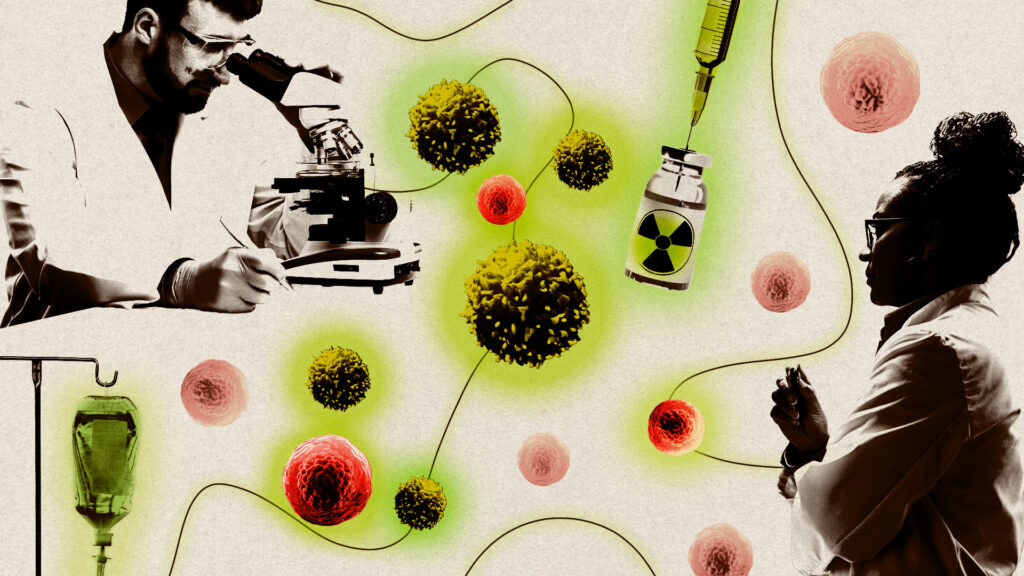
In cancer treatment, the pitch has been simple: What if, instead of blasting radiation across patients’ bodies, crop-dusting not only malignant cells but also neighboring healthy tissues, we could shoot chemical weapons directly at only the noxious tumors?
That has been the central promise of radiopharmaceuticals, which have grabbed the drug industry’s attention and created a shining new field of drug development. But, as more and more of these therapies move into clinical trials, developers are finding it’s not so clear-cut.
The isotopes that make up radiopharmaceuticals are just as virulent as the beam radiation patients have begrudgingly tolerated for decades. They are designed to be far more targeted. But while they’re hurtling to biological bull’s-eyes, some are inadvertently zapping patients’ kidneys, liver, or bone marrow along the way.
STAT+ Exclusive Story
Already have an account? Log in
This article is exclusive to STAT+ subscribers
Unlock this article — plus daily coverage and analysis of the biotech sector — by subscribing to STAT+.
Already have an account? Log in
Individual plans
Group plans
View All Plans
To read the rest of this story subscribe to STAT+.
Subscribe
