


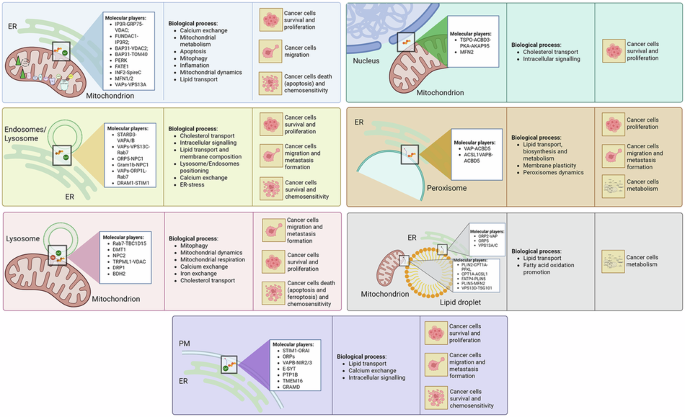
Sassano ML, Felipe-Abrio B, Agostinis P. ER-mitochondria contact sites; a multifaceted factory for Ca2+ signaling and lipid transport. Front Cell Dev Biol. 2022;10. https://doi.org/10.3389/fcell.2022.988014.
Calì T, Bayer EM, Eden ER, Hajnóczky G, Kornmann B, Lackner L, et al. Key challenges and recommendations for defining organelle membrane contact sites. Nat Rev Mol Cell Biol. 2025;26:776–96. https://doi.org/10.1038/S41580-025-00864-X.
Sood A, Jeyaraju DV, Prudent J, Caron A, Lemieux P, McBride HM, et al. A Mitofusin-2-dependent inactivating cleavage of Opa1 links changes in mitochondria cristae and ER contacts in the postprandial liver. Proc Natl Acad Sci. USA. 2014;111:16017–22. https://doi.org/10.1073/pnas.1408061111.
Gil-Hernández A, Arroyo-Campuzano M, Simoni-Nieves A, Zazueta C, Gomez-Quiroz LE, Silva-Palacios A. Relevance of membrane contact sites in cancer progression. Front Cell Dev Biol. 2021;8:622215. https://doi.org/10.3389/fcell.2020.622215.
Atakpa-Adaji P, Ivanova A. IP3R at ER-mitochondrial contact sites: beyond the IP3R-GRP75-VDAC1 Ca2+ funnel. Contact. 2023;6:25152564231181020. https://doi.org/10.1177/25152564231181020.
Bernhard W, Rouiller C. Close topographical relationship between mitochondria and ergastoplasm of liver cells in a definite phase of cellular activity. J Biophys Biochem Cytol. 1956;2. https://doi.org/10.1083/jcb.2.4.73.
Peruzzo R, Costa R, Bachmann M, Leanza L, Szabò I. Mitochondrial metabolism, contact sites and cellular calcium signaling: Implications for tumorigenesis. Cancers. 2020;12:1–19. https://doi.org/10.3390/CANCERS12092574.
Vance JE. Phospholipid synthesis in a membrane fraction associated with mitochondria. J Biol Chem. 1990;265. https://doi.org/10.1016/s0021-9258(19)39106-9.
Rowland AA, Voeltz GK. Endoplasmic reticulum-mitochondria contacts: function of the junction. Nat Rev Mol Cell Biol. 2012;13:607–15. https://doi.org/10.1038/nrm3440.
Casas-Martinez JC, Samali A, McDonagh B. Redox regulation of UPR signalling and mitochondrial ER contact sites. Cellular and Molecular Life Sciences. 2024;81:250. https://doi.org/10.1007/S00018-024-05286-0.
Rizzuto R, Pinton P, Carrington W, Fay FS, Fogarty KE, Lifshitz LM, et al. Close contacts with the endoplasmic reticulum as determinants of mitochondrial Ca2+ responses. Science. 1998;280:1763–6. https://doi.org/10.1126/SCIENCE.280.5370.1763.
Giordano F. Non-vesicular lipid trafficking at the endoplasmic reticulum–mitochondria interface. Biochem Soc Trans. 2018;46:437–52. https://doi.org/10.1042/BST20160185.
Martinvalet D. The role of the mitochondria and the endoplasmic reticulum contact sites in the development of the immune responses. Cell Death Dis. 2018;9:1–15. https://doi.org/10.1038/s41419-017-0237-7.
Missiroli S, Patergnani S, Caroccia N, Pedriali G, Perrone M, Previati M et al. Mitochondria-associated membranes (MAMs) and inflammation. Cell Death Dis. 2018;9. https://doi.org/10.1038/S41419-017-0027-2.
Hamasaki M, Furuta N, Matsuda A, Nezu A, Yamamoto A, Fujita N, et al. Autophagosomes form at ER-mitochondria contact sites. Nature. 2013;495:389–93. https://doi.org/10.1038/NATURE11910.
Hemel IMGM, Sarantidou R, Gerards M. It takes two to tango: the essential role of ER-mitochondrial contact sites in mitochondrial dynamics. Int J Biochem Cell Biol. 2021;141. https://doi.org/10.1016/j.biocel.2021.106101.
Tubbs E, Rieusset J. Metabolic signaling functions of ER–mitochondria contact sites: role in metabolic diseases. J Mol Endocrinol. 2017;58:R87–R106. https://doi.org/10.1530/JME-16-0189.
Doghman-Bouguerra M, Lalli E. ER-mitochondria interactions: both strength and weakness within cancer cells. Biochim Biophys Acta Mol Cell Res. 2019;1866:650–62. https://doi.org/10.1016/j.bbamcr.2019.01.009.
Dong Z, Shanmughapriya S, Tomar D, Siddiqui N, Lynch S, Nemani N, et al. Mitochondrial Ca2+ uniporter is a mitochondrial luminal redox sensor that augments MCU channel activity. Mol Cell. 2017;65:1014–28.e7. https://doi.org/10.1016/j.molcel.2017.01.032.
Simmen T, Herrera-Cruz MS. Plastic mitochondria-endoplasmic reticulum (ER) contacts use chaperones and tethers to mould their structure and signaling. Curr Opin Cell Biol. 2018;53:61–9. https://doi.org/10.1016/J.CEB.2018.04.014.
Rieusset J. Role of endoplasmic reticulum-mitochondria communication in type 2 diabetes. Adv Exp Med Biol. 2017;997:171–86. https://doi.org/10.1007/978-981-10-4567-7_13.
Ruzza A, Zaltron E, Vianello F, Celotti I, Scavezzon M, Severin F, et al. HSPA8 and HSPA9: two prognostic and therapeutic targets in breast, colon, and kidney cancers? Biochim Biophys Acta Mol Basis Dis. 2025;1871:167827. https://doi.org/10.1016/j.bbadis.2025.167827.
Xu H, Guan N, Ren Y-L, Wei Q-J, Tao Y-H, Yang G-S, et al. IP3R-Grp75-VDAC1-MCU calcium regulation axis antagonists protect podocytes from apoptosis and decrease proteinuria in an Adriamycin nephropathy rat model. BMC Nephrol. 2018;19:140. https://doi.org/10.1186/s12882-018-0940-3.
D’Eletto M, Rossin F, Occhigrossi L, Farrace MG, Faccenda D, Desai R, et al. Transglutaminase type 2 regulates ER-mitochondria contact sites by interacting with GRP75. Cell Rep. 2018;25:3573–81.e4. https://doi.org/10.3390/CANCERS12092574.
Yang C, Colosi P, Hugelier S, Zabezhinsky D, Lakadamyali M, Svitkina T. Actin polymerization promotes invagination of flat clathrin-coated lattices in mammalian cells by pushing at lattice edges. Nat Commun. 2022;13. https://doi.org/10.1038/s41467-022-33852-2.
Kerkhofs M, Giorgi C, Marchi S, Seitaj B, Parys JB, Pinton P, et al. Alterations in Ca2+ signalling via ER-mitochondria contact site remodelling in cancer. Adv Exp Med Biol. 2017;997:225. https://doi.org/10.1007/978-981-10-4567-7_17.
Cole ES, Lepp CA, Holohan PD, Fondy TP. Isolation and characterization of flavin-linked glycerol-3-phosphate dehydrogenase from rabbit skeletal muscle mitochondria and comparison with the enzyme from rabbit brain. J Biol Chem. 1978;253. https://doi.org/10.1016/s0021-9258(17)34463-0.
Denton RM. Regulation of mitochondrial dehydrogenases by calcium ions. Biochim Biophys Acta Bioenerg. 2009;1787. https://doi.org/10.1016/j.bbabio.2009.01.005.
Rutter GA, Denton RM. Regulation of NAD+-linked isocitrate dehydrogenase and 2-oxoglutarate dehydrogenase by Ca2+ ions within toluene-permeabilized rat heart mitochondria. Interactions with regulation by adenine nucleotides and NADH/NAD+ ratios. Biochem J. 1988;252. https://doi.org/10.1042/bj2520181.
Cardenas C, Lovy A, Silva-Pavez E, Urra F, Mizzoni C, Ahumada-Castro U et al. Cancer cells with defective oxidative phosphorylation require endoplasmic reticulum-to-mitochondria Ca2+transfer for survival. Sci Signal. 2020;13. https://doi.org/10.1126/scisignal.aay1212.
Wei C, Wang X, Zheng M, Cheng H. Calcium gradients underlying cell migration. Curr Opin Cell Biol. 2012;24. https://doi.org/10.1016/j.ceb.2011.12.002.
Wei C, Wang X, Chen M, Ouyang K, Song LS, Cheng H. Calcium flickers steer cell migration. Nature. 2009;457. https://doi.org/10.1038/nature07577.
Huang X, Jin M, Chen YX, Wang J, Zhai K, Chang Y et al. ERP44 inhibits human lung cancer cell migration mainly via IP3R2. Aging. 2016;8. https://doi.org/10.18632/aging.100984.
Cárdenas C, Miller RA, Smith I, Bui T, Molgó J, Müller M et al. Essential regulation of cell bioenergetics by constitutive InsP3 receptor Ca2+ transfer to mitochondria. Cell. 2010;142. https://doi.org/10.1016/j.cell.2010.06.007.
Liberti M V, Locasale JW. The Warburg effect: how does it benefit cancer cells? Trends Biochem Sci. 2016;41. https://doi.org/10.1016/j.tibs.2015.12.001.
Warburg O. The metabolism of carcinoma cells 1. J Cancer Res. 1925;9. https://doi.org/10.1158/jcr.1925.148.
Baumgartner HK, Gerasimenko J V, Thorne C, Ferdek P, Pozzan T, Tepikin A V. et al. Calcium elevation in mitochondria is the main Ca2+ requirement for mitochondrial permeability transition pore (mPTP) opening. J Biol Chem. 2009;284. https://doi.org/10.1074/jbc.M109.025353.
Marchi S, Patergnani S, Missiroli S, Morciano G, Rimessi A, Wieckowski MR et al. Mitochondrial and endoplasmic reticulum calcium homeostasis and cell death. Cell Calcium. 2018;69. https://doi.org/10.1016/j.ceca.2017.05.003.
Khan MT, Wagner L, Yule DI, Bhanumathy C, Joseph SK. Akt kinase phosphorylation of inositol 1,4,5-trisphosphate receptors. J Biol Chem. 2006;281. https://doi.org/10.1074/jbc.M509262200.
Marchi S, Rimessi A, Giorgi C, Baldini C, Ferroni L, Rizzuto R et al. Akt kinase reducing endoplasmic reticulum Ca2+ release protects cells from Ca2 + -dependent apoptotic stimuli. Biochem Biophys Res Commun 2008;375. https://doi.org/10.1016/j.bbrc.2008.07.153.
Bononi A, Bonora M, Marchi S, Missiroli S, Poletti F, Giorgi C et al. Identification of PTEN at the ER and MAMs and its regulation of Ca2+ signaling and apoptosis in a protein phosphatase-dependent manner. Cell Death Differ. 2013;20. https://doi.org/10.1038/cdd.2013.77.
Giorgi C, Ito K, Lin HK, Santangelo C, Wieckowski MR, Lebiedzinska M et al. PML regulates apoptosis at endoplasmic reticulum by modulating calcium release. Science. 2010;330. https://doi.org/10.1126/science.1189157.
Xie Q, Xu Y, Gao W, Zhang Y, Su J, Liu Y et al. TAT-fused IP3R-derived peptide enhances cisplatin sensitivity of ovarian cancer cells by increasing ER Ca2+ release. Int J Mol Med. 2018;41. https://doi.org/10.3892/ijmm.2017.3260.
Kuchay S, Giorgi C, Simoneschi D, Pagan J, Missiroli S, Saraf A, et al. PTEN counteracts FBXL2 to promote IP3R3- and Ca 2+-mediated apoptosis limiting tumour growth. Nature. 2017;546:554–8. https://doi.org/10.1038/NATURE22965.
Hayashi T, Su T-P. Sigma-1 receptor chaperones at the ER- mitochondrion interface regulate Ca2+ signaling and cell survival. Cell. 2007;131:596–610. https://doi.org/10.1016/j.cell.2007.08.036.
Robinson TS, Osman MA. An emerging role for sigma receptor 1 in personalized treatment of breast cancer. Cancer. 2023;15. https://doi.org/10.3390/cancers15133464.
Liu L, Feng D, Chen G, Chen M, Zheng Q, Song P, et al. Mitochondrial outer-membrane protein FUNDC1 mediates hypoxia-induced mitophagy in mammalian cells. Nat Cell Biol. 2012;14:177–85. https://doi.org/10.1038/ncb2422.
Wu W, Lin C, Wu K, Jiang L, Wang X, Li W, et al. FUNDC1 regulates mitochondrial dynamics at the ER-mitochondrial contact site under hypoxic conditions. EMBO J. 2016;35:1368–84. https://doi.org/10.15252/embj.201593102.
Wu S, Lu Q, Wang Q, Ding Y, Ma Z, Mao X, et al. Binding of FUN14 domain containing 1 with inositol 1,4,5-trisphosphate receptor in mitochondria-associated endoplasmic reticulum membranes maintains mitochondrial dynamics and function in hearts in vivo. Circulation. 2017;136:2248–66. https://doi.org/10.1161/CIRCULATIONAHA.117.030235.
Hou H, Er P, Cheng J, Chen X, Ding X, Wang Y et al. High expression of FUNDC1 predicts poor prognostic outcomes and is a promising target to improve chemoradiotherapy effects in patients with cervical cancer. Cancer Med. 2017;6. https://doi.org/10.1002/cam4.1112.
Sassano ML, Tyurina YY, Diometzidou A, Vervoort E, Tyurin VA, More S et al. Endoplasmic reticulum–mitochondria contacts are prime hotspots of phospholipid peroxidation driving ferroptosis. Nat Cell Biol. 2025;27. https://doi.org/10.1038/s41556-025-01668-z.
Luo X, Li M, Gong Y, Tao Y, Gong Z, Fan K et al. FUNDC1 drives cholangiocarcinoma progression via RAC1 interaction and ferroptosis suppression. Int J Biol Macromol. 2025;321. https://doi.org/10.1016/j.ijbiomac.2025.146087.
Li W, Li Y, Siraj S, Jin H, Fan Y, Yang X, et al. FUN14 domain-containing 1-mediated mitophagy suppresses hepatocarcinogenesis by inhibition of inflammasome activation in mice. Hepatology. 2019;69:604–21. https://doi.org/10.1002/hep.30191.
Wang C, Dai X, Wu S, Xu W, Song P, Huang K, et al. FUNDC1-dependent mitochondria-associated endoplasmic reticulum membranes are involved in angiogenesis and neoangiogenesis. Nat Commun. 2021;12:2616. https://doi.org/10.1038/s41467-021-22771-3.
Yuan Q, Sun N, Zheng J, Wang Y, Yan X, Mai W et al. Prognostic and immunological role of FUN14 domain-containing 1 in pan-cancer: friend or foe? Front Oncol 2020;9. https://doi.org/10.3389/fonc.2019.01502.
Kors S, Costello JL, Schrader M. VAP proteins—from organelle tethers to pathogenic host interactors and their role in neuronal disease. Front Cell Dev Biol. 2022;10:895856. https://doi.org/10.3389/FCELL.2022.895856.
Neefjes J, Cabukusta B. What the VAP: the expanded VAP family of proteins interacting with FFAT and FFAT-related motifs for interorganellar contact. Contact. 2021;4:25152564211012250. https://doi.org/10.1177/25152564211012246.
Kodama TS, Furuita K, Kojima C. Beyond static tethering at membrane contact sites: structural dynamics and functional implications of VAP proteins. Molecules. 2025;30. https://doi.org/10.3390/molecules30061220.
Faria Assoni A, Giove Mitsugi T, Wardenaar R, Oliveira Ferreira R, Farias Jandrey EH, Machado Novaes G et al. Neurodegeneration-associated protein VAPB regulates proliferation in medulloblastoma. Sci Rep. 2023;13.https://doi.org/10.1038/s41598-023-45319-5.
Rao M, Song W, Jiang A, Shyr Y, Lev S, Greenstein D, et al. VAMP-associated protein B (VAPB) promotes breast tumor growth by modulation of Akt activity. PLoS One. 2012;7:e46281. https://doi.org/10.1371/journal.pone.0046281.
Xu J, Xu S, Liu W, Chen J, Cai L, Zhuang W. circTP63 promotes prostate cancer progression via miR-421/VAMP-associated protein A axis. J Cancer. 2024;15. https://doi.org/10.7150/jca.99561.
Kim JH, Moon A, Song M, Lee KW, Seo SM, Kim HJ, et al. Differentially expressed miRNA of prostate cancer compared with benign prostatic hyperplasia tissues: VAMP associated protein B could be used for new targets and biomarkers of prostate cancer. Biomedicines. 2025;13:2922. https://doi.org/10.3390/biomedicines13122922.
Dziurdzik SK, Conibear E. The Vps13 family of lipid transporters and its role at membrane contact sites. Int J Mol Sci. 2021;22:2905. https://doi.org/10.3390/ijms22062905.
Yeshaw WM, Van Der Zwaag M, Pinto F, Lahaye LL, Faber AI, Gómez-Sánchez R, et al. Human VPS13A is associated with multiple organelles and influences mitochondrial morphology and lipid droplet motility. Elife. 2019;8:e43561. https://doi.org/10.7554/eLife.43561.
Zhang XQ, Li L. Biological function and clinical value of VPS13A in pan-cancer based on bioinformatics analysis. Int J Gen Med. 2021;14:6825–38. https://doi.org/10.2147/IJGM.S330256.
Kim H, Lee S, Jun Y, Lee C. Structural basis for mitoguardin-2 mediated lipid transport at ER-mitochondrial membrane contact sites. Nat Commun. 2022;13:3702. https://doi.org/10.1038/s41467-022-31462-6.
Freyre CAC, Rauher PC, Ejsing CS, Klemm RW. MIGA2 links mitochondria, the ER, and lipid droplets and promotes de novo lipogenesis in adipocytes. Mol Cell. 2019;76:811–25.e14. https://doi.org/10.1016/j.molcel.2019.09.011.
Yan M-Q, Zhu B-H, Liu X-H, Yang Y-M, Duan X-Y, Wang Y, et al. Mitoguardin 1 and 2 promote granulosa cell proliferation by activating AKT and regulating the Hippo-YAP1 signaling pathway. Cell Death Dis. 2023;14:779. https://doi.org/10.1038/s41419-023-06312-y.
Zaman M, Shutt TE. The role of impaired mitochondrial dynamics in MFN2-mediated pathology. Front Cell Dev Biol. 2022;10. https://doi.org/10.3389/fcell.2022.858286.
Chen H, Detmer SA, Ewald AJ, Griffin EE, Fraser SE, Chan DC. Mitofusins Mfn1 and Mfn2 coordinately regulate mitochondrial fusion and are essential for embryonic development. J Cell Biol. 2003;160. https://doi.org/10.1083/jcb.200211046.
Sebastián D, Hernández-Alvarez MI, Segalés J, Sorianello E, Muñoz JP, Sala D et al. Mitofusin 2 (Mfn2) links mitochondrial and endoplasmic reticulum function with insulin signaling and is essential for normal glucose homeostasis. Proc Natl Acad Sci USA. 2012;109. https://doi.org/10.1073/pnas.1108220109.
Gottschalk B, Koshenov Z, Bachkoenig OA, Rost R, Malli R, Graier WF. MFN2 mediates ER-mitochondrial coupling during ER stress through specialized stable contact sites. Front Cell Dev Biol 2022;10. https://doi.org/10.3389/fcell.2022.918691.
De Brito OM, Scorrano L. Mitofusin 2 tethers endoplasmic reticulum to mitochondria. Nature. 2008;456:605–10. https://doi.org/10.1038/nature07534.
Ramaiah P, Patra I, Abbas A, Fadhil AA, Abohassan M, Al-qaim ZH, et al. Mitofusin-2 in cancer: friend or foe? Arch Biochem Biophys. 2022;730:109395. https://doi.org/10.1016/j.abb.2022.109395.
Filadi R, Pendin D, Pizzo P. Mitofusin 2: from functions to disease. Cell Death Dis. 2018;9:1–13. https://doi.org/10.1038/s41419-017-0023-6.
Cieri D, Vicario M, Giacomello M, Vallese F, Filadi R, Wagner T, et al. SPLICS: A split green fluorescent protein-based contact site sensor for narrow and wide heterotypic organelle juxtaposition. Cell Death Differ. 2018;25:1131–45. https://doi.org/10.1038/s41418-017-0033-z.
Leal NS, Schreiner B, Pinho CM, Filadi R, Wiehager B, Karlström H et al. Mitofusin-2 knockdown increases ER–mitochondria contact and decreases amyloid β-peptide production. J Cell Mol Med 2016;20. https://doi.org/10.1111/jcmm.12863.
Wang PTC, Garcin PO, Fu M, Masoudi M, St-Pierre P, Panté N et al. Distinct mechanisms controlling rough and smooth endoplasmic reticulum contacts with mitochondria. J Cell Sci 2015;128. https://doi.org/10.1242/jcs.171132.
Xu K, Chen G, Li X, Wu X, Chang Z, Xu J et al. MFN2 suppresses cancer progression through inhibition of mTORC2/Akt signaling. Sci Rep 2017;7. https://doi.org/10.1038/srep41718.
Fang CL, Sun DP, Chen HK, Lin CC, Hung ST, Uen YH et al. Overexpression of mitochondrial GTPase MFN2 represents a negative prognostic marker in human gastric cancer and its inhibition exerts anti-cancer effects. J Cancer. 2017;8. https://doi.org/10.7150/jca.17986.
Wang M, He T, Meng D, Lv W, Ye J, Cheng L, et al. BZW2 modulates lung adenocarcinoma progression through glycolysis-mediated IDH3G lactylation modification. J Proteome Res. 2023;22:3854–65. https://doi.org/10.1021/acs.jproteome.3c00518.
Jin K, Li Y, Wei R, Liu Y, Wang S, Tian H. BZW2 promotes malignant progression in lung adenocarcinoma through enhancing the ubiquitination and degradation of GSK3β. Cell Death Discov 2024;10. https://doi.org/10.1038/S41420-024-01879-7.
Huang L, Chen S, Fan H, Ai F, Sheng W. BZW2 promotes the malignant progression of colorectal cancer via activating the ERK/MAPK pathway. J Cell Physiol. 2020;235:4834–42. https://doi.org/10.1002/JCP.29361.
Cheng DD, Li SJ, Zhu B, Yuan T, Yang QC, Fan CY. Downregulation of BZW2 inhibits osteosarcoma cell growth by inactivating the Akt/mTOR signaling pathway. Oncol Rep. 2017;38:2116–22. https://doi.org/10.3892/OR.2017.5890.
Maio G, Smith M, Bhawal R, Zhang S, Baskin JM, Li J, et al. Interactome Analysis Identifies the Role of BZW2 in Promoting Endoplasmic Reticulum-Mitochondria Contact and Mitochondrial Metabolism. Mol Cell Proteom. 2024;23:100709. https://doi.org/10.1016/j.mcpro.2023.100709.
Li G, Lu A, Chen A, Geng S, Xu Y, Chen X, et al. BZW2/5MP1 acts as a promising target in hepatocellular carcinoma. J Cancer. 2021;12:5125–35. https://doi.org/10.7150/jca.53282.
Agarwal S, Afaq F, Bajpai P, Behring M, Kim H-G, Varambally A, et al. BZW2 inhibition reduces colorectal cancer growth and metastasis. Mol Cancer Res. 2023;21:698–712. https://doi.org/10.1158/1541-7786.MCR-23-0003.
Quistgaard EM, Löw C, Moberg P, Guettou F, Maddi K, Nordlund P. Structural and biophysical characterization of the cytoplasmic domains of human BAP29 and BAP31. PLoS One. 2013;8:e71111. https://doi.org/10.1371/journal.pone.0071111.
Iwasawa R, Mahul-Mellier A, Datler C, Pazarentzos E. Grimm S. Fis1 and Bap31 bridge the mitochondria–ER interface to establish a platform for apoptosis induction. EMBO J. 2011;30:556–68. https://doi.org/10.1038/emboj.2010.346.
Jiang X, Li G, Zhu B, Zang J, Lan T, Jiang R, et al. p20BAP31 induces cell apoptosis via both AIF caspase-independent and the ROS/JNK mitochondrial pathway in colorectal cancer. Cell Mol Biol Lett. 2023;28:25. https://doi.org/10.1186/s11658-023-00434-z.
Thomas G, Aslan JE, Thomas L, Shinde P, Shinde U, Simmen T. Caught in the act—protein adaptation and the expanding roles of the PACS proteins in tissue homeostasis and disease. J Cell Sci. 2017;130:1865. https://doi.org/10.1242/jcs.199463.
Simmen T, Aslan JE, Blagoveshchenskaya AD, Thomas L, Wan L, Xiang Y, et al. PACS-2 controls endoplasmic reticulum-mitochondria communication and Bid-mediated apoptosis. EMBO J. 2005;24:717–29. https://doi.org/10.1038/sj.emboj.7600559.
Namba T. BAP31 regulates mitochondrial function via interaction with Tom40 within ER-mitochondria contact sites. Sci Adv. 2019;5:eaaw1386. https://doi.org/10.1126/sciadv.aaw1386.
Qian B, Li T-Y, Zheng Z-X, Zhang H-Y, Xu W-Q, Mo S-M, et al. The involvement of SigmaR1K142 degradation mediated by ERAD in neural senescence linked with CdCl2 exposure. J Hazard Mater. 2024;472:134466. https://doi.org/10.1016/j.jhazmat.2024.134466.
Crottès D, Rapetti-Mauss R, Alcaraz-Perez F, Tichet M, Gariano G, Martial S, et al. SIGMAR1 regulates membrane electrical activity in response to extracellular matrix stimulation to drive cancer cell invasiveness. Cancer Res. 2016;76:607–18. https://doi.org/10.1158/0008-5472.CAN-15-1465.
Deng L, Ran H, Yang D, Wang Z, Zhao P, Huang H, et al. TOM40 as a prognostic oncogene for oral squamous cell carcinoma prognosis. BMC Cancer. 2025;25:92. https://doi.org/10.1186/s12885-024-13417-w.
Namba T, Tian F, Chu K, Hwang S-Y, Yoon KW, Byun S, et al. CDIP1-BAP31 complex transduces apoptotic signals from endoplasmic reticulum to mitochondria under endoplasmic reticulum stress. Cell Rep. 2013;5:331–9. https://doi.org/10.1016/j.celrep.2013.09.020.
Ran H, Zhang J, Zeng X, Wang Z, Liu P, Kang C, et al. TOM40 regulates the progression of nasopharyngeal carcinoma through ROS-mediated AKT/mTOR and p53 signaling. Discover Oncology. 2023;14:109. https://doi.org/10.1007/s12672-023-00721-3.
Tabas I, Ron D. Integrating the mechanisms of apoptosis induced by endoplasmic reticulum stress. Nat Cell Biol. 2011;13:184–90. https://doi.org/10.1038/ncb0311-184.
Verfaillie T, Rubio N, Garg AD, Bultynck G, Rizzuto R, Decuypere J-P, et al. PERK is required at the ER-mitochondrial contact sites to convey apoptosis after ROS-based ER stress. Cell Death Differ. 2012;19:1880–91. https://doi.org/10.1038/cdd.2012.74.
Van Vliet AR, Giordano F, Gerlo S, Segura I, Van Eygen S, Molenberghs G, et al. The ER stress sensor PERK coordinates ER-plasma membrane contact site formation through interaction with filamin-A and F-Actin remodeling. Mol Cell. 2017;65:885–899.e6. https://doi.org/10.1016/j.molcel.2017.01.020.
Ranganathan AC, Ojha S, Kourtidis A, Conklin DS, Aguirre-Ghiso JA. Dual function of pancreatic endoplasmic reticulum kinase in tumor cell growth arrest and survival. Cancer Res 2008;68. https://doi.org/10.1158/0008-5472.CAN-07-6215.
Bu Y, Diehl JA. PERK integrates oncogenic signaling and cell survival during cancer development. J Cell Physiol. 2016;231:2088–96. https://doi.org/10.1002/JCP.25336.
Feng Y-X, Jin DX, Sokol ES, Reinhardt F, Miller DH, Gupta PB. Cancer-specific PERK signaling drives invasion and metastasis through CREB3L1. Nat Commun. 2017;8:1079. https://doi.org/10.1038/s41467-017-01052-y.
Mandula JK, Chang S, Mohamed E, Jimenez R, Sierra-Mondragon RA, Chang DC, et al. Ablation of the endoplasmic reticulum stress kinase PERK induces paraptosis and type I interferon to promote anti-tumor T cell responses. Cancer Cell. 2022;40:1145–1160.e9. https://doi.org/10.1016/j.ccell.2022.08.016.
Bobrovnikova-Marjon E, Grigoriadou C, Pytel D, Zhang F, Ye J, Koumenis C, et al. PERK promotes cancer cell proliferation and tumor growth by limiting oxidative DNA damage. Oncogene. 2010;29:3881–95. https://doi.org/10.1038/onc.2010.153.
Gilquin B, Cannon BR, Hubstenberger A, Moulouel B, Falk E, Merle N, et al. The calcium-dependent interaction between S100B and the mitochondrial AAA ATPase ATAD3A and the role of this complex in the cytoplasmic processing of ATAD3A. Mol Cell Biol. 2010;30:2724–36. https://doi.org/10.1128/MCB.01468-09.
Teng Y, Ren X, Li H, Shull A, Kim J, Cowell JK. Mitochondrial ATAD3A combines with GRP78 to regulate the WASF3 metastasis-promoting protein. Oncogene. 2016;35:333–43. https://doi.org/10.1038/onc.2015.86.
Brar KK, Hughes DT, Morris JL, Subramanian K, Krishna S, Gao F, et al. PERK-ATAD3A interaction provides a subcellular safe haven for protein synthesis during ER stress. Science. 2024;385:eadp7114. https://doi.org/10.1126/SCIENCE.ADP7114.
Chen L, Li Y, Zambidis A, Papadopoulos V. ATAD3A: a key regulator of mitochondria-associated diseases. Int J Mol Sci. 2023;24:12511. https://doi.org/10.3390/ijms241512511.
Chang TK, Lawrence DA, Lu M, Tan J, Harnoss JM, Marsters SA et al. Coordination between two branches of the unfolded protein response determines apoptotic cell fate. Mol Cell 2018;71. https://doi.org/10.1016/j.molcel.2018.06.038.
Maxfield KE, Taus PJ, Corcoran K, Wooten J, Macion J, Zhou Y, et al. Comprehensive functional characterization of cancer–testis antigens defines obligate participation in multiple hallmarks of cancer. Nat Commun. 2015;6:8840. https://doi.org/10.3390/ijms241512511.
Doghman-Bouguerra M, Granatiero V, Sbiera S, Sbiera I, Lacas-Gervais S, Brau F, et al. FATE1 antagonizes calcium- and drug-induced apoptosis by uncoupling ER and mitochondria. EMBO Rep. 2016;17:1264–80. https://doi.org/10.15252/embr.201541504.
Balasuriya D, Stewart AP, Edwardson JM. The σ-1 Receptor Interacts Directly with GluN1 But Not GluN2A in the GluN1/GluN2A NMDA Receptor. The Journal of Neuroscience. 2013;33:18219. https://doi.org/10.1523/JNEUROSCI.3360-13.2013.
Lastraioli E, Guasti L, Crociani O, Polvani S, Hofmann G, Witchel H, et al. herg1 gene and HERG1 protein are overexpressed in colorectal cancers and regulate cell invasion of tumor cells. Cancer Res. 2004;64:606–11. https://doi.org/10.1158/0008-5472.can-03-2360.
Darmadi D, Saleh RO, Oghenemaro EF, Shakir MN, Hjazi A, Hassan ZF, et al. Role of SEL1L in the progression of solid tumors, with a special focus on its recent therapeutic potential. Cell Biol Int. 2025;49:16–32. https://doi.org/10.1002/cbin.12242.
Cattaneo M, Orlandini S, Beghelli S, Moore PS, Sorio C, Bonora A et al. SEL1L expression in pancreatic adenocarcinoma parallels SMAD4 expression and delays tumor growth in vitro and in vivo. Oncogene 2003; 22. https://doi.org/10.1038/sj.onc.1206665.
Orlandi R, Troglio F, Casalini P, Ronchini C, Ménard S, Cattaneo M, et al. SEL1L expression decreases breast tumor cell aggressiveness in vivo and in vitro. Cancer Res. 2002;62:567–74. https://doi.org/10.1177/172460080201700205.
Ashktorab H, Green W, Finzi G, Sessa F, Nouraie M, Lee EL et al. SEL1L, an UPR response protein, a potential marker of colonic cell transformation. Dig Dis Sci. 2012;57. https://doi.org/10.1007/s10620-011-2026-y.
Mellai M, Annovazzi L, Boldorini R, Bertero L, Cassoni P, De Blasio P et al. SEL1L plays a major role in human malignant gliomas. J Pathol Clin Res. 2020;6. https://doi.org/10.1002/cjp2.134.
Korobova F, Ramabhadran V, Higgs HN. An actin-dependent step in mitochondrial fission mediated by the ER-associated formin INF2. Science. 2013;339:464–7. https://doi.org/10.1126/science.1228360.
Manor U, Bartholomew S, Golani G, Christenson E, Kozlov M, Higgs H, et al. A mitochondria-anchored isoform of the actin-nucleating spire protein regulates mitochondrial division. Elife. 2015;4:e08828. https://doi.org/10.7554/eLife.08828.
Chakrabarti R, Ji W-K, Stan RV, de Juan Sanz J, Ryan TA, Higgs HN. INF2-mediated actin polymerization at the ER stimulates mitochondrial calcium uptake, inner membrane constriction, and division. J Cell Biol. 2018;217:251–68. https://doi.org/10.1083/jcb.201709111.
Linder S, Wiesner C, Himmel M. Degrading devices: invadosomes in proteolytic cell invasion. Annu Rev Cell Dev Biol. 2011;27:185–211. https://doi.org/10.1146/annurev-cellbio-092910-154216.
Lagal V, Abrivard M, Gonzalez V, Perazzi A, Popli S, Verzeroli E, et al. Spire-1 contributes to the invadosome and its associated invasive properties. J Cell Sci. 2014;127:328–40. https://doi.org/10.1242/jcs.130161.
Perkins HT, Allan V. Intertwined and finely balanced: endoplasmic reticulum morphology, dynamics, function, and diseases. Cells. 2021;10:2341. https://doi.org/10.3390/cells10092341.
Scott CC, Vacca F, Gruenberg J. Endosome maturation, transport and functions. Semin Cell Dev Biol. 2014;31:2–10. https://doi.org/10.1016/j.semcdb.2014.03.034.
Wallroth A, Haucke V. Phosphoinositide conversion in endocytosis and the endolysosomal system. J Biol Chem. 2018;293:1526–35. https://doi.org/10.1074/jbc.R117.000629.
Eden ER. The formation and function of ER-endosome membrane contact sites. Biochim Biophys Acta Mol Cell Biol Lipids. 2016;1861:874–9. https://doi.org/10.1016/J.BBALIP.2016.01.020.
Friedman JR, DiBenedetto JR, West M, Rowland AA, Voeltz GK. Endoplasmic reticulum–endosome contact increases as endosomes traffic and mature. Mol Biol Cell. 2013;24:1030–40. https://doi.org/10.1091/mbc.e12-10-0733.
Jongsma MLM, Berlin I, Wijdeven RHM, Janssen L, Janssen GMC, Garstka MA, et al. An ER-associated pathway defines endosomal architecture for controlled cargo transport. Cell. 2016;166:152–66. https://doi.org/10.1016/j.cell.2016.05.078.
Rowland AA, Chitwood PJ, Phillips MJ, Voeltz GK. ER contact sites define the position and timing of endosome fission. Cell. 2014;159:1027–41. https://doi.org/10.1016/j.cell.2014.10.023.
Nakatsu F, Kawasaki A. Functions of oxysterol-binding proteins at membrane contact sites and their control by phosphoinositide metabolism. Front Cell Dev Biol. 2021;9:664788. https://doi.org/10.3389/fcell.2021.664788.
Atakpa P, Thillaiappan NB, Mataragka S, Prole DL, Taylor CW. IP3 receptors preferentially associate with ER-lysosome contact sites and selectively deliver Ca2+ to lysosomes. Cell Rep. 2018;25:3180–3193.e7. https://doi.org/10.1016/j.celrep.2018.11.064.
Hanafusa H, Fujita K, Kamio M, Iida S, Tamura Y, Hisamoto N, et al. LRRK1 functions as a scaffold for PTP1B-mediated EGFR sorting into ILVs at the ER–endosome contact site. J Cell Sci. 2023;136:jcs260566. https://doi.org/10.1242/jcs.260566.
Alpy F, Rousseau A, Schwab Y, Legueux F, Stoll I, Wendling C et al. STARD3 or STARD3NL and VAP form a novel molecular tether between late endosomes and the ER. J Cell Sci. 2013;126. https://doi.org/10.1242/jcs.139295.
Cai W, Ye L, Sun J, Mansel RE, Jiang WG. Expression of MLN64 influences cellular matrix adhesion of breast cancer cells, the role for focal adhesion kinase. Int J Mol Med. 2010;25:573–80. https://doi.org/10.3892/ijmm_00000379.
Wilhelm LP, Wendling C, Védie B, Kobayashi T, Chenard M-P, Tomasetto C, et al. STARD3 mediates endoplasmic reticulum-to-endosome cholesterol transport at membrane contact sites. EMBO J. 2017;36:1412–33. https://doi.org/10.15252/embj.201695917.
Vassilev B, Sihto H, Li S, Hölttä-Vuori M, Ilola J, Lundin J et al. Elevated levels of StAR-related lipid transfer protein 3 alter cholesterol balance and adhesiveness of breast cancer cells: Potential mechanisms contributing to progression of HER2-positive breast cancers. Am J Pathol. 2015;185. https://doi.org/10.1016/j.ajpath.2014.12.018.
Lodi M, Voilquin L, Alpy F, Molière S, Reix N, Mathelin C et al. STARD3: a new biomarker in HER2-positive breast cancer. Cancers. 2023;15. https://doi.org/10.3390/cancers15020362.
Chimento A, Casaburi I, Avena P, Trotta F, De Luca A, Rago V, et al. Cholesterol and its metabolites in tumor growth: therapeutic potential of statins in cancer treatment. Front Endocrinol. 2018;9:807. https://doi.org/10.3389/fendo.2018.00807.
Peretti D, Kim S, Tufi R, Lev S. Lipid transfer proteins and membrane contact sites in human cancer. Front Cell Dev Biol. 2019;7:371. https://doi.org/10.3389/fcell.2019.00371.
Binh DHN, Cheng T-C, Tu S-H, Liao Y-C, Yang Y-Y, Chen L-C et al. StAR-related lipid transfer domain protein 3 (STARD3) regulates HER2 and promotes HER2-positive breast cancer progression through interaction with HSP90 and SRC signaling. 2023;13: 5151–73.
Stigliano A, Gandini O, Cerquetti L, Gazzaniga P, Misiti S, Monti S, et al. Increased metastatic lymph node 64 and CYP17 expression are associated with high-stage prostate cancer. J Endocrinol. 2007;194:55–61. https://doi.org/10.1677/JOE-07-0131.
Hancock-Cerutti W, Wu Z, Xu P, Yadavalli N, Leonzino M, Tharkeshwar AK et al. ER-lysosome lipid transfer protein VPS13C/PARK23 prevents aberrant mtDNA-dependent STING signaling. J Cell Biol. 2022; 221. https://doi.org/10.1083/jcb.202106046.
Tan X, Wang X, Liao X, Wang X, Jiang Z, Liang W, et al. Downregulation of VPS13C promotes cisplatin resistance in cervical cancer by upregulating GSTP1. iScience. 2023;26:107315. https://doi.org/10.1016/j.isci.2023.107315.
Gillingham AK, Bertram J, Begum F, Munro S. In vivo identification of GTPase interactors by mitochondrial relocalization and proximity biotinylation. Elife. 2019;8:e45916. https://doi.org/10.7554/eLife.45916.
Du X, Kumar J, Ferguson C, Schulz TA, Ong YS, Hong W, et al. A role for oxysterol-binding protein–related protein 5 in endosomal cholesterol trafficking. J Cell Biol. 2011;192:121–35. https://doi.org/10.1083/jcb.201004142.
Du X, Turner N, Yang H. The role of oxysterol-binding protein and its related proteins in cancer. Semin Cell Dev Biol. 2018;81:149–53. https://doi.org/10.1016/j.semcdb.2017.07.017.
Höglinger D, Burgoyne T, Sanchez-Heras E, Hartwig P, Colaco A, Newton J, et al. NPC1 regulates ER contacts with endocytic organelles to mediate cholesterol egress. Nat Commun. 2019;10:4276. https://doi.org/10.1038/s41467-019-12152-2.
Kwon HJ, Abi-Mosleh L, Wang ML, Deisenhofer J, Goldstein JL, Brown MS, et al. Structure of N-terminal domain of NPC1 reveals distinct subdomains for binding and transfer of cholesterol. Cell. 2009;137:1213–24. https://doi.org/10.1016/j.cell.2009.03.049.
Nguyen MKL, Jose J, Wahba M, Bernaus-Esqué M, Hoy AJ, Enrich C, et al. Linking late endosomal cholesterol with cancer progression and anticancer drug resistance. Int J Mol Sci. 2022;23:7206. https://doi.org/10.3390/ijms23137206.
Skorda A, Lauridsen AR, Wu C, Huang J, Mrackova M, Winther NI et al. Activation of invasion by oncogenic reprogramming of cholesterol metabolism via increased NPC1 expression and macropinocytosis. Oncogene. 2023;42. https://doi.org/10.1038/s41388-023-02771-x.
Olkkonen VM. The emerging roles of OSBP-related proteins in cancer: Impacts through phosphoinositide metabolism and protein–protein interactions. Biochem Pharmacol. 2022;196. https://doi.org/10.1016/j.bcp.2021.114455.
Wu SY, Yang X, Gharpure KM, Hatakeyama H, Egli M, McGuire MH et al. 2′-OMe-phosphorodithioate-modified siRNAs show increased loading into the RISC complex and enhanced anti-tumour activity. Nat Commun. 2014;5. https://doi.org/10.1038/ncomms4459.
Khanna P, Chua PJ, Wong BSE, Yin C, Thike AA, Wan WK, et al. GRAM domain-containing protein 1B (GRAMD1B), a novel component of the JAK/STAT signaling pathway, functions in gastric carcinogenesis. Oncotarget. 2017;8:115370–83. https://doi.org/10.18632/oncotarget.23265.
Khanna P, Lee JS, Sereemaspun A, Lee H, Baeg GH. GRAMD1B regulates cell migration in breast cancer cells through JAK/STAT and Akt signaling. Sci Rep. 2018;8:9511. https://doi.org/10.1038/s41598-018-27864-6.
Zhao K, Ridgway ND. Oxysterol-binding protein-related protein 1L regulates cholesterol egress from the endo-lysosomal system. Cell Rep. 2017;19:1807–18. https://doi.org/10.1016/j.celrep.2017.05.028.
Raiborg C, Wenzel EM, Stenmark H. ER–endosome contact sites: molecular compositions and functions. EMBO J. 2015;34:1848. https://doi.org/10.15252/EMBJ.201591481.
Rocha N, Kuijl C, van der Kant R, Janssen L, Houben D, Janssen H, et al. Cholesterol sensor ORP1L contacts the ER protein VAP to control Rab7-RILP-p150 Glued and late endosome positioning. J Cell Biol. 2009;185:1209–25. https://doi.org/10.1083/jcb.200811005.
Tang T, Yang Z, Wang D, Yang X, Wang J, Li L, et al. The role of lysosomes in cancer development and progression. Cell Biosci. 2020;10:131. https://doi.org/10.1186/s13578-020-00489-x.
Cardoso CMP, Groth-Pedersen L, Høyer-Hansen M, Kirkegaard T, Corcelle E, Andersen JS, et al. Depletion of Kinesin 5B affects lysosomal distribution and stability and induces peri-nuclear accumulation of autophagosomes in cancer cells. PLoS One. 2009;4:e4424. https://doi.org/10.1371/journal.pone.0004424.
Steffan JJ, Dykes SS, Coleman DT, Adams LK, Rogers D, Carroll JL, et al. Supporting a role for the GTPase Rab7 in prostate cancer progression. PLoS One. 2014;9:e87882. https://doi.org/10.1371/journal.pone.0087882.
Pedersen NM, Wenzel EM, Wang L, Antoine S, Chavrier P, Stenmark H et al. Protrudin-mediated ER–endosome contact sites promote MT1-MMP exocytosis and cell invasion. J Cell Biol. 2020;219. https://doi.org/10.1083/JCB.202003063.
Raiborg C, Wenzel EM, Pedersen NM, Olsvik H, Schink KO, Schultz SW, et al. Repeated ER–endosome contacts promote endosome translocation and neurite outgrowth. Nature. 2015;520:234–8. https://doi.org/10.1038/nature14359.
Linder S, Aepfelbacher M. Podosomes: adhesion hot-spots of invasive cells. Trends Cell Biol. 2003;13:376–85. https://doi.org/10.1016/S0962-8924(03)00128-4.
Crighton D, Wilkinson S, O’Prey J, Syed N, Smith P, Harrison PR, et al. DRAM, a p53-induced modulator of autophagy, is critical for apoptosis. Cell. 2006;126:121–34. https://doi.org/10.1016/j.cell.2006.05.034.
Wang X, Geng J, Rimal S, Sui Y, Pan J, Qin Z et al. The p53 target DRAM1 modulates calcium homeostasis and ER stress by promoting contact between lysosomes and the ER through STIM1. Proc Natl Acad Sci USA 2024;121. https://doi.org/10.1073/PNAS.2400531121.
Zhang W, Sun Y, Yang Y, Chen Y. Impaired intracellular calcium homeostasis enhances protein O-GlcNAcylation and promotes vascular calcification and stiffness in diabetes. Redox Biol. 2023;63:102720. https://doi.org/10.1016/j.redox.2023.102720.
Geng J, Zhang R, Yuan X, Xu H, Zhu Z, Wang X, et al. DRAM1 plays a tumor suppressor role in NSCLC cells by promoting lysosomal degradation of EGFR. Cell Death Dis. 2020;11:768. https://doi.org/10.1038/s41419-020-02979-9.
Wu X, Li Y, Wang W, Xu J, Zhao B, Sun W et al. DRAM1 enhances the proliferation and metastasis of gastric cancer through the PI3K/AKT/mTOR signaling pathway and energy metabolism. Sci Rep. 2025;15. https://doi.org/10.1038/s41598-025-87389-7.
McLelland G-L, Soubannier V, Chen CX, McBride HM, Fon EA. Parkin and PINK1 function in a vesicular trafficking pathway regulating mitochondrial quality control. EMBO J. 2014;33:282–95. https://doi.org/10.1002/embj.201385902.
Chen C, Liang QY, Chen HK, Wu PF, Feng ZY, Ma XM et al. DRAM1 regulates the migration and invasion of hepatoblastoma cells via autophagy-EMT pathway. Oncol Lett. 2018;16. https://doi.org/10.3892/ol.2018.8937.
Selvaraj S, Sun Y, Sukumaran P, Singh BB. Resveratrol activates autophagic cell death in prostate cancer cells via downregulation of STIM1 and the mTOR pathway. Mol Carcinog. 2016;55. https://doi.org/10.1002/mc.22324.
Wong YC, Ysselstein D, Krainc D. Mitochondria–lysosome contacts regulate mitochondrial fission via RAB7 GTP hydrolysis. Nature. 2018;554:382–6. https://doi.org/10.1038/nature25486.
Chen Q, Jin C, Shao X, Guan R, Tian Z, Wang C, et al. Super-resolution tracking of mitochondrial dynamics with an iridium(III) luminophore. Small. 2018;14:e1802166. https://doi.org/10.1002/smll.201802166.
Wong YC, Kim S, Peng W, Krainc D. Regulation and function of mitochondria–lysosome membrane contact sites in cellular homeostasis. Trends Cell Biol. 2019;29:500–13. https://doi.org/10.1016/j.tcb.2019.02.004.
Brahimi-Horn MC, Lacas-Gervais S, Adaixo R, Ilc K, Rouleau M, Notte A, et al. Local mitochondrial-endolysosomal microfusion cleaves voltage-dependent anion channel 1 to promote survival in hypoxia. Mol Cell Biol. 2015;35:1491–505. https://doi.org/10.1128/MCB.01402-14.
Hsu F, Spannl S, Ferguson C, Hyman AA, Parton RG, Zerial M. Rab5 and Alsin regulate stress-activated cytoprotective signaling on mitochondria. Elife. 7:e32282.
Barra J, Crosbourne I, Roberge CL, Bossardi-Ramos R, Warren JSA, Matteson K, et al. DMT1-dependent endosome-mitochondria interactions regulate mitochondrial iron translocation and metastatic outgrowth. Oncogene. 2024;43:650–67. https://doi.org/10.1038/S41388-023-02933-X.
Chang VC, Cotterchio M, Khoo E. Iron intake, body iron status, and risk of breast cancer: a systematic review and meta-analysis. BMC Cancer. 2019;19:543. https://doi.org/10.1186/S12885-019-5642-0.
Lee J, Roh JL. Promotion of ferroptosis in head and neck cancer with divalent metal transporter 1 inhibition or salinomycin. Hum Cell 2023;36. https://doi.org/10.1007/s13577-023-00890-x.
Xue X, Ramakrishnan SK, Weisz K, Triner D, Xie L, Attili D, et al. Iron Uptake via DMT1 integrates cell cycle with JAK-STAT3 signaling to promote colorectal tumorigenesis. Cell Metab. 2016;24:447–61. https://doi.org/10.1016/j.cmet.2016.07.015.
Hoki T, Katsuta E, Yan L, Takabe K, Ito F. Low DMT1 expression associates with increased oxidative phosphorylation and early recurrence in HCC. J Surg Res. 2019;234:343–52. https://doi.org/10.1016/j.jss.2018.11.008.
Kennedy BE, Charman M, Karten B. Niemann-Pick Type C2 protein contributes to the transport of endosomal cholesterol to mitochondria without interacting with NPC1. J Lipid Res. 2012;53:2632–42. https://doi.org/10.1194/jlr.M029942.
Pastore R, Yao L, Hatcher N, Helley M, Brownlees J, Desai R. Deficiency in NPC2 results in disruption of mitochondria-late endosome/lysosomes contact sites and endo-lysosomal lipid dyshomeostasis. Sci Rep. 2025;15:325. https://doi.org/10.1038/s41598-024-83460-x.
Juhl AD, Heegaard CW, Werner S, Schneider G, Krishnan K, Covey DF, et al. Quantitative imaging of membrane contact sites for sterol transfer between endo-lysosomes and mitochondria in living cells. Sci Rep. 2021;11:8927. https://doi.org/10.1038/s41598-021-87876-7.
Yi-Jen L, Shih-Ming H, Yi-Ming C. Characterization of Niemann-Pick Type C2 protein in hepatocellular carcinoma. Ann Oncol. 2014;25:ii19. https://doi.org/10.1093/annonc/mdu165.18.
Wang Z-M, Ning Z-L, Ma C, Liu T-B, Tao B, Guo L. Low expression of lysosome-related genes KCNE1, NPC2, and SFTPD promote cancer cell proliferation and tumor associated M2 macrophage polarization in lung adenocarcinoma. Heliyon. 2024;10:e27575. https://doi.org/10.1016/j.heliyon.2024.e27575.
Wei D, Shen S, Lin K, Lu F, Zheng P, Wu S et al. NPC2 as a Prognostic biomarker for glioblastoma based on integrated bioinformatics analysis and cytological experiments. Front Genet. 2021;12. https://doi.org/10.3389/fgene.2021.611442.
Yao Y, Ren J, Lu J, Sui Y, Gong J, Chen X. Prognostic significance of high NPC2 expression in gastric cancer. Sci Rep. 2023;13:20710. https://doi.org/10.1038/s41598-023-47882-3.
Sugawara M, Ohye H, Tomoda C, Kogai T, Kamata Y, Pezeshkpour GH et al. A novel role for Niemann-Pick disease type 2c protein in papillae formation. PLoS One. 2011;6. https://doi.org/10.1371/journal.pone.0015777.
Fan C, Wu H, Du X, Li C, Zeng W, Qu L, et al. Inhibition of lysosomal TRPML1 channel eliminates breast cancer stem cells by triggering ferroptosis. Cell Death Discov. 2024;10:256. https://doi.org/10.1038/s41420-024-02026-y.
Peng W, Wong YC, Krainc D. Mitochondria-lysosome contacts regulate mitochondrial Ca2+ dynamics via lysosomal TRPML1. Proc Natl Acad Sci. 2020;117:19266–75. https://doi.org/10.1073/pnas.2003236117.
Qi J, Xing Y, Liu Y, Wang M-M, Wei X, Sui Z, et al. MCOLN1/TRPML1 finely controls oncogenic autophagy in cancer by mediating zinc influx. Autophagy. 2021;17:4401–22. https://doi.org/10.1080/15548627.2021.1917132.
Syeda AK, Almasi S, Benson JC, Kennedy BE, Yoast RM, Emrich SM et al. TRPML1 signaling at lysosomes-mitochondria nexus drives triple-negative breast cancer mitophagy, metabolic reprogramming and chemoresistance. bioRxiv 2025:2025.09.11.675705. https://doi.org/10.1101/2025.09.11.675705.
Guerra F, Bucci C. Role of the RAB7 protein in tumor progression and cisplatin chemoresistance. Cancers. 2019;11:1096. https://doi.org/10.3390/cancers11081096.
Liu Q, Bai Y, Shi X, Guo D, Wang Y, Wang Y, et al. High RAS-related protein Rab-7a (RAB7A) expression is a poor prognostic factor in pancreatic adenocarcinoma. Sci Rep. 2022;12:17492. https://doi.org/10.1038/s41598-022-22355-1.
Girolimetti G, Gagliardi S, Cordella P, Bramato G, Di Corato R, Romano R, et al. Induced mitochondrial deficit by NDUFS3 transient silencing reduces RAB7 expression and causes lysosomal dysfunction in pancreatic cancer cells. Cell Commun Signal. 2025;23:224. https://doi.org/10.1186/s12964-025-02214-y.
Liu H, Xu J, Yao Q, Zhang Z, Guo Q, Lin J. Rab7 is associated with poor prognosis of gastric cancer and promotes proliferation, invasion, and migration of gastric cancer cells. Med Sci Monitor. 2020;26. https://doi.org/10.12659/MSM.922217.
Alonso-Curbelo D, Riveiro-Falkenbach E, Pérez-Guijarro E, Cifdaloz M, Karras P, Osterloh L, et al. RAB7 Controls melanoma progression by exploiting a lineage-specific wiring of the endolysosomal pathway. Cancer Cell. 2014;26:61–76. https://doi.org/10.1016/j.ccr.2014.04.030.
Che L, Wu J-S, Du Z-B, He Y-Q, Yang L, Lin J-X, et al. Targeting Mitochondrial COX-2 enhances chemosensitivity via Drp1-dependent remodeling of mitochondrial dynamics in hepatocellular carcinoma. Cancers. 2022;14:821. https://doi.org/10.3390/cancers14030821.
Ingerman E, Perkins EM, Marino M, Mears JA, McCaffery JM, Hinshaw JE, et al. Dnm1 forms spirals that are structurally tailored to fit mitochondria. J Cell Biol. 2005;170:1021–7. https://doi.org/10.1083/jcb.200506078.
Xiong X, Hasani S, Young LEA, Rivas DR, Skaggs AT, Martinez R, et al. Activation of Drp1 promotes fatty acids-induced metabolic reprograming to potentiate Wnt signaling in colon cancer. Cell Death Differ. 2022;29:1913–27. https://doi.org/10.1038/s41418-022-00974-5.
Che L, Wu J-S, Xu C-Y, Cai Y-X, Lin J-X, Du Z-B, et al. Protein phosphatase 2A-B56γ-Drp1-Rab7 signaling axis regulates mitochondria-lysosome crosstalk to sensitize the anti-cancer therapy of hepatocellular carcinoma. Biochem Pharmacol. 2022;202:115132. https://doi.org/10.1016/j.bcp.2022.115132.
Lin X-H, Qiu B-Q, Ma M, Zhang R, Hsu S-J, Liu H-H, et al. Suppressing DRP1-mediated mitochondrial fission and mitophagy increases mitochondrial apoptosis of hepatocellular carcinoma cells in the setting of hypoxia. Oncogenesis. 2020;9:67. https://doi.org/10.1038/s41389-020-00251-5.
Rizzollo F, Escamilla-Ayala A, Fattorelli N, Lysiak NB, More S, Hernández Varas P et al. BDH2-driven lysosome-to-mitochondria iron transfer shapes ferroptosis vulnerability of the melanoma cell states. Nat Metab. 2025; 7. https://doi.org/10.1038/s42255-025-01352-4.
Devireddy LR, Hart DO, Goetz DH, Green MR. A mammalian siderophore synthesized by an enzyme with a bacterial homolog involved in enterobactin production. Cell. 2010;141. https://doi.org/10.1016/j.cell.2010.04.040.
Pedri D, Karras P, Landeloos E, Marine JC, Rambow F. Epithelial-to-mesenchymal-like transition events in melanoma. FEBS J. 2022;289. https://doi.org/10.1111/febs.16021.
Desai R, East DA, Hardy L, Faccenda D, Rigon M, Crosby J et al. Mitochondria form contact sites with the nucleus to couple prosurvival retrograde response. Sci Adv. 2020;6. https://doi.org/10.1126/SCIADV.ABC9955.
Campanella M, Kannan B. Mitochondrial sites of contact with the nucleus. J Cell Biol. 2024;223:e202305010. https://doi.org/10.1083/jcb.202305010.
Hettema EH, Erdmann R, van der Klei I, Veenhuis M. Evolving models for peroxisome biogenesis. Curr Opin Cell Biol. 2014;29:25–30. https://doi.org/10.1016/j.ceb.2014.02.002.
Zervopoulos SD, Boukouris AE, Saleme B, Haromy A, Tejay S, Sutendra G, et al. MFN2-driven mitochondria-to-nucleus tethering allows a non-canonical nuclear entry pathway of the mitochondrial pyruvate dehydrogenase complex. Mol Cell. 2022;82:1066–1077.e7. https://doi.org/10.1016/j.molcel.2022.02.003.
Schrader M, Kamoshita M, Islinger M. Organelle interplay—peroxisome interactions in health and disease. J Inherit Metab Dis. 2020;43:71–89. https://doi.org/10.1002/JIMD.12083.
Braverman NE, Moser AB. Functions of plasmalogen lipids in health and disease. Biochim Biophys Acta. 2012;1822:1442–52. https://doi.org/10.1016/j.bbadis.2012.05.008.
Itoyama A, Honsho M, Abe Y, Moser A, Yoshida Y, Fujiki Y. Docosahexaenoic acid mediates peroxisomal elongation, a prerequisite for peroxisome division. J Cell Sci. 2012;125:589–602. https://doi.org/10.1242/jcs.087452.
Costello JL, Castro IG, Schrader TA, Islinger M, Schrader M. Peroxisomal ACBD4 interacts with VAPB and promotes ER-peroxisome associations. Cell Cycle. 2017;16:1039–45. https://doi.org/10.1080/15384101.2017.1314422.
Hua R, Cheng D, Coyaud É, Freeman S, Di Pietro E, Wang Y, et al. VAPs and ACBD5 tether peroxisomes to the ER for peroxisome maintenance and lipid homeostasis. J Cell Biol. 2017;216:367–77. https://doi.org/10.1083/jcb.201608128.
Young PA, Senkal CE, Suchanek AL, Grevengoed TJ, Lin DD, Zhao L, et al. Long-chain acyl-CoA synthetase 1 interacts with key proteins that activate and direct fatty acids into niche hepatic pathways. J Biol Chem. 2018;293:16724–40. https://doi.org/10.1074/jbc.RA118.004049.
Grevengoed TJ, Martin SA, Katunga L, Cooper DE, Anderson EJ, Murphy RC, et al. Acyl-CoA synthetase 1 deficiency alters cardiolipin species and impairs mitochondrial function. J Lipid Res. 2015;56:1572–82. https://doi.org/10.1194/jlr.M059717.
Zhou Y, Li Y, Chen G, Guo X, Gao X, Meng J, et al. ACSL1-mediated fatty Acid β-oxidation enhances metastasis and proliferation in endometrial cancers. Front Biosci-Landmark. 2024;29:66. https://doi.org/10.31083/j.fbl2902066.
Hsu C-C, Peng D, Cai Z, Lin H-K. AMPK signaling and its targeting in cancer progression and treatment. Semin Cancer Biol. 2022;85:52–68. https://doi.org/10.1016/j.semcancer.2021.04.006.
Nieman KM, Kenny HA, Penicka CV, Ladanyi A, Buell-Gutbrod R, Zillhardt MR, et al. Adipocytes promote ovarian cancer metastasis and provide energy for rapid tumor growth. Nat Med. 2011;17:1498–503. https://doi.org/10.1038/nm.2492.
Jin Y, Tan Y, Wu J, Ren Z. Lipid droplets: a cellular organelle vital in cancer cells. Cell Death Discov. 2023;9. https://doi.org/10.1038/S41420-023-01493-Z.
Meng Y, Guo D, Lin L, Zhao H, Xu W, Luo S, et al. Glycolytic enzyme PFKL governs lipolysis by promoting lipid droplet–mitochondria tethering to enhance β-oxidation and tumor cell proliferation. Nat Metab. 2024;6:1092–107. https://doi.org/10.1038/s42255-024-01047-2.
Kang Y, Yeap YJ, Yang J, Ma S, Lim KL, Zhang Q, et al. Role of lipid droplets in neurodegenerative diseases: From pathogenesis to therapeutics. Neurosci Biobehav Rev. 2024;165:105867. https://doi.org/10.1016/J.NEUBIOREV.2024.105867.
Zadoorian A, Du X, Yang H. Lipid droplet biogenesis and functions in health and disease. Nat Rev Endocrinol. 2023;19:443–59. https://doi.org/10.1038/s41574-023-00845-0.
Weber-Boyvat M, Kentala H, Peränen J, Olkkonen VM. Ligand-dependent localization and function of ORP–VAP complexes at membrane contact sites. Cellular and Molecular Life Sciences. 2015;72:1967–87. https://doi.org/10.1007/s00018-014-1786-x.
Du X, Zhou L, Aw YC, Mak HY, Xu Y, Rae J, et al. ORP5 localizes to ER–lipid droplet contacts and regulates the level of PI(4)P on lipid droplets. Journal of Cell Biology. 2020;219:e201905162. https://doi.org/10.1083/jcb.201905162.
Guyard V, Monteiro-Cardoso VF, Omrane M, Sauvanet C, Houcine A, Boulogne C et al. ORP5 and ORP8 orchestrate lipid droplet biogenesis and maintenance at ER–mitochondria contact sites. J Cell Biol. 2022;221. https://doi.org/10.1083/jcb.202112107.
Najt CP, Adhikari S, Heden TD, Cui W, Gansemer ER, Rauckhorst AJ et al. Organelle interactions compartmentalize hepatic fatty acid trafficking and metabolism. Cell Rep. 2023;42. https://doi.org/10.1016/j.celrep.2023.112435.
Bezawork-Geleta A, Devereux CJ, Keenan SN, Lou J, Cho E, Nie S, et al. Proximity proteomics reveals a mechanism of fatty acid transfer at lipid droplet-mitochondria- endoplasmic reticulum contact sites. Nat Commun. 2025;16:2135. https://doi.org/10.1038/s41467-025-57405-5.
Miner GE, So CM, Edwards W, Ragusa JV, Wine JT, Wong Gutierrez D, et al. PLIN5 interacts with FATP4 at membrane contact sites to promote lipid droplet-to-mitochondria fatty acid transport. Dev Cell. 2023;58:1250–1265.e6. https://doi.org/10.1016/j.devcel.2023.05.006.
Boutant M, Kulkarni SS, Joffraud M, Ratajczak J, Valera-Alberni M, Combe R, et al. Mfn2 is critical for brown adipose tissue thermogenic function. EMBO J. 2017;36:1543–58. https://doi.org/10.15252/embj.201694914.
Kumar N, Leonzino M, Hancock-Cerutti W, Horenkamp FA, Li P, Lees JA, et al. VPS13A and VPS13C are lipid transport proteins differentially localized at ER contact sites. Journal of Cell Biology. 2018;217:3625–39. https://doi.org/10.1083/jcb.201807019.
Wang J, Fang N, Xiong J, Du Y, Cao Y, Ji W-K. An ESCRT-dependent step in fatty acid transfer from lipid droplets to mitochondria through VPS13D − TSG101 interactions. Nat Commun. 2021;12:1252. https://doi.org/10.1038/S41467-021-21525-5.
Du Y, Xiong J, Ji W-K. Trans-Golgi network-lipid droplet contacts maintain the TGN integrity and function via lipid transfer activities of VPS13B. bioRxiv 2020; 2020.12.16.423147. https://doi.org/10.1101/2020.12.16.423147.
Porter KR, Palade GE, STUDIES ON. The endoplasmic reticulum: III. Its form and distribution in striated muscle cells. J Biophys Biochem Cytol. 1957;3:269–300. https://doi.org/10.1083/jcb.3.2.269.
Orci L, Ravazzola M, Le Coadic M, Shen W-W, Demaurex N, Cosson P. From the Cover: STIM1-induced precortical and cortical subdomains of the endoplasmic reticulum. Proc Natl Acad Sci USA. 2009;106:19358–62. https://doi.org/10.1073/pnas.0911280106.
Liou J, Kim ML. Heo W Do, Jones JT, Myers JW, Ferrell JE et al. STIM is a Ca2+ sensor essential for Ca2 + -store-depletion-triggered Ca2+ influx. Curr Biol. 2005;15:1235–41. https://doi.org/10.1016/j.cub.2005.05.055.
Soboloff J, Rothberg BS, Madesh M, Gill DL. STIM proteins: dynamic calcium signal transducers. Nat Rev Mol Cell Biol. 2012;13:549–65. https://doi.org/10.1038/nrm3414.
Carrasco S, Meyer T. STIM proteins and the endoplasmic reticulum-plasma membrane junctions. Annu Rev Biochem. 2011;80:973–1000. https://doi.org/10.1146/annurev-biochem-061609-165311.
Luik RM, Wu MM, Buchanan J, Lewis RS. The elementary unit of store-operated Ca2+ entry: local activation of CRAC channels by STIM1 at ER-plasma membrane junctions. J Cell Biol. 2006;174:815–25. https://doi.org/10.1083/jcb.200604015.
Lefkimmiatis K, Srikanthan M, Maiellaro I, Moyer MP, Curci S, Hofer AM. Store-operated cyclic AMP signalling mediated by STIM1. Nat Cell Biol. 2009;11:433–42. https://doi.org/10.1038/ncb1850.
Chen YF, Lin PC, Yeh YM, Chen LH, Shen MR. Store-Operated Ca2+ entry in tumor progression: from molecular mechanisms to clinical implications. Cancers. 2019;11. https://doi.org/10.3390/cancers11070899.
Chen Y-F, Chiu W-T, Chen Y-T, Lin P-Y, Huang H-J, Chou C-Y, et al. Calcium store sensor stromal-interaction molecule 1-dependent signaling plays an important role in cervical cancer growth, migration, and angiogenesis. Proc Natl Acad Sci USA. 2011;108:15225–30. https://doi.org/10.1073/pnas.1103315108.
Yang S, Zhang JJ. Huang X-Y. Orai1 and STIM1 are critical for breast tumor cell migration and metastasis. Cancer Cell. 2009;15:124–34. https://doi.org/10.1016/j.ccr.2008.12.019.
Kondratskyi A, Yassine M, Slomianny C, Kondratska K, Gordienko D, Dewailly E et al. Identification of ML-9 as a lysosomotropic agent targeting autophagy and cell death. Cell Death Dis 2014;5. https://doi.org/10.1038/cddis.2014.156.
Chakraborty S, Ghosh S, Banerjee B, Santra A, Adhikary A, Misra AK et al. Phemindole, a synthetic di-indole derivative maneuvers the Store Operated Calcium Entry (SOCE) to induce potent anti-carcinogenic activity in human triple negative breast cancer cells. Front Pharmacol. 2016;7. https://doi.org/10.3389/fphar.2016.00114.
Li P, Bian XY, Chen Q, Yao XF, Wang XD, Zhang WC et al. Blocking of stromal interaction molecule 1 expression influence cell proliferation and promote cell apoptosis in vitro and inhibit tumor growth in vivo in head and neck squamous cell carcinoma. PLoS One. 2017;12. https://doi.org/10.1371/journal.pone.0177484.
Flourakis M, Lehen’kyi V, Beck B, Raphaël M, Vandenberghe M, Abeele F V. et al. Orai1 contributes to the establishment of an apoptosis-resistant phenotype in prostate cancer cells. Cell Death Dis. 2010;1. https://doi.org/10.1038/cddis.2010.52.
Sanchez-collado J, Jardin I, López JJ, Ronco V, Salido GM, Dubois C et al. Role of orai3 in the pathophysiology of cancer. Int J Mol Sci. 2021;22. https://doi.org/10.3390/ijms222111426.
Faouzi M, Hague F, Potier M, Ahidouch A, Sevestre H, Ouadid-Ahidouch H. Down-regulation of Orai3 arrests cell-cycle progression and induces apoptosis in breast cancer cells but not in normal breast epithelial cells. J Cell Physiol. 2011;226:542–51. https://doi.org/10.1002/jcp.22363.
Stefan CJ. Building ER-PM contacts: keeping calm and ready on alarm. Curr Opin Cell Biol. 2018;53:1–8. https://doi.org/10.1016/j.ceb.2018.03.008.
Guo X, Zhang L, Fan Y, Zhang D, Qin L, Dong S, et al. Oxysterol-binding protein-related protein 8 inhibits gastric cancer growth through induction of ER stress, inhibition of wnt signaling, and activation of apoptosis. Oncol Res. 2017;25:799. https://doi.org/10.3727/096504016X14783691306605.
Charman M, Colbourne TR, Pietrangelo A, Kreplak L, Ridgway ND. Oxysterol-binding protein (OSBP)-related protein 4 (ORP4) is essential for cell proliferation and survival. J Biol Chem. 2014;289:15705–17. https://doi.org/10.1074/jbc.M114.571216.
Koga Y, Ishikawa S, Nakamura T, Masuda T, Nagai Y, Takamori H, et al. Oxysterol binding protein-related protein-5 is related to invasion and poor prognosis in pancreatic cancer. Cancer Sci. 2008;99:2387–94. https://doi.org/10.1111/j.1349-7006.2008.00987.x.
Huang BX, Akbar M, Kevala K, Kim H-Y. Phosphatidylserine is a critical modulator for Akt activation. J Cell Biol. 2011;192:979–92. https://doi.org/10.1083/jcb.201005100.
Anderie I, Schulz I, Schmid A. Direct interaction between ER membrane-bound PTP1B and its plasma membrane-anchored targets. Cell Signal. 2007;19:582–92. https://doi.org/10.1016/j.cellsig.2006.08.007.
Lessard L, Stuible M, Tremblay ML. The two faces of PTP1B in cancer. Biochim Biophys Acta. 2010;1804:613–9. https://doi.org/10.1016/j.bbapap.2009.09.018.
Abdelsalam SS, Korashy HM, Zeidan A, Agouni A. The role of protein tyrosine phosphatase (PTP)-1B in cardiovascular disease and its interplay with insulin resistance. Biomolecules. 2019;9:286. https://doi.org/10.3390/biom9070286.
Xu Q, Wu N, Li X, Guo C, Li C, Jiang B et al. Inhibition of PTP1B blocks pancreatic cancer progression by targeting the PKM2/AMPK/mTOC1 pathway. Cell Death Dis. 2019;10. https://doi.org/10.1038/s41419-019-2073-4.
Martínez-Meza S, Díaz J, Sandoval-Bórquez A, Valenzuela-Valderrama M, Díaz-Valdivia N, Rojas-Celis V et al. AT2 receptor mediated activation of the tyrosine phosphatase PTP1B blocks caveolin-1 enhanced migration, invasion and metastasis of cancer cells. Cancers. 2019;11. https://doi.org/10.3390/cancers11091299.
Fan G, Lin G, Lucito R, Tonks NK. Protein-tyrosine phosphatase 1B antagonized signaling by insulin-like growth factor-1 receptor and kinase BRK/PTK6 in ovarian cancer cells. J Biol Chem. 2013;288. https://doi.org/10.1074/jbc.M113.482737.
Saheki Y, Bian X, Schauder CM, Sawaki Y, Surma MA, Klose C, et al. Control of plasma membrane lipid homeostasis by the extended synaptotagmins. Nat Cell Biol. 2016;18:504–15. https://doi.org/10.1038/ncb3339.
Giordano F, Saheki Y, Idevall-Hagren O, Colombo SF, Pirruccello M, Milosevic I, et al. PI(4,5)P(2)-dependent and Ca(2 + )-regulated ER-PM interactions mediated by the extended synaptotagmins. Cell. 2013;153:1494–509. https://doi.org/10.1016/j.cell.2013.05.026.
Fernández-Busnadiego R, Saheki Y, De Camilli P. Three-dimensional architecture of extended synaptotagmin-mediated endoplasmic reticulum-plasma membrane contact sites. Proc Natl Acad Sci USA. 2015;112:E2004–2013. https://doi.org/10.1073/pnas.1503191112.
Idevall-Hagren O, Lü A, Xie B, De Camilli P. Triggered Ca2+ influx is required for extended synaptotagmin 1-induced ER-plasma membrane tethering. EMBO J. 2015;34:2291–305. https://doi.org/10.15252/embj.201591565.
Yamada K, Hannya Y, Oikawa T, Yoshida A, Katagiri K, Yoshida S, et al. Extended-Synaptotagmin 1 Enhances Liver Cancer Progression Mediated by the Unconventional Secretion of Cytosolic Proteins. Molecules. 2023;28:4033. https://doi.org/10.3390/molecules28104033.
Caputo A, Caci E, Ferrera L, Pedemonte N, Barsanti C, Sondo E, et al. TMEM16A, a membrane protein associated with calcium-dependent chloride channel activity. Science. 2008;322:590–4. https://doi.org/10.1126/science.1163518.
Brunner JD, Lim NK, Schenck S, Duerst A, Dutzler R. X-ray structure of a calcium-activated TMEM16 lipid scramblase. Nature. 2014;516:207–12. https://doi.org/10.1038/nature13984.
West RB, Corless CL, Chen X, Rubin BP, Subramanian S, Montgomery K, et al. The novel marker, DOG1, is expressed ubiquitously in gastrointestinal stromal tumors irrespective of KIT or PDGFRA mutation status. Am J Pathol. 2004;165:107–13. https://doi.org/10.1016/S0002-9440(10)63279-8.
Huang X, Godfrey TE, Gooding WE, McCarty KS, Gollin SM. Comprehensive genome and transcriptome analysis of the 11q13 amplicon in human oral cancer and synteny to the 7F5 amplicon in murine oral carcinoma. Genes Chromosomes Cancer. 2006;45:1058–69. https://doi.org/10.1002/gcc.20371.
Pedemonte N, Galietta LJV. Structure and Function of TMEM16 Proteins (Anoctamins). Physiol Rev. 2014;94:419–59. https://doi.org/10.1152/physrev.00039.2011.
Simon S, Grabellus F, Ferrera L, Galietta L, Schwindenhammer B, Mühlenberg T, et al. DOG1 regulates growth and IGFBP5 in gastrointestinal stromal tumors. Cancer Res. 2013;73:3661–70. https://doi.org/10.1158/0008-5472.CAN-12-3839.
Britschgi A, Bill A, Brinkhaus H, Rothwell C, Clay I, Duss S, et al. Calcium-activated chloride channel ANO1 promotes breast cancer progression by activating EGFR and CAMK signaling. Proc Natl Acad Sci USA. 2013;110:E1026–1034. https://doi.org/10.1073/pnas.1217072110.
Balla T. Ca2+ and lipid signals hold hands at endoplasmic reticulum-plasma membrane contact sites. J Physiol. 2018;596:2709–16. https://doi.org/10.1113/JP274957.
Keinan O, Kedan A, Gavert N, Selitrennik M, Kim S, Karn T, et al. The lipid-transfer protein Nir2 enhances epithelial-mesenchymal transition and facilitates breast cancer metastasis. J Cell Sci. 2014;127:4740–9. https://doi.org/10.1242/jcs.155721.
Kim S, Kedan A, Marom M, Gavert N, Keinan O, Selitrennik M, et al. The phosphatidylinositol-transfer protein Nir2 binds phosphatidic acid and positively regulates phosphoinositide signalling. EMBO Rep. 2013;14:891–9. https://doi.org/10.1038/embor.2013.113.
Pal I, Mandal M. PI3K and Akt as molecular targets for cancer therapy: Current clinical outcomes. Acta Pharmacol Sin. 2012;33:1441–58. https://doi.org/10.1038/APS.2012.72.
Besprozvannaya M, Dickson E, Li H, Ginburg KS, Bers DM, Auwerx J, et al. GRAM domain proteins specialize functionally distinct ER-PM contact sites in human cells. Elife. 2018;7:e31019. https://doi.org/10.7554/eLife.31019.
Sandhu J, Li S, Fairall L, Pfisterer SG, Gurnett JE, Xiao X, et al. Aster proteins facilitate nonvesicular plasma membrane to ER cholesterol transport in mammalian. Cells. Cell. 2018;175:514–529.e20. https://doi.org/10.1016/j.cell.2018.08.033.
Charsou C, Ng MYW, Simonsen A. Regulation of autophagosome biogenesis and mitochondrial bioenergetics by the cholesterol transport protein GRAMD1C. Autophagy. 2025;19:2159–61. https://doi.org/10.1080/15548627.2022.2155020.
Smith JA. STING, the endoplasmic reticulum, and mitochondria: is three a crowd or a conversation? Front Immunol. 2020;11:611347. https://doi.org/10.3389/fimmu.2020.611347.
Diokmetzidou A, Scorrano L. Mitochondria–membranous organelle contacts at a glance. J Cell Sci 2025;138. https://doi.org/10.1242/jcs.263895.
Aoyama-Ishiwatari S, Hirabayashi Y. Endoplasmic reticulum–mitochondria contact sites—emerging intracellular signaling hubs. Front Cell Dev Biol. 2021;9. https://doi.org/10.3389/fcell.2021.653828.
Zimmermann JA, Lucht K, Stecher M, Badhan C, Glaser KM, Epple MW et al. Functional multi-organelle units control inflammatory lipid metabolism of macrophages. Nat Cell Biol. 2024;26. https://doi.org/10.1038/s41556-024-01457-0.
Zhang Z, Venditti R, Ran L, Liu Z, Vivot K, Schürmann A et al. Distinct changes in endosomal composition promote NLRP3 inflammasome activation. Nat Immunol. 2023; 24. https://doi.org/10.1038/s41590-022-01355-3.
Pereira AC, De Pascale J, Resende R, Cardoso S, Ferreira I, Neves BM et al. ER-mitochondria communication is involved in NLRP3 inflammasome activation under stress conditions in the innate immune system. Cell Mol Life Sci. 2022;79. https://doi.org/10.1007/s00018-022-04211-7.
Prinz WA, Toulmay A, Balla T. The functional universe of membrane contact sites. Nat Rev Mol Cell Biol. 2020;21:7–24. https://doi.org/10.1038/s41580-019-0180-9.
Kim E, Lee DM, Seo MJ, Lee HJ, Choi KS. Intracellular Ca2+ imbalance critically contributes to paraptosis. Front Cell Dev Biol. 2021; 8. https://doi.org/10.3389/fcell.2020.607844.
Fontana F, Raimondi M, Marzagalli M, Di Domizio A, Limonta P. The emerging role of paraptosis in tumor cell biology: Perspectives for cancer prevention and therapy with natural compounds. Biochim Biophys Acta Rev Cancer. 2020; 1873. https://doi.org/10.1016/j.bbcan.2020.188338.
Elbaz-Alon Y, Guo Y, Segev N, Harel M, Quinnell DE, Geiger T, et al. PDZD8 interacts with Protrudin and Rab7 at ER-late endosome membrane contact sites associated with mitochondria. Nat Commun. 2020;11:3645. https://doi.org/10.1038/s41467-020-17451-7.
Mesa D, Barbieri E, Raimondi A, Freddi S, Miloro G, Jendrisek G et al. A tripartite organelle platform links growth factor receptor signaling to mitochondrial metabolism. Nat Commun. 2024;15. https://doi.org/10.1038/s41467-024-49543-z.
O’brien CE, Younger SH, Jan LY, Jan YN. The GARP complex prevents sterol accumulation at the trans-Golgi network during dendrite remodeling. J Cell Biol 2023;222. https://doi.org/10.1083/jcb.202112108.
Hirabayashi Y, Kwon S-K, Paek H, Pernice WM, Paul MA, Lee J, et al. ER-mitochondria tethering by PDZD8 regulates Ca2+ dynamics in mammalian neurons. Science. 2017;358:623–30. https://doi.org/10.1126/science.aan6009.
Hojo Y, Kishi S, Mori S, Fujiwara-Tani R, Sasaki T, Fujii K, et al. Sunitinib and pterostilbene combination treatment exerts antitumor effects in gastric cancer via suppression of PDZD8. Int J Mol Sci. 2022;23:4002. https://doi.org/10.3390/IJMS23074002/S1.
Mattiazzi Ušaj M, Brložnik M, Kaferle P, Žitnik M, Wolinski H, Leitner F et al. Genome-wide localization study of yeast pex11 identifies peroxisome-mitochondria interactions through the ERMES complex. J Mol Biol. 2015; 427. https://doi.org/10.1016/j.jmb.2015.03.004.
Cohen Y, Klug YA, Dimitrov L, Erez Z, Chuartzman SG, Elinger D et al. Peroxisomes are juxtaposed to strategic sites on mitochondria. Mol Biosyst. 2014; 10. https://doi.org/10.1039/c4mb00001c.
Penso J, Beitner R. Clotrimazole and bifonazole detach hexokinase from mitochondria of melanoma cells. Eur J Pharmacol. 1998;342:113–7. https://doi.org/10.3390/IJMS23074002/S1.
Haridas V, Li X, Mizumachi T, Higuchi M, Lemeshko VV, Colombini M, et al. Avicins, a novel plant-derived metabolite lowers energy metabolism in tumor cells by targeting the outer mitochondrial membrane. Mitochondrion. 2007;7:234–40. https://doi.org/10.1016/j.mito.2006.12.005.
Magalhães Rebelo AP, Dal Bello F, Knedlik T, Kaar N, Volpin F, Shin SH, et al. Chemical Modulation of Mitochondria–Endoplasmic Reticulum Contact Sites. Cells. 2020;9:1637. https://doi.org/10.3390/cells9071637.
Madreiter-Sokolowski CT, Gottschalk B, Parichatikanond W, Eroglu E, Klec C, Waldeck-Weiermair M, et al. Resveratrol Specifically Kills Cancer Cells by a Devastating Increase in the Ca2+ Coupling Between the Greatly Tethered Endoplasmic Reticulum and Mitochondria. Cell Physiol Biochem. 2016;39:1404–20. https://doi.org/10.1159/000447844.
Bravo R, Vicencio JM, Parra V, Troncoso R, Munoz JP, Bui M, et al. Increased ER-mitochondrial coupling promotes mitochondrial respiration and bioenergetics during early phases of ER stress. J Cell Sci. 2011;124:2143–52. https://doi.org/10.1242/JCS.080762.
Shaked M, Ketzinel-Gilad M, Cerasi E, Kaiser N, Leibowitz G. AMP-activated protein kinase (AMPK) mediates nutrient regulation of thioredoxin-interacting protein (TXNIP) in pancreatic beta-cells. PLoS One. 2011;6:e28804. https://doi.org/10.1371/journal.pone.0028804.
Turos-Cabal M, Sánchez-Sánchez AM, Puente-Moncada N, Herrera F, Rodriguez-Blanco J, Antolin I et al. Endoplasmic reticulum regulation of glucose metabolism in glioma stem cells. Int J Oncol. 2024;64:1–12. https://doi.org/10.3892/ijo.2023.5589.
Lapillo M, Salis B, Palazzolo S, Poli G, Granchi C, Minutolo F, et al. First-of-its-kind STARD3 inhibitor: in silico identification and biological evaluation as anticancer agent. ACS Med Chem Lett. 2019;10:475–80. https://doi.org/10.1021/acsmedchemlett.8b00509.
Anand A, Liu B, Giacobini JD, Maeda K, Rohde M, Jaattela M. Cell death induced by cationic amphiphilic drugs depends on lysosomal Ca2+ release and cyclic AMP. Mol Cancer Ther. 2019;18:1602–14. https://doi.org/10.1158/1535-7163.MCT-18-1406.
Mauvezin C, Neufeld TP. Bafilomycin A1 disrupts autophagic flux by inhibiting both V-ATPase-dependent acidification and Ca-P60A/SERCA-dependent autophagosome-lysosome fusion. Autophagy. 2015;11:1437–8. https://doi.org/10.1080/15548627.2015.1066957.
Papp B, Launay S, Gélébart P, Arbabian A, Enyedi A, Brouland J-P, et al. Endoplasmic reticulum calcium pumps and tumor cell differentiation. Int J Mol Sci. 2020;21:3351. https://doi.org/10.3390/ijms21093351.
Kilpatrick BS, Eden ER, Hockey LN, Yates E, Futter CE, Patel S. An endosomal NAADP-sensitive two-pore Ca 2+ channel regulates ER-endosome membrane contact sites to control growth factor signaling. Cell Rep. 2017;18:1636–45. https://doi.org/10.1016/j.celrep.2017.01.052.
Favia A, Pafumi I, Desideri M, Padula F, Montesano C, Passeri D, et al. NAADP-dependent Ca2+ signaling controls melanoma progression, metastatic dissemination and neoangiogenesis. Sci Rep. 2016;6:18925. https://doi.org/10.1038/srep18925.
Hockey LN, Kilpatrick BS, Eden ER, Lin-Moshier Y, Brailoiu GC, Brailoiu E, et al. Dysregulation of lysosomal morphology by pathogenic LRRK2 is corrected by two-pore channel 2 inhibition. J Cell Sci. 2015;128:232–38. https://doi.org/10.1242/jcs.164152.
Kulkarni PG, Mohire VM, Bhaisa PK, Joshi MM, Puranik CM, Waghmare PP, et al. Mitofusin-2: functional switch between mitochondrial function and neurodegeneration. Mitochondrion. 2023;69:116–29. https://doi.org/10.1016/j.mito.2023.02.001.
Hernández-Alvarez MI, Sebastián D, Vives S, Ivanova S, Bartoccioni P, Kakimoto P, et al. Deficient endoplasmic reticulum-mitochondrial phosphatidylserine transfer causes liver disease. Cell. 2019;177:881–895.e17. https://doi.org/10.1016/j.cell.2019.04.010.
Cattaneo M, Fontanella E, Canton C, Delia D, Biunno I. SEL1L affects human pancreatic cancer cell cycle and invasiveness through modulation of PTEN and genes related to cell-matrix interactions. Neoplasia. 2005;7:1030–8. https://doi.org/10.1593/neo.05451.
Biunno I, Cattaneo M, Orlandi R, Canton C, Biagiotti L, Ferrero S, et al. SEL1L a multifaceted protein playing a role in tumor progression. J Cell Physiol. 2006;208:23–38. https://doi.org/10.1002/jcp.20574.
Li P, Zhang Z, Lv H, Sun P. Inhibiting the expression of STARD3 induced apoptosis via the inactivation of PI3K/AKT/mTOR pathway on ER+ breast cancer. Tissue Cell. 2022;79:101971. https://doi.org/10.1016/j.tice.2022.101971.
Mollinedo F, Gajate C. Lipid rafts as signaling hubs in cancer cell survival/death and invasion: Implications in tumor progression and therapy. J Lipid Res. 2020;61:611–35. https://doi.org/10.1194/jlr.TR119000439.
Asif K, Memeo L, Palazzolo S, Frión-Herrera Y, Parisi S, Caligiuri I, et al. STARD3: a prospective target for cancer therapy. Cancers. 2021;13:4693. https://doi.org/10.3390/cancers13184693.
Saita S, Shirane M, Natume T, Iemura SI, Nakayama KI. Promotion of neurite extension by protrudin requires its interaction with vesicle-associated membrane protein-associated protein. J Biol Chem. 2009;284. https://doi.org/10.1074/jbc.M807938200.
Ren R, Li Y. STIM1 in tumor cell death: angel or devil? Cell Death Discov. 2023;9:408. https://doi.org/10.1038/S41420-023-01703-8.
Wang J, Xie Q, Wu L, Zhou Y, Xu Y, Chen Y, et al. Stromal interaction molecule 1/microtubule-associated protein 1 A/1B-light chain 3B complex induces metastasis of hepatocellular carcinoma by promoting autophagy. MedComm. 2024;5:e482. https://doi.org/10.1002/mco2.482.
Kundra R, Kornfeld S. Asparagine-linked oligosaccharides protect Lamp-1 and Lamp-2 from intracellular proteolysis. J Biol Chem. 1999;274:31039–46. https://doi.org/10.1074/jbc.274.43.31039.
Agarwal AK, Srinivasan N, Godbole R, More SK, Budnar S, Gude RP, et al. Role of tumor cell surface lysosome-associated membrane protein-1 (LAMP1) and its associated carbohydrates in lung metastasis. J Cancer Res Clin Oncol. 2015;141:1563–74. https://doi.org/10.1007/s00432-015-1917-2.
Wang Q, Yao J, Jin Q, Wang X, Zhu H, Huang F, et al. LAMP1 expression is associated with poor prognosis in breast cancer. Oncol Lett. 2017;14:4729–35. https://doi.org/10.3892/ol.2017.6757.
Lu M, Zhu H, Wang X, Zhang D, Xiong L, Zhu J, et al. LAMP1 expression is associated with malignant behaviours and predicts unfavourable prognosis in laryngeal squamous cell carcinoma. Pathology. 2016;48:684–90. https://doi.org/10.1016/j.pathol.2016.08.001.
Park S-H, Lee A-R, Choi K, Joung S, Yoon J-B, Kim S. TOMM20 as a potential therapeutic target of colorectal cancer. BMB Rep. 2019;52:712–7. https://doi.org/10.5483/BMBREP.2019.52.12.249.
Yin L, Dai Y, Wang Y, Liu S, Ye Y, Fu Y, et al. A mitochondrial outer membrane protein TOMM20 maintains protein stability of androgen receptor and regulates AR transcriptional activity in prostate cancer cells. Oncogene. 2025. https://doi.org/10.1038/s41388-025-03328-w.
Liao YJ, Lin MW, Yen CH, Lin YT, Wang CK, Huang SF et al. Characterization of Niemann-Pick type C2 protein expression in multiple cancers using a novel NPC2 monoclonal antibody. PLoS One 2013;8. https://doi.org/10.1371/journal.pone.0077586.
Jardin I, Rosado JA. STIM and calcium channel complexes in cancer. Biochim Biophys Acta. 2016;1863:1418–26. https://doi.org/10.1016/j.bbamcr.2015.10.003.
Warabi M, Nemoto T, Ohashi K, Kitagawa M, Hirokawa K. Expression of protein tyrosine phosphatases and its significance in esophageal cancer. Exp Mol Pathol. 2000;68:187–95. https://doi.org/10.1006/exmp.2000.2303.
Wang Q, Pan Y, Zhao L, Qi F, Liu J. Protein tyrosine phosphatase 1B(PTP1B) promotes melanoma cells progression through Src activation. Bioengineered. 2021;12:8396–406. https://doi.org/10.1080/21655979.2021.1988376.
Villamar-Cruz O, Loza-Mejia MA, Arias-Romero LE, Camacho-Arroyo I. Recent advances in PTP1B signaling in metabolism and cancer. Biosci Rep. 2021; 41. https://doi.org/10.1042/BSR20211994.
Dietel E, Brobeil A, Delventhal L, Tag C, Gattenlöhner S, Wimmer M. Crosstalks of the PTPIP51 interactome revealed in Her2 amplified breast cancer cells by the novel small molecule LDC3/Dynarrestin. PLoS One. 2019;14:e0216642. https://doi.org/10.1371/JOURNAL.PONE.0216642.
Kerkhofs M, Bittremieux M, Morciano G, Giorgi C, Pinton P, Parys JB, et al. Emerging molecular mechanisms in chemotherapy: Ca2+ signaling at the mitochondria-associated endoplasmic reticulum membranes. Cell Death Dis. 2018;9:334. https://doi.org/10.1038/S41419-017-0179-0.
Andrzejewski S, Gravel S-P, Pollak M, St-Pierre J. Metformin directly acts on mitochondria to alter cellular bioenergetics. Cancer Metab. 2014;2:12. https://doi.org/10.1186/2049-3002-2-12.
Xu Y, Wang C, Su J, Xie Q, Ma L, Zeng L, et al. Tolerance to endoplasmic reticulum stress mediates cisplatin resistance in human ovarian cancer cells by maintaining endoplasmic reticulum and mitochondrial homeostasis. Oncol Rep. 2015;34:3051–60. https://doi.org/10.3892/OR.2015.4283.
Ling X, Zhang J, Song L, Wu H, Wang Q, Liu X, et al. Discovery of novel azaphenothiazine derivatives to suppress endometrial cancer by targeting GRP75 to impair its interaction with IP3R and mitochondrial Ca2+ homeostasis. J Med Chem. 2024;67:13829–51. https://doi.org/10.1021/ACS.JMEDCHEM.4C00638.
Lee CS, Kim YJ, Jang ER, Kim W, Myung SC. Fluoxetine induces apoptosis in ovarian carcinoma cell line OVCAR-3 through reactive oxygen species-dependent activation of nuclear factor-κB. Basic Clin Pharmacol Toxicol. 2010;106:446–53. https://doi.org/10.1111/j.1742-7843.2009.00509.x.
Tewari D, Majumdar D, Vallabhaneni S, Bera AK. Aspirin induces cell death by directly modulating mitochondrial voltage-dependent anion channel (VDAC). Scientific Reports. 2017;7:1–9. https://doi.org/10.1038/srep45184.
Yagoda N, Von Rechenberg M, Zaganjor E, Bauer AJ, Yang WS, Fridman DJ, et al. RAS-RAF-MEK-dependent oxidative cell death involving voltage-dependent anion channels. Nature. 2007;447:864–8. https://doi.org/10.1038/nature05859.
Lu X, Chen D, Wang M, Song X, Ermine K, Hao S, et al. Depletion of oxysterol-binding proteins by OSW-1 triggers RIP1/RIP3-independent necroptosis and sensitization to cancer immunotherapy. Cell Death Differ. 2025;32:2038–152052. https://doi.org/10.1038/s41418-025-01521-8.
Yuan N, Song L, Zhang S, Lin W, Cao Y, Xu F et al. Bafilomycin A1 targets both autophagy and apoptosis pathways in pediatric B-cell acute lymphoblastic leukemia. Haematologica. 2015;100. https://doi.org/10.3324/haematol.2014.113324.
Mauvezin C, Nagy P, Juhász G, Neufeld TP. Autophagosome-lysosome fusion is independent of V-ATPase-mediated acidification. Nat Commun. 2015;6. https://doi.org/10.1038/ncomms8007.
