


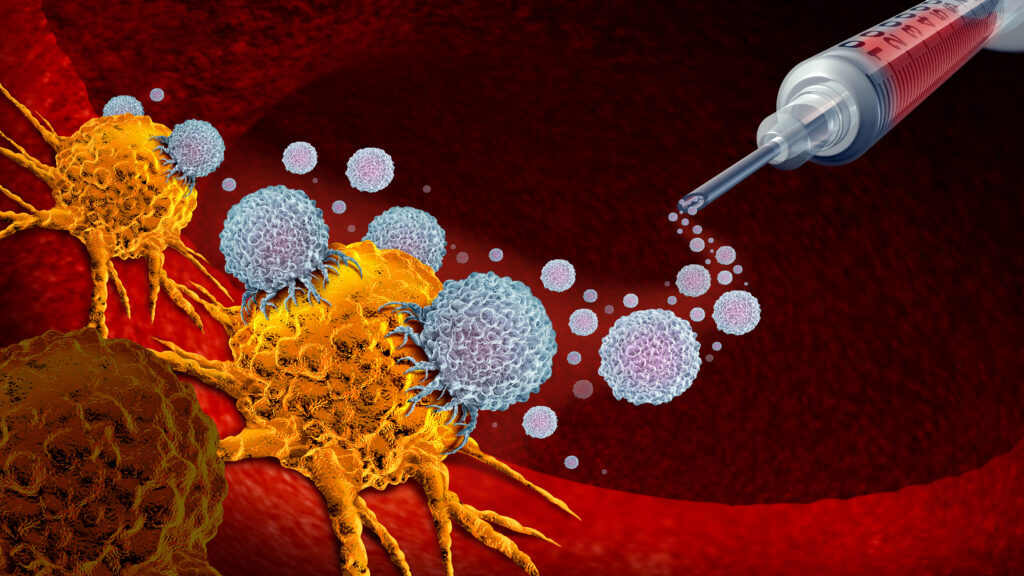
The recent success of a late-stage mRNA cancer vaccine, showing the drug stopped the return of melanoma, has boosted hopes that the approach can be successfully harnessed to attack other cancers.
The question now is which ones — and whether mRNA is up to the task.
Merck and Moderna reported in August that adding their mRNA cancer vaccine to an existing treatment slowed the return and spread of melanoma. The field had been waiting “with bated breath” for the news on the drug, called intismeran autogene, said Karen Knudsen, the CEO of the Parker Institute for Cancer Immunotherapy, the research organization founded by tech entrepreneur Sean Parker. The results suggested that the idea of using messenger RNA to train the immune system to attack cancer cells — an approach first devised decades ago — was ripe for further drug development.
STAT+ Exclusive Story
Already have an account? Log in
This article is exclusive to STAT+ subscribers
Unlock this article — plus daily coverage and analysis of the biotech sector — by subscribing to STAT+.
Already have an account? Log in
Individual plans
Group plans
View All Plans
To read the rest of this story subscribe to STAT+.
Subscribe
