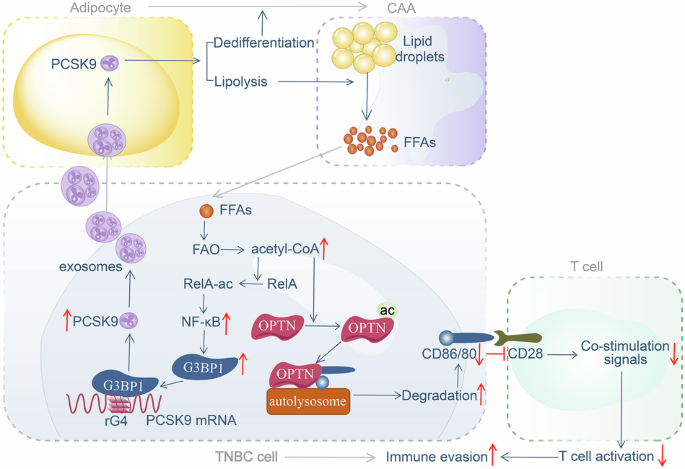
Triple-negative breast cancer (TNBC) is characterized by aggressive behaviors, limited treatment options, and poor prognosis. Adipocytes, the predominant cellular component in the tumor microenvironment (TME) of breast cancer, interact bidirectionally with tumor cells, influencing tumor progression and immune evasion. Understanding the interactions between TNBC cells and adipocytes within TME is crucial for identifying new therapeutic targets. We employed murine models and co-culture systems to investigate the effects of adipocyte-TNBC cell interactions on lipid metabolism, signaling pathways, and immune evasion mechanisms. Our findings revealed that TNBC cells utilized PCSK9-enriched exosome transfer to induce the formation of cancer-associated adipocytes (CAAs) from adipocytes. These CAAs, characterized by altered lipid content and a pro-inflammatory secretory profile, contributed to a tumor-promoting environment. Additionally, CAAs enhanced the immune evasion properties of TNBC by modifying the metabolic pathways of tumor cells. In depth, CAAs induced fatty acid oxidation (FAO) in TNBC cells, which facilitated G3BP1-induced stabilization of PCSK9 and promoted OPTN-mediated autophagic degradation of the co-stimulatory molecules CD80 and CD86, which are essential for T cell activation. Our study identifies PCSK9 as a central mediator in the bidirectional interactions between TNBC cells and adipocytes, influencing tumor progression and immune evasion. These insights suggest that targeting the PCSK9 pathway could provide new therapeutic opportunities for TNBC, potentially transforming treatment approaches and improving patient outcomes. Further investigation into the mechanisms by which PCSK9 regulates these processes may yield novel combination strategies to enhance the efficacy of immunotherapy in TNBC.
Trending
- PD-L1 expression and survival in unresectable/recurrent gastric cancer treated by 1st-line treatment without immune checkpoint inhibitors: JCOG1013A1
- Managing High-Risk BCLC-C HCC in a Younger Fit Patient
- CELMoD Potency and Cereblon-Mediated Activity in Multiple Myeloma
- <![CDATA[Conclusions and Award Ceremony]]>
- Mixed T-cell chimerism at 3 months predicts late relapse in acute myeloid leukemia after allogeneic stem cell transplantation
- FDA Approves Camizestrant for ESR1-Mutated HR+/HER2– Advanced Breast Cancer
- AI’s Evolving Role in Radiation Oncology
- Alcohol-related cancer deaths in US have more than doubled over three decades | Alcohol


Saturday, September 5
Tumor-derived PCSK9-enriched exosomes reprogram adipocytes to drive metabolic dysregulation and immune evasion in triple-negative breast cancer
 By NewsCancer