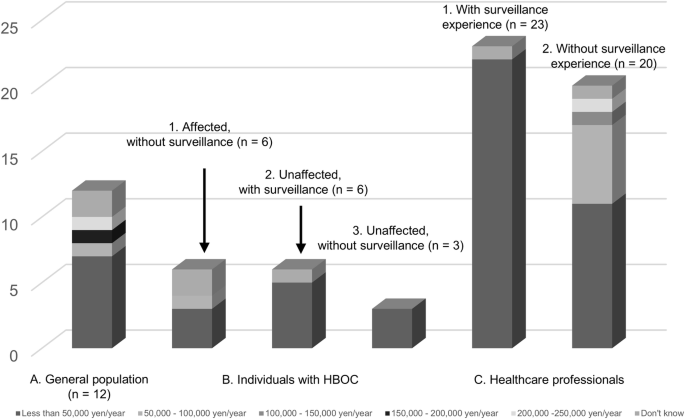
Hereditary breast and ovarian cancer (HBOC) syndrome, caused by pathogenic variants in BRCA1 or BRCA2, is associated with increased risks of breast, ovarian, pancreatic, and prostate cancers. Although long-term, multi-organ surveillance is recommended, real-world data on its implementation in Japan remain limited. We conducted a web-based cross-sectional survey among 274 individuals registered for a hybrid public lecture at Keio University Hospital in 2024; 121 responded (44.2%). Respondents included HBOC carriers, healthcare professionals, and the general public. Among 66 carriers, 57 were affected and 9 were unaffected. Although the sample size is small, surveillance uptake was high among affected carriers (89.5%). Approximately half of affected carriers undergoing surveillance reported satisfaction, while nearly half underwent surveillance at multiple institutions, suggesting fragmented care. Across all groups including healthcare professionals and the general public, the most acceptable annual cost was less than 50,000 yen. Healthcare professionals identified interdepartmental coordination and shortages of genetic specialists as major challenges. These exploratory findings suggest that affordability, convenience, interdepartmental and interfacility coordination, and the availability of genetic medicine professionals may be important considerations in efforts to develop sustainable HBOC surveillance systems in Japan.
Trending
- Chemo hair loss doesn't define me
- As assisted dying bill returns to Commons, families recall loved ones’ battle to ‘go out on own terms’ | Assisted dying
- Maryam Moshiri: BBC News presenter reveals she has blood cancer
- Cancer survivors living with chemo hair loss celebrate resilience
- Scientists find breast cancer cells hiding behind protective “shields”
- Why Investigate Implant Upsizing in a Mastectomy Skin Flap Necrosis Study?
- Real-World Data Reveals Underdiagnosis of SCLC-Associated LEMS
- In vivo photoacoustic breast imaging and the interactive effects of skin tone, wavelength, beamformer, and depth on target detectability


Monday, September 7
Towards sustainable hereditary breast and ovarian cancer surveillance: insights from a single-center survey
 By NewsCancer