


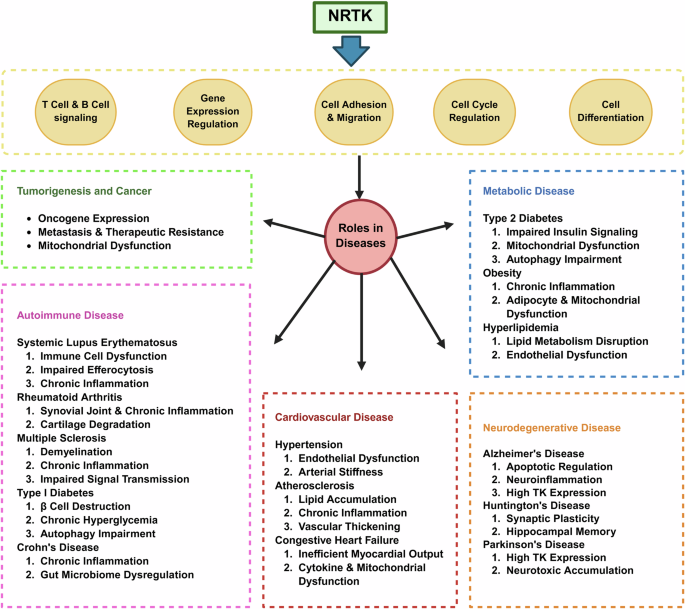
Eshaq, A. M. et al. Non-receptor tyrosine kinases: their structure and mechanistic role in tumor progression and resistance. Cancers 16, 2754 (2024).
Google Scholar
Li, A., Voleti, R., Lee, M., Gagoski, D. & Shah, N. H. High-throughput profiling of sequence recognition by tyrosine kinases and SH2 domains using bacterial peptide display. eLife 12, e82345 (2023).
Google Scholar
Soteriou, C. et al. Two cooperative lipid binding sites within the pleckstrin homology domain are necessary for AKT binding and stabilization to the plasma membrane. Structure 33, 181–195 (2025).
Google Scholar
Hong, E., Shin, J., Kim, H. I., Lee, S. T. & Lee, W. Solution structure and backbone dynamics of the non-receptor protein-tyrosine kinase-6 Src homology 2 domain. J. Biol. Chem. 297, 29700–29708 (2004).
Google Scholar
Seo, S. U., Woo, S. M. & Kwon, T. K. Cathepsin K inhibition induces raptor destabilization and mitochondrial dysfunction via Syk/SHP2/Src/OTUB1 axis-mediated signaling. Cell Death Dis. 14, 366 (2023).
Google Scholar
Zhou, C. et al. B-lymphoid tyrosine kinase-mediated FAM83A phosphorylation elevates pancreatic tumorigenesis through interacting with β-catenin. Signal Transduct. Target. Ther. 8, 66 (2023).
Google Scholar
Guillet, S. et al. ACK1 and BRK non-receptor tyrosine kinase deficiencies are associated with familial systemic lupus and involved in efferocytosis. eLife 13, RP96085 (2024).
Google Scholar
Jones, S., Cunningham, D. L., Rappoport, J. Z. & Heath, J. K. The non-receptor tyrosine kinase Ack1 regulates the fate of activated EGFR by inducing trafficking to the p62/NBR1 pre-autophagosome. J. Cell Sci. 127, 994–1006 (2014).
Google Scholar
Yin, Z. et al. Regulation of the Tec family of non-receptor tyrosine kinases in cardiovascular disease. Cell Death Discov. 8, 119 (2022).
Google Scholar
Kaddoura, R., Dabdoob, W. A., Ahmed, K. & Yassin, M. A. A practical guide to managing cardiopulmonary toxicities of tyrosine kinase inhibitors in chronic myeloid leukemia. Front. Med. 10, 1163137 (2023).
Google Scholar
García-Gutiérrez, V. & Hernández-Boluda, J. C. Tyrosine kinase inhibitors available for chronic myeloid leukemia: efficacy and safety. Front. Oncol. 9, 603 (2019).
Google Scholar
Alvarez, A. R., Sandoval, P. C., Leal, N. R., Castro, P. U. & Kosik, K. S. Activation of the neuronal c-Abl tyrosine kinase by amyloid-β-peptide and reactive oxygen species. Neurobiol. Dis. 17, 326–336 (2004).
Google Scholar
Fowler, A. J. et al. Multikinase Abl/DDR/Src inhibition produces optimal effects for tyrosine kinase inhibition in neurodegeneration. Drugs RD 19, 149–166 (2019).
Google Scholar
de Pins, B., Mendes, T., Giralt, A. & Girault, J. A. The non-receptor tyrosine kinase Pyk2 in brain function and neurological and psychiatric diseases. Front. Synaptic Neurosci. 13, 749001 (2021).
Google Scholar
Hunter, T. Discovering the first tyrosine kinase. Proc. Natl. Acad. Sci. 112, 7877–7882 (2015).
Google Scholar
Martellucci, S. et al. Src family kinases as therapeutic targets in advanced solid tumors: what we have learned so far. Cancers 12, 1448 (2020).
Google Scholar
Hellwig, S. et al. Small molecule inhibitors of the c-Fes protein-tyrosine kinase. Chem. Biol. 19, 529–540 (2012).
Google Scholar
Bousoik, E. & Montazeri Aliabadi, H. “Do We Know Jack” About JAK? A closer look at JAK/STAT signaling pathway. Front. Oncol. 8, 287 (2018).
Google Scholar
Gertler, F. B., Bennett, R. L., Clark, M. J. & Hoffmann, F. M. Drosophila abl tyrosine kinase in embryonic CNS axons: a role in axonogenesis is revealed through dosage-sensitive interactions with disabled. Cell 58, 103–113 (1989).
Google Scholar
Mehta, K. et al. Targeting RTKs/nRTKs as promising therapeutic strategies for the treatment of triple-negative breast cancer: evidence from clinical trials. Mil. Med. Res. 11, 76 (2024).
Google Scholar
Jimenez, P. A. et al. Oral spleen tyrosine kinase/Janus Kinase inhibitor gusacitinib for the treatment of chronic hand eczema: results of a randomized phase 2 study. J. Am. Acad. Dermatol. 89, 235–242 (2023).
Google Scholar
Mease, P. et al. Efficacy and safety of the TYK2/JAK1 inhibitor brepocitinib for active psoriatic arthritis: a phase IIb randomized controlled trial. Arthritis Rheumatol. 75, 1370–1380 (2023).
Google Scholar
Pang, X. J. et al. Drug Discovery targeting focal adhesion kinase (FAK) as a promising cancer therapy. Molecules 26, 4250 (2021).
Google Scholar
Yun, M. R. et al. Repotrectinib exhibits potent antitumor activity in treatment-naïve and solvent-front–mutant ROS1-rearranged non–small cell lung cancer. Clin. Cancer Res. 26, 3287–3295 (2020).
Google Scholar
Blake, S., Hughes, T. P., Mayrhofer, G. & Lyons, A. B. The Src/ABL kinase inhibitor dasatinib (BMS-354825) inhibits function of normal human T-lymphocytes in vitro. Clin. Immunol. 127, 330–339 (2008).
Google Scholar
Xue, C. et al. Evolving cognition of the JAK-STAT signaling pathway: autoimmune disorders and cancer. Signal Transduct. Target. Ther. 8, 1–24 (2023).
Kwon, A. et al. Tracing the origin and evolution of pseudokinases across the tree of life. Sci. Signal. 12, eaav3810 (2019).
Google Scholar
Kan, Y., Paung, Y., Seeliger, M. A. & Miller, W. T. Domain architecture of the nonreceptor tyrosine kinase Ack1. Cells 12, 900 (2023).
Google Scholar
Jaber Chehayeb, R. & Boggon, T. J. SH2 domain binding: diverse FLVRs of partnership. Front. Endocrinol. 11, 575220 (2020).
Google Scholar
Gizzio, J., Thakur, A., Haldane, A., Post, C. B. & Levy, R. M. Evolutionary sequence and structural basis for the distinct conformational landscapes of Tyr and Ser/Thr kinases. Nat. Commun. 15, 6545 (2024).
Google Scholar
Xie, B. et al. ACK1 promotes hepatocellular carcinoma progression via downregulating WWOX and activating AKT signaling. Int. J. Oncol. 46, 2057–2066 (2015).
Google Scholar
Ozkal, T. et al. Focal adhesion kinase (FAK) expression in normal and neoplastic lymphoid tissues. Pathol. Res. Pract. 205, 781–788 (2009).
Google Scholar
Wang, Y., Miller, A. L., Mooseker, M. S. & Koleske, A. J. The Abl-related gene (Arg) nonreceptor tyrosine kinase uses two F-actin-binding domains to bundle F-actin. Proc. Natl. Acad. Sci. 98, 14865–14870 (2001).
Google Scholar
Pelaz, S. G. & Tabernero, A. Src: coordinating metabolism in cancer. Oncogene 41, 4917–4928 (2022).
Google Scholar
Galisteo, M. L., Yang, Y., Ureña, J. & Schlessinger, J. Activation of the nonreceptor protein tyrosine kinase Ack by multiple extracellular stimuli. Proc. Natl. Acad. Sci. 103, 9796–9801 (2006).
Google Scholar
Bandaranayake, R. M. et al. Crystal structures of the JAK2 pseudokinase domain and the pathogenic mutant V617F. Nat. Struct. Mol. Biol. 19, 754–759 (2012).
Google Scholar
Garrido-Trigo, A. & Salas, A. Molecular structure and function of Janus kinases: implications for the development of inhibitors. J. Crohns Colitis 14, S713–S724 (2020).
Google Scholar
Katoh, K. Signal transduction mechanisms of focal adhesions: Src and FAK-mediated cell response. Front. Biosci. 29, 392 (2024).
Google Scholar
Bradshaw, W. J., Harris, G., Gileadi, O. & Katis, V. L. The mechanism of allosteric activation of SYK kinase derived from multiple phospho-ITAM-bound structures. Structure 32, 2337–2351 (2024).
Google Scholar
Yiu, W. H. et al. Spleen tyrosine kinase inhibition ameliorates tubular inflammation in IgA nephropathy. Front. Physiol. 12, 650888 (2021).
Google Scholar
McPherson, V. A. et al. Contributions of F-bar and SH2 domains of FES protein tyrosine kinase for coupling to the FcɛRI pathway in mast cells, molecular and cellular biology. Mol. Cell. Biol. 29, 389–401 (2009).
Google Scholar
Sun, G. & Ayrapetov, M. K. Dissection of the catalytic and regulatory structure-function relationships of Csk protein tyrosine kinase. Front. Cell Dev. Biol. 11, 1148352 (2023).
Google Scholar
Ivanova, I. A. et al. FER kinase promotes breast cancer metastasis by regulating α6- and β1-integrin-dependent cell adhesion and anoikis resistance. Oncogene 32, 5582–5592 (2013).
Google Scholar
Guo, C. & Stark, G. R. FER tyrosine kinase (FER) overexpression mediates resistance to quinacrine through EGF-dependent activation of NF-κB. Proc. Natl. Acad. Sci. 108, 7968–7973 (2011).
Google Scholar
Miah, S. et al. BRK Targets Dok1 for ubiquitin-mediated proteasomal degradation to promote cell proliferation and migration. PLoS ONE 9, e87684 (2014).
Google Scholar
Miah, S. et al. BRK phosphorylates SMAD4 for proteasomal degradation and inhibits tumor suppressor FRK to control SNAIL, SLUG, and metastatic potential. Sci. Adv. 5, eaaw3113 (2019).
Google Scholar
Ang, H. L. et al. Putting the BRK on breast cancer: from molecular target to therapeutics. Theranostics 11, 1115–1128 (2021).
Google Scholar
Brian, B. F. & Freedman, T. S. The Src-family Kinase Lyn in immunoreceptor signaling. Endocrinology 162, bqab152 (2021).
Google Scholar
Waskiewicz, A. J. et al. Phosphorylation of the cap-binding protein eukaryotic translation initiation factor 4E by protein kinase Mnk1 in vivo. Mol. Cell. Biol. 19, 1871–1880 (1999).
Google Scholar
Kosti, A. et al. ELF4 is a critical component of a miRNA-transcription factor network and is a bridge regulator of glioblastoma receptor signaling and lipid dynamics. Neuro Oncol. 25, 459 (2022).
Google Scholar
Wang, J. Q., Derges, J. D., Bodepudi, A., Pokala, N. & Mao, L. M. Roles of non-receptor tyrosine kinases in pathogenesis and treatment of depression. IMR Press 21, 25 (2022).
Montero, P., Milara, J., Roger, I. & Cortijo, J. Role of JAK/STAT in interstitial lung diseases; molecular and cellular mechanisms. Int. J. Mol. Sci. 22, 6211 (2021).
Google Scholar
Hu, Q. et al. JAK/STAT pathway: extracellular signals, diseases, immunity, and therapeutic regimens. Front. Bioeng. Biotechnol. 11, 1110765 (2023).
Google Scholar
Owen, K. L., Brockwell, N. K. & Parker, B. S. JAK-STAT signaling: a double-edged sword of immune regulation and cancer progression. Cancers 11, 2002 (2019).
Google Scholar
Manek, R. et al. Targeting Src in endometriosis-associated ovarian cancer. Oncogenesis 5, e251–e251 (2016).
Google Scholar
Filippova, N., Yang, X. & Nabors, L. B. Growth factor dependent regulation of centrosome function and genomic instability by HuR. Biomolecules 5, 263–281 (2015).
Google Scholar
Akhter, M. Z. et al. FAK regulates tension transmission to the nucleus and endothelial transcriptome independent of kinase activity. Cell Rep. 43, 114297 (2024).
Google Scholar
Paul, R. et al. FAK activates AKT-mTOR signaling to promote the growth and progression of MMTV-Wnt1-driven basal-like mammary tumors. Breast Cancer Res. 22, 59 (2020).
Google Scholar
Zhu, W. et al. SULF1 regulates malignant progression of colorectal cancer by modulating ARSH via FAK/PI3K/AKT/mTOR signaling. Cancer Cell Int. 24, 201 (2024).
Google Scholar
Katkere, B., Rosa, S. & Drake, J. R. The Syk-binding Ubiquitin Ligase c-Cbl mediates signaling-dependent B cell receptor ubiquitination and B cell receptor-mediated antigen processing and presentation. J. Biol. Chem. 287, 16636 (2012).
Google Scholar
Solouki, S., August, A. & Huang, W. Non-receptor tyrosine kinase signaling in autoimmunity and therapeutic implications. Pharmacol. Ther. 201, 39 (2019).
Google Scholar
Su, J. et al. Cell–cell communication: new insights and clinical implications. Signal Transduct. Target. Ther. 9, 1–52 (2024).
Mkaddem, S. B. et al. Lyn and Fyn function as molecular switches that control immunoreceptors to direct homeostasis or inflammation. Nat. Commun. 8, 1–13 (2017).
Google Scholar
Liu, D. & Mamorska-Dyga, A. Syk inhibitors in clinical development for hematological malignancies. J. Hematol. Oncol. 10, 145 (2017).
Google Scholar
Alfonzo-Méndez, M. A., Sochacki, K. A., Strub, M. P. & Taraska, J. W. Dual clathrin and integrin signaling systems regulate growth factor receptor activation. Nat. Commun. 13, 905 (2022).
Google Scholar
Alfonzo-Méndez, M. A., Strub, M. P. & Taraska, J. W. Spatial and signaling overlap of growth factor receptor systems at clathrin-coated sites. Mol. Biol. Cell. 35, ar138 (2024).
Google Scholar
Tao, Y., Zhang, Q., Wang, H., Yang, X. & Mu, H. Alternative splicing and related RNA binding proteins in human health and disease. Signal Transduct. Target. Ther. 9, 1–33 (2024).
Hartmann, A. M., Nayler, O., Schwaiger, F. W., Obermeier, A. & Stamm, S. The interaction and colocalization of Sam68 with the splicing-associated factor YT521-B in nuclear dots is regulated by the Src family kinase p59fyn. Mol. Biol. Cell 10, 3909–3926 (1999).
Google Scholar
Mai, S. et al. Functional interaction between nonreceptor tyrosine kinase c-Abl and SR-rich protein RBM39. Biochem. Biophys. Res. Commun. 473, 355–360 (2016).
Google Scholar
Penafuerte, C. et al. Downregulation of PTP1B and TC-PTP phosphatases potentiate dendritic cell-based immunotherapy through IL-12/IFNγ signaling. OncoImmunology 6, e1321185 (2017).
Google Scholar
Tomuleasa, C. et al. Therapeutic advances of targeting receptor tyrosine kinases in cancer. Signal Transduct. Target. Ther. 9, 1–51 (2024).
Roskoski, R. Src protein–tyrosine kinase structure and regulation. Biochem. Biophys. Res. Commun. 324, 1155–1164 (2004).
Google Scholar
Lorenz, S., Deng, P., Hantschel, O., Superti-Furga, G. & Kuriyan, J. Crystal structure of an SH2-kinase construct of c-Abl and effect of the SH2 domain on kinase activity. Biochem. J. 468, 283–291 (2015).
Google Scholar
Hiscox, S., Jordan, N. J., Morgan, L., Green, T. P. & Nicholson, R. I. Src kinase promotes adhesion-independent activation of FAK and enhances cellular migration in tamoxifen-resistant breast cancer cells. Clin. Exp. Metastasis 24, 157–167 (2007).
Google Scholar
Westhoff, M. A., Serrels, B., Fincham, V. J., Frame, M. C. & Carragher, N. O. Src-mediated phosphorylation of focal adhesion kinase couples actin and adhesion dynamics to survival signaling. Mol. Cell. Biol. 24, 8113 (2004).
Google Scholar
Fortner, A., Chera, A., Tanca, A. & Bucur, O. Apoptosis regulation by the tyrosine-protein kinase CSK. Front. Cell Dev. Biol. 10, 1078180 (2022).
Google Scholar
Chen, J. The cell-cycle arrest and apoptotic functions of p53 in tumor initiation and progression. Cold Spring Harb. Perspect. Med. 6, a026104 (2016).
Google Scholar
Shah, K., Al-Haidari, A., Sun, J. & Kazi, J. U. T cell receptor (TCR) signaling in health and disease. Signal Transduct. Target. Ther. 6, 1–26 (2021).
Google Scholar
Filipp, D. et al. Regulation of Fyn through translocation of activated Lck into lipid rafts. J. Exp. Med. 197, 1221 (2003).
Google Scholar
Wu, R. et al. c-Abl inhibition mitigates diet-induced obesity through improving insulin sensitivity of subcutaneous fat in mice. Diabetologia 60, 900–910 (2017).
Google Scholar
Sato, H. et al. Src regulates insulin secretion and glucose metabolism by influencing subcellular localization of glucokinase in pancreatic β-cells. J. Diab. Investig. 7, 171 (2015).
Google Scholar
Yu, C. C., Yen, T. S., Lowell, C. A. & DeFranco, A. L. Lupus-like kidney disease in mice deficient in the Src family tyrosine kinases Lyn and Fyn. Curr. Biol. 11, 34–38 (2001).
Google Scholar
Knoll, M. et al. SYK kinase mediates brown fat differentiation and activation. Nat. Commun. 8, 1–11 (2017).
Google Scholar
Zhao, W. et al. The proto-oncogene tyrosine kinase c-SRC facilitates glioblastoma progression by remodeling fatty acid synthesis. Nat. Commun. 15, 1–18 (2024).
Google Scholar
Miller, K. D. et al. Cancer statistics for the US Hispanic/Latino population, 2021. Ca. Cancer J. Clin. 71, 466–487 (2021).
Google Scholar
Siegel, R. L., Miller, K. D. & Jemal, A. Cancer statistics, 2020. Ca. Cancer J. Clin. 70, 7–30 (2020).
Google Scholar
Hallowell, B. D. et al. Cancer mortality rates among US and foreign-born individuals: United States 2005–2014. Prev. Med. 126, 105755 (2019).
Google Scholar
Printz, C. US cancer death rate continues to decline. Cancer 127, 1733–1733 (2021).
Google Scholar
Sturgeon, K. M. et al. A population-based study of cardiovascular disease mortality risk in US cancer patients. Eur. Heart J. 40, 3889–3897 (2019).
Google Scholar
Orkaby, L. et al. Association of statin use with all-cause and cardiovascular mortality in US veterans 75 years and older. J. Am. Med. Assoc. 324, 68 (2020).
Google Scholar
Kraus, W. E. et al. Physical activity, all-cause and cardiovascular mortality, and cardiovascular disease. Med. Sci. Sports Exerc. 51, 1270–1281 (2019).
Google Scholar
Peters, J. L. et al. Epidemiology of valvular heart disease. Surg. Clin. North Am. 102, 517–528 (2022).
Google Scholar
Dai, W. & Albrecht, S. S. Sitting time and its interaction with physical activity in relation to all-cause and heart disease mortality in U.S. adults with diabetes. Diabetes Care 47, 1764–1768 (2024).
Google Scholar
Trindade, V. C., Carneiro-Sampaio, M., Bonfa, E. & Silva, C. A. An update on the management of childhood-onset systemic lupus erythematosus. Pediatr. Drugs 23, 331–347 (2021).
Google Scholar
Di Angelantonio, J. E. et al. Association of cardiometabolic multimorbidity with mortality. J. Am. Med. Assoc. 314, 52 (2015).
Google Scholar
Ke, L., Zhao, L., Xing, W. & Tang, Q. Association between Parkinson’s disease and cardiovascular disease mortality: a prospective population-based study from NHANES. Lipids Health Dis. 23, 212 (2024).
Google Scholar
Calió, M. L. et al. Mitochondrial dysfunction, neurogenesis, and epigenetics: putative implications for amyotrophic lateral sclerosis neurodegeneration and treatment. Front. Neurosci. 14, 679 (2020).
Google Scholar
Jiang, W., Peng, Y. & Yang, K. Cellular signaling pathways regulating β-cell proliferation as a promising therapeutic target in the treatment of diabetes (Review). Exp. Ther. Med. 16, 3275–3285 (2018).
Google Scholar
Shiau, J. P. et al. FAK regulates VEGFR2 expression and promotes angiogenesis in triple-negative breast cancer. Biomedicines 9, 1789 (2021).
Google Scholar
Mezquita, B., Reyes-Farias, M. & Pons, M. Targeting the src N-terminal regulatory element in cancer. Oncotarget 14, 503–513 (2023).
Google Scholar
Alwanian, W. M., Vlajic, K., Bie, W., Kajdacsy-Balla, A. & Tyner, A. L. Protein tyrosine kinase 6 regulates activation of SRC kinase. J. Biol. Chem. 298, 102584 (2022).
Google Scholar
Hu, X., Li, J., Fu, M., Zhao, X. & Wang, W. The JAK/STAT signaling pathway: from bench to clinic. Signal Transduct. Target. Ther. 6, 1–33 (2021).
Yoon, H., Dehart, J. P., Murphy, J. M. & Lim, S. T. S. Understanding the roles of FAK in cancer. J. Histochem. Cytochem. 63, 114–128 (2015).
Google Scholar
Wu, Q. et al. LAMC1 attenuates neuronal apoptosis via FAK/PI3K/AKT signaling pathway after subarachnoid hemorrhage. Exp. Neurol. 376, 114776 (2024).
Google Scholar
Kurenova, E. et al. Focal adhesion kinase suppresses apoptosis by binding to the death domain of receptor-interacting protein. Mol. Cell. Biol. 24, 4361–4371 (2004).
Google Scholar
Macrì, F. et al. High phosphate-induced JAK-STAT signaling sustains vascular smooth muscle cell inflammation and limits calcification. Biomolecules 14, 29 (2023).
Google Scholar
Kumar, N., Sharma, N. & Mehan, S. Connection between JAK/STAT and PPARγ signaling during the progression of multiple sclerosis: insights into the modulation of t-cells and immune responses in the brain. Curr. Mol. Pharmacol. 14, 823–837 (2021).
Google Scholar
Shouse, G. & Nikolaenko, L. Targeting the JAK/STAT pathway in T cell lymphoproliferative disorders. Curr. Hematol. Malig. Rep. 14, 570–576 (2019).
Google Scholar
Wang, A. M. et al. Gain-of-function variants in SYK cause immune dysregulation and systemic inflammation in humans and mice. Nat. Genet. 53, 500–510 (2021).
Google Scholar
Ho, J. N., Byun, S. S., Kim, D., Ryu, H. & Lee, S. Dasatinib induces apoptosis and autophagy by suppressing the PI3K/Akt/mTOR pathway in bladder cancer cells. Investig. Clin. Urol. 65, 593 (2024).
Google Scholar
Dosch, A. R. et al. Src kinase inhibition restores E-cadherin expression in dasatinib-sensitive pancreatic cancer cells. Oncotarget 10, 1056–1069 (2019).
Google Scholar
Hunter, C. A., Koc, H. & Koc, E. C. c-Src kinase impairs the expression of mitochondrial OXPHOS complexes in liver cancer. Cell. Signal. 72, 109651 (2020).
Google Scholar
Song, Z. C. et al. Effect of Src in cervical cancer cells proliferation and apoptosis via ERK signal transduction. pathway. Zhonghua Liu Xing Bing. Xue Za Zhi 38, 1246–1251 (2017).
Google Scholar
Aydin, E. et al. Phosphoinositide 3-kinase signaling in the tumor microenvironment: what do we need to consider when treating chronic lymphocytic leukemia with PI3K inhibitors? Front. Immunol. 11, 595818 (2021).
Google Scholar
Chen, S. et al. Tyrosine kinase BMX phosphorylates phosphotyrosine-primed motif mediating the activation of multiple receptor tyrosine kinases. Sci. Signal. 6, ra40 (2013).
Google Scholar
Chen, Z., Xiao, Y., Yang, P. & Wang, R. Pan-cancer analysis reveals SRC may link lipid metabolism and macrophages. Iran. J. Biotechnol. 21, 63–74 (2023).
Mohammed, Y. A. et al. Sublethal doxorubicin promotes migration and invasion of breast cancer cells: role of Src family non-receptor tyrosine kinases. Breast Cancer Res. 23, 76 (2021).
Google Scholar
Chen, C. C., Wang, S., Yang, J. M. & Huang, C. H. Targeting signaling excitability in cervical and pancreatic cancer cells through combined inhibition of FAK and PI3K. Int. J. Mol. Sci. 26, 3040 (2025).
Google Scholar
Chuang, H. H. et al. FAK in cancer: from mechanisms to therapeutic strategies. Int. J. Mol. Sci. 23, 1726 (2022).
Google Scholar
de Heer, P. et al. Combined expression of the non-receptor protein tyrosine kinases FAK and Src in primary colorectal cancer is associated with tumor recurrence and metastasis formation. Eur. J. Surg. Oncol. 34, 1253–1261 (2008).
Google Scholar
Song, X. et al. Focal adhesion kinase (FAK) promotes cholangiocarcinoma development and progression via YAP activation. J. Hepatol. 75, 888–899 (2021).
Google Scholar
Mitchell, P. J., Sara, E. A. & Crompton, M. R. A novel adaptor-like protein which is a substrate for the non-receptor tyrosine kinase, BRK. Oncogene 19, 4273–4282 (2000).
Google Scholar
Mandapati, A., Ning, Z., Baharani, A. & Lukong, K. E. BRK confers tamoxifen-resistance in breast cancer via regulation of tyrosine phosphorylation of CDK1. Cell. Signal. 108, 110723 (2023).
Google Scholar
Prieto-Echagüe, W. T. et al. Cancer-associated mutations activate the nonreceptor tyrosine kinase Ack1. J. Biol. Chem. 285, 10605–10615 (2010).
Google Scholar
Mahajan, K. et al. Ack1 tyrosine kinase activation correlates with pancreatic cancer progression. Am. J. Pathol. 180, 1386–1393 (2012).
Google Scholar
Simoni, A. D., Huber, H. A., Georgia, S. K. & Finley, S. D. Phosphatases are predicted to govern prolactin-mediated JAK–STAT signaling in pancreatic beta cells. Integr. Biol. 14, 37–48 (2022).
Google Scholar
Bagratuni, T. et al. JQ1 inhibits tumour growth in combination with cisplatin and suppresses JAK/STAT signaling pathway in ovarian cancer. Eur. J. Cancer 126, 125–135 (2020).
Google Scholar
Tang, J. J. H., Thng, D. K. H., Lim, J. J. & Toh, T. B. JAK/STAT signaling in hepatocellular carcinoma. Hepatic Oncol. 7, HEP18 (2020).
Google Scholar
Zhu, J. et al. Comprehensive analysis of the immune implication of ACK1 gene in non-small cell lung cancer. Front. Oncol. 10, 1132 (2020).
Google Scholar
Yasuda, K. et al. Cutting edge: Fyn is essential for tyrosine phosphorylation of Csk-binding protein/phosphoprotein associated with glycolipid-enriched microdomains in lipid rafts in resting T cells. J. Immunol. 169, 2813–2817 (2002).
Google Scholar
Ling, S. et al. Significant gene biomarker tyrosine kinase non-receptor 2 mediated cell proliferation and invasion in colon cancer. Front. Genet. 12, 653657 (2021).
Google Scholar
Chouhan, S. et al. TNK2/ACK1-mediated phosphorylation of ATP5F1A (ATP synthase F1 subunit alpha) selectively augments survival of prostate cancer while engendering mitochondrial vulnerability. Autophagy 19, 1000–1025 (2023).
Google Scholar
Caswell-Jin, J. L. et al. Analysis of breast cancer mortality in the US—1975 to 2019. J. Am. Med. Assoc. 331, 233–241 (2024).
Google Scholar
Luo, J. et al. SRC kinase-mediated signaling pathways and targeted therapies in breast cancer. Breast Cancer Res. 24, 99 (2022).
Google Scholar
Lin, S. Y. & Lin, S. C. SRC promotes lipogenesis: implications for obesity and breast cancer. Mol. Cell. Oncol. 8, 1866975 (2021).
Google Scholar
Rao, R. D., Siziopikou, K. P. & Cobleigh, M. A. A phase II open-label trial to evaluate the efficacy and toxicity of erlotinib in women with metastatic, hormone receptor-negative, and HER2-negative breast cancer. J. Clin. Oncol. 29, 296 (2011).
Google Scholar
Mamot, C. et al. A multicenter phase II trial of anti-EGFR-immunoliposomes loaded with doxorubicin in patients with advanced triple negative breast cancer. Sci. Rep. 13, 3705 (2023).
Google Scholar
Sawant, M. et al. Epigenetic reprogramming of cell cycle genes by ACK1 promotes breast cancer resistance to CDK4/6 inhibitor. Oncogene 42, 2263–2277 (2023).
Google Scholar
Hoeller, C. et al. The Non-receptor-associated tyrosine kinase Syk is a regulator of metastatic behavior in human melanoma cells. J. Invest. Dermatol. 124, 1293–1299 (2005).
Google Scholar
He, X. et al. CSF2 upregulates CXCL3 expression in adipocytes to promote metastasis of breast cancer via the FAK signaling pathway. J. Mol. Cell Biol. 15, 25 (2023).
Google Scholar
Mubtasim, N. & Gollahon, L. The Effect of adipocyte-secreted factors in activating focal adhesion kinase-mediated cell signaling pathway towards metastasis in breast cancer cells. Int. J. Mol. Sci. 24, 16605 (2023).
Google Scholar
Toyama, T. et al. Reduced expression of the Syk gene is correlated with poor prognosis in human breast cancer. Cancer Lett. 189, 97–102 (2003).
Google Scholar
Zhou, Z. et al. Syk-dependent homologous recombination activation promotes cancer resistance to DNA targeted therapy. Drug Resist. Updat. 74, 101085 (2024).
Google Scholar
Polak, P. et al. SYK inhibition targets acute myeloid leukemia stem cells by blocking their oxidative metabolism. Cell Death Dis. 11, 956 (2020).
Google Scholar
Hu, D. et al. Adiponectin regulates vascular endothelial growth factor-c expression in macrophages via Syk-ERK pathway. PLoS ONE 8, e56071 (2013).
Google Scholar
Sang, Q. X. A. et al. Non-receptor tyrosine kinase 2 reaches its lowest expression levels in human breast cancer during regional nodal metastasis. Clin. Exp. Metastasis 29, 143–153 (2012).
Google Scholar
Raivola, O. et al. Hyperactivation of oncogenic JAK3 mutants depend on ATP binding to the pseudokinase domain. Front. Oncol. 8, 560 (2018).
Google Scholar
Losdyck, E. et al. Distinct Acute Lymphoblastic Leukemia (ALL)-associated Janus kinase 3 (JAK3) mutants exhibit different cytokine-receptor requirements and JAK inhibitor specificities. J. Biol. Chem. 290, 29022–29034 (2015).
Google Scholar
Hornakova, T. et al. ALL-associated JAK1 mutations confer hypersensitivity to the antiproliferative effect of type I interferon. Blood 115, 3287–3295 (2010).
Google Scholar
Hornakova, T. et al. Acute Lymphoblastic Leukemia-associated JAK1 mutants activate the Janus kinase/STAT pathway via interleukin-9 receptor α homodimers. J. Biol. Chem. 284, 6773–6781 (2009).
Google Scholar
Li, Q. et al. Identification of a novel functional JAK1 S646P mutation in acute lymphoblastic leukemia. Oncotarget 8, 34687–34697 (2017).
Google Scholar
Degryse, S. et al. Mutant JAK3 signaling is increased by loss of wild-type JAK3 or by acquisition of secondary JAK3 mutations in T-ALL. Blood 131, 421–425 (2018).
Google Scholar
Qusairy, Z. & Rada, M. Bruton’s Tyrosine Kinase: A Double-Edged sword in cancer and aging. Kinases Phosphatases 3, 10 (2025).
Google Scholar
Irgit, A. et al. Structure and dynamics of the ABL1 tyrosine kinase and its important role in chronic myeloid leukemia. Arch. Pharm. 358, e70005 (2025).
Google Scholar
Luttman, J. H., Colemon, A., Mayro, B. & Pendergast, A. M. Role of the ABL tyrosine kinases in the epithelial–mesenchymal transition and the metastatic cascade. Cell Commun. Signal. 19, 59 (2021).
Google Scholar
Qu, Z., Dong, J. & Zhang, Z. Y. Protein tyrosine phosphatases as emerging targets for cancer immunotherapy. Br. J. Pharmacol. 183, 1233–1249 (2024).
Google Scholar
Sivaganesh, V. et al. Protein tyrosine phosphatases: mechanisms in cancer. Int. J. Mol. Sci. 22, 12865 (2021).
Google Scholar
Li, X., Zhang, H., Dong, J. & Wang, J. Tyrosine phosphatase SHP2 accelerated ovarian cancer via modulating integrin/E-Cadherin/ZEB1 induced EMT. Sci. Rep. 15, 1535 (2025).
Google Scholar
Goh, P. K. et al. PTPN2 elicits cell autonomous and non–cell autonomous effects on antitumor immunity in triple-negative breast cancer. Sci. Adv. 8, eabk3338 (2022).
Google Scholar
Ilangumaran, S., Gui, Y., Shukla, A. & Ramanathan, S. SOCS1 expression in cancer cells: potential roles in promoting antitumor immunity. Front. Immunol. 15, 1362224 (2024).
Google Scholar
Lynch, D. M., Forrester, B., Webb, T. & Ciulli, A. Unravelling the druggability and immunological roles of the SOCS-family proteins. Front. Immunol. 15, 1449397 (2024).
Google Scholar
Liu, X., Liu, F., Cai, M. & Fang, H. Therapeutic values of engineered immune cells: a precision-guided weapon. Cell Biol. Toxicol. 39, 367–369 (2023).
Google Scholar
Dai, L. et al. SOCS proteins and their roles in the development of glioblastoma (Review). Oncol. Lett. 23, 5 (2021).
Google Scholar
Yurdagul, A. et al. Oxidized LDL induces FAK-dependent RSK signaling to drive NF-κB activation and VCAM-1 expression. J. Cell Sci. 129, 1580–1591 (2016).
Google Scholar
Münzel, J. C. et al. Impact of oxidative stress on the heart and vasculature. J. Am. Coll. Cardiol. 70, 212–229 (2017).
Google Scholar
Siasos, G. et al. Mitochondria and cardiovascular diseases-from pathophysiology to treatment. Ann. Transl. Med. 6, 256 (2018).
Google Scholar
Takeishi, Y. et al. Src and Multiple MAP kinase activation in cardiac hypertrophy and congestive heart failure under chronic pressure-overload: comparison with acute mechanical stretch. J. Mol. Cell. Cardiol. 33, 1637–1648 (2001).
Google Scholar
Sun, J. et al. Sophoridine counteracts obesity via src-mediated inhibition of VEGFR expression and PI3K/AKT phosphorylation. Int. J. Mol. Sci. 25, 1206 (2024).
Google Scholar
Jayaraman, P. et al. Tumor-Expressed inducible nitric oxide synthase controls induction of functional myeloid-derived suppressor cells through modulation of vascular endothelial growth factor release. J. Immunol. 188, 5365–5376 (2012).
Google Scholar
Zhang, H. et al. Discovery of a covalent inhibitor selectively targeting the autophosphorylation site of c-Src kinase. ACS Chem. Biol. 19, 999–1010 (2024).
Google Scholar
Zan, L. et al. Src regulates angiogenic factors and vascular permeability after focal cerebral ischemia–reperfusion. Neuroscience 262, 118–128 (2014).
Google Scholar
Oyaizu, M. et al. Src tyrosine kinase inhibition prevents pulmonary ischemia–reperfusion-induced acute lung injury. Intensive Care Med. 38, 894–905 (2012).
Google Scholar
Wang, H. et al. IL-17A exacerbates caspase-12-dependent neuronal apoptosis following ischemia through the Src-PLCγ-calpain pathway. Exp. Neurol. 379, 114863 (2024).
Google Scholar
Jo, S. et al. IL-17A induces osteoblast differentiation by activating JAK2/STAT3 in ankylosing spondylitis. Arthritis Res. Ther. 20, 115 (2018).
Google Scholar
Wang, X. et al. Germline mutations in ABL1 cause an autosomal dominant syndrome characterized by congenital heart defects and skeletal malformations. Nat. Genet. 49, 613–617 (2017).
Google Scholar
Roger, I., Milara, J., Montero, P. & Cortijo, J. The role of JAK/STAT molecular pathway in vascular remodeling associated with pulmonary hypertension. Int. J. Mol. Sci. 22, 4980 (2021).
Google Scholar
Pang, S. et al. Peptide SMIM30 promotes HCC development by inducing SRC/YES1 membrane anchoring and MAPK pathway activation. J. Hepatol. 73, 1155–1169 (2020).
Google Scholar
Ma, J. & Chen, X. Advances in pathogenesis and treatment of essential hypertension. Front. Cardiovasc. Med. 9, 1003852 (2022).
Google Scholar
Pathan, M. K. & Cohen, D. L. Resistant hypertension: where are we now and where do we go from here? Integr. Blood Press. Control 13, 83–93 (2020).
Google Scholar
Yang, X., Yang, Y., Liu, K. & Zhang, C. Traditional Chinese medicine monomers: Targeting pulmonary artery smooth muscle cells proliferation to treat pulmonary hypertension. Heliyon 9, e14916 (2023).
Google Scholar
Lee, J. J. et al. Inhibition of epithelial cell migration and Src/FAK signaling by SIRT3. Proc. Natl. Acad. Sci. USA 115, 7057–7062 (2018).
Google Scholar
Gém, J. B. et al. Characterization of type 1 angiotensin II receptor activation induced dual-specificity MAPK phosphatase gene expression changes in rat vascular smooth muscle cells. Cells 10, 3538 (2021).
Google Scholar
Jin, J. et al. The peptide PROTAC modality: a novel strategy for targeted protein ubiquitination. Theranostics 10, 10141–10153 (2020).
Google Scholar
Baldini, C., Moriconi, F. R., Galimberti, S., Libby, P. & De Caterina, R. The JAK–STAT pathway: an emerging target for cardiovascular disease in rheumatoid arthritis and myeloproliferative neoplasms. Eur. Heart J. 42, 4389–4400 (2021).
Google Scholar
Guan, X. et al. FAK family kinases: a potential therapeutic target for atherosclerosis. Diab. Metab. Syndr. Obes. 17, 3151–3161 (2024).
Google Scholar
Murphy, J. M., Jeong, K. & Lim, S. T. S. FAK family kinases in vascular diseases. Int. J. Mol. Sci. 21, 3630 (2020).
Google Scholar
Sato, H. et al. Mitochondrial reactive oxygen species and c-Src play a critical role in hypoxic response in vascular smooth muscle cells. Cardiovasc. Res. 67, 714–722 (2005).
Google Scholar
Yamaura, T., Kasaoka, T., Iijima, N., Kimura, M. & Hatakeyama, S. Evaluation of therapeutic effects of FAK inhibition in murine models of atherosclerosis. BMC Res. Notes 12, 200 (2019).
Google Scholar
Booz, G. W., Day, J. N. E. & Baker, K. M. Interplay between the cardiac renin angiotensin system and jak-stat signaling: role in cardiac hypertrophy, ischemia/reperfusion dysfunction, and heart failure. J. Mol. Cell. Cardiol. 34, 1443–1453 (2002).
Google Scholar
Shams, P., Malik, A. & Chhabra, L. Heart Failure (Congestive Heart Failure) (StatPearls Publishing, 2025).
Hakim, Z. S. et al. FAK regulates cardiomyocyte survival following ischemia/reperfusion. J. Mol. Cell. Cardiol. 46, 241–248 (2009).
Google Scholar
Liu, Y., Yang, Z., Zhou, X., Li, Z. & Hideki, N. Diacylglycerol kinases and its role in lipid metabolism and related diseases. Int. J. Mol. Sci. 25, 13207 (2024).
Google Scholar
Chang, C., Lin, C., Chen, B., Lin, P. & Chen, C. SHP2: The protein tyrosine phosphatase involved in chronic pulmonary inflammation and fibrosis. IUBMB Life 74, 131–142 (2021).
Google Scholar
Lauriol, J., Jaffré, F. & Kontaridis, M. I. The role of the protein tyrosine phosphatase SHP2 in cardiac development and disease. Semin. Cell Dev. Biol. 37, 73–81 (2015).
Google Scholar
Kontaridis, M. I. et al. Deletion of Ptpn11 (Shp2) in cardiomyocytes causes dilated cardiomyopathy via effects on the extracellular signal–regulated kinase/mitogen-activated protein kinase and rhoa signaling pathways. Circulation 117, 1423–1435 (2008).
Google Scholar
Dung Nguyen, T. et al. Increased protein tyrosine phosphatase 1B (PTP1B) activity and cardiac insulin resistance precede mitochondrial and contractile dysfunction in pressure-overloaded hearts. J. Am. Heart Assoc. 7, e008865 (2018).
Google Scholar
Sun, Y., Dinenno, F. A., Tang, P. & Kontaridis, M. I. Protein tyrosine phosphatase 1B in metabolic and cardiovascular diseases: from mechanisms to therapeutics. Front. Cardiovasc. Med. 11, 1445739 (2024).
Google Scholar
Huang, Y. et al. Correlation between SHP-1 and carotid plaque vulnerability in humans. Cardiovasc. Pathol. 49, 107258 (2020).
Google Scholar
Nagata, T. et al. Cardiac-Specific SOCS3 deletion prevents in vivo myocardial ischemia reperfusion injury through sustained activation of cardioprotective signaling molecules. PLoS ONE 10, e0127942–e0127942 (2015).
Google Scholar
Ketema, E. B. & Lopaschuk, G. D. The role of acetylation in obesity-induced cardiac metabolic alterations. J. Pharm. Pharm. Sci. 27, 13080 (2024).
Google Scholar
Marshall, T., Chen, J. & Viloria-Petit, A. M. Adipocyte-derived adipokines and other obesity-associated molecules in feline mammary cancer. Biomedicines 11, 2309 (2023).
Google Scholar
Brenachot, X. et al. Hepatic protein tyrosine phosphatase receptor gamma links obesity-induced inflammation to insulin resistance. Nat. Commun. 8, 1–9 (2017).
Google Scholar
Huang, X., Liu, G., Guo, J. & Su, Z. The PI3K/AKT pathway in obesity and type 2 diabetes. Int. J. Biol. Sci. 14, 1483–1496 (2018).
Google Scholar
Ma, K. L. et al. Inflammatory stress induces lipid accumulation in multi-organs of db/db mice. Acta Biochim. Biophys. Sin. 47, 767–774 (2015).
Google Scholar
Jeon, S. M. Regulation and function of AMPK in physiology and diseases. Exp. Mol. Med. 48, e245–e245 (2016).
Google Scholar
Honda, T. et al. Protective role for lipid modifications of Src-family kinases against chromosome missegregation. Sci. Rep. 6, 38751 (2016).
Google Scholar
Morinaga, T., Yamaguchi, N., Nakayama, Y., Tagawa, M. & Yamaguchi, N. Role of membrane cholesterol levels in activation of Lyn upon cell detachment. Int. J. Mol. Sci. 19, 1811 (2018).
Google Scholar
Malekmohammad, K., Bezsonov, E. E. & Rafieian-Kopaei, M. Role of lipid accumulation and inflammation in atherosclerosis: focus on molecular and cellular mechanisms. Front. Cardiovasc. Med. 8, 707529 (2021).
Google Scholar
Frontini, M. J. et al. Lipid incorporation inhibits src-dependent assembly of fibronectin and type I collagen by vascular smooth muscle cells. Circ. Res. 104, 832–841 (2009).
Google Scholar
Biswas, S., Zimman, A., Gao, D., Byzova, T. V. & Podrez, E. A. TLR2 plays a key role in platelet hyperreactivity and accelerated thrombosis associated with hyperlipidemia. Circ. Res. 121, 951–962 (2017).
Google Scholar
Bastie, C. C. et al. Integrative metabolic regulation of peripheral tissue fatty acid oxidation by the SRC kinase family member Fyn. Cell Metab. 5, 371–381 (2007).
Google Scholar
Mohammad, I. L. et al. Lipid-driven Src self-association modulates its transformation capacity. Life Sci. Alliance 8, 1–12 (2025).
Google Scholar
Iurlo, A. et al. Effects of first- and second-generation tyrosine kinase inhibitor therapy on glucose and lipid metabolism in chronic myeloid leukemia patients: a real clinical problem? Oncotarget 6, 33944–33951 (2015).
Google Scholar
Li, C. et al. Alterations in cellular metabolisms after TKI therapy for Philadelphia chromosome-positive leukemia in children: a review. Front Oncol. 12, 1072806 (2022).
Google Scholar
Koh, J. H., Lee, B. W. & Kim, W. U. Changes in the cholesterol profile of patients with rheumatoid arthritis treated with biologics or Janus kinase inhibitors. J. Rheum. Dis. 30, 234–242 (2023).
Google Scholar
Collotta, D., Franchina, M. P., Carlucci, V. & Collino, M. Recent advances in JAK inhibitors for the treatment of metabolic syndrome. Front. Pharmacol. 14, 1245535 (2023).
Google Scholar
Luk, C. T. et al. FAK signalling controls insulin sensitivity through regulation of adipocyte survival. Nat. Commun. 8, 1–13 (2017).
Google Scholar
Hu, M. et al. FAK contributes to proteinuria in hypercholesterolaemic rats and modulates podocyte F-actin re-organization via activating p38 in response to ox-LDL. J. Cell. Mol. Med. 21, 552–567 (2017).
Google Scholar
Caterino, M. et al. Dysregulation of lipid metabolism and pathological inflammation in patients with COVID-19. Sci. Rep. 11, 1–10 (2021).
Google Scholar
van der Wel, T. et al. Chemical genetics strategy to profile kinase target engagement reveals role of FES in neutrophil phagocytosis. Nat. Commun. 11, 1–20 (2020).
Laight, B. J. et al. Establishing the role of the FES tyrosine kinase in the pathogenesis, pathophysiology, and severity of sepsis and its outcomes. Front. Immunol. 14, 1145826 (2023).
Google Scholar
Karamanavi, E. et al. The FES gene at the 15q26 coronary-artery-disease locus inhibits atherosclerosis. Circ. Res. 131, 1004 (2022).
Google Scholar
Zhu, S., Wang, H., Ranjan, K. & Zhang, D. Regulation, targets and functions of CSK. Front. Cell Dev. Biol. 11, 1206539 (2023).
Google Scholar
Choi, S. H., Wiesner, P., Almazan, F., Kim, J. & Miller, Y. I. Spleen tyrosine kinase regulates AP-1 dependent transcriptional response to minimally oxidized LDL. PLoS ONE 7, e32378 (2012).
Google Scholar
Rosenzweig, T., Aga-Mizrachi, S., Bak, A. & Sampson, S. R. Src tyrosine kinase regulates insulin-induced activation of protein kinase C (PKC) δ in skeletal muscle. Cell. Signal. 16, 1299–1308 (2004).
Google Scholar
Morita, S. et al. Targeting ABL-IRE1α signaling spares ER-stressed pancreatic β-cells to reverse autoimmune diabetes. Cell Metab. 25, 883 (2017).
Google Scholar
Xia, C. Q. et al. C-Abl inhibitor imatinib enhances insulin production by β cells: C-Abl negatively regulates insulin production via interfering with the expression of NKx2.2 and GLUT-2. PLoS ONE 9, e97694 (2014).
Google Scholar
Berthier, C. C. et al. Enhanced expression of Janus kinase–signal transducer and activator of transcription pathway members in human diabetic nephropathy. Diabetes 58, 469–477 (2009).
Google Scholar
Cai, E. P. et al. In vivo role of focal adhesion kinase in regulating pancreatic β-cell mass and function through insulin signaling, actin dynamics, and granule trafficking. Diabetes 61, 1708–1718 (2012).
Google Scholar
Zhao, J., Chen, J., Li, Y. Y., Xia, L. L. & Wu, Y. G. Bruton’s tyrosine kinase regulates macrophage‑induced inflammation in the diabetic kidney via NLRP3 inflammasome activation. Int. J. Mol. Med. 48, 177 (2021).
Google Scholar
Wu, H. & Ballantyne, C. M. Metabolic inflammation and insulin resistance in obesity. Circ. Res. 126, 1549–1564 (2020).
Google Scholar
Arbet-Engels, C., Tartare-Deckert, S. & Eckhart, W. C-terminal Src kinase associates with ligand-stimulated insulin-like growth factor-I receptor. J. Biol. Chem. 274, 5422–5428 (1999).
Google Scholar
Zhang, X. et al. Adipsin alleviates cardiac microvascular injury in diabetic cardiomyopathy through CSK-dependent signaling mechanism. BMC Med. 21, 197 (2023).
Google Scholar
Sekimoto, H. & Boney, C. M. C-Terminal Src kinase (CSK) modulates insulin-like growth factor-I signaling through Src in 3T3-L1 differentiation. Endocrinology 144, 2546–2552 (2003).
Google Scholar
Hodder, S., Fox, M., Binti, A. M., Mott, H. R. & Owen, D. ACKnowledging the role of the activated-Cdc42 associated kinase (ACK) in regulating protein stability in cancer. Small GTPases 14, 14 (2023).
Google Scholar
Shen, H. et al. Constitutive activated Cdc42-associated kinase (ACK) phosphorylation at arrested endocytic clathrin-coated pits of cells that lack dynamin. Mol. Biol. Cell 22, 493–502 (2011).
Google Scholar
Yerlikaya, E. I. et al. Spleen tyrosine kinase contributes to müller glial expression of proangiogenic cytokines in diabetes. Invest. Ophthalmol. Vis. Sci. 63, 25–25 (2022).
Google Scholar
Xu, J. W., Morita, I., Ikeda, K., Miki, T. & Yamori, Y. C-Reactive protein suppresses insulin signaling in endothelial cells: role of spleen tyrosine kinase. Mol. Endocrinol. 21, 564–573 (2007).
Google Scholar
Li, S. et al. Spleen tyrosine kinase‑induced JNK‑dependent NLRP3 activation is involved in diabetic cardiomyopathy. Int. J. Mol. Med. 43, 2481–2490 (2019).
Google Scholar
Barrachina, M. N. et al. Phosphoproteomic analysis of platelets in severe obesity uncovers platelet reactivity and signaling pathways alterations. Arterioscler. Thromb. Vasc. Biol. 41, 478–490 (2021).
Google Scholar
Keshet, R. et al. C-Abl tyrosine kinase promotes adipocyte differentiation by targeting PPAR-gamma 2. Proc. Natl. Acad. Sci. USA 111, 16365–16370 (2014).
Google Scholar
Menshawey, R., Menshawey, E., Alserr, A. H. K. & Abdelmassih, A. F. JAK out of the box; the rationale behind Janus kinase inhibitors in the COVID-19 setting, and their potential in obese and diabetic populations. Cardiovasc. Endocrinol. Metab. 10, 80–88 (2021).
Google Scholar
Mishra, J., Verma, R. K., Alpini, G., Meng, F. & Kumar, N. Role of Janus kinase 3 in predisposition to obesity-associated metabolic syndrome. J. Biol. Chem. 290, 29301 (2015).
Google Scholar
Ruppert, Z. et al. Characterization of obesity-related diseases and inflammation using single cell immunophenotyping in two different diet-induced obesity models. Int. J. Obes. 48, 1568–1576 (2024).
Google Scholar
Hotamisligil, G. S., Budavari, A., Murray, D. & Spiegelman, B. M. Reduced tyrosine kinase activity of the insulin receptor in obesity-diabetes. Central role of tumor necrosis factor-alpha. J. Clin. Invest. 94, 1543–1549 (1994).
Google Scholar
Umbayev, B. et al. The role of Cdc42 in the insulin and leptin pathways contributing to the development of age-related obesity. Nutr 15, 4964 (2023).
Google Scholar
Yung, J. H. M. & Giacca, A. Role of c-Jun N-terminal Kinase (JNK) in Obesity and Type 2 Diabetes. Cells 9, 706 (2020).
Google Scholar
Loh, K. et al. Elevated hypothalamic TCPTP in obesity contributes to cellular leptin resistance. Cell Metab. 14, 684–699 (2011).
Google Scholar
Zhu, J. et al. The natural product rotundic acid treats both aging and obesity by inhibiting PTP1B. Life Med. 1, 372–386 (2022).
Google Scholar
Saint-Laurent, C. et al. The tyrosine phosphatase SHP2: a new target for insulin resistance? Biomedicines 10, 2139–2139 (2022).
Google Scholar
Ueki, K., Kondo, T. & Kahn, C. R. Suppressor of cytokine signaling 1 (SOCS-1) and SOCS-3 cause insulin resistance through inhibition of tyrosine phosphorylation of insulin receptor substrate proteins by discrete mechanisms. Mol. Cell. Biol. 24, 5434–5446 (2004).
Google Scholar
Emanuelli, B. et al. SOCS-3 inhibits insulin signaling and is up-regulated in response to tumor necrosis factor-α in the adipose tissue of obese mice. J. Biol. Chem. 276, 47944–47949 (2001).
Google Scholar
Yang, Z. et al. Regulation of insulin and leptin signaling by muscle suppressor of cytokine signaling 3 (SOCS3). PLoS ONE 7, e47493 (2012).
Google Scholar
Al Massadi, O. et al. PYK2 in the dorsal striatum of Huntington’s disease R6/2 mouse model. Neurobiol. Dis. 207, 106840 (2025).
Google Scholar
Brown, N. F. et al. A study of the focal adhesion kinase inhibitor GSK2256098 in patients with recurrent glioblastoma with evaluation of tumor penetration of [11C]GSK2256098. Neuro Oncol. 20, 1634–1642 (2018).
Google Scholar
Farkas, G. J. & Gater, D. R. Neurogenic obesity and systemic inflammation following spinal cord injury: a review. J. Spinal Cord. Med. 41, 378 (2017).
Google Scholar
Li, M. et al. Spleen tyrosine kinase (SYK) signals are implicated in cardio-cerebrovascular diseases. Heliyon 9, e15625 (2023).
Google Scholar
Giralt, A. et al. Pyk2 modulates hippocampal excitatory synapses and contributes to cognitive deficits in a Huntington’s disease model. Nat. Commun. 8, 15592 (2017).
Google Scholar
Schlatterer, S. D., Tremblay, M. A., Acker, C. M. & Davies, P. Neuronal c-Abl overexpression leads to neuronal loss and neuroinflammation in the mouse forebrain. J. Alzheimers Dis. 25, 119–137 (2011).
Google Scholar
Dhawan, G. & Combs, C. K. Inhibition of Src kinase activity attenuates amyloid associated microgliosis in a murine model of Alzheimer’s disease. J. Neuroinflammation 9, 563 (2012).
Google Scholar
Hawez, A. et al. c-Abl kinase regulates neutrophil extracellular trap formation and lung injury in abdominal sepsis. Lab. Investig. 102, 263–271 (2021).
Google Scholar
Imam, S. Z. et al. Novel regulation of parkin function through c-Abl-mediated tyrosine phosphorylation: implications for Parkinson’s disease. J. Neurosci. 31, 157–163 (2011).
Google Scholar
Pagan, F. L. et al. Pharmacokinetics and pharmacodynamics of a single dose Nilotinib in individuals with Parkinson’s disease. Pharmacol. Res. Perspect. 7, e00470 (2019).
Google Scholar
Qian, W. et al. PP2A regulates Tau phosphorylation directly and also indirectly via activating GSK-3β. Disease 19, 1221–1229 (2010).
Google Scholar
Zhou, X. W. et al. Tau hyperphosphorylation correlates with reduced methylation of protein phosphatase 2A. Neurobiol. Dis. 31, 386–394 (2008).
Google Scholar
Mao, L. M., Geosling, R., Penman, B. & Wang, J. Q. Local substrates of non-receptor tyrosine kinases at synaptic sites in neurons. Sheng Li Xue Bao 69, 657–665 (2017).
Google Scholar
Ghalayini, J. Exploring the therapeutic potential of protein tyrosine phosphatase 1B in hAPP-J20 mouse model of Alzheimer’s disease. J. Neurosci. 40, 6100–6102 (2020).
Google Scholar
Vieira, M. N. N., Lyra E Silva, N. M., Ferreira, S. T. & De Felice, F. G. Protein tyrosine phosphatase 1B (PTP1B): a potential target for Alzheimer’s therapy? Front. Aging Neurosci. 9, 7 (2017).
Google Scholar
Beckers, L. et al. CD33 and SHP-1/PTPN6 interaction in Alzheimer’s disease. Genes 15, 1204 (2024).
Google Scholar
Kołodziej-Sobczak, D., Sobczak, Ł & Łączkowski, K. Z. Protein tyrosine phosphatase 1B (PTP1B): a comprehensive review of its role in pathogenesis of human diseases. Int. J. Mol. Sci. 25, 7033–7033 (2024).
Google Scholar
Feng, C. W., Chen, N. F., Chan, T. F. & Chen, W. F. Therapeutic role of protein tyrosine phosphatase 1B in Parkinson’s disease via antineuroinflammation and neuroprotection in Vitro and in Vivo. Park. Dis. 2020, 1–15 (2020).
Chong, Z. Z. & Maiese, K. The Src homology 2 domain tyrosine phosphatases SHP-1 and SHP-2: diversified control of cell growth, inflammation, and injury. Histol. Histopathol. 22, 1251–1267 (2007).
Google Scholar
Kiratikanon, S., Chattipakorn, S. C., Chattipakorn, N. & Kumfu, S. The regulatory effects of PTPN6 on inflammatory process: reports from mice to men. Arch. Biochem. Biophys. 721, 109189 (2022).
Google Scholar
Al-Kuraishy, H. M. et al. Targeting the JAK/STAT3/SOCS signaling pathway in Alzheimer’s disease. Inflammopharmacology 33, 2951–2962 (2025).
Google Scholar
Lyra e Silva, N. M. et al. Pro-inflammatory interleukin-6 signaling links cognitive impairments and peripheral metabolic alterations in Alzheimer’s disease. Transl. Psychiatry 11, 1–15 (2021).
Google Scholar
Cao, L., Wang, Z. & Wan, W. Suppressor of cytokine signaling 3: emerging role linking central insulin resistance and Alzheimer’s disease. Front. Neurosci. 12, 417 (2018).
Google Scholar
Yan, M. et al. SOCS modulates JAK-STAT pathway as a novel target to mediate the occurrence of neuroinflammation: molecular details and treatment options. Brain Res. Bull. 213, 110988–110988 (2024).
Google Scholar
Walker, D. G., Whetzel, A. M. & Lue, L. F. Expression of suppressor of cytokine signaling genes in human elderly and Alzheimer’s disease brains and human microglia. Neuroscience 302, 121–137 (2015).
Google Scholar
Dzamko, N. Cytokine activity in Parkinson’s disease. Neuronal Signal. 7, NS20220063 (2023).
Google Scholar
Lorenzo-Vizcaya, A., Fasano, S. & Isenberg, D. A. Bruton’s tyrosine kinase inhibitors: a new therapeutic target for the treatment of SLE? Immunotargets Ther. 9, 105–110 (2020).
Google Scholar
Brignatz, C. et al. Alternative splicing modulates autoinhibition and SH3 accessibility in the Src kinase Fyn. Mol. Cell. Biol. 29, 6438–6448 (2009).
Google Scholar
Filby, A. et al. Fyn regulates the duration of TCR engagement needed for commitment to effector function. J. Immunol. 179, 4635–4644 (2007).
Google Scholar
Mendes-Bastos, M. et al. Bruton’s tyrosine kinase inhibition—an emerging therapeutic strategy in immune-mediated dermatological conditions. Allergy 77, 2355–2366 (2022).
Google Scholar
Robak, E. & Robak, T. Bruton’s kinase inhibitors for the treatment of immunological diseases: current status and perspectives. J. Clin. Med. 11, 2807 (2022).
Google Scholar
Di Zenzo, G., Amber, K. T., Sayar, B. S., Müller, E. J. & Borradori, L. Immune response in pemphigus and beyond: progresses and emerging concepts. Semin. Immunopathol. 38, 57–74 (2016).
Google Scholar
Kubo, S., Nakayamada, S. & Tanaka, Y. JAK inhibitors for rheumatoid arthritis. Expert Opin. Investig. Drugs 32, 333–344 (2023).
Google Scholar
Kour, G. et al. Phytochemicals targeting JAK/STAT pathway in the treatment of rheumatoid arthritis: Is there a future? Biochem Pharm. 197, 114929 (2022).
Google Scholar
Abdelhamid, S. & Huttunen, K. Orchestrated modulation of rheumatoid arthritis via crosstalking intracellular signaling pathways. Inflammopharmacology 29, 1–10 (2021).
Byeon, S. E. et al. The role of Src kinase in macrophage-mediated inflammatory responses. Mediat. Inflamm. 2012, 512926 (2012).
Google Scholar
Banerjee, S., Biehl, A., Gadina, M., Hasni, S. & Schwartz, D. M. JAK–STAT signaling as a target for inflammatory and autoimmune diseases: current and future prospects. Drugs 77, 521–546 (2017).
Google Scholar
Schwartz, D. M., Bonelli, M., Gadina, M. & O’Shea, J. J. Type I/II cytokines, JAKs, and new strategies for treating autoimmune diseases. Nat. Rev. Rheumatol. 12, 25–36 (2016).
Google Scholar
Honsho, S. et al. Pressure-mediated hypertrophy and mechanical stretch induces IL-1 release and subsequent IGF-1 generation to maintain compensative hypertrophy by affecting Akt and JNK pathways. Circ. Res. 105, 1149–1158 (2009).
Google Scholar
Chen, J. The Src/PI3K/Akt pathway may play a key role in the production of IL-17 in obesity. J. Leukoc. Biol. 87, 355–355 (2010).
Google Scholar
Ringheim, G. E., Wampole, M. & Oberoi, K. Bruton’s tyrosine kinase (BTK) inhibitors and autoimmune diseases: making sense of BTK inhibitor specificity profiles and recent clinical trial successes and failures. Front. Immunol. 12, 662223 (2021).
Google Scholar
Ding, Q. et al. Signaling pathways in rheumatoid arthritis: implications for targeted therapy. Signal Transduct. Target. Ther. 8, 68 (2023).
Google Scholar
Brunner, C., Betzler, A. C., Brown, J. R., Andreotti, A. H. & Grassilli, E. Editorial: targeting bruton tyrosine kinase. Front. Cell Dev. Biol. 10, 909655 (2022).
Google Scholar
Káposztás, E. et al. The selective inhibition of the Syk tyrosine kinase ameliorates experimental autoimmune arthritis. Front. Immunol. 14, 1279155 (2023).
Google Scholar
Sandner, L. et al. The tyrosine kinase Tec regulates effector Th17 differentiation, pathogenicity, and plasticity in T-cell-driven intestinal inflammation. Front. Immunol. 12, 750466 (2021).
Google Scholar
Potuckova, L., Draberova, L., Halova, I., Paulenda, T. & Draber, P. Positive and negative regulatory roles of C-terminal Src kinase (CSK) in FceRI-mediated mast cell activation, independent of the transmembrane adaptor PAG/CSK-binding protein. Front. Immunol. 9, 375776 (2018).
Google Scholar
Carnero Contentti, E. & Correale, J. Current perspectives: evidence to date on BTK inhibitors in the management of multiple sclerosis. Drug Des. Dev. Ther. 16, 3473–3490 (2022).
Google Scholar
García-Merino, A. Bruton’s tyrosine kinase inhibitors: a new generation of promising agents for multiple sclerosis therapy. Cells 10, 2560 (2021).
Google Scholar
Razaghi, A. et al. Proteomic analysis of pleural effusions from COVID-19 deceased patients: enhanced inflammatory markers. Diagnostics 12, 2789 (2022).
Google Scholar
Rumberger, B. E., Boarder, E. L., Owens, S. L. & Howell, M. D. Transcriptomic analysis of hidradenitis suppurativa skin suggests roles for multiple inflammatory pathways in disease pathogenesis. Inflamm. Res. 69, 967–973 (2020).
Google Scholar
Nuesslein-Hildesheim, B. et al. Remibrutinib (LOU064) inhibits neuroinflammation driven by B cells and myeloid cells in preclinical models of multiple sclerosis. J. Neuroinflammation 20, 194 (2023).
Google Scholar
Jacobsen, F. A. et al. A role for the non-receptor tyrosine kinase Abl2/Arg in experimental neuroinflammation. J. Neuroimmune Pharmacol. 13, 265–276 (2018).
Google Scholar
von Hoff, L. et al. Autocrine LTA signaling drives NF-κB and JAK-STAT activity and myeloid gene expression in Hodgkin lymphoma. Blood 133, 1489–1494 (2019).
Google Scholar
Tang, L. Y. et al. Transforming growth factor-β (TGF-β) directly activates the JAK1-STAT3 axis to induce hepatic fibrosis in coordination with the SMAD Pathway. J. Biol. Chem. 292, 4302–4312 (2017).
Google Scholar
Ali, F. H. M., Smatti, M. K., Elrayess, M. A., Thani, A. A. A. & Yassine, H. M. Role of genetics in eleven of the most common autoimmune diseases in the post genome-wide association studies era. Eur. Rev. Med. Pharmacol. Sci. 27, 8463–8485 (2023).
Google Scholar
Zhu, Q. et al. LCK rs10914542-G allele associates with type 1 diabetes in children via T cell hyporesponsiveness. Pediatr. Res. 86, 311–315 (2019).
Google Scholar
Kumar Singh, P., Kashyap, A. & Silakari, O. Exploration of the therapeutic aspects of Lck: A kinase target in inflammatory mediated pathological conditions. Biomed. Pharmacother. 108, 1565–1571 (2018).
Google Scholar
Gurzov, E. N., Stanley, W. J., Pappas, E. G., Thomas, H. E. & Gough, D. J. The JAK/STAT pathway in obesity and diabetes. FEBS J. 283, 3002–3015 (2016).
Google Scholar
Matilainen, J. et al. Increased secretion of adipocyte-derived extracellular vesicles is associated with adipose tissue inflammation and the mobilization of excess lipid in human obesity. J. Transl. Med. 22, 623 (2024).
Google Scholar
Hulme, J. S. et al. Association analysis of the lymphocyte-specific protein tyrosine kinase (LCK) gene in type 1 diabetes. Diabetes 53, 2479–2482 (2004).
Google Scholar
Gong, W. et al. CCL4-mediated targeting of spleen tyrosine kinase (Syk) inhibitor using nanoparticles alleviates inflammatory bowel disease. Clin. Transl. Med. 11, e339 (2021).
Google Scholar
Zheng, D., Liwinski, T. & Elinav, E. Interaction between microbiota and immunity in health and disease. Cell Res. 30, 492–506 (2020).
Google Scholar
Jarmakiewicz-Czaja, S., Zielińska, M., Sokal, A. & Filip, R. Genetic and epigenetic etiology of inflammatory bowel disease: an update. Genes 13, 2388 (2022).
Google Scholar
Stephens, M., Keane, K., Roizes, S., Liao, S. & Weid, P. Y. Mincle-binding DNA aptamer demonstrates therapeutic potential in a model of inflammatory bowel disease. Mol. Ther. Nucleic Acids 28, 935–947 (2022).
Google Scholar
Salas, N. et al. JAK-STAT pathway targeting for the treatment of inflammatory bowel disease. Nat. Rev. Gastroenterol. Hepatol. 17, 323–337 (2020).
Google Scholar
Danese, S., Argollo, M., Le Berre, C. & Peyrin-Biroulet, L. JAK selectivity for inflammatory bowel disease treatment: does it clinically matter? Gut 68, 1893–1899 (2019).
Google Scholar
Macaluso, F. S. & Rodríguez-Lago, I. JAK inhibition as a therapeutic strategy for inflammatory bowel disease. Curr. Drug Metab. 21, 247–255 (2020).
Google Scholar
Biagioli, M. et al. Genetic and pharmacological dissection of the role of spleen tyrosine kinase (Syk) in intestinal inflammation and immune dysfunction in inflammatory bowel diseases. Inflamm. Bowel Dis. 24, 123–135 (2018).
Google Scholar
Anderson, W. et al. PTPN22 R620W gene editing in T cells enhances low-avidity TCR responses. eLife 12, e81577 (2023).
Google Scholar
Spalinger, M. R., McCole, D. F., Rogler, G. & Scharl, M. Role of protein tyrosine phosphatases in regulating the immune system. Inflamm. Bowel Dis. 21, 645–655 (2015).
Google Scholar
Sharp, R. C., Abdulrahim, M., Naser, E. S. & Naser, S. A. Genetic variations of PTPN2 and PTPN22: role in the pathogenesis of type 1 diabetes and crohn’s disease. Front. Cell. Infect. Microbiol. 5, 95 (2015).
Google Scholar
Qin, Y., Ma, J. & Vinuesa, C. G. Monogenic lupus: insights into disease pathogenesis and therapeutic opportunities. Curr. Opin. Rheumatol. 36, 191–200 (2024).
Google Scholar
Niogret, C., Birchmeier, W. & Guarda, G. SHP-2 in lymphocytes’ cytokine and inhibitory receptor signaling. Front. Immunol. 10, 2468 (2019).
Google Scholar
Morelli, M., Madonna, S. & Albanesi, C. SOCS1 and SOCS3 as key checkpoint molecules in the immune responses associated to skin inflammation and malignant transformation. Front. Immunol. 15, 1393799 (2024).
Google Scholar
Kumar, P., Mishra, J. & Kumar, N. Mechanistic Role of Jak3 in obesity-associated cognitive impairments. Nutrients 14, 3715 (2022).
Google Scholar
Zhao, Y. et al. Novel insight into the role of Src family kinases in hepatocellular carcinoma and therapeutic potential. Biochem. Biophys. Res. Commun. 772, 151970 (2025).
Google Scholar
Xing, J., Zhang, Z., Mao, H., Schnellmann, R. G. & Zhuang, S. Src regulates cell cycle protein expression and renal epithelial cell proliferation via PI3K/Akt signaling-dependent and -independent mechanisms. Am. J. Physiol. Ren. Physiol. 295, F145–F152 (2008).
Google Scholar
He, Y. et al. Targeting PI3K/Akt signal transduction for cancer therapy. Signal Transduct. Target. Ther. 6, 1–17 (2021).
Google Scholar
Zhai, Y. et al. Src-family Protein tyrosine kinases: a promising target for treating cardiovascular diseases. Int. J. Med. Sci. 18, 1216–1224 (2021).
Google Scholar
Matrone, C., Petrillo, F., Nasso, R. & Ferretti, G. Fyn tyrosine kinase as harmonizing factor in neuronal functions and dysfunctions. Int. J. Mol. Sci. 21, 4444 (2020).
Google Scholar
Corneth, O. B. J., Neys, S. F. H. & Hendriks, R. W. Aberrant B cell signaling in autoimmune diseases. Cells 11, 3391 (2022).
Google Scholar
Schmid, V. K. & Hobeika, E. B cell receptor signaling and associated pathways in the pathogenesis of chronic lymphocytic leukemia. Front. Oncol. 14, 1339620 (2024).
Google Scholar
Simpfendorfer, K. R. et al. Autoimmune disease–associated haplotypes of BLK exhibit lowered thresholds for B cell activation and expansion of Ig class-switched B cells. Arthritis Rheumatol. 67, 2866–2876 (2015).
Google Scholar
Petersen, N. et al. B-lymphoid tyrosine kinase (Blk) is an oncogene and a potential target for therapy with dasatinib in cutaneous T-cell lymphoma (CTCL). Leukemia 28, 2109–2112 (2014).
Google Scholar
Loren, C. P. et al. The BCR-ABL inhibitor ponatinib inhibits platelet immunoreceptor tyrosine-based activation motif (ITAM) signaling, platelet activation and aggregate formation under shear. Thromb. Res. 135, 155 (2014).
Google Scholar
Simpfendorfer, K. R. et al. The autoimmunity-associated BLK haplotype exhibits cis-regulatory effects on mRNA and protein expression that are prominently observed in B cells early in development. Hum. Mol. Genet. 21, 3918–3925 (2012).
Google Scholar
Yeung, S. F., Zhou, Y., Zou, W., Chan, W. L. & Ching, Y. P. TEC kinase stabilizes PLK4 to promote liver cancer metastasis. Cancer Lett. 524, 70–81 (2022).
Google Scholar
Guryanova, O. A. et al. Nonreceptor tyrosine kinase BMX maintains self-renewal and tumorigenic potential of glioblastoma stem cells by activating STAT3. Cancer Cell 19, 498–511 (2011).
Google Scholar
Hu, H. H. et al. Roles and inhibitors of FAK in cancer: current advances and future directions. Front. Pharmacol. 15, 1274209 (2024).
Google Scholar
Yu, C. et al. Phosphorylation of BECLIN-1 by BCR-ABL suppresses autophagy in chronic myeloid leukemia. Haematologica 105, 1285–1293 (2020).
Google Scholar
Spencer, B. et al. Beclin 1 gene transfer activates autophagy and ameliorates the neurodegenerative pathology in α-synuclein models of parkinson’s and Lewy body diseases. J. Neurosci. 29, 13578–13588 (2009).
Google Scholar
Pickford, T. et al. The autophagy-related protein beclin 1 shows reduced expression in early Alzheimer disease and regulates amyloid beta accumulation in mice. J. Clin. Invest. 118, 2190–2199 (2008).
Google Scholar
Duggan, B. M., Marko, D. M., Muzaffar, R., Chan, D. Y. & Schertzer, J. D. Kinase inhibitors for cancer alter metabolism, blood glucose, and insulin. J. Endocrinol. 256, e220212 (2023).
Google Scholar
Althubiti, M. Tyrosine kinase targeting: a potential therapeutic strategy for diabetes. Saudi J. Med. Med. Sci. 10, 183 (2022).
Google Scholar
Xiao, L. et al. Ibrutinib-mediated atrial fibrillation attributable to inhibition of C-terminal Src kinase. Circulation 142, 2443–2455 (2020).
Google Scholar
Goh, B. C. et al. Seliciclib (R-roscovitine) induces apoptosis in undifferentiated nasopharyngeal cancer (NPC) in vivo and in vitro. J. Clin. Oncol. 23, 3145–3145 (2005).
Google Scholar
MacCallum, D. E. et al. Seliciclib (CYC202, R-Roscovitine) induces cell death in multiple myeloma cells by inhibition of RNA polymerase II–dependent transcription and down-regulation of Mcl-1. Cancer Res. 65, 5399–5407 (2005).
Google Scholar
Raje, N. et al. Seliciclib (CYC202 or R-roscovitine), a small-molecule cyclin-dependent kinase inhibitor, mediates activity via down-regulation of Mcl-1 in multiple myeloma. Blood 106, 1042–1047 (2005).
Google Scholar
Narayanan, S. et al. The spleen tyrosine kinase inhibitor, entospletinib (GS-9973) restores chemosensitivity in lung cancer cells by modulating ABCG2-mediated multidrug resistance. Int. J. Biol. Sci. 17, 2652 (2021).
Google Scholar
Zheng, T. J. et al. Entospletinib. Am. J. Physiol. Cell Physiol. 320, C902–C915 (2021).
Google Scholar
Elkamhawy, A., Ali, E. M. H. & Lee, K. New horizons in drug discovery of lymphocyte-specific protein tyrosine kinase (Lck) inhibitors: a decade review (2011–2021) focussing on structure–activity relationships (SAR) and docking insights. J. Enzym. Inhib. Med. Chem. 36, 1572–1600 (2021).
Google Scholar
Rawlings, J. S. Roles of SMC complexes during T lymphocyte development and function. Adv. Protein Chem. Struct. Biol. 106, 17–42 (2017).
Google Scholar
Knox, C. et al. Entospletinib: uses, interactions, mechanism of action. DrugBank Online. https://go.drugbank.com/drugs/DB12121 (2025).
Duong, V. H. et al. Entospletinib with decitabine in acute myeloid leukemia with mutant TP53 or complex karyotype: A phase 2 substudy of the Beat AML Master Trial. Cancer 129, 2308–2320 (2023).
Google Scholar
Duan, R. et al. Effects of the Btk-inhibitors remibrutinib (LOU064) and rilzabrutinib (PRN1008) with varying Btk selectivity over Tec on platelet aggregation and in vitro bleeding time. Front. Cardiovasc. Med. 8, 749022 (2021).
Google Scholar
Langrish, C. L. et al. Preclinical efficacy and anti-inflammatory mechanisms of action of the Bruton tyrosine kinase inhibitor rilzabrutinib for immune-mediated disease. J. Immunol. 206, 1454–1468 (2021).
Google Scholar
Kuter, D. J. & Ghanima, W. Evaluating rilzabrutinib in the treatment of immune thrombocytopenia. Immunotherapy 17, 767–782 (2025).
Google Scholar
Schafer, P. H. et al. Spebrutinib (CC-292) Affects markers of B cell activation, chemotaxis, and osteoclasts in patients with rheumatoid arthritis: results from a mechanistic study. Rheumatol. Ther. 7, 101–119 (2019).
Google Scholar
Arneson, L. C., Carroll, K. J. & Ruderman, E. M. Bruton’s tyrosine kinase inhibitors for rheumatoid arthritis. Immunotargets Ther. 10, 333–342 (2021).
Google Scholar
Haselmayer, P. et al. Efficacy and Pharmacodynamic Modeling of the BTK Inhibitor Evobrutinib in Autoimmune Disease Models. J. Immunol. 202, 2888–2906 (2019).
Google Scholar
Montalban, H. et al. Characterisation of the safety profile of evobrutinib in over 1000 patients from phase II clinical trials in multiple sclerosis, rheumatoid arthritis and systemic lupus erythematosus: an integrated safety analysis. J. Neurol. Neurosurg. Psychiatry 94, 1–9 (2022).
Google Scholar
Ibrahim, S. et al. Pirtobrutinib in the treatment of chronic lymphocytic leukemia or small lymphocytic lymphoma. Future Oncol. 21, 3435–3445 (2025).
Google Scholar
Tam, C. S. et al. Phase 1 study of the selective BTK inhibitor zanubrutinib in B-cell malignancies and safety and efficacy evaluation in CLL. Blood 134, 851–859 (2019).
Google Scholar
Bond, D. A. & Woyach, J. A. Targeting BTK in CLL: beyond Ibrutinib. Curr. Hematol. Malig. Rep. 14, 197–205 (2019).
Google Scholar
Aung, K. L. et al. A phase II trial of GSK2256098 and trametinib in patients with advanced pancreatic ductal adenocarcinoma. J. Gastrointest. Oncol. 13, 3216–3226 (2022).
Google Scholar
Bartscht, T., Lehnert, H., Gieseler, F. & Ungefroren, H. The Src family kinase inhibitors PP2 and PP1 effectively block TGF-beta1-induced cell migration and invasion in both established and primary carcinoma cells. Cancer Chemother. Pharmacol. 70, 221–230 (2012).
Google Scholar
Karni, R. et al. The pp60c-Src inhibitor PP1 is non-competitive against ATP. FEBS Lett. 537, 47–52 (2003).
Google Scholar
Xie, A. et al. c-Src is responsible for mitochondria-mediated arrhythmic risk in ischemic cardiomyopathy. Circ. Arrhythm. Electrophysiol. 17, e013054 (2024).
Google Scholar
Cui, Z. et al. Design, synthesis and evaluation of azaacridine derivatives as dual-target EGFR and Src kinase inhibitors for antitumor treatment. Eur. J. Med. Chem. 136, 372–381 (2017).
Google Scholar
Taniguchi, K. et al. Inhibition of Src kinase blocks high glucose–induced EGFR transactivation and collagen synthesis in mesangial cells and prevents diabetic nephropathy in mice. Diabetes 62, 3874–3886 (2013).
Google Scholar
Ahangari, F. et al. Saracatinib, a selective Src kinase inhibitor, blocks fibrotic responses in preclinical models of pulmonary fibrosis. Am. J. Respir. Crit. Care Med. 206, 1463–1479 (2022).
Google Scholar
Williams, E. et al. Saracatinib is an efficacious clinical candidate for fibrodysplasia ossificans progressiva. JCI Insight 68, e95042 (2021).
Google Scholar
National Jewish Health. Saracatinib in the Treatment of Idiopathic Pulmonary Fibrosis. ClinicalTrials.gov https://clinicaltrials.gov/study/NCT04598919 (2024).
S Vasanthi, T. et al. Diet-incorporated saracatinib, a Src tyrosine kinase inhibitor, counteracts diisopropylfluorophosphate (DFP)-induced chronic neurotoxicity in the rat model. Biomed. Pharmacother. 189, 118234 (2025).
Google Scholar
Lipton, J. H. et al. Epic: A Phase 3 Trial of ponatinib compared with imatinib in patients with newly diagnosed chronic myeloid leukemia in chronic phase (CP-CML). Blood 124, 519 (2014).
Google Scholar
Incyte Biosciences International Sàrl. Safety and Efficacy of Ponatinib for Treatment of Pediatric Recurrent or Refractory Leukemias, Lymphomas or Solid Tumors. ClinicalTrials.gov https://clinicaltrials.gov/study/NCT03934372 (2025).
Dash, S. et al. The SRC family kinase inhibitor NXP900 demonstrates potent anti-tumor activity in squamous cell carcinomas. J. Biol. Chem. 300, 107615 (2024).
Google Scholar
Hochhaus, A. et al. Asciminib in newly diagnosed chronic myeloid leukemia. N. Engl. J. Med. 391, 885–898 (2024).
Google Scholar
Parmentier, A. J. et al. In vitro and in vivo characterization of the JAK1 selectivity of upadacitinib (ABT-494). BMC Rheumatol. 2, 23 (2018).
Google Scholar
Vieujean, S., Danese, S. & Peyrin-Biroulet, L. The preclinical discovery and development of upadacitinib for the treatment of Crohn’s disease. Expert Opin. Drug Discov. 20, 951–971 (2025).
Google Scholar
Mohamed, M. E. F., Bhatnagar, S., Parmentier, J. M., Nakasato, P. & Wung, P. Upadacitinib: mechanism of action, clinical, and translational science. Clin. Transl. Sci. 17, e13688 (2023).
Google Scholar
Mullally, R. et al. Fedratinib in myelofibrosis. Blood Adv. 4, 1792–1800 (2020).
Google Scholar
Ramakrishna, C., Mason, A. & Edwards, C. J. Tyrosine kinase 2 inhibitors in autoimmune diseases. Autoimmun. Rev. 23, 103649 (2024).
Google Scholar
Padda, I. S., Bhatt, R., & Parmar, M. Upadacitinib (StatPearls Publishing, 2023).
Talpaz, M. & Kiladjian, J. J. Fedratinib, a newly approved treatment for patients with myeloproliferative neoplasm-associated myelofibrosis. Leukemia 35, 1–17 (2020).
Google Scholar
Zhao, M. et al. Protein tyrosine phosphatases: emerging role in cancer therapy resistance. Cancer Commun. 44, 637–653 (2024).
Google Scholar
Zhang, Y. et al. PTPN2: advances and perspectives in cancer treatment potential and inhibitor research. Int. J. Biol. Macromol. 316, 144740–144740 (2025).
Google Scholar
Jang, Y. et al. Activatable PROTAC nanoassembly for photodynamic PTP1B proteolysis enhances glioblastoma immunotherapy. Acta Pharm. Sin. B 15, 4886–4899 (2025).
Google Scholar
Miao, J. & Zhang, Z. Drugging protein tyrosine phosphatases through targeted protein degradation. ChemMedChem 19, e202300669 (2024).
Google Scholar
Jin, Y. et al. Endothelial activation and dysfunction in COVID-19: from basic mechanisms to potential therapeutic approaches. Signal Transduct. Target. Ther. 5, 293 (2020).
Google Scholar
Zhu, Y., Dai, Y. & Tian, Y. The peptide PROTAC modality: a new strategy for drug discovery. Med. Comm. 64, e70133 (2025).
Lazo, J. S., McQueeney, K. E. & Sharlow, E. R. New approaches to difficult drug targets: the phosphatase story. SLAS Discov. 22, 1071–1083 (2017).
Google Scholar
Yi, T. et al. Phosphatase inhibitor, sodium stibogluconate, in combination with interferon (IFN) alpha 2b: phase I trials to identify pharmacodynamic and clinical effects. Oncotarget 2, 1155–1164 (2011).
Google Scholar
Czub, M. P. et al. Structure of the complex of an iminopyridinedione protein tyrosine phosphatase 4A3 phosphatase inhibitor with human serum albumin. Mol. Pharmacol. 98, 648–657 (2020).
Google Scholar
McQueeney, E. R. et al. Targeting ovarian cancer and endothelium with an allosteric PTP4A3 phosphatase inhibitor. Oncotarget 9, 8223–8240 (2017).
Google Scholar
Tripathi, R., Liu, Z. & Plattner, R. Enabling tumor growth and progression: recent progress in unraveling the functions of ABL kinases in solid tumor cells. Curr. Pharmacol. Rep. 4, 367–379 (2018).
Google Scholar
Ortiz, M. A. et al. Src family kinases, adaptor proteins and the actin cytoskeleton in epithelial-to-mesenchymal transition. Cell Commun. Signal. 19, 67 (2021).
Google Scholar
Ge, M. M. et al. Src-family protein tyrosine kinases: a promising target for treating chronic pain. Biomed. Pharmacother. 125, 110017–110017 (2020).
Google Scholar
Xiao, X., Yang, Y., Mao, B., Cheng, C. Y. & Ni, Y. Emerging role for SRC family kinases in junction dynamics during spermatogenesis. Reproduction 157, R85–R94 (2019).
Google Scholar
Séverin, S. et al. Distinct and overlapping functional roles of Src family kinases in mouse platelets. J. Thromb. Haemost. 10, 1631–1645 (2012).
Google Scholar
Agashe, R. P., Lippman, S. M. & Kurzrock, R. JAK: not just another kinase. Mol. Cancer Ther. 21, 1757–1764 (2022).
Google Scholar
Lechner, K. S., Neurath, M. F. & Weigmann, B. Role of the IL-2 inducible tyrosine kinase ITK and its inhibitors in disease pathogenesis. J. Mol. Med. 98, 1385–1395 (2020).
Google Scholar
Roman-Garcia, Y. R. et al. Distinct roles for Bruton’s tyrosine kinase in B cell immune synapse formation. Front. Immunol. 9, 2027 (2018).
Google Scholar
Chen, T. et al. Glycation of fibronectin inhibits VEGF-induced angiogenesis by uncoupling VEGF receptor-2-c-Src crosstalk. J. Cell. Mol. Med. 24, 9154–9164 (2020).
Google Scholar
Palacios, E. H. & Weiss, A. Distinct roles for Syk and ZAP-70 during early thymocyte development. J. Exp. Med. 204, 1703–1715 (2007).
Google Scholar
Chan, T. et al. TNK1 is a ubiquitin-binding and 14-3-3-regulated kinase that can be targeted to block tumor growth. Nat. Commun. 12, 5337 (2021).
Google Scholar
Jing, L. et al. ACK1 contributes to the pathogenesis of inflammation and autoimmunity by promoting the activation of TLR signaling pathways. Front. Immunol. 13, 864995 (2022).
Google Scholar
Sridaran, D. & Mahajan, N. P. ACK1/TNK2 kinase: molecular mechanisms and emerging cancer therapeutics. Trends Pharmacol. Sci. 46, 62–77 (2025).
Google Scholar
Tavares, S. et al. FER regulates endosomal recycling and is a predictor for adjuvant taxane benefit in breast cancer. Cell Rep. 39, 110584 (2022).
Google Scholar
Genna, A. et al. Pyk2 and FAK differentially regulate invadopodia formation and function in breast cancer cells. J. Cell Biol. 217, 375–395 (2017).
Google Scholar
Giralt, A. et al. PTK2B/Pyk2 overexpression improves a mouse model of Alzheimer’s disease. Exp. Neurol. 307, 62–73 (2018).
Google Scholar
Lukic, N. et al. Pyk2 regulates cell-edge protrusion dynamics by interacting with Crk. Mol. Biol. Cell 32, ar17 (2021).
Google Scholar
Schlaepfer, D. D., Ojalill, M. & Stupack, D. G. Focal adhesion kinase signaling—tumor vulnerabilities and clinical opportunities. J. Cell Sci. 137, jcs261723 (2024).
Google Scholar
Thomas, K. S. et al. Non-redundant functions of FAK and Pyk2 in intestinal epithelial repair. Sci. Rep. 9, 4497 (2019).
Google Scholar
Zrihan-Licht, S. et al. Association of csk-homologous kinase (CHK) (formerly MATK) with HER-2/ErbB-2 in breast cancer cells. J. Biol. Chem. 272, 1856–1863 (1997).
Google Scholar
Yao, Q. et al. C-terminal Src kinase (Csk)-mediated phosphorylation of eukaryotic elongation factor 2 (eEF2) promotes proteolytic cleavage and nuclear translocation of eEF2. J. Biol. Chem. 289, 12666–12678 (2014).
Google Scholar
Cortes, J. E. et al. Bosutinib versus imatinib for newly diagnosed chronic myeloid leukemia: results from the randomized BFORE trial. J. Clin. Oncol. 36, 231–237 (2018).
Google Scholar
Réa, D. et al. A phase 3, open-label, randomized study of asciminib, a STAMP inhibitor, vs bosutinib in CML after 2 or more prior TKIs. Blood 138, 2031 (2021).
Google Scholar
Gambacorti-Passerini, C. et al. Efficacy and safety of bosutinib in previously treated patients with chronic myeloid leukemia: final results from the BYOND trial. Leuk 38, 2162–2170 (2024).
Google Scholar
Ozanne, J., Prescott, A. R. & Clark, K. The clinically approved drugs dasatinib and bosutinib induce anti-inflammatory macrophages by inhibiting the salt-inducible kinases. Biochem. J. 465, 271 (2015).
Google Scholar
Salaami, O. et al. Anti-diabetic effects of the senolytic agent dasatinib. Mayo Clin. Proc. 96, 3021 (2021).
Google Scholar
Welsh, N. Are off-target effects of imatinib the key to improving beta-cell function in diabetes? Ups. J. Med. Sci. 127, 10 (2022).
Dianne Pulte, E. et al. FDA approval summary: revised indication and dosing regimen for ponatinib based on the results of the OPTIC trial. Oncologist 27, 149 (2022).
Google Scholar
Jabbour, E. et al. Dose modification dynamics of ponatinib in patients with chronic-phase chronic myeloid leukemia (CP-CML) from the PACE and OPTIC trials. Leuk 38, 475–481 (2024).
Google Scholar
Knox, C. et al. Ponatinib: uses, interactions, mechanism of action. DrugBank Online. https://go.drugbank.com/drugs/DB08901 (2025).
Knox, C. et al. Asciminib: uses, interactions, mechanism of action. DrugBank Online. https://go.drugbank.com/drugs/DB12597 (2025).
Schuld, P. et al. Structural and biochemical studies confirming the mechanism of action of asciminib, an agent specifically targeting the ABL myristoyl pocket (STAMP). Blood 136, 34–35 (2020).
Google Scholar
Anbalagan, M. et al. Peptidomimetic Src/pretubulin inhibitor KX-01 alone and in combination with paclitaxel suppresses growth, metastasis in human ER/PR/HER2-negative tumor xenografts. Mol. Cancer Ther. 11, 1936–1947 (2012).
Google Scholar
Anbalagan, M. et al. KX-01, a novel Src kinase inhibitor directed toward the peptide substrate site, synergizes with tamoxifen in estrogen receptor α positive breast cancer. Breast Cancer Res. Treat. 132, 391–409 (2012).
Google Scholar
Antonarakis, E. S. et al. A phase 2 study of KX2-391, an oral inhibitor of Src kinase and tubulin polymerization, in men with bone-metastatic castration-resistant prostate cancer. Cancer Chemother. Pharmacol. 71, 883–892 (2013).
Google Scholar
Li Pomi, F. et al. Tirbanibulin 1% ointment for actinic keratosis: results from a real-life study. Medicina 60, 225 (2024).
Google Scholar
Reinehr, C. P. H. & Bakos, R. M. Actinic keratoses: review of clinical, dermoscopic, and therapeutic aspects. An. Bras. Dermatol. 94, 637–657 (2019).
Google Scholar
Sadeghi, S. & Goodarzi, A. Various applications of tofacitinib and ruxolitinib (Janus kinase inhibitors) in dermatology and rheumatology: a review of current evidence and future perspective. Dermatol. Pract. Concept. 12, e2022178–e2022178 (2022).
Google Scholar
Harrison, C. N. et al. Janus kinase-2 inhibitor fedratinib in patients with myelofibrosis previously treated with ruxolitinib (JAKARTA-2): a single-arm, open-label, non-randomised, phase 2, multicentre study. Lancet Haematol. 4, e317–e324 (2017).
Google Scholar
Van Der Heijde, D. et al. Tofacitinib in patients with ankylosing spondylitis: a phase II, 16-week, randomised, placebo-controlled, dose-ranging study. Ann. Rheum. Dis. 76, 1340–1347 (2017).
Google Scholar
Van De Laar, C. J. et al. PERFECTRA: a pragmatic, multicentre, real-life study comparing treat-to-target strategies with baricitinib versus TNF inhibitors in patients with active rheumatoid arthritis after failure on csDMARDs. RMD Open 10, e004291 (2024).
Google Scholar
Sanmartí, R. & Corominas, H. Upadacitinib for patients with rheumatoid arthritis: a comprehensive review. J. Clin. Med. 12, 1734 (2023).
Google Scholar
Knox, C. et al. DrugBank 6.0: the DrugBank Knowledgebase for 2024. Filgotinib: uses, interactions, mechanism of action. DrugBank Online. https://go.drugbank.com/drugs/DB14845 (2025).
Tarrant, J. M. et al. Filgotinib, a JAK1 inhibitor, modulates disease-related biomarkers in rheumatoid arthritis: results from two randomized, controlled phase 2b trials. Rheumatol. Ther. 7, 173 (2020).
Google Scholar
Catlett, I. M. et al. First-in-human study of deucravacitinib: a selective, potent, allosteric small-molecule inhibitor of tyrosine kinase 2. Clin. Transl. Sci. 16, 151 (2022).
Google Scholar
Boccia, R. et al. Fostamatinib is an effective second-line therapy in patients with immune thrombocytopenia. Br. J. Haematol. 190, 933 (2020).
Google Scholar
Bussel, J. et al. Fostamatinib for the treatment of adult persistent and chronic immune thrombocytopenia: results of two phase 3, randomized, placebo-controlled trials. Am. J. Hematol. 93, 921 (2018).
Google Scholar
McKeage, K. & Lyseng-Williamson, K. A. Fostamatinib in chronic immune thrombocytopenia: a profile of its use in the USA. Drug. Ther. Persp. Drugs Ther. Perspect. 34, 451–456 (2018).
Google Scholar
Weir, M. C. et al. Dual inhibition of Fes and Flt3 tyrosine kinases potently inhibits Flt3-ITD+ AML cell growth. PLoS ONE 12, e0181178 (2017).
Google Scholar
Kariri, Y. A., Alqasmi, M. H. & Alqahtani, B. S. Phase IV clinical trials for the treatment of non-small cell lung carcinoma (NSCLC). Saudi Med. J. 46, 1119–1130 (2025).
Google Scholar
Patel, A. A., Cahill, K., Saygin, C. & Odenike, O. Cedazuridine/decitabine: from preclinical to clinical development in myeloid malignancies. Blood Adv. 5, 2264–2271 (2021).
Google Scholar
Siveen, K. S. et al. Role of non receptor tyrosine kinases in hematological malignances and its targeting by natural products. Mol. Cancer 17, 31 (2018).
Google Scholar
Shanafelt, T. D. et al. Ibrutinib–rituximab or chemoimmunotherapy for chronic lymphocytic leukemia. N. Engl. J. Med. 381, 432–443 (2019).
Google Scholar
Wang, M. et al. Acalabrutinib in relapsed or refractory mantle cell lymphoma (ACE-LY-004): a single-arm, multicentre, phase 2 trial. Lancet 391, 659–667 (2017).
Google Scholar
Guo, Y. et al. Discovery of zanubrutinib (BGB-3111), a novel, potent, and selective covalent inhibitor of Bruton’s tyrosine kinase. J. Med. Chem. 62, 7923–7940 (2019).
Google Scholar
Knox, C. et al. Zanubrutinib: uses, interactions, mechanism of action. DrugBank Online. https://go.drugbank.com/drugs/DB15035 (2025).
Kozaki, R. et al. Investigation of the anti-tumor mechanism of tirabrutinib, a highly selective Bruton’s tyrosine kinase inhibitor, by phosphoproteomics and transcriptomics. PLoS ONE 18, e0282166 (2023).
Google Scholar
Munakata, W. & Tobinai, K. Tirabrutinib hydrochloride for B-cell lymphomas. Drugs Today 57, 277–289 (2021).
Google Scholar
Knox, C. et al. Tirabrutinib: uses, interactions, mechanism of action. DrugBank Online. https://go.drugbank.com/drugs/DB15227 (2025).
Gerber, D. E. et al. Phase 2 study of the focal adhesion kinase inhibitor defactinib (VS-6063) in previously treated advanced KRAS mutant non-small cell lung cancer. Lung Cancer 139, 60 (2019).
Google Scholar
Marlowe, T. A., Lenzo, F. L., Figel, S. A., Grapes, A. T. & Cance, W. G. Oncogenic receptor tyrosine kinases directly phosphorylate focal adhesion kinase (FAK) as a resistance mechanism to FAK-kinase inhibitors. Mol. Cancer Ther. 15, 3028 (2016).
Google Scholar
Cohen, P., Cross, D. & Jänne, P. A. Kinase drug discovery 20 years after imatinib: progress and future directions. Nat. Rev. Drug Discov. 20, 551–569 (2021).
Google Scholar
Taskinen, B., Ferrada, E. & Fowler, D. M. Early emergence of negative regulation of the tyrosine kinase Src by the C-terminal Src kinase. J. Biol. Chem. 292, 18518–18529 (2017).
Google Scholar
