


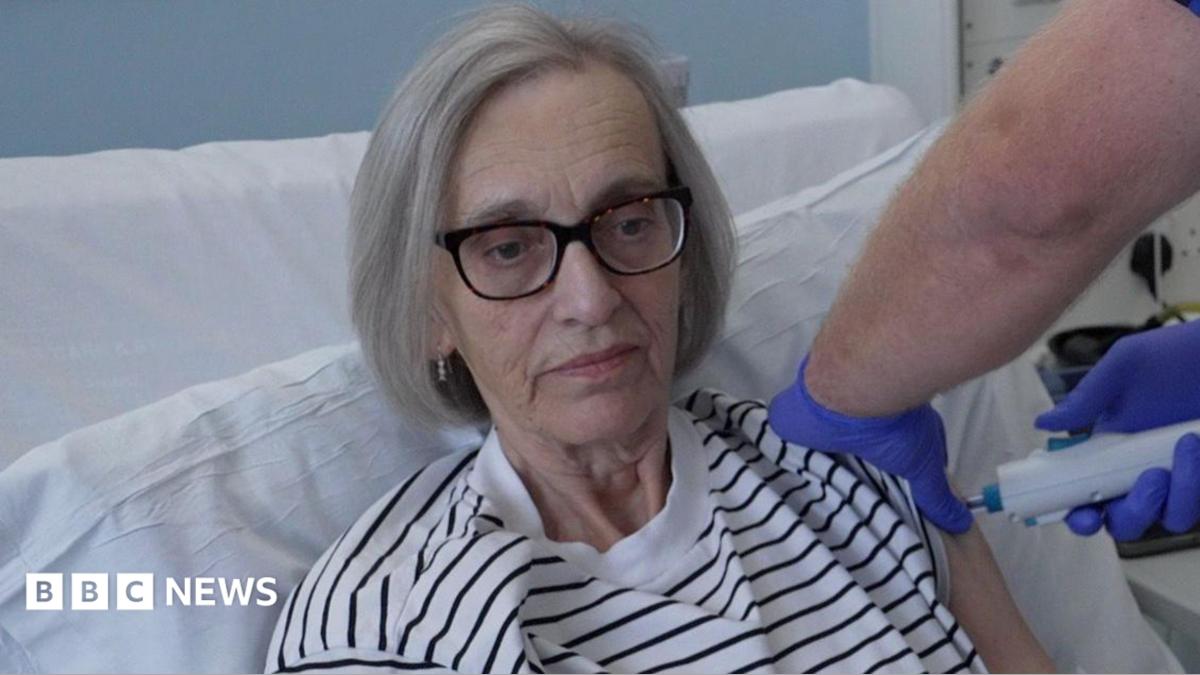
Chris has agreed to take part in an early stage clinical trial, looking at whether that can be done.
As she was prepared for the injections she said: “I’m a bit nervous.”
She said she had volunteered “because I obviously want to live longer if I can and if it helps other people in the future then that’s a bonus – for everybody.”
Chris has another reason for volunteering.
Just under 10 years ago her eldest daughter Alex died from secondary breast cancer.
“If there’d been something for her like this maybe things would have been different,” she said.
“I think trials are amazing.”
Chris’s vaccine was made specifically for her.
Scientists used a biopsy from her own tumour to map the DNA of her cancer.
They then used that information to engineer the vaccine using synthetic DNA.
That DNA is known as “doggybone” because of its unusual shape.
Researchers say it is faster and cheaper to produce than normal bacterial DNA and this makes individually tailored vaccines potentially more achievable for the NHS.
