


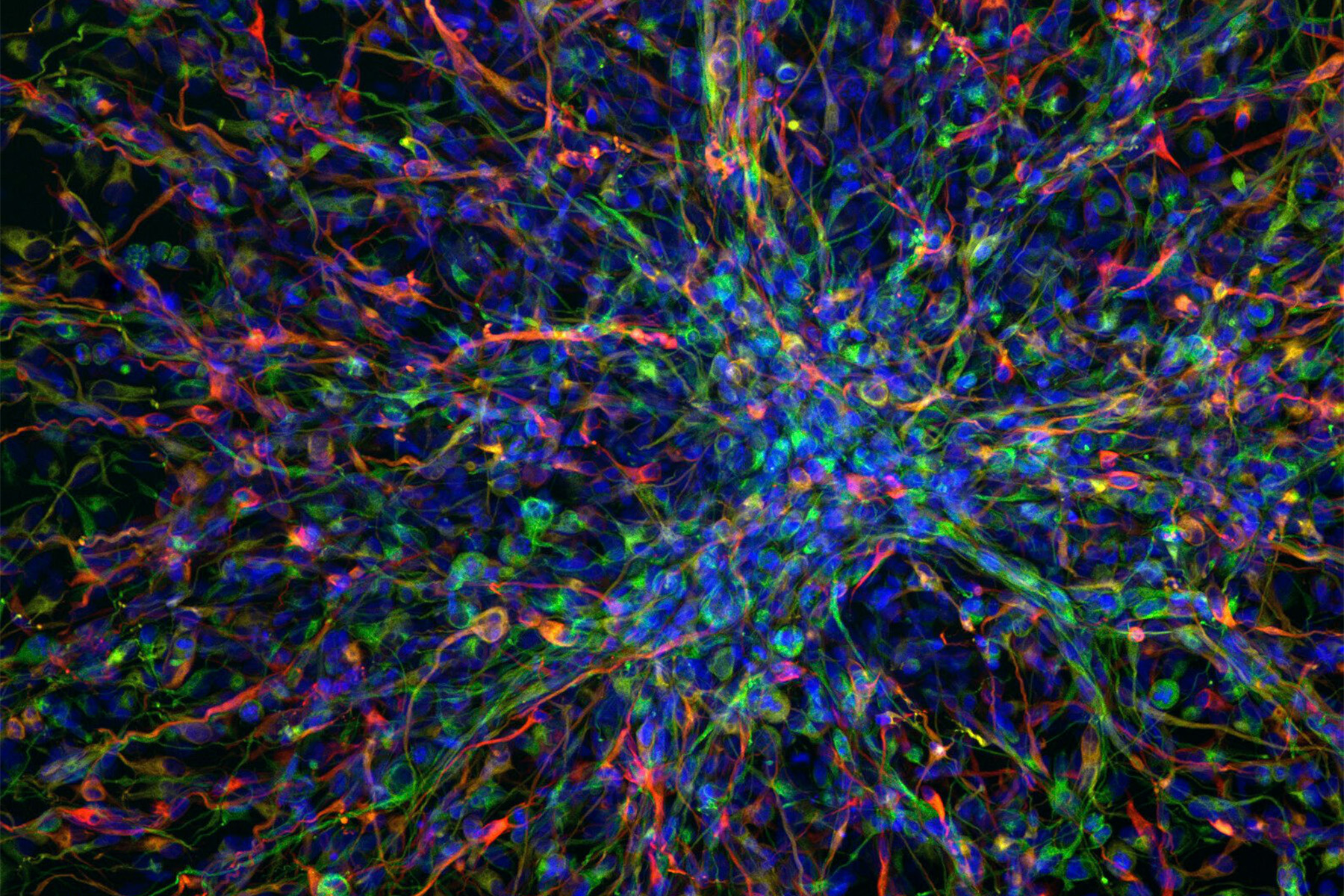
Everything we know about the way brain tumours in children and young people start suggests that boosting the body’s own defences (the immune system) should be an effective way of stopping them.
Most of these cancers begin developing before a baby is born, and before the immune system has the tools it needs to identify them as threats. Even once the immune system is established, it’s at a disadvantage – cancer cells in children and young people can look and act a lot like the healthy cells that are growing all around them.
That’s supposed to be where immunotherapies come in. These treatments are designed to show the immune system how to find hidden tumour cells, so they should be powerful tools for stopping young patients’ brain tumours in their tracks. But the brain isn’t like any other part of the body, and for years, researchers couldn’t find a way to make immunotherapies work there.
Then their understanding of the brain began to change.
First, scientists in the US uncovered that, despite their apparent differences, the brain and the immune system are constantly communicating. And now, Dr Elizabeth Cooper and her team at the Cancer Research UK Cambridge Institute have found a way to tap into that communication system with a treatment. Thanks to their discovery, immunotherapy may finally be able to fulfil its promise for children and young people with brain tumours.
The brain’s hidden connection to the immune system
The story starts in 2022, when researchers at the Washington University School of Medicine in the US made a breakthrough in understanding how the brain protects itself from infection.
That’s relevant because, although infections are very different from cancer, the immune system guards against both. It does that by growing disease-fighting cells in the soft centre of bones (called marrow) and transporting them through a network of tubes called the lymphatic system. The lymphatic system can then work with the bloodstream to deliver immune cells where they’re needed.
Crucially, though, the lymphatic system doesn’t extend into the brain, and the brain’s blood vessels are too tightly sealed to let any immune cells through that way, either. Because of this, scientists had long thought that the brain was cut off from the immune system, almost as if it were in a separate protective bubble.
The team at Washington University proved otherwise. They discovered that the brain had been communicating with the immune system all along. And it was doing it through the bubble itself – a liquid that surrounds the brain called cerebrospinal fluid (CSF).
“Cerebrospinal fluid was always thought of as this cushioning fluid that keeps the brain floating, but it’s actually a communication method,” says Cooper, who studies children’s brain tumours as part of the Gilbertson Group in Cambridge.
Like a courier, CSF carries messages between the brain and immune cells in the marrow of the skull.
“The brain uses CSF to talk to immune cells, much like the blood [in other parts of the body]. It can tell cells in the CSF what to do and even use them as a way of patrolling for anything wrong.”
The important immune cells here are known as immune stem cells – multipurpose immune cells that can produce other more specialised one to do different jobs. The team in the US showed that the skull’s immune stem cells can sense proteins and molecules from the brain through the CSF. When they notice proteins from intruders like infections, they produce new cells that can launch an immune attack.
All that got Cooper thinking: if the immune system can respond to signals sent by infections in the brain, can it also respond to signals from tumours?
