


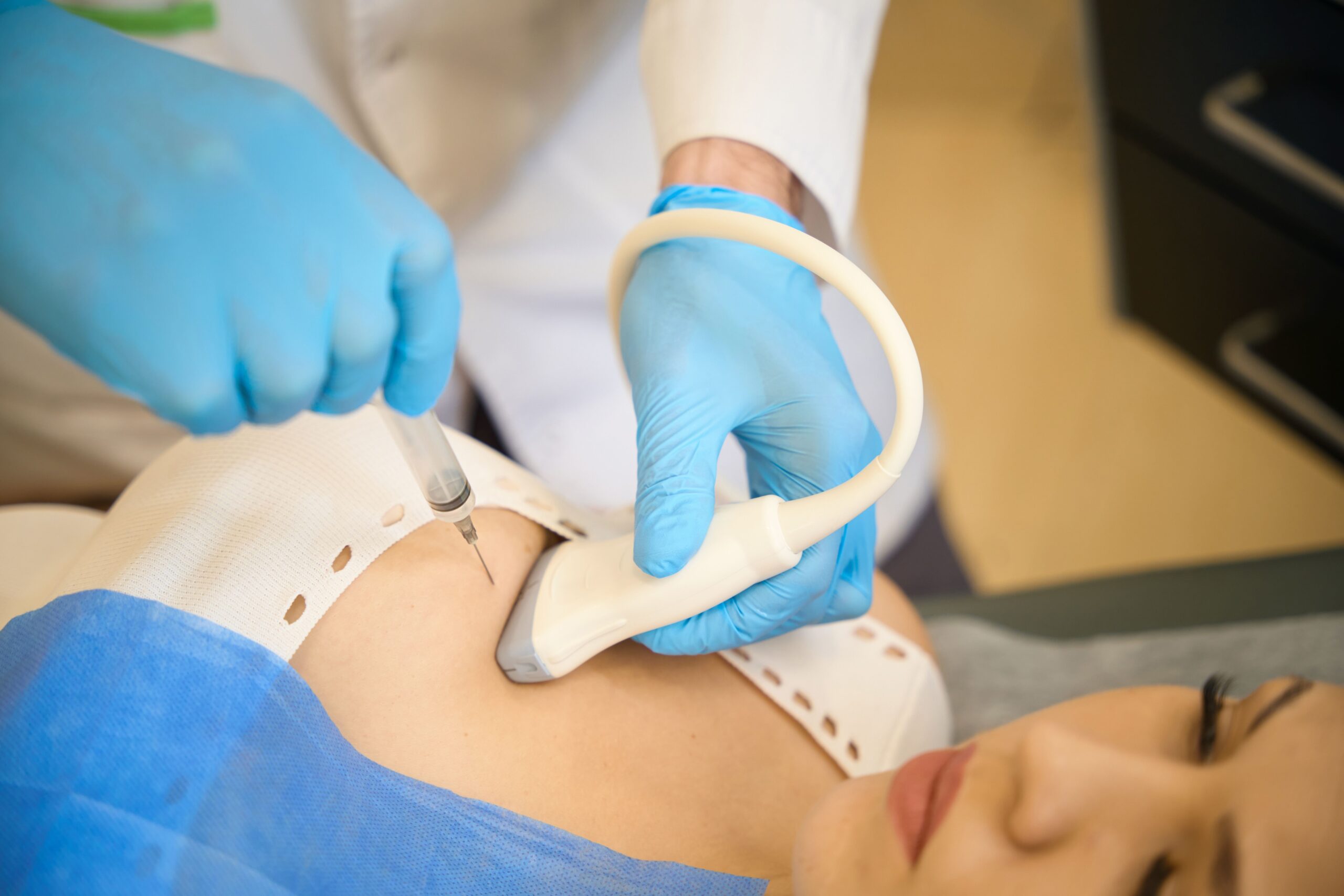
When Hologic recalled its Brevera Breast Biopsy System disposable 9-gauge needle on January 2, 2026, citing a risk of metal and plastic particles dislodging into patients or specimens during use, the ripple effects were felt across breast oncology.1 The needle wasn’t a niche product. It was one of the main products used by radiologists for breast biopsy imaging.
Its removal from the market forced breast centers across the country, including Hackensack Meridian Health (HMH) in New Jersey, to pivot to Hologic’s Eviva needle system instead, and that sudden, simultaneous shift in demand created a supply chain issue of its own. By March 13, 2026, the FDA had added stereotactic breast biopsy needles (product code KNW) to its Medical Device Shortages List. On June 16, the regulatory agency issued a formal letter to health care providers acknowledging that the disruption is expected to persist through the end of the first quarter of 2027. In the letter, the FDA recommended a series of conservation and diversification strategies, such as expanding supplier networks, utilizing varying needle gauges and lengths, using prior-generation devices where appropriate, limiting unnecessary opening or wasting of devices, and centralizing inventory tracking across breast imaging sites.
The FDA’s letter also urged providers to communicate delays transparently with patients, offer alternative biopsy locations when a suitable device isn’t available on site, and above all, keep focus on minimizing any delay to cancer diagnosis and treatment. Those recommendations sit alongside the more operational asks of forecasting utilization based on scheduled biopsy volume, distributing needles appropriately across health systems, and monitoring supply through a shared dashboard available to every radiologist performing the procedure.
More than 6 months into the shortage, the picture that has emerged from clinicians on the front lines is less about scarcity than the value of institutional scale, communication, and flexibility, as well as how the FDA’s recommendations translate cleanly into daily practice.
Harriet Borofsky, MD, medical director of breast imaging at HMH Riverview Medical Center and Bayshore Medical Center who performs multiple MRI-, ultrasound-, and tomosynthesis-guided biopsies daily at her breast center, said tracking needle inventory against upcoming procedure volume was already routine well before the recall. What changed in January was the scale of the problem.
“[The availability of biopsy needles] has not been an issue until January of this year, when there was a cascade of issues, starting with the recall of the [Brevera 9-gauge needles], which is a specific Hologic needle that we use for vacuum-assisted tomosynthesis-guided biopsies,” Borofsky said. She described it as a device that cut procedure time by about half, and its sudden unavailability pushed her center, and many others, toward the Eviva needle instead, which in turn strained that product’s own supply.
Borofsky was careful to note that supply disruptions themselves are not new to breast imaging. She pointed to earlier shortages of lidocaine, lidocaine with epinephrine, and sodium bicarbonate tied to a hurricane that disrupted manufacturing in Puerto Rico.2 “We’re used to this, believe it or not,” she said. “Unexpected things happen in the supply chain for procedures frequently.”
What has proven harder is following through on the FDA’s recommendation to diversify needle systems across vendors. Borofsky explained that a biopsy needle is not an isolated disposable item that can be swapped between suppliers; it is part of a console-and-software ecosystem specific to each manufacturer. Switching vendors, she said, is “easier said than done” for that reason, and comes with real costs in equipment, training, and the comfort a clinician builds with a device over years of use.
Where her team has diversified is in needle size within the same manufacturer’s system, alternating between standard and petite needles depending on the case. She noted a tradeoff: petite needles yield smaller tissue samples, so her practice reserves them for situations that require it, such as a patient whose breast could only be compressed to a very thin profile.
Because of this trade-off that Borofsky and her colleagues have engineered during the shortage, she encountered one of her first real challenges. When Borofsky was reviewing and preparing for upcoming procedures, she realized her site had used up its petite needle supply, substituting them in place of standard needles. Rather than delay the patient’s biopsy, staff reached out across HMH’s network of sister sites. A colleague at another HMH facility, reached by text message on her day off, confirmed she had petite needles on hand, and a staff member drove to retrieve the needed supply so the procedure could occur as scheduled. “We have, [as of] today, not canceled a procedure,” Borofsky said.
Maintaining Patient Safety and Outcomes
Within the FDA’s letter to health care providers, the agency noted the need for “limiting unnecessary opening or wasting of devices”.1 When asked about this, Borofsky said the practical reality of a one-time-use, disposable, sterile needle doesn’t leave much room for the kind of rationing that the phrase implies. A patient may need multiple needles for multiple biopsies in a single visit, and once a sterile needle has been used for a diagnostic sample, the number of tissue samples taken from it isn’t something that can be scaled back without compromising the diagnostic yield.
“How can you conserve when you’re doing procedures on patients?” she said, adding that her team has not had to prioritize one patient’s procedure over another’s and hopes it never will.
On the patient safety side, Borofsky said a small number of post-biopsy mammograms nationally showed metallic fragments associated with the recalled needle, but that her site never experienced that complication and, per guidance she received, sites without evidence of the issue were not required to proactively notify prior patients.
Looking ahead, Borofsky said the most durable structural fix is the one the FDA already recommended: vendor diversification. However, she was candid that it comes at a price in cost, in the complexity of maintaining familiarity across multiple equipment platforms, and potentially in the procedural comfort that contributes to safety and consistency.
For now, her center hasn’t had to make that tradeoff, leaning instead on its internal network. She expects the recalled needle system to return to the market, and in the meantime, equipment and product shortages have simply become “part of our daily work lives.”
Kathryn Eckert, DO, a breast surgeon at HMH’s Jersey Shore University Medical Center, whose practice sits at the referral end of the biopsy pipeline, described an experience shaped largely by the strength of her radiology partnerships rather than by direct exposure to needle supply issues. Breast surgeons, she noted, typically are not the ones performing biopsies. That responsibility falls to their radiology colleagues, like Borofsky, both within her own institution and among community-based partners who handle a substantial share of mammography, ultrasound, and biopsy volume for her patients.
“Our partners have been exceptional in trying to make sure that there have been no delays with our patients,” Eckert said, adding that her radiology colleagues were forthcoming in communicating how their practice patterns were shifting in response to the shortage. From her vantage point as a surgeon coordinating care for patients with abnormal imaging, she has not observed meaningful delays in diagnosis or in the additional biopsies sometimes needed to refine a treatment plan.
Eckert described her role during the shortage as largely one of support and communication rather than direct clinical adaptation. She and her partners have maintained close contact with Borofsky, their primary radiology partner, to keep resources and workflows aligned across departments, and have done the same with community partners who may be using different equipment and adapting in their own ways. That variability across sites, she said, is itself a challenge since the majority of breast biopsy volume nationally occurs in community settings rather than large academic centers.
Importantly, Eckert said the shortage has not changed her institution’s referral criteria. Patients who meet evidence-based guidelines for biopsy are still being referred without alteration to that threshold. When delays do arise locally, she said the priority is transparent communication to ensure patients understand what is happening on the technology side, without feeling that their own care is being deprioritized.
When asked about morale and the risk to standard of care given the shortage’s expected duration into 2027, Eckert said HMH has had the flexibility to shift between technology providers or across product lines within a single provider to meet patient needs. She said some community partners have raised a more forward-looking concern: widespread switching to the same alternative needle systems could eventually create a second-order shortage of whichever product everyone converges on.
“There’s still a little bit of an unknown—and we never like that in medicine—but we are continuing to work with and support our radiology partners on all fronts. That way, if it comes to a point down the line where one institution or partner has something available that another one needs, we certainly can try to be a conduit between those 2 to make sure that patients are still getting excellent care regardless of what’s happening in the technology space,” Eckert said. This echoes the cross-site support Borofsky described within the HMH network.
Reflecting on the broader arc of the shortage, Eckert connected it to a pattern she has seen recur in breast cancer care: technology dependence bringing real gains in patient care while also introducing single points of failure, as with an earlier saline shortage tied to hurricane-related manufacturing disruption. She said episodes like this tend to prompt useful institutional introspection about the wisdom of relying on a single vendor or technology, and voiced hope that the shortage could ultimately spur new competition and product development in the space. In the meantime, she said, her institution has had the resources to absorb the disruption without patients feeling its effects.
“All you see as a patient should be the swan,” Eckert said, “but underneath, the health care providers are paddling very quickly to make sure that patients don’t experience any dips or delays in care.”
Reference
- Disruptions in availability of breast biopsy needles – letter to health care providers. News release. FDA. June 16, 2026. Accessed July 8, 2026. https://tinyurl.com/6ej3dufn
- Statement by FDA commissioner Scott Gottlieb, M.D., updating on Puerto Rico related medical product shortages. News release. FDA. November 30, 2017. Accessed July 8, 2026. https://tinyurl.com/bdh7muyh
