


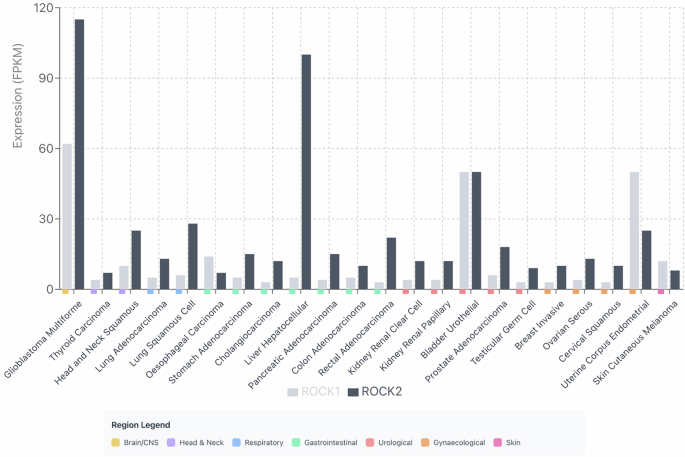
Leung T, Chen XQ, Manser E, Lim L. The p160 RhoA-binding kinase ROCK alpha is a member of a kinase family and is involved in the reorganization of the cytoskeleton. Mol Cell Biol. 1886;16:5313–27. https://doi.org/10.1128/mcb.16.10.5313.
Google Scholar
Nakagawa O, Fujisawa K, Ishizaki T, Saito Y, Nakao K, Narumiya S. ROCK-I and ROCK-II, two isoforms of Rho-associated coiled-coil forming protein serine/threonine kinase in mice. FEBS Lett. 1996;392:189–93. https://doi.org/10.1016/0014-5793(96)00811-3.
Google Scholar
Hahmann C, Schroeter T. Rho-kinase inhibitors as therapeutics: from pan inhibition to isoform selectivity. Cell Mol Life Sci. 2010;67:171–7. https://doi.org/10.1007/s00018-009-0189-x.
Google Scholar
Matsui T, Amano M, Yamamoto T, Chihara K, Nakafuku M, Ito M, et al. Rho- associated kinase, a novel serine/threonine kinase, is a putative target for the small GTP-binding protein Rho. EMBO J. 1996;15:2208–16. https://doi.org/10.1002/j.1460-2075.1996.tb00574.x.
Google Scholar
Shabazi R, Baradaran B, Khordadmehr M, Safei S, Baghbanzadeh A, Jigari F, et al. Targeting ROCK signaling in health, malignant and non-malignant diseases. Immunol Lett. 2020;219:15–26. https://doi.org/10.1016/j.imlet.2019.12.012.
Google Scholar
Nig Y, Zheng M, Zhang Y, Jiao Y, Wang J, Zhang S. RhoA-ROCK2 signaling possesses complex pathophysiological functions in cancer progression and shows promising therapeutic potential. Cancer Cell Int. 2024;24:339. https://doi.org/10.1186/s12935-024-03519-7.
Google Scholar
Wei L, Surma M, Shi S, Lambert-Cheargam N, Shi J. Novel insights into the roles of Rho kinase in cancer. Arch Immunol Ther Exp. 2016;64:259–78. https://doi.org/10.1007/s00005-015-0382-6.
Google Scholar
Strezelecka-Kiliszek A, Mebarek S, Roskkowska M, Buchet R, Magne D, Pikula S. Functions of Rho family of small GTPases and Rho-associated coiled-coil kinases in bone cells during differentiation and mineralization. Biochim Biophys Acta Gen Subj. 2017;1861:1009–23. https://doi.org/10.1016/j.bbagen.2017.02.005.
Google Scholar
Shi J, Wu X, Surma M, Vemula S, Zhang L, Yang Y, et al. Distinct roles for ROCK1 and ROCK2 in the regulation of cell detachment. Cell Physiol Biochem. 2018;49:565–77. https://doi.org/10.1159/000492994.
Google Scholar
Barcelo J, Samain R, Sanz-Moreno V. Preclinical to clinical utility of ROCK inhibitors in cancer. Trends Cancer. 2023;9:250–63. https://doi.org/10.1016/j.trecan.2022.12.001.
Google Scholar
Vigil D, Kim TY, Plachco A, Garton AJ, Castaldo L, Pachter JA, et al. ROCK1 and ROCK2 are required for non-small cell lung cancer anchorage-independent growth and invasion. Cancer Res. 2012;72:5338–47. https://doi.org/10.1158/0008-5472.CAN-11-2373.
Google Scholar
Kim S, Kim SA, Han J, Kim I-S. Rho-kinase as a target for cancer therapy and its immunotherapeutic potential. Int J Mol Sci. 2021;22:12916 https://doi.org/10.3390/ijms222312916.
Google Scholar
The Human Protein Atlas. ROCK2 Protein Expression. 2025. Available from: https://www.proteinatlas.org/ENSG00000134318-ROCK2
Julian L, Olson MF. Rho-associated coiled-coil containing kinases (ROCK). Small GTPases. 2014:5. https://doi.org/10.4161/sgtp.29846
Schwarts M. Rho signalling at a glance. J Cell Sci. 2004;117:5457–8. https://doi.org/10.1242/jcs.01582.
Google Scholar
Shimizu T, Ihara K, Maesaki R, Amano M, Kaibuchi K, Hakoshima T. Parallel coiled-coil association of the RhoA-binding domain in Rho-kinase. J Biol Chem. 2003;278:46046–51. https://doi.org/10.1074/jbc.M306458200.
Google Scholar
Amano M, Chihara K, Nakamura N, Kaneko T, Matsuura Y, Kaibuchi K. The COOH terminus of Rho-kinase negatively regulates Rho-kinase activity. J Biol Chem. 1999;274:32418–24. https://doi.org/10.1074/jbc.274.45.32418.
Google Scholar
Ishizaki T, Naito M, Fujisawa K, Maekawa M, Watanabe N, Saito Y, et al. p160ROCK, a Rho-associated coiled-coil forming protein kinase, works downstream of Rho and induces focal adhesions. FEBS Lett. 1997;404:118–24. https://doi.org/10.1016/S0014-5793(97)00107-5.
Google Scholar
Sebbagh M, Renvoizé C, Hamelin J, Riché N, Bertoglio J, Bréard J. Caspase-3- mediated cleavage of ROCK I induces MLC phosphorylation and apoptotic membrane blebbing. Nat Cell Biol. 2001:346–52. https://doi.org/10.1038/35070019
Sebbagh M, Hamelin J, Bertoglio J, Solary E, Bréard J. Direct cleavage of ROCK II by granzyme B induces target cell membrane blebbing in a caspase-independent manner. J Exp Med. 2005;201:465–71. https://doi.org/10.1084/jem.20031877.
Google Scholar
Sapet C, Simoncini S, Loriod B, Puthier D, Sampol J, Nguyen C, et al. Thrombin- induced endothelial microparticle generation: identification of a novel pathway involving ROCK-II activation by caspase-2. Blood. 2006;108:1868–76. https://doi.org/10.1182/blood-2006-04-014175.
Google Scholar
Kher SS, Worthylake RA. Regulation of ROCKII membrane localization through its C-terminus. Exp Cell Res. 2011;317:2845–52. https://doi.org/10.1016/j.yexcr.2011.09.009.
Google Scholar
Khatiwala CB, Kim PD, Peyton SR, Putnam AJ. ECM compliance regulates osteogenesis by influencing MAPK signaling downstream of RhoA and ROCK. J Bone Miner Res. 2008;24:886–98. https://doi.org/10.1359/JBMR.081240.
Google Scholar
Heo J, Raines KW, Mocanu V, Campbell SL. Redox regulation of RhoA. Biochemistry. 2006;45:14481–9. https://doi.org/10.1021/bi0610101.
Google Scholar
Feng J, Ito M, Ichikawa K, Isaka N, Nishikawa M, Hartshorne DJ, et al. Inhibitory phosphorylation site for Rho-associated kinase on smooth muscle myosin phosphatase. J Biol Chem. 1999;274:37385–90. https://doi.org/10.1074/jbc.274.52.37385.
Google Scholar
Kawano Y, Fukata Y, Oshiro N, Amano M, Nakamura T, Ito M, et al. Phosphorylation of Myosin-binding subunit (Mbs) of Myosin phosphatase by Rho- kinase in vivo. J Cell Biol. 1999;147:1023–38. https://doi.org/10.1083/jcb.147.5.1023.
Google Scholar
Maekawa M, Ishizaki T, Boku S, Watanabe N, Fujita A, Iwamatsu A, et al. Signaling from Rho to the actin cytoskeleton through protein kinases ROCK and LIM-kinase. Science. 1999;285:895–8. https://doi.org/10.1126/science.285.5429.895.
Google Scholar
Hartmann S, Ridley AJ, Lutz S. The function of Rho-associated kinases ROCK1 and ROCK2 in the pathogenesis of cardiovascular disease. Front Pharmacol. 2015;6:276 https://doi.org/10.3389/fphar.2015.00276.
Google Scholar
Sharma P, Roy K. ROCK-2-selective targeting and its therapeutic outcomes. Drug Discov Today. 2020;25:446–55. https://doi.org/10.1016/j.drudis.2019.11.017.
Google Scholar
Ward Y, Yap S, Ravichandran V, Matsumura F, Ito M, Spinelli B, et al. The GTP-binding proteins Gem and Rad are negative regulators of the Rho–Rho kinase pathway. J Cell Biol. 2002;157:291–302. https://doi.org/10.1083/jcb.200111026.
Google Scholar
Chem W, Nyuydzefe MS, Weiss JM, Zhang J, Waksal SD, Zanin-Zhorov A. ROCK2, but not ROCK1, interacts with phosphorylated STAT3 and co-occupies TH17/TFH gene promoters in TH17-activated human T cells. Sci Rep. 2018;8:16636. https://doi.org/10.1038/s41598-018-35109-9.
Google Scholar
Zanin-Zhorov A, Blazar BR. ROCK2, a critical regulator of immune modulation and fibrosis, has emerged as a therapeutic target in chronic graft-versus-host disease. Clin Immunol. 2021;230:108823. https://doi.org/10.1016/j.clim.2021.108823.
Google Scholar
Tybulewics VLJ, Henderson RB. Rho family GTPases and their regulators in lymphocytes. Nat Rev Immunol. 2009;9:630–44. https://doi.org/10.1038/nri2606.
Google Scholar
Bettelli E, Carrier Y, Gao W, Korn T, Strom TB, Oukka M, et al. Reciprocal developmental pathways for the generation of pathogenic effector TH17 and regulatory T cells. Nature. 2006;441:235–8. https://doi.org/10.1038/nature04753.
Google Scholar
Knipe RS, Tager AM, Liao JK. The Rho kinases: critical mediators of multiple profibrotic processes and rational targets for new therapies for pulmonary fibrosis. Pharmacol Rev. 2015;67:103–17. https://doi.org/10.1124/pr.114.009381.
Google Scholar
Edlun S, Landström M, Heldin C, Aspenström P. Transforming growth factor-β– induced mobilization of actin cytoskeleton requires signaling by small GTPases Cdc42 and RhoA. Mol Biol Cell. 2002;13:902–14. https://doi.org/10.1091/mbc.01-08-0398.
Google Scholar
Deng B, Deng J, Yi X, Zou Y, Li C. ROCK2 promotes osteosarcoma growth and glycolysis by up-regulating HKII via phospho-PI3K/AKT signalling. Cancer Manag Res. 2021;13:449–62. https://doi.org/10.2147/CMAR.S279496.
Google Scholar
Woldetsadik A, Vogel MC, Rabeh WM, Magzoub M. Hexokinase II–derived cell-penetrating peptide targets mitochondria and triggers apoptosis in cancer cells. FASEB J. 2017;31:2168–84. https://doi.org/10.1096/fj.201601173R.
Google Scholar
Coleman ML, Marshall CJ, Olson MF. RAS and RHO GTPases in G1-phase cell-cycle regulation. Nat Rev Mol Cell Biol. 2004;5:355–66. https://doi.org/10.1038/nrm1365.
Google Scholar
Swant JD, Rendon BE, Symons M, Mitchell RA. Rho GTPase-dependent signaling is required for macrophage migration inhibitory factor-mediated expression of cyclin D1. J Biol Chem. 2005;280:23066–72. https://doi.org/10.1074/jbc.M500636200.
Google Scholar
Mammoto A, Huang S, Moore K, Oh P, Ingber DE. Role of RhoA, mDia, and ROCK in cell shape-dependent control of the Skp2-p27kip1 pathway and the G1/S transition. J Biol Chem. 2004;279:26323–30. https://doi.org/10.1074/jbc.M402725200.
Google Scholar
Kanada M, Nagasaki A, Uyeda T. Stabilization of anaphase midzone microtubules is regulated by Rho during cytokinesis in human fibrosarcoma cells. Exp Cell Res. 2009;315:2705–14. https://doi.org/10.1016/j.yexcr.2009.06.027.
Google Scholar
Glotzer M. The molecular requirements for cytokinesis. Science. 2005;307:1735–9. https://doi.org/10.1126/science.1096896.
Google Scholar
Cheffings TH, Burroughs NJ, Balasubramanian MK. Actin turnover ensures uniform tension distribution during cytokinetic actomyosin ring contraction. Mol Biol Cell. 2019;30:933–41. https://doi.org/10.1091/mbc.E18-08-0511.
Google Scholar
Taneja N, Baillargeon SM, Burnette DT. Myosin light chain kinase-driven myosin II turnover regulates actin cortex contractility during mitosis. Mol Biol Cell. 2021;32:br3 https://doi.org/10.1091/mbc.E20-09-0608.
Google Scholar
Goto H, Kosako H, Inagaki M. Regulation of intermediate filament organization during cytokinesis: Possible roles of Rho-associated kinase. Microsc Res Tech. 2000;49:173–82.
Google Scholar
Kimura K, Ito M, Amano M, Chihara K, Fukata Y, Nakafuku M, et al. Regulation of myosin phosphatase by Rho and Rho-associated kinase (Rho-kinase). Science. 1996;273:245–8. https://doi.org/10.1126/science.273.5272.245.
Google Scholar
Yoshioka K, Foletta V, Bernard O, Itoh K. A role for LIM kinase in cancer invasion. Proc Natl Acad Sci USA. 2003;100:7247–52. https://doi.org/10.1073/pnas.1232344100.
Google Scholar
Sandbo N, Dulin N. The actin cytoskeleton in myofibroblast differentiation: ultrastructure defining form and driving function. Transl Res. 2011;158:181–96. https://doi.org/10.1016/j.trsl.2011.05.004.
Google Scholar
Kassianidou E, Hughes JH, Kumar S. Activation of ROCK and MLCK tunes regional stress fiber formation and mechanics via preferential myosin light chain phosphorylation. Mol Biol Cell. 2017;28:3832–43. https://doi.org/10.1091/mbc.E17-06-0401.
Google Scholar
Kalluri R, Weinberg RA. The basics of epithelial-mesenchymal transition. J Clin Investig. 2009;119:1420–8. https://doi.org/10.1172/JCI39104.
Google Scholar
Ribatti D, Tamma R, Annese T. Epithelial-mesenchymal transition in cancer: a historical overview. Transl Oncol. 2020;13:100773. https://doi.org/10.1016/j.tranon.2020.100773.
Google Scholar
Villalonga E, Mosrin C, Normand T, Girardin C, Serrano A, Žunar B, et al. LIM kinases, LIMK1 and LIMK2, are crucial node actors of the cell fate: molecular to pathological features. Cells. 2023;12:805 https://doi.org/10.3390/cells12050805.
Google Scholar
Yoshioka K, Foletta V, Bernard O, Itoh K. A role for LIM kinase in cancer invasion. Proc Natl Acad Sci USA. 2003;100:7247 https://doi.org/10.1073/pnas.1232344100.
Google Scholar
Peng Y, Chen Z, Chen Y, Li S, Jiang Y, Jiang Y, et al. ROCK isoforms differentially modulate cancer cell motility by mechanosensing the substrate stiffness. Acta Biomater. 2019;88:86–101. https://doi.org/10.1016/j.actbio.2019.02.015.
Google Scholar
Friedl P, Wolf K. Tumour-cell invasion and migration: diversity and escape mechanisms. Nat Rev Cancer. 2003;3:362–74. https://doi.org/10.1038/nrc1075.
Google Scholar
Murali A, Rajalingam K. Small Rho GTPases in the control of cell shape and mobility. Cell Mol Life Sci. 2014;71:1703–21. https://doi.org/10.1007/s00018-013-1519-6.
Google Scholar
Graziani V, Rodriguez-Hernandez I, Maiques O, Sanz-Moreno V. The amoeboid state as part of the epithelial-to-mesenchymal transition programme. Trends Cell Biol. 2022;32:228–42. https://doi.org/10.1016/j.tcb.2021.10.004.
Google Scholar
Aliyu M, Zohara FT, Anka AU, Ali K, Maleknia S, Saffarioun M, et al. Interleukin-6 cytokine: An overview of the immune regulation, immune dysregulation, and therapeutic approach. Int Immunopharmacol. 2022;111:109–30. https://doi.org/10.1016/j.intimp.2022.109130.
Google Scholar
Del RDP, Miyamoto S, Brown JH. Focal adhesion kinase as a RhoA-activable signaling scaffold mediating Akt activation and cardiomyocyte protection. J Biol Chem. 2008;283:35622–9. https://doi.org/10.1074/jbc.M804036200.
Google Scholar
Pagano C, Navarra G, Pastorino O, Avilia G, Coppola L, Monica RD, et al. N6- Isopentenyladenosine hinders the vasculogenic mimicry in human glioblastoma cells through Src-120 catenin pathway modulation and RhoA activity inhibition. Int J Mol Sci. 2021;22:10530 https://doi.org/10.3390/ijms221910530.
Google Scholar
Zhang JG, Li XY, Wang YZ, Zhang QD, Gu SY, Wu Y, et al. ROCK is involved in vasculogenic mimicry formation in hepatocellular carcinoma cell line. PLoS ONE. 2014;9:e107661 https://doi.org/10.1371/journal.pone.0107661.
Google Scholar
Zhang JG, Zhou HM, Zhang X, Mu W, Hu JN, Liu GL, et al. Hypoxic induction of vasculogenic mimicry in hepatocellular carcinoma: role of HIF-1 α, RhoA/ROCK and Rac1/PAK signaling. BMC Cancer. 2020;20:32. https://doi.org/10.1186/s12885-. 419-6501-8.
Google Scholar
Xia Y, Cai XY, Fan JQ, Zhang LL, Ren JH, Li ZY, et al. The role of sema4D in vasculogenic mimicry formation in non-small cell lung cancer and the underlying mechanisms. Int J Cancer. 2019;144:2227–38. https://doi.org/10.1002/ijc.31958.
Google Scholar
Zhang X, Zhang J, Zhou H, Liu G, Li Q. Rho kinase mediates transforming growth factor-β1-induced vasculogenic mimicry formation: involvement of the epithelial– mesenchymal transition and cancer stemness activity. Acta Biochim Biophys Sin. 2020;52:411–20. https://doi.org/10.1093/abbs/gmaa014.
Google Scholar
Zhang Y, Li X, Qi J, Wang J, Liu X, Zhang H, et al. Rock2 controls TGFβ signaling and inhibits mesoderm induction in zebrafish embryos. J Cell Sci. 2009;122:2197–207. https://doi.org/10.1242/jcs.040659.
Google Scholar
Totaro A, Panciera T, Piccolo S. YAP/TAZ upstream signals and downstream responses. Nat Cell Biol. 2018;20:888–99. https://doi.org/10.1038/s41556-018-0142-z.
Google Scholar
Zanconato F, Cordenonsi M, Piccolo S. YAP/TAZ at the roots of cancer. Cancer Cell. 2016;29:783–803. https://doi.org/10.1016/j.ccell.2016.05.005.
Google Scholar
Lamar JM, Stern P, Liu H, Schindler JW, Jiang ZG, Hynes RO. The Hippo pathway target, YAP, promotes metastasis through its TEAD-interaction domain. Proc Natl Acad Sci USA. 2012;109:E2441–50. https://doi.org/10.1073/pnas.1212021109.
Google Scholar
Sorrentino G, Ruggeri N, Specchia V, Cordenonsi M, Mano M, Dupont S, et al. Metabolic control of YAP and TAZ by the mevalonate pathway. Cells. 2023;12:2370 https://doi.org/10.3390/cells12192370.
Google Scholar
Komiya Y, Habas R. Wnt signal transduction pathways. Organogenesis. 2008;4:68–75. https://doi.org/10.4161/org.4.2.5851.
Google Scholar
Kim KB, Kim DW, Kim Y, Tang J, Kirk N, Gan Y, et al. WNT5A–RHOA signaling is a driver of tumorigenesis and represents a therapeutically actionable vulnerability in small cell lung cancer. Cancer Res. 2022;82:4219–33. https://doi.org/10.1158/0008-5472.CAN-22-1170.
Google Scholar
Ebrahimi N, Kharazmi K, Ghanaatian M, Miraghel SA, Amiri Y, Seyedebrahimi SS, et al. Role of the Wnt and GTPase pathways in breast cancer tumorigenesis and treatment. Cytokine Growth Factor Rev. 2022;67:11–24. https://doi.org/10.1016/j.cytogfr.2022.05.001.
Google Scholar
Liu S, Goldstein RH, Scepansky EM, Rosenblatt M. Inhibition of Rho-associated kinase signaling prevents breast cancer metastasis to human bone. Cancer Res. 2009;69:8742–51. https://doi.org/10.1158/0008-5472.CAN-09-1541.
Google Scholar
Shi Q, Xue C, Zeng Y, Yuan X, Chu Q, Jiang S, et al. Notch signaling pathway in cancer: from mechanistic insights to targeted therapies. Sig Transduct Target Ther. 2024;9. https://doi.org/10.1038/s41392-024-01828-x
Hunter GL, He L, Perrimon N, Charras G, Giniger E, Baum B. A role for actomyosin contractility in Notch signaling. BMC Biol. 2019;17:12. https://doi.org/10.1186/s12915-019-0625-9.
Google Scholar
Chen ZX, Pervaiz S. Bcl-2 induces pro-oxidant state by engaging mitochondrial respiration in tumor cells. Cell Death Differ. 2007;14:1617–27. https://doi.org/10.1038/sj.cdd.4402165.
Google Scholar
Huang Y, Sadée W. Membrane transporters and channels in chemoresistance and – sensitivity of tumor cells. Cancer Lett. 2006;239:168–82. https://doi.org/10.1016/j.canlet.2005.07.032.
Google Scholar
Sau A, Tregno FP, Valentino F, Federici G, Caccuri AM. Glutathione transferases and development of new principles to overcome drug resistance. Arch Biochem Biophys. 2010;500:116–22. https://doi.org/10.1016/j.abb.2010.05.012.
Google Scholar
Kobune M, Chiba H, Kato J, Kato K, Nakamura K, Kawano Y, et al. Wnt3/RhoA/ROCK signaling pathway is involved in adhesion-mediated drug resistance of multiple myeloma in an autocrine mechanism. Mol Cancer Ther. 2007;6:1774–84. https://doi.org/10.1158/1535-7163.MCT-06-0684.
Google Scholar
Pranatharthi A, Ross C, Srivastava S. Cancer stem cells and radioresistance: Rho/ROCK pathway plea attention. Stem Cells Int. 2016;2016:5785786. https://doi.org/10.1155/2016/5785786.
Google Scholar
Yan M, Luo X, Han H, Qiu J, Ye Q, Zhang L, et al. ROCK2 increases drug resistance in acute myeloid leukemia via metabolic reprogramming and MAPK/PI3K/AKT signaling. Int Immunopharmacol. 2024:140. https://doi.org/10.1016/j.intimp.2024.112897
Stine ZE, Walton ZE, Altman BJ, Hsieh AL, Dang CV. MYC, metabolism, and cancer. Cancer Discov. 2015;5:1024–39. https://doi.org/10.1158/2159-8290.CD-15-0507.
Google Scholar
Infantino V, Santarsiero A, Convertini P, Todisco S, Iacobazzi V. Cancer cell metabolism in hypoxia: Role of HIF-1 as key regulator and therapeutic target. Int J Mol Sci. 2021;22:5703 https://doi.org/10.3390/ijms22115703.
Google Scholar
Chen H, Xu X, Li J, Xue Y, Li X, Zhang K, et al. Decoding tumor-fibrosis interplay: mechanisms, impact on progression, and innovative therapeutic strategies. Front Pharmacol. 2024;15:1491400. https://doi.org/10.3389/fphar.2024.1491400.
Google Scholar
Yang D, Liu J, Qian H, Zhuang Q. Cancer-associated fibroblasts: from basic science to anticancer therapy. Exp Mol Med. 2023;55:1322–32. https://doi.org/10.1038/s12276-023-01013-0.
Google Scholar
Tanaka HY, Nakazawa T, Miyazaki T, Cabral H, Masamune A, Kano MR. Targeting ROCK2 improves macromolecular permeability in a 3D fibrotic pancreatic cancer microenvironment model. J Control Release. 2024;369:283–95. https://doi.org/10.1016/j.jconrel.2024.03.041.
Google Scholar
Rick JW, Chandra A, Ore CD, Nguyen AT, Yagnik G, Aghi MK. Fibronectin in malignancy: Cancer-specific alterations, protumoral effects, and therapeutic implications. Semin Oncol. 2019;46:284–90. https://doi.org/10.1053/j.seminoncol.2019.08.002.
Google Scholar
Zhou Y, Zhou Y, Wang K, Li T, Yang Y, Wang R, et al. ROCK2 confers acquired gemcitabine resistance in pancreatic cancer cells by upregulating transcription factor ZEB1. Cancers. 2019;11:1881 https://doi.org/10.3390/cancers11121881.
Google Scholar
Fujimoto H, Yoshihara M, Rodgers R, Iyoshi S, Mogi K, Miyamoto E. Tumor-associated fibrosis: a unique mechanism promoting ovarian cancer metastasis and peritoneal dissemination. Cancer Metastasis Rev. 2024;43:1037–53. https://doi.org/10.1007/s10555-024-10169-8.
Google Scholar
Blair HA. Belumosudil: first approval. Drugs. 2021;81:1677–82. https://doi.org/10.1007/s40265-021-01593-z.
Google Scholar
Rathje K, Gagelmann N, Heidenreich S, Richter J, Marquard FE, Massoud R, et al. Belumosudil for chronic graft-versus-host disease: a systematic review and meta-analysis. Transpl Cell Ther. 2025;31:434.e1–434.e10.
Michonneau D, Malard F, Le Grand S, Magro L, D’Aveni M, Tudesq JJ, et al. Efficacy and safety of belumosudil for treatment of cGVHD: multicenter retrospective analysis of the French cohort of the compassionate use program, on behalf of the French Society of Bone Marrow Transplantation and Cellular Therapy. Bone Marrow Transpl. 2025;60:779–86. https://doi.org/10.1038/s41409-025-02554-w.
Google Scholar
Marusyk A, Janiszewska M, Polyak K. Intratumor heterogeneity: the Rosetta stone of therapy resistance. Cancer Cell. 2020;37:471–84. https://doi.org/10.1016/j.ccell.2020.03.007.
Google Scholar
Kinker GS, Greenwald AC, Tal R, Orlova Z, Cuoco MS, McFarland JM, et al. Pan-cancer single-cell RNA-seq identifies recurring programs of cellular heterogeneity. Nat Genet. 2020;52:1208–18. https://doi.org/10.1038/s41588-020-00726-6.
Google Scholar
Pastushenko I, Blanpain C. EMT transition states during tumor progression and metastasis. Trends Cell Biol. 2019;29:212–26. https://doi.org/10.1016/j.tcb.2018.12.001.
Google Scholar
Jolly MK, Somarelli JA, Seth M, Biddle A, Tripathi SC, Armstrong AJ, et al. Hybrid epithelial/mesenchymal phenotypes promote metastasis and therapy resistance across carcinomas. Pharmacol Ther. 2019;194:161–84. https://doi.org/10.1016/j.pharmthera.2018.09.007.
Google Scholar
Wong CH, Siah KW, Lo AW. Estimation of clinical trial success rates and related parameters. Biostatistics. 2019;20:273–86. https://doi.org/10.1093/biostatistics/kxx069.
Google Scholar
Sharma P, Hu-Lieskovan S, Wrgo JA, Ribas A. Primary, adaptive and acquired resistance to cancer immunotherapy. Cell. 2017;168:707–23. https://doi.org/10.1016/j.cell.2017.01.017.
Google Scholar
Harvel JJ, Chowell D, Cha TA. The evolving landscape of biomarkers for checkpoint inhibitor immunotherapy. Nat Rev Cancer. 2019;19:133–50. https://doi.org/10.1038/s41568-019-0116-x.
Google Scholar
Tsubaki M, Gunno S, Takeda T, Matsuda T, Kimura N, Yamashita Y, et al. Rhosin suppressed tumor cell metastasis through inhibition of Rho/YAP pathway and expression of RHAMM and CXCR4 in melanoma and breast cancer cells. Biomedicines. 2021;9:35 https://doi.org/10.3390/biomedicines9010035.
Google Scholar
Meloni M, Perrin P, Nouguier C, Poirier S, Bouaboula M, Bisht K, et al. Abstract 5277: The ROCK-2 inhibitor belumosudil exerts a direct antimyeloma effect and improves isatuximab-mediated cytotoxicity against multiple myeloma cells. Cancer Res. 2024;84:5277 https://doi.org/10.1158/1538-7445.AM2024-5277.
Google Scholar
Jagasia M, Lazaryan A, Bachier CR, Salhotra A, Weisdorf D, Zoghi B, et al. ROCK2 inhibition with belumosudil (KD025) for the treatment of chronic graft- versus-host disease. J Clin Oncol. 2021;39:1888–98. https://doi.org/10.1200/JCO.20.02754.
Google Scholar
Ying H, Biroc SL, Li WW, Alicke B, Xuan JA, Pagila R, et al. The Rho kinase inhibitor fasudil inhibits tumor progression in human and rat tumor models. Mol Cancer Ther. 2006;5:2158–64. https://doi.org/10.1158/1535-7163.MCT-05-0440.
Google Scholar
Takahshi N, Nobosue H, Shimizu T, Sugihara E, Yamaguchi- Iwai S, Onishi N, et al. ROCK inhibition induces terminal adipocyte differentiation and suppresses tumorigenesis in chemoresistant osteosarcoma cells free. Cancer Res. 2019;79:3088–99. https://doi.org/10.1158/0008-5472.CAN-18-2693.
Google Scholar
Rath N, Munro J, Cutiongco MF, Jagiello A, Gadegaard N, McGarry L, et al. Rho kinase inhibitor AT13148 blocks pancreatic ductal adenocarinoma invasion and tumor growth. Cancer Res. 2018;78:3321–36. https://doi.org/10.1158/0008-5472.CAN-17-1339.
Google Scholar
McLeod R, Kumar R, Papadatos-Pastos D, Mateo J, Brown JS, Garces AH, et al. First-in-human study of AT13148, a dual ROCK-AKT inhibitor in patients with solid tumors. Clin Cancer Res. 2020;26:4777–84. https://doi.org/10.1158/1078-0432.CCR-20-0700.
Google Scholar
Pepich A, Tümmler C, Abu Ajamieh S, Treis D, Boje A, Vellema Q, et al. The ROCK-1/2 inhibitor RKI-1447 blocks N-MYC, promotes cell death, and emerges as a synergistic partner for BET inhibitors in neuroblastoma. Cancer Lett. 2024;605. https://doi.org/10.1016/j.canlet.2024.217261
Patel RA, Forinash KD, Pireddu R, Sun Y, Sun N, Martin MP, et al. RKI-1447 is a potent inhibitor of the Rho-associated ROCK kinases with anti-invasive and antitumor activities in breast cancer. Cancer Res. 2012;72:5025–34. https://doi.org/10.1158/0008-5472.CAN-12-0954.
Google Scholar
Jiang L, Wen J, Luo W. Rho-associated kinase inhibitor, Y27632, inhibits the invasion and proliferation of T24 and 5367 bladder cancer cells. Mol Med Rep. 2015;12:7526–30. https://doi.org/10.3892/mmr.2015.4404.
Google Scholar
RedX. Zelasudil (RXC007, ROCK2 inhibitor). 2025. Available from: https://www.redxpharma.com/our-pipeline/zelasudil/
Hwang S, Lee W, Ravi D, Devine W, Yong M, Diebold RB, et al. Novel small-molecule ROCK2 inhibitor GNS-3595 attenuates pulmonary fibrosis in preclinical studies. Am J Respir Cell Mol Biol. 2024;71:430–41. https://doi.org/10.1165/rcmb.2023-0401OC.
Google Scholar
Mulder IA, Abbinanti M, Woller SA, Ruschel J, Countinho JM, de Vries HE, et al. The novel ROCK2 selective inhibitor NRL-1049 preserves the blood-brain barrier after acute injury. J Cereb Blood Flow Metab. 2024;44:1238–52. https://doi.org/10.1177/0271678X241238845.
Google Scholar
Hi X, Cui Y. Model-informed drug development of novel ROCK2 inhibitor TDI01: population pharmacokinetic study and simulation. Front Pharmacol. 2025;16:1477607. https://doi.org/10.3389/fphar.2025.1477607.
Google Scholar
LARVOL. TDI01 / Sino Biopharm, Graviton Biosci – LARVOL DELTA. 2025. Available from: https://delta.larvol.com/Products/?ProductId=720c6bcd-92a9-40f4-94f0-017be175151a
