


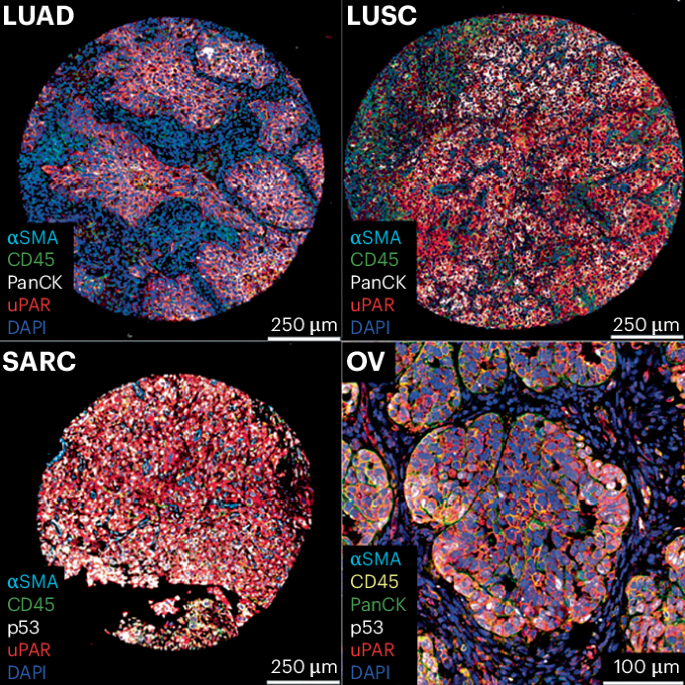
The urokinase plasminogen activator receptor (uPAR) has roles in proteolysis, remodelling of the extracellular matrix and cell migration during wound healing and has been previously linked to cellular senescence and fibrosis. Through systematic analysis of RNA sequencing data from more than 10,000 tumour samples, the researchers found significant elevation of PLAUR, the gene encoding uPAR, in 12 cancer types, and multiplexed immunofluorescence analysis of more than 1,000 patient tumour samples revealed high levels of stromal cells positive for uPAR in the tumour microenvironment. The team then applied uPAR CAR T cells to several in vivo tumour models with high levels of uPAR expression, including subsets of lung, ovarian, pancreatic, brain and colorectal cancers, which resulted in far extended survival. In both mice and ex vivo patient samples, they conducted further experiments that showed action of uPAR CAR T cells against fibrotic stromal cells as well as tumour cells. In particular, the treatment exhibited strong therapeutic effects in cell- and patient-derived mouse models of ovarian cancer, a diagnosis with limited treatment options for patients, and even showed elimination of metastases and resistance to rechallenge.
The team further combined uPAR antibodies with radiotracers to facilitate non-invasive treatment monitoring with positron emission tomography imaging, and conducted experiments to clarify the safety and specificity of the uPAR CAR T cells. In vitro and in vivo, potent cytotoxicity was observed against uPAR-expressing tumours, but not in genetically engineered uPAR-deficient models. Through quantitative analysis of The Cancer Genome Atlas and the Human Protein Atlas, the team found that PLAUR was enhanced in tumour tissues compared to normal tissues and that uPAR expression was both limited to myeloid cells and had substantially reduced expression in vital organs compared to other cell surface markers with FDA-approved treatment options. Moreover, combination with the senescence-inducing chemotherapy agent cisplatin highlighted a synergistic effect, resulting in improved tumour control, CAR T cell infiltration and survival in vivo compared with either agent alone.
