


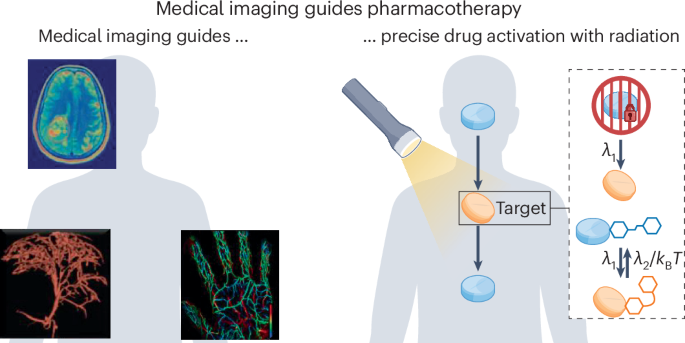
National Cancer Institute. Side effects of cancer treatment. https://www.cancer.gov/about-cancer/treatment/side-effects (2024).
Prigerson, H. G. et al. Chemotherapy use, performance status, and quality of life at the end of life. JAMA Oncol. 1, 778–784 (2015).
Google Scholar
Wyatt, L. C. et al. Peptides of pHLIP family for targeted intracellular and extracellular delivery of cargo molecules to tumors. Proc. Natl Acad. Sci. USA 115, E2811–E2818 (2018).
Google Scholar
Pardeshi, K. A., Ravikumar, G. & Chakrapani, H. Esterase sensitive self-immolative sulfur dioxide donors. Org. Lett. 20, 4–7 (2018).
Google Scholar
Li, X., Huo, F., Zhang, Y., Cheng, F. & Yin, C. Enzyme-activated prodrugs and their release mechanisms for the treatment of cancer. J. Mater. Chem. B 10, 5504–5519 (2022).
Google Scholar
Velema, W. A., Szymanski, W. & Feringa, B. L. Photopharmacology: beyond proof of principle. J. Am. Chem. Soc. 136, 2178–2191 (2014). Foundational review describing the underlying principles of photopharmacology and the challenges that must be addressed for its future successful clinical use.
Google Scholar
Hüll, K., Morstein, J. & Trauner, D. In vivo photopharmacology. Chem. Rev. 118, 10710–10747 (2018). Foundational review describing the underlying principles of photopharmacology and the challenges that must be addressed for its future successful clinical use.
Google Scholar
Lerch, M. M., Hansen, M. J., van Dam, G. M., Szymanski, W. & Feringa, B. L. Emerging targets in photopharmacology. Angew. Chem. Int. Ed. Engl. 55, 10978–10999 (2016). Foundational review describing the underlying principles of photopharmacology and the challenges that must be addressed for its future successful clinical use.
Google Scholar
Broichhagen, J., Frank, J. A. & Trauner, D. A roadmap to success in photopharmacology. Acc. Chem. Res. 48, 1947–1960 (2015). Foundational review describing the underlying principles of photopharmacology and the challenges that must be addressed for its future successful clinical use.
Google Scholar
Brieke, C., Rohrbach, F., Gottschalk, A., Mayer, G. & Heckel, A. Light-controlled tools. Angew. Chem. Int. Ed. Engl. 51, 8446–8476 (2012).
Google Scholar
Fuchter, M. J. On the promise of photopharmacology using photoswitches: a medicinal chemist’s perspective. J. Med. Chem. 63, 11436–11447 (2020). An important resource on the medicinal chemistry perspective of photopharmacological drugs design, pharmacokinetics and safety.
Google Scholar
Beharry, A. A. et al. Azobenzene photoswitches for biomolecules. Chem. Soc. Rev. 40, 4422–4437 (2011).
Google Scholar
Volarić, J., Szymanski, W., Simeth, N. A. & Feringa, B. L. Molecular photoswitches in aqueous environments. Chem. Soc. Rev. 50, 12377–12449 (2021).
Google Scholar
Sadovski, O., Beharry, A. A., Zhang, F. & Woolley, G. A. Spectral tuning of azobenzene photoswitches for biological applications. Angew. Chem. Int. Ed. Engl. 48, 1484–1486 (2009).
Google Scholar
Szymański, W., Beierle, J. M., Kistemaker, H. A. V., Velema, W. A. & Feringa, B. L. Reversible photocontrol of biological systems by the incorporation of molecular photoswitches. Chem. Rev. 113, 6114–6178 (2013).
Google Scholar
Velema, W. A. et al. Optical control of antibacterial activity. Nat. Chem. 5, 924–928 (2013). A pioneering study in the design and application of reversibly light-controlled antibiotics.
Google Scholar
Weston, C. E., Richardson, R. D., Haycock, P. R., White, A. J. P. & Fuchter, M. J. Arylazopyrazoles: azoheteroarene photoswitches offering quantitative isomerization and long thermal half-lives. J. Am. Chem. Soc. 136, 11878–11881 (2014).
Google Scholar
Matsuda, K. & Irie, M. Diarylethene as a photoswitching unit. J. Photochem. Photobiol. C Photochem. Rev. 5, 169–182 (2004).
Google Scholar
Hammerich, M. et al. Heterodiazocines: synthesis and photochromic properties, trans to cis switching within the bio-optical window. J. Am. Chem. Soc. 138, 13111–13114 (2016).
Google Scholar
Hoorens, M. W. H. et al. Iminothioindoxyl as a molecular photoswitch with 100 nm band separation in the visible range. Nat. Commun. 10, 2390 (2019).
Google Scholar
Kobauri, P., Dekker, F. J., Szymanski, W. & Feringa, B. L. Rational design in photopharmacology with molecular photoswitches. Angew. Chem. Int. Ed. Engl. 62, e202300681 (2023).
Google Scholar
Matera, C. et al. Photoswitchable antimetabolite for targeted photoactivated chemotherapy. J. Am. Chem. Soc. 140, 15764–15773 (2018).
Google Scholar
Samanta, S., Babalhavaeji, A., Dong, M.-X. & Woolley, G. A. Photoswitching of ortho-substituted azonium Ions by red light in whole blood. Angew. Chem. Int. Ed. Engl. 52, 14127–14130 (2013). A first report on molecular photoswitches that can be operated with red light.
Google Scholar
Samanta, S. et al. Photoswitching azo compounds in vivo with red light. J. Am. Chem. Soc. 135, 9777–9784 (2013).
Google Scholar
Cardano, F., Márquez García, R. & Szymanski, W. Manipulation of chemistry and biology with visible light using tetra-ortho-substituted azobenzenes and azonium Ions. Angew. Chem. Int. Ed. Engl. 2025, e202423506 (2025).
Hansen, M. J., Velema, W. A., Lerch, M. M., Szymanski, W. & Feringa, B. L. Wavelength-selective cleavage of photoprotecting groups: strategies and applications in dynamic systems. Chem. Soc. Rev. 44, 3358–3377 (2015).
Google Scholar
Bochet, C. G. Photolabile protecting groups and linkers. J. Chem. Soc. Perkin 1, 125–142 (2002).
Kand, D. et al. Water-soluble BODIPY photocages with tunable cellular localization. J. Am. Chem. Soc. 142, 4970–4974 (2020).
Google Scholar
Bonnet, S. Ruthenium-based photoactivated chemotherapy. J. Am. Chem. Soc. 145, 23397–23415 (2023).
Google Scholar
Tochitsky, I. et al. Restoring visual function to blind mice with a photoswitch that exploits electrophysiological remodeling of retinal ganglion cells. Neuron 81, 800–813 (2014). Photoswitches used in vivo; the use of an azobenzene-based photoswitch to restore vision in live mice.
Google Scholar
Casson, R. J. et al. Intravitreal photoswitch therapy in advanced retinitis pigmentosa: a phase 1 open-label trial. Nat. Med. 32, 1865–1870 (2026).
Google Scholar
Weissleder, R. A clearer vision for in vivo imaging. Nat. Biotechnol. 19, 316–317 (2001).
Google Scholar
Wang, L. V. & Hu, S. Photoacoustic tomography: in vivo imaging from organelles to organs. Science 335, 1458–1462 (2012).
Google Scholar
Ntziachristos, V. & Razansky, D. Molecular imaging by means of multispectral optoacoustic tomography (MSOT). Chem. Rev. 110, 2783–2794 (2010). A key resource on the principles and applications of optoacoustic imaging.
Google Scholar
Stiel, A. C. & Ntziachristos, V. Controlling the sound of light: photoswitching optoacoustic imaging. Nat. Methods 21, 1996–2007 (2024).
Google Scholar
Kossatz, S. et al. Validation of the use of a fluorescent PARP1 inhibitor for the detection of oral, oropharyngeal and oesophageal epithelial cancers. Nat. Biomed. Eng. 4, 272–285 (2020).
Google Scholar
Gabriëls, R. Y. et al. Fluorescently labelled vedolizumab to visualise drug distribution and mucosal target cells in inflammatory bowel disease. Gut 73, 1454–1463 (2024).
Google Scholar
He, H., Englert, L. & Ntziachristos, V. Optoacoustic endoscopy of the gastrointestinal tract. ACS Photonics 10, 559–570 (2023).
Google Scholar
Gabriëls, R. Y. et al. Detection of early esophageal neoplastic Barrett lesions with quantified fluorescence molecular endoscopy using cetuximab-800CW. J. Nucl. Med. 64, 803–808 (2023).
Google Scholar
Sheth, R. A. et al. Prospective trial with optical molecular imaging for percutaneous interventions in focal hepatic lesions. Radiology 274, 917–926 (2015).
Google Scholar
Kruit, H., Francis, K. J., Rascevska, E. & Manohar, S. Annular fiber probe for interstitial illumination in photoacoustic guidance of radiofrequency ablation. Sensors 21, 4458 (2021).
Google Scholar
Jing, H. et al. Imaging and selective elimination of glioblastoma stem cells with theranostic near-infrared-labeled CD133-specific antibodies. Theranostics 6, 862–874 (2016).
Google Scholar
Albert, F. K., Forsting, M., Sartor, K., Adams, H. P. & Kunze, S. Early postoperative magnetic resonance imaging after resection of malignant glioma: objective evaluation of residual tumor and its influence on regrowth and prognosis. Neurosurgery 34, 45–61 (1994).
Google Scholar
Obermannová, R. et al. Oesophageal cancer: ESMO Clinical Practice Guideline for diagnosis, treatment and follow-up. Ann. Oncol. 33, 992–1004 (2022).
Google Scholar
Remon, J., Soria, J. C. & Peters, S. Early and locally advanced non-small-cell lung cancer: an update of the ESMO Clinical Practice Guidelines focusing on diagnosis, staging, systemic and local therapy. Ann. Oncol. 32, 1637–1642 (2021).
Google Scholar
Hingorani, D. V., Yoo, B., Bernstein, A. S. & Pagel, M. D. Detecting enzyme activities with exogenous MRI contrast agents. Chem. Eur. J. 20, 9840–9850 (2014).
Google Scholar
Welleman, I. M. et al. The development of a smart magnetic resonance imaging and chemical exchange saturation transfer contrast agent for the imaging of sulfatase activity. Pharmaceuticals 16, 1439 (2023).
Google Scholar
Ankrah, A. O., Sathekge, M. M., Dierckx, R. A. J. O. & Glaudemans, A. W. J. M. Imaging fungal infections in children. Clin. Transl. Imaging 4, 57–72 (2016).
Google Scholar
Van Oosten, M. et al. Real-time in vivo imaging of invasive- and biomaterial-associated bacterial infections using fluorescently labelled vancomycin. Nat. Commun. 4, 2584 (2013). A seminal report on the in vivo imaging of bacterial infections, with future applications in guiding photopharmacological antibiotic treatments.
Google Scholar
Debie, P. & Hernot, S. Emerging fluorescent molecular tracers to guide intra-operative surgical decision-making. Front. Pharmacol. 10, 510 (2019).
Google Scholar
Mallidi, S. et al. Beyond the barriers of light penetration: strategies, perspectives and possibilities for photodynamic therapy. Theranostics 6, 2458–2487 (2016).
Google Scholar
De Wit, J. G. et al. EGFR-targeted fluorescence molecular imaging for intraoperative margin assessment in oral cancer patients: a phase II trial. Nat. Commun. 14, 4952 (2023).
Google Scholar
Taruttis, A. & Ntziachristos, V. Advances in real-time multispectral optoacoustic imaging and its applications. Nat. Photonics 9, 219–227 (2015).
Google Scholar
Matsumoto, Y. et al. Visualising peripheral arterioles and venules through high-resolution and large-area photoacoustic imaging. Sci. Rep. 8, 14930 (2018).
Google Scholar
Wang, S. & Larina, I. V. in Monitoring and Evaluation of Biomaterials and their Performance In Vivo (ed. Narayan, R. J.) 151–180 (Elsevier, 2017).
Kircher, M. F. et al. A brain tumor molecular imaging strategy using a new triple-modality MRI-photoacoustic-Raman nanoparticle. Nat. Med. 18, 829–834 (2012).
Google Scholar
Krebs, M. et al. Photopharmacological applications for Cherenkov radiation generated by clinically used radionuclides. Int. J. Mol. Sci. 22, 9010 (2021).
Google Scholar
Ran, C., Zhang, Z., Hooker, J. & Moore, A. In vivo photoactivation without ‘light’: use of Cherenkov radiation to overcome the penetration limit of light. Mol. Imaging Biol. 14, 156–162 (2012).
Google Scholar
Schulte, A. M., Alachouzos, G., Szymański, W. & Feringa, B. L. Strategy for engineering high photolysis efficiency of photocleavable protecting groups through cation stabilization. J. Am. Chem. Soc. 144, 12421–12430 (2022).
Google Scholar
Weinstain, R., Segal, E., Satchi-Fainaro, R. & Shabat, D. Real-time monitoring of drug release. Chem. Comm. 46, 553–555 (2010).
Google Scholar
Gagey, N., Neveu, P. & Jullien, L. Two-photon uncaging with the efficient 3,5-dibromo-2,4-dihydroxycinnamic caging group. Angew. Chem. Int. Ed. Engl. 46, 2467–2469 (2007).
Google Scholar
Welleman, I. M. et al. Towards medical imaging of drug photoactivation: development of light responsive magnetic resonance imaging and chemical exchange saturation transfer contrast agents. Smart Mol. 2, e20230029 (2024).
Google Scholar
Hong, G., Antaris, A. L. & Dai, H. Near-infrared fluorophores for biomedical imaging. Nat. Biomed. Eng. 1, 0010 (2017).
Google Scholar
Hemmer, E., Benayas, A., Légaré, F. & Vetrone, F. Exploiting the biological windows: current perspectives on fluorescent bioprobes emitting above 1000 nm. Nanoscale Horiz. 1, 168–184 (2016).
Google Scholar
Lyu, Y., Li, J. & Pu, K. Second near-infrared absorbing agents for photoacoustic imaging and photothermal therapy. Small Methods 3, 1900553 (2019).
Google Scholar
Klaue, K., Garmshausen, Y. & Hecht, S. Taking photochromism beyond visible: direct one-photon NIR photoswitches operating in the biological window. Angew. Chem. Int. Ed. Engl. 57, 1414–1417 (2018).
Google Scholar
Fu, Q. et al. Radiotherapy activates picolinium prodrugs in tumours. Nat. Chem. 13, 1348–1356 (2024).
Google Scholar
Fu, Q. et al. External-radiation-induced local hydroxylation enables remote release of functional molecules in tumors. Angew. Chem. Int. Ed. Engl. 59, 21546–21552 (2020). One of the earliest examples of the use of deeply penetrating radiation for selective activation of molecular function.
Google Scholar
Geng, J. et al. Switching on prodrugs using radiotherapy. Nat. Chem. 13, 805–810 (2021). One of the earliest examples of the use of deeply penetrating radiation for selective activation of molecular function.
Google Scholar
Guo, Z. et al. Radiotherapy-induced cleavage of quaternary ammonium groups activates prodrugs in tumors. Angew. Chem. Int. Ed. Engl. 61, e202205014 (2022).
Google Scholar
Ding, Z. et al. Radiotherapy reduces N-oxides for prodrug activation in tumors. J. Am. Chem. Soc. 144, 9458–9464 (2022).
Google Scholar
Olsen, D. R., Bruland, O. S., Frykholm, G. & Norderhaug, I. N. Proton therapy—a systematic review of clinical effectiveness. Radiother. Oncol. 83, 123–132 (2007).
Google Scholar
Lane, S. A., Slater, J. M. & Yang, G. Y. Image-guided proton therapy: a comprehensive review. Cancers 15, 2555 (2023).
Google Scholar
Yang, M. et al. Chemiluminescence for bioimaging and therapeutics: recent advances and challenges. Chem. Soc. Rev. 49, 6800–6815 (2020).
Google Scholar
Yan, Y., Shi, P., Song, W. & Bi, S. Chemiluminescence and bioluminescence imaging for biosensing and therapy: in vitro and in vivo perspectives. Theranostics 9, 4047–4065 (2019).
Google Scholar
Ran, C. & Pu, K. Molecularly generated light and its biomedical applications. Angew. Chem. Int. Ed. Engl. 63, e202314468 (2024). A review of chemical methods for generating light inside biological systems.
Google Scholar
Mc Larney, B., Skubal, M. & Grimm, J. A review of recent and emerging approaches for the clinical application of Cerenkov luminescence imaging. Front. Phys. 9, 684196 (2021).
Google Scholar
Grootendorst, M. R., Cariati, M., Kothari, A., Tuch, D. S. & Purushotham, A. Cerenkov luminescence imaging (CLI) for image-guided cancer surgery. Clin. Transl. Imaging 4, 353–366 (2016).
Google Scholar
Thiemann, A., Holsteyns, F., Cairós, C. & Mettin, R. Sonoluminescence and dynamics of cavitation bubble populations in sulfuric acid. Ultrason. Sonochem. 34, 663–676 (2017).
Google Scholar
Cairós, C. & Mettin, R. Simultaneous high-speed recording of sonoluminescence and bubble dynamics in multibubble fields. Phys. Rev. Lett. 118, 064301 (2017).
Google Scholar
Exner, A. A. & Kolios, M. C. Bursting microbubbles: how nanobubble contrast agents can enable the future of medical ultrasound molecular imaging and image-guided therapy. Curr. Opin. Colloid Interface Sci. 54, 101463 (2021).
Google Scholar
Fournier, L., de La Taille, T. & Chauvierre, C. Microbubbles for human diagnosis and therapy. Biomaterials 294, 122025 (2023).
Google Scholar
Beguin, E. et al. Direct evidence of multibubble sonoluminescence using therapeutic ultrasound and microbubbles. ACS Appl. Mater. Interfaces 11, 19913–19919 (2019).
Google Scholar
Lu, L., Sun, M., Lu, Q., Wu, T. & Huang, B. High energy X-ray radiation sensitive scintillating materials for medical imaging, cancer diagnosis and therapy. Nano Energy 79, 105437 (2021).
Google Scholar
Velema, W. A. et al. Ciprofloxacin-photoswitch conjugates: a facile strategy for photopharmacology. Bioconjug. Chem. 26, 2592–2597 (2015).
Google Scholar
Selvaraj, C., Chandra, I. & Singh, S. K. Artificial intelligence and machine learning approaches for drug design: challenges and opportunities for the pharmaceutical industries. Mol. Divers. 26, 1893–1913 (2022).
Google Scholar
Zhang, K. et al. Artificial intelligence in drug development. Nat. Med. 31, 45–59 (2025).
Google Scholar
Vickerman, B. M., Zywot, E. M., Tarrant, T. K. & Lawrence, D. S. Taking phototherapeutics from concept to clinical launch. Nat. Rev. Chem. 5, 816–834 (2021).
Google Scholar
Basile, A. O., Yahi, A. & Tatonetti, N. P. Artificial intelligence for drug toxicity and safety. Trends Pharmacol. Sci. 40, 624–635 (2019).
Google Scholar
Zhong, F. et al. Artificial intelligence in drug design. Sci. China Life Sci. 61, 1191–1204 (2018).
Google Scholar
Qureshi, R. et al. AI in drug discovery and its clinical relevance. Heliyon 9, e17575 (2023).
Google Scholar
Rizzuti, B. & Grande, F. in Protein Homeostasis Diseases (ed. Pey, A. L.) 309–327 (Elsevier, 2020).
Cerqueira, N. M. F. S. A. et al. Receptor-based virtual screening protocol for drug discovery. Arch. Biochem. Biophys. 582, 56–67 (2015).
Google Scholar
Carpenter, K. A., Cohen, D. S., Jarrell, J. T. & Huang, X. Deep learning and virtual drug screening. Future Med. Chem. 10, 2557–2567 (2018).
Google Scholar
Maia, E. H. B. et al. Structure-based virtual screening: from classical to artificial intelligence. Front. Chem. 8, 343 (2020).
Google Scholar
Schirle, M. & Jenkins, J. L. Identifying compound efficacy targets in phenotypic drug discovery. Drug Discov. Today 21, 82–89 (2016).
Google Scholar
Casanola-Martin, G. M., Wang, J., Zhou, J. G., Rasulev, B. & Leszczynski, J. Chemical feature-based machine learning model for predicting photophysical properties of BODIPY compounds: density functional theory and quantitative structure–property relationship modeling. J. Mol. Model. 31, 18 (2025).
Google Scholar
Nisa, R. U., Shahzad, N. & Ayub, K. Density functional theory study of linear and non-linear optical properties of dihydroazulene-vinylheptafulvene photoswitches. Comput. Theor. Chem. 1095, 1–8 (2016).
Google Scholar
Lameijer, L. N. et al. General principles for the design of visible-light-responsive photoswitches: tetra-ortho-chloro-azobenzenes. Angew. Chem. Int. Ed. Engl. 59, 21663–21670 (2020).
Google Scholar
Rautio, J., Meanwell, N. A., Di, L. & Hageman, M. J. The expanding role of prodrugs in contemporary drug design and development. Nat. Rev. Drug Discov. 17, 559–587 (2018).
Google Scholar
Clas, S.-D., Sanchez, R. I. & Nofsinger, R. Chemistry-enabled drug delivery (prodrugs): recent progress and challenges. Drug Discov. Today 19, 79–87 (2014).
Google Scholar
Brown, M. A. & De Vito, S. C. Predicting azo dye toxicity. Crit. Rev. Environ. Sci. Technol. 23, 249–324 (1993).
Google Scholar
Stricker, L., Böckmann, M., Kirse, T. M., Doltsinis, N. L. & Ravoo, B. J. Arylazopyrazole photoswitches in aqueous solution: substituent effects, photophysical properties, and host–guest chemistry. Chem. Eur. J. 24, 8639–8647 (2018).
Google Scholar
Samanta, S., McCormick, T. M., Schmidt, S. K., Seferos, D. S. & Woolley, G. A. Robust visible light photoswitching with ortho-thiol substituted azobenzenes. Chem. Commun. 49, 10314–10316 (2013).
Google Scholar
Welleman, I. M., Hoorens, M. W. H. H., Feringa, B. L., Boersma, H. H. & Szymański, W. Photoresponsive molecular tools for emerging applications of light in medicine. Chem. Sci. 11, 11672–11691 (2020).
Google Scholar
Boulègue, C., Löweneck, M., Renner, C. & Moroder, L. Redox potential of azobenzene as an amino acid residue in peptides. ChemBioChem 8, 591–594 (2007).
Google Scholar
Zhu, J., Guo, T., Wang, Z. & Zhao, Y. Triggered azobenzene-based prodrugs and drug delivery systems. J. Control. Release 345, 475–493 (2022).
Google Scholar
Hessler, G. & Baringhaus, K.-H. Artificial intelligence in drug design. Molecules 23, 2520 (2018).
Google Scholar
European Medicines Agency. Investigation of chiral active substance. https://www.ema.europa.eu/en/documents/scientific-guideline/investigation-chiral-active-substances_en.pdf (1994).
European Medicines Agency. ICH Q1B photostability testing of new active substances and medicinal products—scientific guideline. https://www.ema.europa.eu/en/ich-q1b-photostability-testing-new-active-substances-medicinal-products-scientific-guideline (1998).
Pizzato, M. et al. The epidemiological landscape of thyroid cancer worldwide: GLOBOCAN estimates for incidence and mortality rates in 2020. Lancet Diabetes Endocrinol. 10, 264–272 (2022).
Google Scholar
Haugen, B. R. et al. 2015 American Thyroid Association Management Guidelines for adult patients with thyroid nodules and differentiated thyroid cancer: the American Thyroid Association Guidelines Task Force on thyroid nodules and differentiated thyroid cancer. Thyroid 26, 1–133 (2016).
Google Scholar
Papini, E., Monpeyssen, H., Frasoldati, A. & Hegedüs, L. 2020 European Thyroid Association Clinical Practice Guideline for the use of image-guided ablation in benign thyroid nodules. Eur. Thyroid J. 9, 172–185 (2020).
Google Scholar
Van Dijk, S. P. J. et al. Assessment of radiofrequency ablation for papillary microcarcinoma of the thyroid: a systematic review and meta-analysis. JAMA Otolaryngol. Head Neck Surg. 148, 317–325 (2022).
Google Scholar
Jonker, P. K. C. et al. Intraoperative MET-receptor targeted fluorescent imaging and spectroscopy for lymph node detection in papillary thyroid cancer: novel diagnostic tools for more selective central lymph node compartment dissection. Eur. J. Nucl. Med. Mol. Imaging 49, 3557–3570 (2022).
Google Scholar
Zeng, Z. J., Yao, F. M., He, W., Wei, Q. S. & He, M. C. Incidence of periprosthetic joint infection after primary total hip arthroplasty is underestimated: a synthesis of meta-analysis and bibliometric analysis. J. Orthop. Surg. Res. 18, 610 (2023).
Google Scholar
Morgenstern, M. et al. Diagnostic challenges and future perspectives in fracture-related infection. Injury 49, S83–S90 (2018).
Google Scholar
Wouthuyzen-Bakker, M. et al. Use of gentamicin-impregnated beads or sponges in the treatment of early acute periprosthetic joint infection: a propensity score analysis. J. Antimicrob. Chemother. 73, 3454–3459 (2018).
Google Scholar
Yang, M. et al. NIR-I light-activated antibiotic delivery & PDT via TiO2/graphene metastructure for enhanced antibacterial activity and osseointegration of Ti implants. Adv. Healthc. Mater. 14, e2500743 (2025).
Google Scholar
Feringa, B. L. & Browne, W. R. Molecular Switches, Second Edition (John Wiley & Sons, 2012).
Pianowski, Z. L. Recent Implementations of molecular photoswitches into smart materials and biological systems. Chem. Eur. J. 25, 5128–5144 (2019).
Google Scholar
Palasis, K. A. et al. Optical fibre-enabled photoswitching for localised activation of an anti-cancer therapeutic drug. Int. J. Mol. Sci. 22, 10844 (2021).
Google Scholar
Van der Lei, S. et al. Thermal ablation versus surgical resection of small-size colorectal liver metastases (COLLISION): an international, randomised, controlled, phase 3 non-inferiority trial. Lancet Oncol. 26, 187–199 (2025).
Google Scholar
Georgiades, C. & Rodriguez, R. Renal tumor ablation. Tech. Vasc. Interv. Radiol. 16, 230–238 (2013).
Google Scholar
Chlorogiannis, D.-D. et al. The importance of optimal thermal ablation margins in colorectal liver metastases: a systematic review and meta-analysis of 21 studies. Cancers 15, 5806 (2023).
Google Scholar
Toi, M. et al. Non-surgical ablation for breast cancer: an emerging therapeutic option. Lancet Oncol. 25, e114–e125 (2024).
Google Scholar
Atwell, T. D. et al. Complications following 573 percutaneous renal radiofrequency and cryoablation procedures. J. Vasc. Interv. Radiol. 23, 48–54 (2012).
Google Scholar
Mauri, G. et al. Technical success, technique efficacy and complications of minimally-invasive imaging-guided percutaneous ablation procedures of breast cancer: a systematic review and meta-analysis. Eur. Radiol. 27, 3199–3210 (2017).
Google Scholar
Chlorogiannis, D. D. et al. Impact of percutaneous cryoablation on renal function in patients with stage I renal cell carcinoma: a systematic review and meta-analysis. J. Vasc. Interv. Radiol. 35, 1278–1287 (2024).
Google Scholar
Xu, X., Peng, Y. & Han, G. Three-year follow-up results of radiofrequency ablation for low-risk papillary thyroid microcarcinomas: systematic review and meta-analysis. Eur. J. Surg. Oncol. 50, 108470 (2024).
Google Scholar
Meijerink, M. R. et al. Radiofrequency and microwave ablation compared to systemic chemotherapy and to partial hepatectomy in the treatment of colorectal liver metastases: a systematic review and meta-analysis. Cardiovasc. Intervent. Radiol 41, 1189–1204 (2018).
Google Scholar
Jiang, C. et al. Radiofrequency ablation versus laparoscopic hepatectomy for hepatocellular carcinoma: a systematic review and meta-analysis. World J. Surg. Oncol. 22, 199 (2024).
Google Scholar
Matsumoto, Y. et al. Label-free photoacoustic imaging of human palmar vessels: a structural morphological analysis. Sci. Rep. 8, 786 (2018).
Google Scholar
Abbasi, I. A., Alshehri, M. & AlQahtani, Y. Tumor-specific PET tracer imaging and contrast-enhanced MRI based tumor volume differences inspection of glioblastoma patients. Sci. Rep. 15, 30011 (2025).
Google Scholar
Amare, R. et al. 1D thermoembolization model using CT imaging data for porcine liver. Sci. Rep. 15, 20552 (2025).
Google Scholar
Frangioni, J. V. In vivo near-infrared fluorescence imaging. Curr. Opin. Chem. Biol. 7, 626–634 (2003).
Google Scholar
