


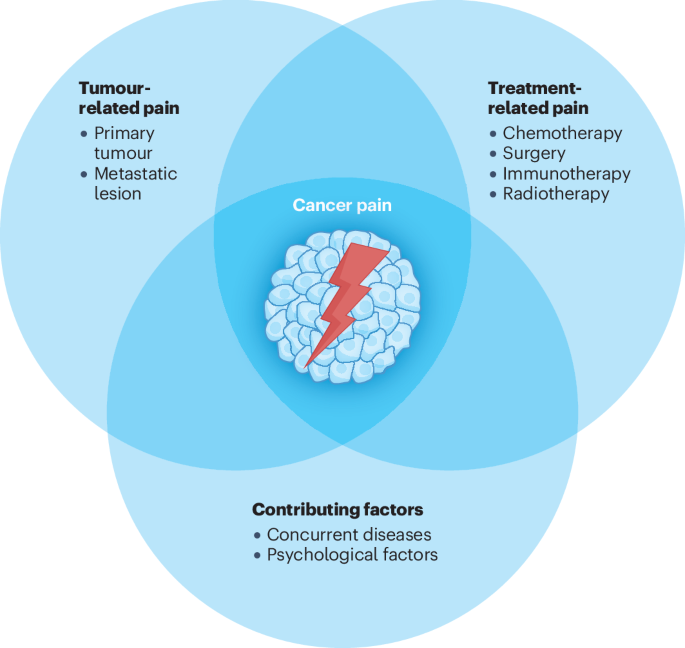
Bennett, M. I. et al. The IASP classification of chronic pain for ICD-11: chronic cancer-related pain. Pain 160, 38–44 https://doi.org/10.1097/j.pain.0000000000001363 (2019). This classification framework introduces the ICD-11 diagnostic entities chronic cancer-related pain and chronic treatment-related pain, shifting classification towards a standardized system that better reflects pain aetiology and supports more precise diagnosis and treatment.
Google Scholar
Bennett, M. I. et al. Prevalence and aetiology of neuropathic pain in cancer patients: a systematic review. Pain 153, 359–365 https://doi.org/10.1016/j.pain.2011.10.028 (2012).
Google Scholar
Ji, R.-R., Chamessian, A. & Zhang, Y.-Q. Pain regulation by non-neuronal cells and inflammation. Science 354, 572–577 https://doi.org/10.1126/science.aaf8924 (2016). This is a relevant review establishing the neuroimmune paradigm of pain, demonstrating how immune and glial cells actively regulate nociceptive signalling rather than acting as passive bystanders.
Google Scholar
Martel Matos, A. A. & Scheff, N. N. Sensory neurotransmission and pain in solid tumor progression. Trends Cancer 11, 309–320 https://doi.org/10.1016/j.trecan.2025.01.003 (2025). This review summarizes current understanding of sensory neurotransmission within solid tumours and integrates emerging concepts from cancer neuroscience.
Google Scholar
Monje, M. et al. Roadmap for the emerging field of cancer neuroscience. Cell 181, 219–222 https://doi.org/10.1016/j.cell.2020.03.034 (2020).
Google Scholar
Karschnia, P., Nelson, T. A. & Dietrich, J. Mechanisms and treatment of cancer therapy-induced peripheral and central neurotoxicity. Nat. Rev. Cancer 25, 887–909 https://doi.org/10.1038/s41568-025-00863-2 (2025). This study proposes a mechanistic framework distinguishing chemotherapy- and radiotherapy-induced neurotoxicity as separate neuropathic pain entities with persistent molecular reprogramming.
Google Scholar
Grond, S., Zech, D., Diefenbach, C., Radbruch, L. & Lehmann, K. A. Assessment of cancer pain: a prospective evaluation in 2266 cancer patients referred to a pain service. Pain 64, 107–114 https://doi.org/10.1016/0304-3959(95)00076-3 (1996).
Google Scholar
Sutradhar, R., Lokku, A. & Barbera, L. Cancer survivorship and opioid prescribing rates: a population-based matched cohort study among individuals with and without a history of cancer. Cancer 123, 4286–4293 https://doi.org/10.1002/cncr.30839 (2017). This large population-based cohort study was the first to show that cancer survivors have substantially higher long-term opioid prescribing rates compared with individuals without a history of cancer, highlighting survivorship as a phase of persistent analgesic need.
Google Scholar
Craig, T., Napolitano, A. & Brown, M. Cancer survivors and cancer pain. BJA Educ. 24, 309–317 https://doi.org/10.1016/j.bjae.2024.05.002 (2024).
Google Scholar
Shi, R.-j., Ke, B.-w., Tang, Y.-l. & Liang, X.-h. Perineural invasion: a potential driver of cancer-induced pain. Biochem. Pharmacol. 215, 115692 https://doi.org/10.1016/j.bcp.2023.115692 (2023).
Google Scholar
van den Beuken-van Everdingen, M. H. J., Hochstenbach, L. M. J., Joosten, E. A. J., Tjan-Heijnen, V. C. G. & Janssen, D. J. A. Update on prevalence of pain in patients with cancer: systematic review and meta-analysis. J. Pain Symptom Manag. 51, 1070–1090 https://doi.org/10.1016/j.jpainsymman.2015.12.340 (2016). This study presents an update on global estimate of cancer pain, demonstrating prevalence rates of 39.3% after curative treatment, 55.0% during anticancer treatment and 66.4% in advanced, metastatic or terminal disease, with ~38% of patients reporting moderate-to-severe pain despite therapeutic progress.
Google Scholar
Fallon, M. et al. Management of cancer pain in adult patients: ESMO clinical practice guidelines. Ann. Oncol. 29, iv166–iv191 https://doi.org/10.1093/annonc/mdy152 (2018). These guidelines establish multimodal, mechanism-based analgesia as the standard of care and underscore that opioids alone are insufficient for complex cancer pain.
Google Scholar
Snijders, R. A. H., Brom, L., Theunissen, M. & van den Beuken-van Everdingen, M. H. J. Update on prevalence of pain in patients with cancer 2022: a systematic literature review and meta-analysis. Cancers 15, 591 https://doi.org/10.3390/cancers15030591 (2023).
Google Scholar
Fernández-Gualda, M. Á. et al. Prevalence and characteristics of persistent pain among head and neck cancer survivors: a systematic review and meta-analysis. Pain Med. 26, 712–721 https://doi.org/10.1093/pm/pnaf051 (2025).
Google Scholar
Koulouris, A. I., Banim, P. & Hart, A. R. Pain in patients with pancreatic cancer: prevalence, mechanisms, management and future developments. Dig. Dis. Sci. 62, 861–870 https://doi.org/10.1007/s10620-017-4488-z (2017).
Google Scholar
Boland, E. G. et al. Symptom prevalence in gastrointestinal cancer: a secondary analysis of IPOS data. Support. Care Cancer 33, 860 https://doi.org/10.1007/s00520-025-09919-3 (2025).
Google Scholar
Allart-Vorelli, P., Porro, B., Baguet, F., Michel, A. & Cousson-Gélie, F. Haematological cancer and quality of life: a systematic literature review. Blood Cancer J. 5, e305 https://doi.org/10.1038/bcj.2015.29 (2015).
Google Scholar
Ahmed, Y. et al. Does gender affect self-perceived pain in cancer patients? – A meta-analysis. Ann. Palliat. Med. 6, S177–S184 https://doi.org/10.21037/apm.2017.08.09 (2017). This meta-analysis examines sex-related differences in cancer pain perception and reporting.
Google Scholar
Mizrahi, D. et al. Hemoglobin, body mass index, and age as risk factors for paclitaxel- and oxaliplatin-induced peripheral neuropathy. JAMA Netw. Open 4, e2036695 https://doi.org/10.1001/jamanetworkopen.2020.36695 (2021).
Google Scholar
von Itzstein, M. S. et al. Incidence and correlates of high-grade chemotherapy-induced peripheral neuropathy in patients with lung cancer. Oncologist 30, oyaf036 https://doi.org/10.1093/oncolo/oyaf036 (2025).
Google Scholar
Chou, P.-L., Fang, S.-Y., Sun, J.-L., Rau, K.-M. & Lee, B.-O. Gender difference in cancer patients’ adherence to analgesics and related outcomes of pain management. Cancer Nurs. 41, E11–E18 https://doi.org/10.1097/ncc.0000000000000532 (2018).
Google Scholar
Martinez, K. A., Snyder, C. F., Malin, J. L. & Dy, S. M. Is race/ethnicity related to the presence or severity of pain in colorectal and lung cancer? J. Pain Symptom Manag. 48, 1050–1059 https://doi.org/10.1016/j.jpainsymman.2014.02.005 (2014).
Google Scholar
Gabbard, J. et al. Patient-reported pain severity is associated with shorter survival in older adults with newly diagnosed cancer. Support. Care Cancer 33, 722 https://doi.org/10.1007/s00520-025-09779-x (2025).
Google Scholar
Lundstedt, D. et al. Risk factors of developing long-lasting breast pain after breast cancer radiotherapy. Int. J. Radiat. Oncol. Biol. Phys. 83, 71–78 https://doi.org/10.1016/j.ijrobp.2011.05.065 (2012).
Google Scholar
Waldenström, A.-C. et al. Pain and mean absorbed dose to the pubic bone after radiotherapy among gynecological cancer survivors. Int. J. Radiat. Oncol. Biol. Phys. 80, 1171–1180 https://doi.org/10.1016/j.ijrobp.2010.04.007 (2011).
Google Scholar
Wang, L. et al. Predictors of persistent pain after breast cancer surgery: a systematic review and meta-analysis of observational studies. Can. Med. Assoc. J. 188, E352–E361 https://doi.org/10.1503/cmaj.151276 (2016).
Google Scholar
Green, C. R. & Hart-Johnson, T. Cancer pain: an age-based analysis. Pain Med. 11, 1525–1536 https://doi.org/10.1111/j.1526-4637.2010.00957.x (2010).
Google Scholar
Bubis, L. D. et al. Symptom burden in the first year after cancer diagnosis: an analysis of patient-reported outcomes. J. Clin. Oncol. 36, 1103–1111 https://doi.org/10.1200/jco.2017.76.0876 (2018).
Google Scholar
Bakr, M. A.-E.-M. et al. Comparison between the effects of intravenous morphine, tramadol, and ketorolac on stress and immune responses in patients undergoing modified radical mastectomy. Clin. J. Pain 32, 889–897 https://doi.org/10.1097/ajp.0000000000000338 (2016).
Google Scholar
Hou, M. et al. Morphine and ketamine inhibit immune function of gastric cancer patients by increasing percentage of CD4+CD25+Foxp3+ regulatory T cells in vitro. J. Surg. Res. 203, 306–312 https://doi.org/10.1016/j.jss.2016.02.031 (2016).
Google Scholar
Cui, J.-H. et al. Effects of oxycodone on immune function in patients undergoing radical resection of rectal cancer under general anesthesia. Medicine 96, e7519 https://doi.org/10.1097/md.0000000000007519 (2017).
Google Scholar
Hu, X. et al. Effects of Dezocine and Sufentanil on Th1/Th2 balance in breast cancer patients undergoing surgery. Drug Des. Dev. Ther. 15, 4925–4938 https://doi.org/10.2147/dddt.S326891 (2021).
Google Scholar
Wodehouse, T. et al. A randomized pilot study to investigate the effect of opioids on immunomarkers using gene expression profiling during surgery. Pain 160, 2691–2698 https://doi.org/10.1097/j.pain.0000000000001677 (2019).
Google Scholar
Moser, E. C. & Meunier, F. Cancer survivorship: a positive side-effect of more successful cancer treatment. Eur. J. Cancer Suppl. 12, 1–4 https://doi.org/10.1016/j.ejcsup.2014.03.001 (2014).
Google Scholar
Glare, P. et al. Pharmacologic management of persistent pain in cancer survivors. Drugs 82, 275–291 https://doi.org/10.1007/s40265-022-01675-6 (2022).
Google Scholar
Emery, J. et al. Management of common clinical problems experienced by survivors of cancer. Lancet 399, 1537–1550 https://doi.org/10.1016/s0140-6736(22)00242-2 (2022).
Google Scholar
Cox-Martin, E., Anderson-Mellies, A., Borges, V. & Bradley, C. Chronic pain, health-related quality of life, and employment in working-age cancer survivors. J. Cancer Surviv. 14, 179–187 https://doi.org/10.1007/s11764-019-00843-0 (2020).
Google Scholar
Beckwée, D., Leysen, L., Meuwis, K. & Adriaenssens, N. Prevalence of aromatase inhibitor-induced arthralgia in breast cancer: a systematic review and meta-analysis. Support. Care Cancer 25, 1673–1686 https://doi.org/10.1007/s00520-017-3613-z (2017).
Google Scholar
Martinez, V. et al. Chronic postsurgical pain: a European survey. Eur. J. Anaesthesiol. 41, 351–362 https://doi.org/10.1097/eja.0000000000001974 (2024).
Google Scholar
O’Regan, A. et al. Managing chronic pain in cancer survivorship: communication challenges and opportunities as described by cancer survivors. Am. J. Hosp. Palliat. Care 41, 78–86 https://doi.org/10.1177/10499091231164634 (2024).
Google Scholar
Zernikow, B. et al. Pain in pediatric oncology—children’s and parents’ perspectives. Eur. J. Pain 9, 395–406 https://doi.org/10.1016/j.ejpain.2004.09.008 (2005).
Google Scholar
Tutelman, P. R. et al. Pain in children with cancer: prevalence, characteristics, and parent management. Clin. J. Pain 34, 198–206 https://doi.org/10.1097/ajp.0000000000000531 (2018).
Google Scholar
Le-Short, C., Katragadda, K., Nagda, N., Farris, D. & Gelter, M. H. Interventional pain management for the pediatric cancer patient: a literature review. Children 9, 389 https://doi.org/10.3390/children9030389 (2022).
Google Scholar
World Health Organization. WHO Guidelines on the Pharmacological Treatment of Persisting Pain in Children with Medical Illnesses (WHO, 2012).
Brinkman, T. M., Recklitis, C. J., Michel, G., Grootenhuis, M. A. & Klosky, J. L. Psychological symptoms, social outcomes, socioeconomic attainment, and health behaviors among survivors of childhood cancer: current state of the literature. J. Clin. Oncol. 36, 2190–2197 https://doi.org/10.1200/jco.2017.76.5552 (2018).
Google Scholar
Lu, Q. et al. Pain in long-term adult survivors of childhood cancers and their siblings: a report from the childhood cancer survivor study. Pain 152, 2616–2624 https://doi.org/10.1016/j.pain.2011.08.006 (2011).
Google Scholar
Swarm, R. A. et al. Adult cancer pain, version 2.2025, NCCN clinical practice guidelines in oncology. J. Natl Compr. Cancer Netw. 23, e250032 https://doi.org/10.6004/jnccn.2025.0032 (2025). These guidelines integrate interventional, neuromodulatory and non-pharmacological strategies into routine care to individualize pain management across disease stages.
Google Scholar
Wang, W.-L., Hao, Y.-H., Pang, X. & Tang, Y.-L. Cancer pain: molecular mechanisms and management. Mol. Biomed. 6, 45 https://doi.org/10.1186/s43556-025-00289-0 (2025).
Google Scholar
Schweizerhof, M. et al. Hematopoietic colony-stimulating factors mediate tumor-nerve interactions and bone cancer pain. Nat. Med. 15, 802–807 https://doi.org/10.1038/nm.1976 (2009).
Google Scholar
Hou, T., Ding, H., Huang, G., Meng, T. & Song, D. Neural-tumor crosstalk and molecular targeting: mechanisms and therapeutic implications in cancer neuroscience. Cell. Oncol. 49, 35 https://doi.org/10.1007/s13402-025-01151-9 (2026).
Google Scholar
Khasabov, S. G., Hamamoto, D. T., Harding-Rose, C. & Simone, D. A. Tumor-evoked hyperalgesia and sensitization of nociceptive dorsal horn neurons in a murine model of cancer pain. Brain Res. 1180, 7–19 https://doi.org/10.1016/j.brainres.2007.08.075 (2007).
Google Scholar
Urch, C. E., Donovan-Rodriguez, T., Gordon-Williams, R., Bee, L. A. & Dickenson, A. H. Efficacy of chronic morphine in a rat model of cancer-induced bone pain: behavior and in dorsal horn pathophysiology. J. Pain 6, 837–845 https://doi.org/10.1016/j.jpain.2005.08.005 (2005).
Google Scholar
Urch, E. C., Donovan-Rodriguez, T. & Dickenson, H. A. Alterations in dorsal horn neurones in a rat model of cancer-induced bone pain. Pain 106, 347–356 https://doi.org/10.1016/j.pain.2003.08.002 (2003).
Google Scholar
Yanagisawa, Y. et al. Bone cancer induces a unique central sensitization through synaptic changes in a wide area of the spinal cord. Mol. Pain 6, 38 https://doi.org/10.1186/1744-8069-6-38 (2010).
Google Scholar
Donovan-Rodriguez, T., Dickenson, A. H. & Urch, C. E. Gabapentin normalizes spinal neuronal responses that correlate with behavior in a rat model of cancer-induced bone pain. Anesthesiology 102, 132–140 https://doi.org/10.1097/00000542-200501000-00022 (2005).
Google Scholar
Davis, M. P. Drug management of visceral pain: concepts from basic research. Pain Res. Treat. 2012, 265605 https://doi.org/10.1155/2012/265605 (2012).
Google Scholar
Yoon, S. Y. & Oh, J. Neuropathic cancer pain: prevalence, pathophysiology, and management. Korean J. Intern. Med. 33, 1058–1069 https://doi.org/10.3904/kjim.2018.162 (2018).
Google Scholar
Colosia, A. et al. The burden of metastatic cancer-induced bone pain: a narrative review. J. Pain Res. 15, 3399–3412 https://doi.org/10.2147/jpr.S371337 (2022).
Google Scholar
Falk, S. & Dickenson, A. H. Pain and nociception: mechanisms of cancer-induced bone pain. J. Clin. Oncol. 32, 1647–1654 https://doi.org/10.1200/jco.2013.51.7219 (2014).
Google Scholar
Jimenez-Andrade, J. M. et al. Pathological sprouting of adult nociceptors in chronic prostate cancer-induced bone pain. J. Neurosci. 30, 14649–14656 https://doi.org/10.1523/jneurosci.3300-10.2010 (2010).
Google Scholar
Mantyh, W. G. et al. Blockade of nerve sprouting and neuroma formation markedly attenuates the development of late stage cancer pain. Neuroscience 171, 588–598 https://doi.org/10.1016/j.neuroscience.2010.08.056 (2010).
Google Scholar
Bloom, A. P. et al. Breast cancer-induced bone remodeling, skeletal pain, and sprouting of sensory nerve fibers. J. Pain 12, 698–711 https://doi.org/10.1016/j.jpain.2010.12.016 (2011).
Google Scholar
Haroun, R., Wood, J. N. & Sikandar, S. Mechanisms of cancer pain. Front. Pain Res. 3, 1030899 https://doi.org/10.3389/fpain.2022.1030899 (2022). This review synthesizes tumour–immune–neural signalling and establishes cancer pain as a neuroimmune disease driven by multi-mechanistic processes.
Google Scholar
Sikandar, S. & Dickenson, A. H. Visceral pain: the ins and outs, the ups and downs. Curr. Opin. Support. Palliat. Care 6, 17–26 https://doi.org/10.1097/SPC.0b013e32834f6ec9 (2012).
Google Scholar
Cervero, F. & Laird, J. M. A. Visceral pain. Lancet 353, 2145–2148 https://doi.org/10.1016/s0140-6736(99)01306-9 (1999).
Google Scholar
Bapat, A. A., Hostetter, G., Von Hoff, D. D. & Han, H. Perineural invasion and associated pain in pancreatic cancer. Nat. Rev. Cancer 11, 695–707 https://doi.org/10.1038/nrc3131 (2011).
Google Scholar
Liebig, C. et al. Perineural invasion is an independent predictor of outcome in colorectal cancer. J. Clin. Oncol. 27, 5131–5137 https://doi.org/10.1200/jco.2009.22.4949 (2009).
Google Scholar
Demir, I. E., Friess, H. & Ceyhan, G. O. Neural plasticity in pancreatitis and pancreatic cancer. Nat. Rev. Gastroenterol. Hepatol. 12, 649–659 https://doi.org/10.1038/nrgastro.2015.166 (2015).
Google Scholar
Amit, M. et al. Neuro-immune cross-talk in cancer. Nat. Rev. Cancer 25, 573–589 https://doi.org/10.1038/s41568-025-00831-w (2025).
Google Scholar
Davis, B. M., McIlvried, L. A., Saloman, J. L., Nilsen, M. L. & Scheff, N. N. Rethinking relief: targeting sensory neurons to combat cancer and pain. Cancer Cell 43, 1777–1782 https://doi.org/10.1016/j.ccell.2025.07.019 (2025).
Google Scholar
Liu, H., Li, X., Yu, J. & Chen, T. Peripheral nerve remodeling in the tumor microenvironment: neuro-immune crosstalk, molecular mechanisms, and precision therapeutic. Front. Immunol. 17, 1789297 https://doi.org/10.3389/fimmu.2026.1789297 (2026).
Google Scholar
Amit, M. et al. Loss of p53 drives neuron reprogramming in head and neck cancer. Nature 578, 449–454 https://doi.org/10.1038/s41586-020-1996-3 (2020).
Google Scholar
Linke, J. A., Munn, L. L. & Jain, R. K. Compressive stresses in cancer: characterization and implications for tumour progression and treatment. Nat. Rev. Cancer 24, 768–791 https://doi.org/10.1038/s41568-024-00745-z (2024).
Google Scholar
Liu, C., Li, H. & Hang, L. The research progress into cellular mechanosensitive ion channels mediating cancer pain. Channels 19, 2517109 https://doi.org/10.1080/19336950.2025.2517109 (2025).
Google Scholar
Coste, B. et al. Piezo1 and Piezo2 are essential components of distinct mechanically activated cation channels. Science 330, 55–60 https://doi.org/10.1126/science.1193270 (2010).
Google Scholar
Kanda, H. et al. TREK-1 and TRAAK are principal K+ channels at the nodes of Ranvier for rapid action potential conduction on mammalian myelinated afferent nerves. Neuron 104, 960–971 https://doi.org/10.1016/j.neuron.2019.08.042 (2019).
Google Scholar
Voloshyna, I. et al. TREK-1 is a novel molecular target in prostate cancer. Cancer Res. 68, 1197–1203 https://doi.org/10.1158/0008-5472.Can-07-5163 (2008).
Google Scholar
Liu, J.-P. et al. Contribution of TRESK two-pore domain potassium channel to bone cancer-induced spontaneous pain and evoked cutaneous pain in rats. Mol. Pain 17, 17448069211023230 https://doi.org/10.1177/17448069211023230 (2021).
Google Scholar
Delanne-Cuménal, M. et al. The TREK-1 potassium channel is involved in both the analgesic and anti-proliferative effects of riluzole in bone cancer pain. Biomed. Pharmacother. 176, 116887 https://doi.org/10.1016/j.biopha.2024.116887 (2024).
Google Scholar
Li, C. et al. Piezo1 forms mechanosensitive ion channels in the human MCF-7 breast cancer cell line. Sci. Rep. 5, 8364 https://doi.org/10.1038/srep08364 (2015).
Google Scholar
Yang, X.-N. et al. Piezo1 is as a novel trefoil factor family 1 binding protein that promotes gastric cancer cell mobility in vitro. Dig. Dis. Sci. 59, 1428–1435 https://doi.org/10.1007/s10620-014-3044-3 (2014).
Google Scholar
Huang, Z. et al. Loss of stretch-activated channels, PIEZOs, accelerates non-small cell lung cancer progression and cell migration. Biosci. Rep. 39, BSR20181679 https://doi.org/10.1042/bsr20181679 (2019).
Google Scholar
McHugh, B. J., Murdoch, A., Haslett, C. & Sethi, T. Loss of the integrin-activating transmembrane protein Fam38A (Piezo1) promotes a switch to a reduced integrin-dependent mode of cell migration. PLoS ONE 7, e40346 https://doi.org/10.1371/journal.pone.0040346 (2012).
Google Scholar
Neri, D. & Supuran, C. T. Interfering with pH regulation in tumours as a therapeutic strategy. Nat. Rev. Drug Discov. 10, 767–777 https://doi.org/10.1038/nrd3554 (2011).
Google Scholar
Yoneda, T., Hiasa, M., Nagata, Y., Okui, T. & White, F. Contribution of acidic extracellular microenvironment of cancer-colonized bone to bone pain. Biochim. Biophys. Acta Biomembranes 1848, 2677–2684 https://doi.org/10.1016/j.bbamem.2015.02.004 (2015).
Google Scholar
Cleeland, C. S. et al. Pain outcomes in patients with advanced breast cancer and bone metastases: results from a randomized, double-blind study of denosumab and zoledronic acid. Cancer 119, 832–838 https://doi.org/10.1002/cncr.27789 (2013).
Google Scholar
Struck, A. F., Muzahir, S. & Hall, L. T. 18F-FDG PET/CT and pain in metastatic bone cancer. Am. J. Nucl. Med. Mol. Imaging 5, 287–292 (2015).
Google Scholar
Kim, T. J., Freml, L., Park, S. S. & Brennan, T. J. Lactate concentrations in incisions indicate ischemic-like conditions may contribute to postoperative pain. J. Pain 8, 59–66 https://doi.org/10.1016/j.jpain.2006.06.003 (2007).
Google Scholar
Riva, B. et al. Oxaliplatin induces pH acidification in dorsal root ganglia neurons. Sci. Rep. 8, 15084 https://doi.org/10.1038/s41598-018-33508-6 (2018).
Google Scholar
Qian, H.-Y. et al. Metformin attenuates bone cancer pain by reducing TRPV1 and ASIC3 Expression. Front. Pharmacol. 12, 713944 https://doi.org/10.3389/fphar.2021.713944 (2021).
Google Scholar
Pethő, G. & Reeh, P. W. Sensory and signaling mechanisms of bradykinin, eicosanoids, platelet-activating factor, and nitric oxide in peripheral nociceptors. Physiol. Rev. 92, 1699–1775 https://doi.org/10.1152/physrev.00048.2010 (2012).
Google Scholar
Szatrowski, T. P. & Nathan, C. F. Production of large amounts of hydrogen peroxide by human tumor cells. Cancer Res. 51, 794–798 (1991).
Google Scholar
Antoniazzi, C. T. D. D. et al. Transient receptor potential ankyrin 1 (TRPA1) plays a critical role in a mouse model of cancer pain. Int. J. Cancer 144, 355–365 https://doi.org/10.1002/ijc.31911 (2019).
Google Scholar
De Logu, F. et al. Peripheral nerve resident macrophages and schwann cells mediate cancer-induced pain. Cancer Res. 81, 3387–3401 https://doi.org/10.1158/0008-5472.Can-20-3326 (2021).
Google Scholar
Halvorson, K. G. et al. A blocking antibody to nerve growth factor attenuates skeletal pain induced by prostate tumor cells growing in bone. Cancer Res. 65, 9426–9435 https://doi.org/10.1158/0008-5472.Can-05-0826 (2005).
Google Scholar
Demir, I. E., Tieftrunk, E., Schorn, S., Friess, H. & Ceyhan, G. O. Nerve growth factor & TrkA as novel therapeutic targets in cancer. Biochim. Biophys. Acta Rev. Cancer 1866, 37–50 https://doi.org/10.1016/j.bbcan.2016.05.003 (2016).
Google Scholar
Zhuang, Z.-Y., Xu, H., Clapham, D. E. & Ji, R.-R. Phosphatidylinositol 3-kinase activates ERK in primary sensory neurons and mediates inflammatory heat hyperalgesia through TRPV1 sensitization. J. Neurosci. 24, 8300–8309 https://doi.org/10.1523/jneurosci.2893-04.2004 (2004).
Google Scholar
Zhu, Z. et al. Nerve growth factor expression correlates with perineural invasion and pain in human pancreatic cancer. J. Clin. Oncol. 17, 2419–2428 https://doi.org/10.1200/jco.1999.17.8.2419 (1999).
Google Scholar
Plant, T. D. et al. Endothelin potentiates TRPV1 via ETA receptor-mediated activation of protein kinase C. Mol. Pain 3, 35 https://doi.org/10.1186/1744-8069-3-35 (2007).
Google Scholar
Zhou, Z., Davar, G. & Strichartz, G. Endothelin-1 (ET-1) selectively enhances the activation gating of slowly inactivating tetrodotoxin-resistant sodium currents in rat sensory neurons: a mechanism for the pain-inducing actions of ET-1. J. Neurosci. 22, 6325–6330 https://doi.org/10.1523/jneurosci.22-15-06325.2002 (2002).
Google Scholar
Amadesi, S. et al. Protease-activated receptor 2 sensitizes TRPV1 by protein kinase Cε- and A-dependent mechanisms in rats and mice. J. Physiol. 575, 555–571 https://doi.org/10.1113/jphysiol.2006.111534 (2006).
Google Scholar
Bhoola, K. D., Figueroa, C. D. & Worthy, K. Bioregulation of kinins: kallikreins, kininogens, and kininases. Pharmacol. Rev. 44, 1–80 (1992).
Google Scholar
Liu, B. et al. The acute nociceptive signals induced by bradykinin in rat sensory neurons are mediated by inhibition of M-type K+ channels and activation of Ca2+-activated Cl− channels. J. Clin. Invest. 120, 1240–1252 https://doi.org/10.1172/jci41084 (2010).
Google Scholar
Cook, N., Batt, J. & Fowler, C. Symptomatic breast cancers and why breast pain may not always need clinical review. Eur. J. Breast Health 16, 267–269 https://doi.org/10.5152/ejbh.2020.5730 (2020).
Google Scholar
Popiolek, M. et al. Natural history of early, localized prostate cancer: a final report from three decades of follow-up. Eur. Urol. 63, 428–435 https://doi.org/10.1016/j.eururo.2012.10.002 (2013).
Google Scholar
Hamilton, W., Round, A., Sharp, D. & Peters, T. J. Clinical features of colorectal cancer before diagnosis: a population-based case-control study. Br. J. Cancer 93, 399–405 https://doi.org/10.1038/sj.bjc.6602714 (2005).
Google Scholar
Negin, B. P. et al. Symptoms and signs of primary melanoma: important indicators of Breslow depth. Cancer 98, 344–348 https://doi.org/10.1002/cncr.11513 (2003).
Google Scholar
Brusco, I. et al. Potentiation of paclitaxel-induced pain syndrome in mice by angiotensin I converting enzyme inhibition and involvement of kinins. Mol. Neurobiol. 54, 7824–7837 https://doi.org/10.1007/s12035-016-0275-7 (2017).
Google Scholar
Frauenfelder, S. R. et al. Prostaglandin E2, tumor necrosis factor α, and pro-opiomelanocortin genes as potential mediators of cancer pain in cutaneous squamous cell carcinoma of organ transplant recipients. JAMA Dermatol. 153, 350–352 https://doi.org/10.1001/jamadermatol.2016.4775 (2017).
Google Scholar
Lam, D. K., Dang, D., Flynn, A. N., Hardt, M. & Schmidt, B. L. TMPRSS2, a novel membrane-anchored mediator in cancer pain. Pain 156, 923–930 https://doi.org/10.1097/j.pain.0000000000000130 (2015).
Google Scholar
Fallon, M. et al. A randomized placebo-controlled trial of the anti-nerve growth factor antibody tanezumab in subjects with cancer pain due to bone metastasis. Oncologist 28, e1268–e1278 https://doi.org/10.1093/oncolo/oyad188 (2023). This clinical study shows that NGF blockade is the first mechanism-based biologic analgesic to reduce cancer-induced bone pain in randomized settings, validating the tumour–nerve axis as a druggable target.
Google Scholar
Rodwin, R. L., Siddiq, N. Z., Ehrlich, B. E. & Lustberg, M. B. Biomarkers of chemotherapy-induced peripheral neuropathy: current status and future directions. Front. Pain Res. 3, 864910 https://doi.org/10.3389/fpain.2022.864910 (2022).
Google Scholar
Loprinzi, C. L. et al. Prevention and management of chemotherapy-induced peripheral neuropathy in survivors of adult cancers: ASCO guideline update. J. Clin. Oncol. 38, 3325–3348 https://doi.org/10.1200/jco.20.01399 (2020).
Google Scholar
Hochberg, M. C. et al. When is osteonecrosis not osteonecrosis?: Adjudication of reported serious adverse joint events in the tanezumab clinical development program. Arthritis Rheumatol. 68, 382–391 https://doi.org/10.1002/art.39492 (2016).
Google Scholar
Hochberg, M. C. Serious joint-related adverse events in randomized controlled trials of anti-nerve growth factor monoclonal antibodies. Osteoarthritis Cartilage 23, S18–S21 https://doi.org/10.1016/j.joca.2014.10.005 (2015).
Google Scholar
Liebl, F. et al. The severity of neural invasion is associated with shortened survival in colon cancer. Clin. Cancer Res. 19, 50–61 https://doi.org/10.1158/1078-0432.Ccr-12-2392 (2013).
Google Scholar
Ceyhan, G. O. et al. Pancreatic neuropathy and neuropathic pain—a comprehensive pathomorphological study of 546 cases. Gastroenterology 136, 177–186 https://doi.org/10.1053/j.gastro.2008.09.029 (2009).
Google Scholar
Gutierrez, S. et al. Advanced cancer perineural invasion induces profound peripheral neuronal plasticity, pain, and somatosensory mechanical deactivation, unmitigated by the lack of TNFR1. Part 2. Biophysics and gene expression. Mol. Pain 21, 17448069251323666 https://doi.org/10.1177/17448069251323666 (2025).
Google Scholar
Maru, N., Ohori, M., Kattan, M. W., Scardino, P. T. & Wheeler, T. M. Prognostic significance of the diameter of perineural invasion in radical prostatectomy specimens. Hum. Pathol. 32, 828–833 https://doi.org/10.1053/hupa.2001.26456 (2001).
Google Scholar
Albergotti, W. G. et al. Defining the prevalence and prognostic value of perineural invasion and angiolymphatic invasion in human papillomavirus-positive oropharyngeal carcinoma. JAMA Otolaryngol. Head Neck Surg. 143, 1236–1243 https://doi.org/10.1001/jamaoto.2017.2019 (2017).
Google Scholar
Wang, M. et al. Significance and mechanisms of perineural invasion in malignant tumors. Front. Oncol. 15, 1572396 https://doi.org/10.3389/fonc.2025.1572396 (2025).
Google Scholar
He, S. et al. The chemokine (CCL2–CCR2) signaling axis mediates perineural invasion. Mol. Cancer Res. 13, 380–390 https://doi.org/10.1158/1541-7786.Mcr-14-0303 (2015).
Google Scholar
Cavel, O. et al. Endoneurial macrophages induce perineural invasion of pancreatic cancer cells by secretion of GDNF and activation of RET tyrosine kinase receptor. Cancer Res. 72, 5733–5743 https://doi.org/10.1158/0008-5472.Can-12-0764 (2012).
Google Scholar
Zarco, N., Norton, E., Quiñones-Hinojosa, A. & Guerrero-Cázares, H. Overlapping migratory mechanisms between neural progenitor cells and brain tumor stem cells. Cell. Mol. Life Sci. 76, 3553–3570 https://doi.org/10.1007/s00018-019-03149-7 (2019).
Google Scholar
Kamiya, A., Hiyama, T., Fujimura, A. & Yoshikawa, S. Sympathetic and parasympathetic innervation in cancer: therapeutic implications. Clin. Auton. Res. 31, 165–178 https://doi.org/10.1007/s10286-020-00724-y (2021).
Google Scholar
Paes, F. M. et al. Perineural spread in head and neck malignancies: clinical significance and evaluation with 18F-FDG PET/CT. Radiographics 33, 1717–1736 https://doi.org/10.1148/rg.336135501 (2013).
Google Scholar
Woolf, C. J. & Walters, E. T. Common patterns of plasticity contributing to nociceptive sensitization in mammals and Aplysia. Trends Neurosci. 14, 74–78 https://doi.org/10.1016/0166-2236(91)90024-o (1991).
Google Scholar
Basbaum, A. I. & Fields, H. L. Endogenous pain control systems: brainstem spinal pathways and endorphin circuitry. Annu. Rev. Neurosci. 7, 309–338 https://doi.org/10.1146/annurev.ne.07.030184.001521 (1984).
Google Scholar
Tu, Y., Zhang, L. & Kong, J. Placebo and nocebo effects: from observation to harnessing and clinical application. Transl. Psychiatry 12, 524 https://doi.org/10.1038/s41398-022-02293-2 (2022).
Google Scholar
Shah, K. et al. Predictors and consequences of cancer and non-cancer-related pain in those diagnosed with primary and metastatic cancers. Curr. Oncol. 30, 8826–8840 https://doi.org/10.3390/curroncol30100637 (2023).
Google Scholar
Mitchell, A. J. et al. Prevalence of depression, anxiety, and adjustment disorder in oncological, haematological, and palliative-care settings: a meta-analysis of 94 interview-based studies. Lancet Oncol. 12, 160–174 https://doi.org/10.1016/s1470-2045(11)70002-x (2011).
Google Scholar
Nguyen, J. P. et al. Bicentre, randomized, parallel-arm, sham-controlled trial of transcranial direct-current stimulation (tDCS) in the treatment of palliative care patients with refractory cancer pain. BMC Palliat. Care 22, 15 https://doi.org/10.1186/s12904-023-01129-0 (2023).
Google Scholar
Abdo, H. et al. Specialized cutaneous Schwann cells initiate pain sensation. Science 365, 695–699 https://doi.org/10.1126/science.aax6452 (2019).
Google Scholar
Du, Y. et al. Repetitive transcranial magnetic stimulation: is it an effective treatment for cancer pain? Pain Ther. 14, 47–66 https://doi.org/10.1007/s40122-024-00679-2 (2025).
Google Scholar
Anagnostopoulos, F., Paraponiari, A. & Kafetsios, K. The role of pain catastrophizing, emotional intelligence, and pain intensity in the quality of life of cancer patients with chronic pain. J. Clin. Psychol. Med. Settings 30, 501–519 https://doi.org/10.1007/s10880-022-09921-5 (2023).
Google Scholar
Ma, H., Pan, Z., Lai, B., Li, M. & Wang, J. Contribution of immune cells to cancer-related neuropathic pain: an updated review. Mol. Pain 19, 17448069231182235 https://doi.org/10.1177/17448069231182235 (2023).
Google Scholar
Bruno, G. et al. β2-and β3-adrenergic receptors contribute to cancer-evoked pain in a mouse model of osteosarcoma via modulation of neural macrophages. Front. Pharmacol. 12, 697912 https://doi.org/10.3389/fphar.2021.697912 (2021).
Google Scholar
Wang, Z., Song, K., Zhao, W. & Zhao, Z. Dendritic cells in tumor microenvironment promoted the neuropathic pain via paracrine inflammatory and growth factors. Bioengineered 11, 661–678 https://doi.org/10.1080/21655979.2020.1771068 (2020).
Google Scholar
Demir, I. E. et al. Perineural mast cells are specifically enriched in pancreatic neuritis and neuropathic pain in pancreatic cancer and chronic pancreatitis. PLoS ONE 8, e60529 https://doi.org/10.1371/journal.pone.0060529 (2013).
Google Scholar
Cabañero, D., Villalba-Riquelme, E., Fernández-Ballester, G., Fernández-Carvajal, A. & Ferrer-Montiel, A. ThermoTRP channels in pain sexual dimorphism: new insights for drug intervention. Pharmacol. Ther. 240, 108297 https://doi.org/10.1016/j.pharmthera.2022.108297 (2022).
Google Scholar
Shin, J. et al. Perturbations in neuroinflammatory pathways are associated with a worst pain profile in oncology patients receiving chemotherapy. J. Pain 24, 84–97 https://doi.org/10.1016/j.jpain.2022.08.007 (2023).
Google Scholar
Dominguez, C. X. et al. Single-cell RNA sequencing reveals stromal evolution into LRRC15+ myofibroblasts as a determinant of patient response to cancer immunotherapy. Cancer Discov. 10, 232–253 https://doi.org/10.1158/2159-8290.Cd-19-0644 (2020).
Google Scholar
Yang, D., Liu, J., Qian, H. & Zhuang, Q. Cancer-associated fibroblasts: from basic science to anticancer therapy. Exp. Mol. Med. 55, 1322–1332 https://doi.org/10.1038/s12276-023-01013-0 (2023).
Google Scholar
Wang, X.-W. et al. Extracellular signal-regulated kinase activation in spinal astrocytes and microglia contributes to cancer-induced bone pain in rats. Neuroscience 217, 172–181 https://doi.org/10.1016/j.neuroscience.2012.04.065 (2012).
Google Scholar
Xue, M. et al. Schwann cells regulate tumor cells and cancer-associated fibroblasts in the pancreatic ductal adenocarcinoma microenvironment. Nat. Commun. 14, 4600 https://doi.org/10.1038/s41467-023-40314-w (2023).
Google Scholar
Landini, L. et al. Schwann cell insulin-like growth factor receptor type-1 mediates metastatic bone cancer pain in mice. Brain Behav. Immun. 110, 348–364 https://doi.org/10.1016/j.bbi.2023.03.013 (2023).
Google Scholar
Rinwa, P. et al. Demise of nociceptive Schwann cells causes nerve retraction and pain hyperalgesia. Pain 162, 1816–1827 https://doi.org/10.1097/j.pain.0000000000002169 (2021).
Google Scholar
World Health Organization. WHO Guidelines for the Pharmacological and Radiotherapeutic Management of Cancer Pain in Adults and Adolescents (WHO, 2018).
Seretny, M. et al. Incidence, prevalence, and predictors of chemotherapy-induced peripheral neuropathy: a systematic review and meta-analysis. Pain 155, 2461–2470 https://doi.org/10.1016/j.pain.2014.09.020 (2014).
Google Scholar
Zhang, B., Lau, L. Y., Wu, Z. & Chen, Y. Chemotherapy induced neurotoxicity in cancer survivors assessed through a dual database bibliometric analysis from 2005 to 2025. Discov. Oncol. 16, 1961 https://doi.org/10.1007/s12672-025-03802-7 (2025).
Google Scholar
Jordan, B. et al. Systemic anticancer therapy-induced peripheral and central neurotoxicity: ESMO-EONS-EANO Clinical Practice Guidelines for diagnosis, prevention, treatment and follow-up. Ann. Oncol. 31, 1306–1319 https://doi.org/10.1016/j.annonc.2020.07.003 (2020). These guidelines standardize diagnostic criteria and management of chemotherapy-induced peripheral neuropathy, emphasizing early detection and mechanism-guided treatment.
Google Scholar
Burgess, J. et al. Chemotherapy-induced peripheral neuropathy: epidemiology, pathomechanisms and treatment. Oncol. Ther. 9, 385–450 https://doi.org/10.1007/s40487-021-00168-y (2021).
Google Scholar
Koskinen, M. J. et al. Intraepidermal nerve fibre density in cancer patients receiving adjuvant chemotherapy. Anticancer Res. 31, 4413–4416 (2011).
Google Scholar
Starobova, H. & Vetter, I. Pathophysiology of chemotherapy-induced peripheral neuropathy. Front. Mol. Neurosci. 10, 174 https://doi.org/10.3389/fnmol.2017.00174 (2017).
Google Scholar
Colloca, L. et al. Neuropathic pain. Nat. Rev. Dis. Primers 3, 17002 https://doi.org/10.1038/nrdp.2017.2 (2017).
Google Scholar
Meregalli, C., Monza, L. & Jongen, J. L. M. A mechanistic understanding of the relationship between skin innervation and chemotherapy-induced neuropathic pain. Front. Pain Res. 3, 1066069 https://doi.org/10.3389/fpain.2022.1066069 (2022).
Google Scholar
Anand, P. et al. Rational treatment of chemotherapy-induced peripheral neuropathy with capsaicin 8% patch: from pain relief towards disease modification. J. Pain Res. 12, 2039–2052 https://doi.org/10.2147/jpr.S213912 (2019).
Google Scholar
Chine, V. B., Au, N. P. B., Kumar, G. & Ma, C. H. E. Targeting axon integrity to prevent chemotherapy-induced peripheral neuropathy. Mol. Neurobiol. 56, 3244–3259 https://doi.org/10.1007/s12035-018-1301-8 (2019).
Google Scholar
Flatters, S. J. L. & Bennett, G. J. Studies of peripheral sensory nerves in paclitaxel-induced painful peripheral neuropathy: evidence for mitochondrial dysfunction. Pain 122, 245–257 https://doi.org/10.1016/j.pain.2006.01.037 (2006).
Google Scholar
Villalba-Riquelme, E., de la Torre-Martínez, R., Fernández-Carvajal, A. & Ferrer-Montiel, A. Oxaliplatin reversibly and differentially affects electrogenic activity of small IB4(+) of male and female rat sensory neurons. Biomed. Pharmacother. 183, 117849 https://doi.org/10.1016/j.biopha.2025.117849 (2025).
Google Scholar
Akin, E. J. et al. Paclitaxel increases axonal localization and vesicular trafficking of Nav1.7. Brain 144, 1727–1737 https://doi.org/10.1093/brain/awab113 (2021).
Google Scholar
Nascimento de Lima, A. P. et al. Nav1.8 in small dorsal root ganglion neurons contributes to vincristine-induced mechanical allodynia. Brain 147, 3157–3170 https://doi.org/10.1093/brain/awae071 (2024).
Google Scholar
Gressett, S. M., Stanford, B. L. & Hardwicke, F. Management of hand-foot syndrome induced by capecitabine. J. Oncol. Pharm. Pract. 12, 131–141 https://doi.org/10.1177/1078155206069242 (2006).
Google Scholar
Cata, J. P., Corrales, G., Speer, B. & Owusu-Agyemang, P. Postoperative acute pain challenges in patients with cancer. Best Pract. Res. Clin. Anaesthesiol. 33, 361–371 https://doi.org/10.1016/j.bpa.2019.07.018 (2019).
Google Scholar
Glare, P., Aubrey, K. R. & Myles, P. S. Transition from acute to chronic pain after surgery. Lancet 393, 1537–1546 https://doi.org/10.1016/s0140-6736(19)30352-6 (2019).
Google Scholar
Ramadan, M. I., Khudair, H. Y. A., Obaid, A. T., Yousef, O. A. & Sammour, R. A. Prevalence of chronic postsurgical pain among cancer patients: a cross-sectional study. Anesth. Essays Res. 16, 71–79 https://doi.org/10.4103/aer.aer_24_22 (2022).
Google Scholar
Pellegrino, P. R. & Are, M. Pain management in cancer surgery: global inequities and strategies to address them. J. Surg. Oncol. 128, 1032–1037 https://doi.org/10.1002/jso.27441 (2023).
Google Scholar
Delanian, S., Lefaix, J.-L. & Pradat, P. F. Radiation-induced neuropathy in cancer survivors. Radiother. Oncol. 105, 273–282 https://doi.org/10.1016/j.radonc.2012.10.012 (2012).
Google Scholar
Xia, J. et al. Expert consensus on the prevention and treatment of radiochemotherapy-induced oral mucositis. Int. J. Oral Sci. 17, 54 https://doi.org/10.1038/s41368-025-00382-8 (2025).
Google Scholar
Behroozian, T. et al. MASCC clinical practice guidelines for the prevention and management of acute radiation dermatitis: part 1) systematic review. eClinicalMedicine 58, 101886 https://doi.org/10.1016/j.eclinm.2023.101886 (2023).
Google Scholar
Ripamonti, C. I., Bossi, P., Santini, D. & Fallon, M. Pain related to cancer treatments and diagnostic procedures: a no man’s land? Ann. Oncol. 25, 1097–1106 https://doi.org/10.1093/annonc/mdu011 (2014).
Google Scholar
Dong, Y. et al. Incidence and outcomes of radiation-induced late cranial neuropathy in 10-year survivors of head and neck cancer. Oral Oncol. 95, 59–64 https://doi.org/10.1016/j.oraloncology.2019.05.014 (2019).
Google Scholar
Ziller, V. et al. Adherence to adjuvant endocrine therapy in postmenopausal women with breast cancer. Ann. Oncol. 20, 431–436 https://doi.org/10.1093/annonc/mdn646 (2009).
Google Scholar
Hyder, T., Marino, C. C., Ahmad, S., Nasrazadani, A. & Brufsky, A. M. Aromatase inhibitor-associated musculoskeletal syndrome: understanding mechanisms and management. Front. Endocrinol. 12, 713700 https://doi.org/10.3389/fendo.2021.713700 (2021).
Google Scholar
Haanen, J. et al. Management of toxicities from immunotherapy: ESMO Clinical Practice Guideline for diagnosis, treatment and follow-up. Ann. Oncol. 33, 1217–1238 https://doi.org/10.1016/j.annonc.2022.10.001 (2022).
Google Scholar
Geisler, A. N. et al. Immune checkpoint inhibitor-related dermatologic adverse events. J. Am. Acad. Dermatol. 83, 1255–1268 https://doi.org/10.1016/j.jaad.2020.03.132 (2020).
Google Scholar
Lee, D. J., Lee, H. J. Jr, Farmer, J. R. & Reynolds, K. L. Mechanisms driving immune-related adverse events in cancer patients treated with immune checkpoint inhibitors. Curr. Cardiol. Rep. 23, 98 https://doi.org/10.1007/s11886-021-01530-2 (2021).
Google Scholar
Schneider, B. J. et al. Management of immune-related adverse events in patients treated with immune checkpoint inhibitor therapy: ASCO guideline update. J. Clin. Oncol. 39, 4073–4126 https://doi.org/10.1200/jco.21.01440 (2021).
Google Scholar
Lemaire, A. et al. Opening up disruptive ways of management in cancer pain: the concept of multimorphic pain. Support. Care Cancer 27, 3159–3170 https://doi.org/10.1007/s00520-019-04831-z (2019). This review introduces the concept of multimorphic cancer pain, emphasizing the coexistence of multiple pain mechanisms within individual patients.
Google Scholar
Loeb, S. et al. Systematic review of complications of prostate biopsy. Eur. Urol. 64, 876–892 https://doi.org/10.1016/j.eururo.2013.05.049 (2013).
Google Scholar
Ghadimi, J. D., Looha, M. A., Akbari, M. E. & Akbari, A. Predictors of postoperative pain six months after breast surgery. Sci. Rep. 13, 8302 https://doi.org/10.1038/s41598-023-35426-8 (2023).
Google Scholar
Wang, L. et al. Pain sensitivity and acute postoperative pain in patients undergoing abdominal surgery: the mediating roles of pain self-efficacy and pain catastrophizing. Pain Manag. Nurs. 25, e108–e114 https://doi.org/10.1016/j.pmn.2023.12.001 (2024).
Google Scholar
Lam, E. et al. Self-reported pain in breast cancer patients receiving adjuvant radiotherapy. Support. Care Cancer 29, 155–167 https://doi.org/10.1007/s00520-020-05462-5 (2021).
Google Scholar
Hershman, D. L., Lacchetti, C. & Loprinzi, C. L. Prevention and management of chemotherapy-induced peripheral neuropathy in survivors of adult cancers: American Society of Clinical Oncology Clinical Practice Guideline summary. J. Oncol. Pract. 10, e421–e424 https://doi.org/10.1200/jop.2014.001776 (2014).
Google Scholar
Bouhassira, D., Luporsi, E. & Krakowski, I. Prevalence and incidence of chronic pain with or without neuropathic characteristics in patients with cancer. Pain 158, 1118–1125 https://doi.org/10.1097/j.pain.0000000000000895 (2017).
Google Scholar
Varrassi, G. et al. Mixed pain: clinical practice recommendations. Front. Med. 12, 1659490 https://doi.org/10.3389/fmed.2025.1659490 (2025).
Google Scholar
Mücke, M. et al. Quantitative sensory testing (QST). English version. Schmerz 35, 153–160 https://doi.org/10.1007/s00482-015-0093-2 (2021).
Google Scholar
van Haren, F., van den Heuvel, S., Ligtenberg, M., Vissers, K. & Steegers, M. Diagnostic tools should be used for the diagnosis of chemotherapy induced peripheral neuropathy in breast cancer patients receiving taxanes. Cancer Rep. 5, e1577 https://doi.org/10.1002/cnr2.1577 (2022).
Google Scholar
Brownson-Smith, R. et al. Longitudinal assessment of chemotherapy-induced peripheral neuropathy in women undergoing taxane-based treatment for breast cancer: a prospective observational study. BMC Cancer 26, 404 https://doi.org/10.1186/s12885-026-15750-8 (2026).
Google Scholar
Bennedsgaard, K. et al. Oxaliplatin- and docetaxel-induced polyneuropathy: clinical and neurophysiological characteristics. J. Peripher. Nerv. Syst. 25, 377–387 https://doi.org/10.1111/jns.12413 (2020).
Google Scholar
Petersen, K. K.-S. et al. The effect of duloxetine on mechanistic pain profiles, cognitive factors and clinical pain in patients with painful knee osteoarthritis—a randomized, double-blind, placebo-controlled, crossover study. Eur. J. Pain 26, 1650–1664 https://doi.org/10.1002/ejp.1988 (2022).
Google Scholar
Lipton, R. B. et al. Large and small fibre type sensory dysfunction in patients with cancer. J. Neurol. Neurosurg. Psychiatry 54, 706–709 https://doi.org/10.1136/jnnp.54.8.706 (1991).
Google Scholar
Scott, A. C., McConnell, S., Laird, B., Colvin, L. & Fallon, M. Quantitative sensory testing to assess the sensory characteristics of cancer-induced bone pain after radiotherapy and potential clinical biomarkers of response. Eur. J. Pain 16, 123–133 https://doi.org/10.1016/j.ejpain.2011.05.002 (2012).
Google Scholar
Faghih, M. et al. Pancreatic adenocarcinoma patients with pain have abnormal central pain processing. Pancreatology 25, 426–432 https://doi.org/10.1016/j.pan.2025.04.010 (2025).
Google Scholar
Liu, D. et al. Altered brain functional activity and connectivity in bone metastasis pain of lung cancer patients: a preliminary resting-state fMRI study. Front. Neurol. 13, 936012 https://doi.org/10.3389/fneur.2022.936012 (2022).
Google Scholar
Boonstra, A. M. et al. Cut-off points for mild, moderate, and severe pain on the numeric rating scale for pain in patients with chronic musculoskeletal pain: variability and influence of sex and catastrophizing. Front. Psychol. 7, 1466 https://doi.org/10.3389/fpsyg.2016.01466 (2016).
Google Scholar
Baudic, S. et al. Effect of alexithymia and emotional repression on postsurgical pain in women with breast cancer: a prospective longitudinal 12-month study. J. Pain 17, 90–100 https://doi.org/10.1016/j.jpain.2015.10.001 (2016).
Google Scholar
Tavoli, A., Montazeri, A., Roshan, R., Tavoli, Z. & Melyani, M. Depression and quality of life in cancer patients with and without pain: the role of pain beliefs. BMC Cancer 8, 177 https://doi.org/10.1186/1471-2407-8-177 (2008).
Google Scholar
Dams, L. et al. Biopsychosocial risk factors for pain and pain-related disability 1 year after surgery for breast cancer. Support. Care Cancer 30, 4465–4475 https://doi.org/10.1007/s00520-022-06805-0 (2022).
Google Scholar
Gulati, R. R. The challenge of cancer pain assessment. Ulster Med. J. 90, 37–40 (2021).
Google Scholar
Delgado-Guay, M. et al. Financial distress and its associations with physical and emotional symptoms and quality of life among advanced cancer patients. Oncologist 20, 1092–1098 https://doi.org/10.1634/theoncologist.2015-0026 (2015).
Google Scholar
Liu, Q. et al. Perineural invasion-associated biomarkers for tumor development. Biomed. Pharmacother. 155, 113691 https://doi.org/10.1016/j.biopha.2022.113691 (2022).
Google Scholar
Zeng, Q. et al. The relationship between overexpression of glial cell-derived neurotrophic factor and its RET receptor with progression and prognosis of human pancreatic cancer. J. Int. Med. Res. 36, 656–664 https://doi.org/10.1177/147323000803600406 (2008).
Google Scholar
Basch, E. et al. Symptom monitoring with patient-reported outcomes during routine cancer treatment: a randomized controlled trial. J. Clin. Oncol. 34, 557–565 https://doi.org/10.1200/jco.2015.63.0830 (2016).
Google Scholar
Kasasbeh, M. A. M., McCabe, C. & Payne, S. Cancer-related pain management: a review of knowledge and attitudes of healthcare professionals. Eur. J. Cancer Care https://doi.org/10.1111/ecc.12625 (2017).
Ortiz, M. I., Cuevas-Suárez, C. E., Cariño-Cortés, R., Navarrete-Hernández, J. d. J. & González-Montiel, C. A. Nurses knowledge and attitude regarding pain: a systematic review and meta-analysis. Nurse Educ. Pract. 63, 103390 https://doi.org/10.1016/j.nepr.2022.103390 (2022).
Google Scholar
Furrow, B. R. Pain management and liability issues. Hematol. Oncol. Clin. N. Am. 16, 1483–1494 https://doi.org/10.1016/s0889-8588(02)00065-5 (2002).
Google Scholar
Lin, C.-C., Lai, Y.-L. & Ward, S. E. Effect of cancer pain on performance status, mood states, and level of hope among Taiwanese cancer patients. J. Pain Symptom Manag. 25, 29–37 https://doi.org/10.1016/s0885-3924(02)00542-0 (2003).
Google Scholar
Schoth, D. E., Radhakrishnan, K. & Liossi, C. A systematic review with subset meta-analysis of studies exploring memory recall biases for pain-related information in adults with chronic pain. Pain Rep. 5, e816 https://doi.org/10.1097/pr9.0000000000000816 (2020).
Google Scholar
Schenker, Y. et al. This is a different patient population: opioid prescribing challenges for patients with cancer-related pain. JCO Oncol. Pract. 17, e1030–e1037 https://doi.org/10.1200/op.20.01041 (2021).
Google Scholar
Stjernswärd, J. WHO cancer pain relief programme. Cancer Surv. 7, 195–208 (1988).
Google Scholar
Caraceni, A. et al. Use of opioid analgesics in the treatment of cancer pain: evidence-based recommendations from the EAPC. Lancet Oncol. 13, e58–68 https://doi.org/10.1016/s1470-2045(12)70040-2 (2012).
Google Scholar
Paice, J. A. et al. Management of chronic pain in survivors of adult cancers: American Society of Clinical Oncology Clinical Practice Guideline. J. Clin. Oncol. 34, 3325–3345 https://doi.org/10.1200/jco.2016.68.5206 (2016).
Google Scholar
Porzio, G. et al. Multidisciplinary approach, continuous care and opioid management in cancer pain: case series and review of the literature. Drugs Context 12, 2022-11-7 https://doi.org/10.7573/dic.2022-11-7 (2023).
Google Scholar
Gomes-Ferraz, C. A., Rezende, G., Fagundes, A. A. & De Carlo, M. M. R. d. P. Assessment of total pain in people in oncologic palliative care: integrative literature review. Palliat. Care Soc. Pract. 16, 26323524221125244 https://doi.org/10.1177/26323524221125244 (2022).
Google Scholar
Ju, C. et al. Global, regional, and national trends in opioid analgesic consumption from 2015 to 2019: a longitudinal study. Lancet Public. Health 7, e335–e346 https://doi.org/10.1016/s2468-2667(22)00013-5 (2022).
Google Scholar
Knaul, F. M. et al. Alleviating the access abyss in palliative care and pain relief—an imperative of universal health coverage: the Lancet Commission report. Lancet 391, 1391–1454 https://doi.org/10.1016/s0140-6736(17)32513-8 (2018). A landmark Lancet Commission report highlighting global disparities in access to pain relief, particularly opioids.
Google Scholar
Roberto, A. et al. Living systematic review to assess the analgesic undertreatment in cancer patients. Pain Pract. 22, 487–496 https://doi.org/10.1111/papr.13098 (2022).
Google Scholar
Mestdagh, F., Steyaert, A. & Lavand’homme, P. Cancer pain management: a narrative review of current concepts, strategies, and techniques. Curr. Oncol. 30, 6838–6858 https://doi.org/10.3390/curroncol30070500 (2023).
Google Scholar
Kurumbail, R. G. et al. Structural basis for selective inhibition of cyclooxygenase-2 by anti-inflammatory agents. Nature 384, 644–648 https://doi.org/10.1038/384644a0 (1996).
Google Scholar
Moore, A., Makinson, G. & Li, C. Patient-level pooled analysis of adjudicated gastrointestinal outcomes in celecoxib clinical trials: meta-analysis of 51,000 patients enrolled in 52 randomized trials. Arthritis Res. Ther. 15, R6 https://doi.org/10.1186/ar4134 (2013).
Google Scholar
Bhala, N. et al. Vascular and upper gastrointestinal effects of non-steroidal anti-inflammatory drugs: meta-analyses of individual participant data from randomised trials. Lancet 382, 769–779 https://doi.org/10.1016/s0140-6736(13)60900-9 (2013).
Google Scholar
Szeto, C.-C. et al. Non-steroidal anti-inflammatory drug (NSAID) therapy in patients with hypertension, cardiovascular, renal or gastrointestinal comorbidities: joint APAGE/APLAR/APSDE/APSH/APSN/PoA recommendations. Gut 69, 617–629 https://doi.org/10.1136/gutjnl-2019-319300 (2020).
Google Scholar
Wiffen, P. J. et al. Oral paracetamol (acetaminophen) for cancer pain. Cochrane Database Syst. Rev. 7, CD012637 https://doi.org/10.1002/14651858.CD012637.pub2 (2017).
Google Scholar
Yoon, E., Babar, A., Choudhary, M., Kutner, M. & Pyrsopoulos, N. Acetaminophen-induced hepatotoxicity: a comprehensive update. J. Clin. Transl. Hepatol. 4, 131–142 https://doi.org/10.14218/jcth.2015.00052 (2016).
Google Scholar
Dowell, D., Ragan, K. R., Jones, C. M., Baldwin, G. T. & Chou, R. CDC Clinical Practice Guideline for prescribing opioids for pain — United States, 2022. Morbid. Mortal. Wkly Rep. Recomm. Rep. 71, 1–95 https://doi.org/10.15585/mmwr.rr7103a1 (2022).
Google Scholar
Matthes, H. W. et al. Loss of morphine-induced analgesia, reward effect and withdrawal symptoms in mice lacking the μ-opioid-receptor gene. Nature 383, 819–823 https://doi.org/10.1038/383819a0 (1996).
Google Scholar
Stein, C. Opioid receptors. Annu. Rev. Med. 67, 433–451 https://doi.org/10.1146/annurev-med-062613-093100 (2016).
Google Scholar
Pasternak, G. W. Opiate pharmacology and relief of pain. J. Clin. Oncol. 32, 1655–1661 https://doi.org/10.1200/jco.2013.53.1079 (2014).
Google Scholar
LaForge, K. S., Yuferov, V. & Kreek, M. J. Opioid receptor and peptide gene polymorphisms: potential implications for addictions. Eur. J. Pharmacol. 410, 249–268 https://doi.org/10.1016/s0014-2999(00)00819-0 (2000).
Google Scholar
Kreek, M. J., Bart, G., Lilly, C., LaForge, K. S. & Nielsen, D. A. Pharmacogenetics and human molecular genetics of opiate and cocaine addictions and their treatments. Pharmacol. Rev. 57, 1–26 https://doi.org/10.1124/pr.57.1.1 (2005).
Google Scholar
Drewes, A. M. et al. Differences between opioids: pharmacological, experimental, clinical and economical perspectives. Br. J. Clin. Pharmacol. 75, 60–78 https://doi.org/10.1111/j.1365-2125.2012.04317.x (2013).
Google Scholar
Fallon, M. et al. An international, open-label, randomised trial comparing a two-step approach versus the standard three-step approach of the WHO analgesic ladder in patients with cancer. Ann. Oncol. 33, 1296–1303 https://doi.org/10.1016/j.annonc.2022.08.083 (2022).
Google Scholar
Jara, C. et al. SEOM clinical guideline for treatment of cancer pain (2017). Clin. Transl. Oncol. 20, 97–107 https://doi.org/10.1007/s12094-017-1791-2 (2018).
Google Scholar
Wang, Q., Liu, Z., Tang, S. & Wu, Z. Morphine suppresses the immune function of lung cancer by up-regulating MAEL expression. BMC Pharmacol. Toxicol. 23, 92 https://doi.org/10.1186/s40360-022-00632-z (2022).
Google Scholar
Higgins, C., Smith, B. H. & Matthews, K. Evidence of opioid-induced hyperalgesia in clinical populations after chronic opioid exposure: a systematic review and meta-analysis. Br. J. Anaesth. 122, e114–e126 https://doi.org/10.1016/j.bja.2018.09.019 (2019).
Google Scholar
Lavand’homme, P. & Steyaert, A. Opioid-free anesthesia opioid side effects: tolerance and hyperalgesia. Best Pract. Res. Clin. Anaesthesiol. 31, 487–498 https://doi.org/10.1016/j.bpa.2017.05.003 (2017).
Google Scholar
Finnerup, N. B. et al. Pharmacotherapy for neuropathic pain in adults: a systematic review and meta-analysis. Lancet Neurol. 14, 162–173 https://doi.org/10.1016/s1474-4422(14)70251-0 (2015).
Google Scholar
Matsuoka, H. et al. Additive duloxetine for cancer-related neuropathic pain nonresponsive or intolerant to opioid-pregabalin therapy: a randomized controlled trial (JORTC-PAL08). J. Pain Symptom Manag. 58, 645–653 https://doi.org/10.1016/j.jpainsymman.2019.06.020 (2019).
Google Scholar
Curry, Z. A., Dang, M. C., Sima, A. P., Abdullaziz, S. & Del Fabbro, E. G. Combination therapy with methadone and duloxetine for cancer-related pain: a retrospective study. Ann. Palliat. Med. 10, 2505–2511 https://doi.org/10.21037/apm-20-1455 (2021).
Google Scholar
Kalso, E., Tasmuth, T. & Neuvonen, P. J. Amitriptyline effectively relieves neuropathic pain following treatment of breast cancer. Pain 64, 293–302 https://doi.org/10.1016/0304-3959(95)00138-7 (1996).
Google Scholar
Ferron, L., Gandini, M. A. & Zamponi, G. W. Fighting pain: the structure of gabapentin and its binding site in the Cavα2δ subunit. Nat. Struct. Mol. Biol. 30, 717–719 https://doi.org/10.1038/s41594-023-01013-8 (2023).
Google Scholar
Caraceni, A. et al. Gabapentin for neuropathic cancer pain: a randomized controlled trial from the Gabapentin Cancer Pain Study Group. J. Clin. Oncol. 22, 2909–2917 https://doi.org/10.1200/jco.2004.08.141 (2004).
Google Scholar
Coleman, R. et al. Bone health in cancer: ESMO clinical practice guidelines. Ann. Oncol. 31, 1650–1663 https://doi.org/10.1016/j.annonc.2020.07.019 (2020).
Google Scholar
Wang, N., Song, F., Li, X. & Chen, H. Denosumab plus immune checkpoint inhibitors in bone metastases from solid tumors. Cancer Control 33, 10732748261427063 https://doi.org/10.1177/10732748261427063 (2026).
Google Scholar
Cheung, K. W. A., Chan, P. C. & Lo, S. H. The use of ketamine in the management of refractory cancer pain in a palliative care unit. Ann. Palliat. Med. 9, 4478–4489 https://doi.org/10.21037/apm.2019.09.09 (2020).
Google Scholar
Courade, M. et al. Low-dose ketamine adjuvant treatment for refractory pain in children, adolescents and young adults with cancer: a pilot study. BMJ Support. Palliat. Care 12, e656–e663 https://doi.org/10.1136/bmjspcare-2018-001739 (2022).
Google Scholar
Minnai, F. et al. A genome-wide association study of European advanced cancer patients treated with opioids identifies regulatory variants on chromosome 20 associated with pain intensity. Eur. J. Pain 29, e4764 https://doi.org/10.1002/ejp.4764 (2025).
Google Scholar
Farmer, A. D. et al. Pathophysiology, diagnosis, and management of opioid-induced constipation. Lancet Gastroenterol. Hepatol. 3, 203–212 https://doi.org/10.1016/s2468-1253(18)30008-6 (2018).
Google Scholar
Sommers, T. et al. Significant morbidity and mortality associated with fecal impaction in patients who present to the emergency department. Dig. Dis. Sci. 64, 1320–1327 https://doi.org/10.1007/s10620-018-5394-8 (2019).
Google Scholar
Seyfried, O. & Hester, J. Opioids and endocrine dysfunction. Br. J. Pain 6, 17–24 https://doi.org/10.1177/2049463712438299 (2012).
Google Scholar
Kotlińska-Lemieszek, A. & Żylicz, Z. Less well-known consequences of the long-term use of opioid analgesics: a comprehensive literature review. Drug Des. Dev. Ther. 16, 251–264 https://doi.org/10.2147/dddt.S342409 (2022).
Google Scholar
Bates, N., Bello, J. K., Osazuwa-Peters, N., Sullivan, M. D. & Scherrer, J. F. Depression and long-term prescription opioid use and opioid use disorder: implications for pain management in cancer. Curr. Treat. Options Oncol. 23, 348–358 https://doi.org/10.1007/s11864-022-00954-4 (2022).
Google Scholar
Preux, C. et al. Prevalence of opioid use disorder among patients with cancer-related pain: a systematic review. J. Clin. Med. 11, 1594 https://doi.org/10.3390/jcm11061594 (2022).
Google Scholar
Ye, L. et al. Effectiveness of non-pharmacological interventions for pain management in patients with cancer:a protocol for systematic review and network meta-analysis. BMJ Open 14, e084500 https://doi.org/10.1136/bmjopen-2024-084500 (2024).
Google Scholar
John, G. M. et al. Complementary and alternative medicine use among US cancer survivors. J. Cancer Surviv. 10, 850–864 https://doi.org/10.1007/s11764-016-0530-y (2016).
Google Scholar
Hershman, D. L. et al. Effect of acupuncture vs sham acupuncture or waitlist control on joint pain related to aromatase inhibitors among women with early-stage breast cancer: a randomized clinical trial. JAMA 320, 167–176 https://doi.org/10.1001/jama.2018.8907 (2018).
Google Scholar
Mao, J. J. et al. Effectiveness of electroacupuncture or auricular acupuncture vs usual care for chronic musculoskeletal pain among cancer survivors: the PEACE randomized clinical trial. JAMA Oncol. 7, 720–727 https://doi.org/10.1001/jamaoncol.2021.0310 (2021).
Google Scholar
Khedr, E. M. et al. Repetitive transcranial magnetic stimulation in neuropathic pain secondary to malignancy: a randomized clinical trial. Eur. J. Pain 19, 519–527 https://doi.org/10.1002/ejp.576 (2015).
Google Scholar
Tang, Y. et al. Analgesic effects of repetitive transcranial magnetic stimulation in patients with advanced non-small-cell lung cancer: a randomized, sham-controlled, pilot study. Front. Oncol. 12, 840855 https://doi.org/10.3389/fonc.2022.840855 (2022).
Google Scholar
Goto, Y. et al. Pilot study of repetitive transcranial magnetic stimulation in patients with chemotherapy-induced peripheral neuropathy. J. Clin. Neurosci. 73, 101–107 https://doi.org/10.1016/j.jocn.2020.01.020 (2020).
Google Scholar
Yan, Z. et al. Repetitive transcranial magnetic stimulation for chemotherapy-induced peripheral neuropathy in multiple myeloma: a pilot study. Sage Open Med. 11, 20503121231209088 https://doi.org/10.1177/20503121231209088 (2023).
Google Scholar
Kataria, M. et al. Assessing the effectiveness of high frequency repetitive transcranial magnetic stimulation for post-mastectomy pain in breast cancer patients: a randomized controlled trial. Breast Cancer 31, 841–850 https://doi.org/10.1007/s12282-024-01598-y (2024).
Google Scholar
Katayama, Y., Tsubokawa, T., Hirayama, T. & Yamamoto, T. Pain relief following stimulation of the pontomesencephalic parabrachial region in humans: brain sites for nonopiate-mediated pain control. Appl. Neurophysiol. 48, 195–200 https://doi.org/10.1159/000101127 (1985).
Google Scholar
Keifer, O. P. Jr, Riley, J. P. & Boulis, N. M. Deep brain stimulation for chronic pain: intracranial targets, clinical outcomes, and trial design considerations. Neurosurg. Clin. N. Am. 25, 671–692 https://doi.org/10.1016/j.nec.2014.07.009 (2014).
Google Scholar
Habib, M. H., Schlögl, M., Raza, S., Chwistek, M. & Gulati, A. Interventional pain management in cancer patients—a scoping review. Ann. Palliat. Med. 12, 1198–1214 https://doi.org/10.21037/apm-23-433 (2023).
Google Scholar
Rouhento, E. A. S., Lehto, J. T. & Kalliomäki, M.-L. Peripheral nerve blocks in advanced cancer pain: retrospective case series. BMJ Support. Palliat. Care 13, e287–e290 https://doi.org/10.1136/bmjspcare-2021-003293 (2023).
Google Scholar
Deer, T. R. et al. The Polyanalgesic Consensus Conference (PACC): recommendations on intrathecal drug infusion systems best practices and guidelines. Neuromodulation 20, 96–132 https://doi.org/10.1111/ner.12538 (2017).
Google Scholar
Smith, T. J. et al. Randomized clinical trial of an implantable drug delivery system compared with comprehensive medical management for refractory cancer pain: impact on pain, drug-related toxicity, and survival. J. Clin. Oncol. 20, 4040–4049 https://doi.org/10.1200/jco.2002.02.118 (2002).
Google Scholar
Deer, T. R. et al. A systematic literature review of peripheral nerve stimulation therapies for the treatment of pain. Pain Med. 21, 1590–1603 https://doi.org/10.1093/pm/pnaa030 (2020).
Google Scholar
Karri, J. et al. Spinal cord stimulation for chronic pain syndromes: a review of considerations in practice management. Pain Physician 23, 599–616 (2020).
Google Scholar
World Health Organization. Left Behind in Pain: Extent and Causes of Global Variations in Access to Morphine for Medical Use and Actions to Improve Safe Access (WHO, 2023).
Quyen, V. T., Hadjiat, Y., Chala, M. B., Nguyen, H. T. & Oluwafemi, A. K. Opioid Analgesics Access in Low-Middle Income Countries (International Association for the Study of Pain, 2025).
Andres, E. B. et al. Opioid access among advanced cancer patients in low- and middle-income countries in Asia. J. Pain Symptom Manag. 68, 352–359 https://doi.org/10.1016/j.jpainsymman.2024.06.020 (2024).
Google Scholar
Chukwusa, E. et al. Ethnic disparities in opioid prescribing for cancer pain and associated emergency department visits and hospital admissions in the last three months of life: a retrospective cohort study. Br. J. Cancer https://doi.org/10.1038/s41416-025-03200-4 (2025).
Google Scholar
Rodin, R. A. & Smith, C. B. The challenge of opioids in cancer care: balancing equity, safety, and access. Ann. Palliat. Med. 13, 1301–1306 https://doi.org/10.21037/apm-24-61 (2024).
Google Scholar
Boland, J. W. et al. The relationship between pain, analgesics and survival in patients with advanced cancer; a secondary data analysis of the international European Palliative Care Cancer Symptom Study. Eur. J. Clin. Pharmacol. 76, 393–402 https://doi.org/10.1007/s00228-019-02801-2 (2020).
Google Scholar
Oh, T. K., Kim, H. G. & Song, I.-A. New, long-term opioid use after lung cancer surgery is associated with reduced 2-year survival: a retrospective population-based cohort study in South Korea. Reg. Anesth. Pain Med. https://doi.org/10.1136/rapm-2022-103769 (2022).
Google Scholar
Fitzgerald Jones, K. et al. Consensus-based guidance on opioid management in individuals with advanced cancer-related pain and opioid misuse or use disorder. JAMA Oncol. 8, 1107–1114 https://doi.org/10.1001/jamaoncol.2022.2191 (2022).
Google Scholar
Bradley, A. & Boland, J. W. Effects of opioids on immune and endocrine function in patients with cancer pain. Curr. Treat. Options Oncol. 24, 867–879 https://doi.org/10.1007/s11864-023-01091-2 (2023).
Google Scholar
Sheikh, M., Brennan, P., Mariosa, D. & Robbins, H. A. Opioid medications: an emerging cancer risk factor? Br. J. Anaesth. 130, e401–e403 https://doi.org/10.1016/j.bja.2022.12.007 (2023).
Google Scholar
Kang, J. H. et al. Interference with daily functioning by breakthrough pain in patients with cancer. Support. Care Cancer 28, 5177–5183 https://doi.org/10.1007/s00520-020-05329-9 (2020).
Google Scholar
Joshy, G. et al. Pain and its interference with daily living in relation to cancer: a comparative population-based study of 16,053 cancer survivors and 106,345 people without cancer. BMC Cancer 23, 774 https://doi.org/10.1186/s12885-023-11214-5 (2023).
Google Scholar
Ma, Y. et al. Prevalence and risk factors of cancer-related fatigue: a systematic review and meta-analysis. Int. J. Nurs. Stud. 111, 103707 https://doi.org/10.1016/j.ijnurstu.2020.103707 (2020).
Google Scholar
Ee, C. et al. Lifestyle and integrative oncology interventions for cancer-related fatigue and sleep disturbances. Maturitas 187, 108056 https://doi.org/10.1016/j.maturitas.2024.108056 (2024).
Google Scholar
Wang, L. et al. Medical cannabis or cannabinoids for chronic non-cancer and cancer related pain: a systematic review and meta-analysis of randomised clinical trials. BMJ 374, n1034 https://doi.org/10.1136/bmj.n1034 (2021).
Google Scholar
Wang, G. & Pan, S. The impact of sleep interventions combined with enhanced nutritional support on sleep quality, nutritional status, pain management, psychological well-being, and quality of life in postoperative colon cancer patients. J. Cancer Res. Clin. Oncol. 151, 50 https://doi.org/10.1007/s00432-025-06093-1 (2025).
Google Scholar
Bradt, J., Dileo, C., Myers-Coffman, K. & Biondo, J. Music interventions for improving psychological and physical outcomes in people with cancer. Cochrane Database Syst. Rev. 10, CD006911 https://doi.org/10.1002/14651858.CD006911.pub4 (2021).
Google Scholar
Sheinfeld Gorin, S. et al. Meta-analysis of psychosocial interventions to reduce pain in patients with cancer. J. Clin. Oncol. 30, 539–547 https://doi.org/10.1200/jco.2011.37.0437 (2012).
Google Scholar
DeForge, S. M. et al. Pain coping, multidisciplinary care, and mHealth: patients’ views on managing advanced cancer pain. Psychooncology 33, e6308 https://doi.org/10.1002/pon.6308 (2024).
Google Scholar
Syrjala, K. L. et al. Psychological and behavioral approaches to cancer pain management. J. Clin. Oncol. 32, 1703–1711 https://doi.org/10.1200/jco.2013.54.4825 (2014).
Google Scholar
Kolokotroni, P. & Anagnostopoulos, F. The impact of cognitive and existential factors on pain experience and how pain relates to cancer survivors’ fear of recurrence: a systematic review. J. Health Psychol. 30, 3359–3377 https://doi.org/10.1177/13591053251324249 (2025).
Google Scholar
Grassi, L. et al. Anxiety and depression in adult cancer patients: ESMO Clinical Practice Guideline. ESMO Open 8, 101155 https://doi.org/10.1016/j.esmoop.2023.101155 (2023).
Google Scholar
Jan, F., Singh, M., Syed, N. A., Wani, D. & Bashir, M. Effectiveness of cognitive restructuring on intensity of pain in cancer patients: a pilot study in oncology department of tertiary care hospital. Asian Pac. J. Cancer Prev. 23, 2035–2047 https://doi.org/10.31557/apjcp.2022.23.6.2035 (2022).
Google Scholar
Duarte, J., Björkstrand, F. K., McCracken, L. & Perrin, S. The contribution of psychological flexibility to functioning in people living with cancer-related pain. Eur. J. Pain 27, 413–423 https://doi.org/10.1002/ejp.2067 (2023).
Google Scholar
Montgomery, G. H., Schnur, J. B. & Kravits, K. Hypnosis for cancer care: over 200 years young. CA Cancer J. Clin. 63, 31–44 https://doi.org/10.3322/caac.21165 (2013).
Google Scholar
De Paolis, G. et al. The effectiveness of progressive muscle relaxation and interactive guided imagery as a pain-reducing intervention in advanced cancer patients: a multicentre randomised controlled non-pharmacological trial. Complement. Ther. Clin. Pract. 34, 280–287 https://doi.org/10.1016/j.ctcp.2018.12.014 (2019).
Google Scholar
Xia, W. et al. Experiences of patients with advanced cancer coping with chronic pain: a qualitative analysis. BMC Palliat. Care 23, 94 https://doi.org/10.1186/s12904-024-01418-2 (2024).
Google Scholar
Mannes, A. J. et al. Treatment of intractable cancer pain with resiniferatoxin – an interim study. N. Engl. J. Med. Evid. 4, EVIDoa2400423 https://doi.org/10.1056/EVIDoa2400423 (2025).
Google Scholar
Salvo, E. et al. TNFα promotes oral cancer growth, pain, and Schwann cell activation. Sci. Rep. 11, 1840 https://doi.org/10.1038/s41598-021-81500-4 (2021).
Google Scholar
Hsieh, Y.-L., Chen, H.-Y., Lin, C.-R. & Wang, C.-F. Efficacy of epidural analgesia for intractable cancer pain: a systematic review. Pain Pract. 23, 956–969 https://doi.org/10.1111/papr.13273 (2023).
Google Scholar
Oldenburger, E. et al. International consensus on palliative radiotherapy endpoints for future clinical trials in bone metastases: a second update. Radiother. Oncol. 214, 111300 https://doi.org/10.1016/j.radonc.2025.111300 (2025).
Google Scholar
Crowther, J. E., Chen, G. H., Legler, A. & Gulati, A. Spinal cord stimulation in the treatment of cancer pain: a retrospective review. Neuromodulation 25, 693–699 https://doi.org/10.1016/j.neurom.2022.01.023 (2022).
Google Scholar
Sudek, E. W., Mach, S., Huh, B. & Javed, S. Use of temporary percutaneous peripheral nerve stimulation in an oncologic population: a retrospective review. Neuromodulation 27, 118–125 https://doi.org/10.1016/j.neurom.2023.06.009 (2024). This pilot study demonstrates >50% sustained pain relief after short-term peripheral nerve stimulation, signalling the clinical entry of neuromodulation into cancer pain management.
Google Scholar
Guan, J., Tanaka, S. & Kawakami, K. Anticonvulsants or antidepressants in combination pharmacotherapy for treatment of neuropathic pain in cancer patients: a systematic review and meta-analysis. Clin. J. Pain 32, 719–725 (https://doi.org/10.1097/ajp.0000000000000310 (2016).
Google Scholar
Tsai, J.-H. et al. Lidocaine transdermal patches reduced pain intensity in neuropathic cancer patients already receiving opioid treatment. BMC Palliat. Care 22, 4 https://doi.org/10.1186/s12904-023-01126-3 (2023).
Google Scholar
Lavoie Smith, E. M. et al. Effect of duloxetine on pain, function, and quality of life among patients with chemotherapy-induced painful peripheral neuropathy: a randomized clinical trial. JAMA 309, 1359–1367 https://doi.org/10.1001/jama.2013.2813 (2013). This randomized phase III trial demonstrates duloxetine superiority over placebo for painful chemotherapy-induced peripheral neuropathy, providing the first high-level evidence for a targeted adjuvant analgesic in cancer pain.
Google Scholar
Sgouros, G., Bodei, L., McDevitt, M. R. & Nedrow, J. R. Radiopharmaceutical therapy in cancer: clinical advances and challenges. Nat. Rev. Drug Discov. 19, 589–608 https://doi.org/10.1038/s41573-020-0073-9 (2020).
Google Scholar
Kettyle, G. Multidisciplinary approach to cancer pain management. Ulster Med. J. 92, 55–58 (2023).
Google Scholar
Epstein, A. S. et al. Acupuncture vs massage for pain in patients living with advanced cancer: the IMPACT randomized clinical trial. JAMA Netw. Open 6, e2342482 https://doi.org/10.1001/jamanetworkopen.2023.42482 (2023).
Google Scholar
Danon, N., Al-Gobari, M., Burnand, B. & Rodondi, P.-Y. Are mind–body therapies effective for relieving cancer-related pain in adults? A systematic review and meta-analysis. Psychooncology 31, 345–371 https://doi.org/10.1002/pon.5821 (2022).
Google Scholar
Wong, A. K., Somogyi, A. A., Rubio, J. & Philip, J. The role of pharmacogenomics in opioid prescribing. Curr. Treat. Options Oncol. 23, 1353–1369 https://doi.org/10.1007/s11864-022-01010-x (2022).
Google Scholar
Ho, K. W. D., Wallace, M. R., Staud, R. & Fillingim, R. B. OPRM1, OPRK1, and COMT genetic polymorphisms associated with opioid effects on experimental pain: a randomized, double-blind, placebo-controlled study. Pharmacogenomics J. 20, 471–481 https://doi.org/10.1038/s41397-019-0131-z (2020).
Google Scholar
Haupt, L. M. et al. The effects of OPRM1 118A>G on methadone response in pain management in advanced cancer at end of life. Sci. Rep. 14, 3411 (2024). This study shows that allelic variants strongly influence opioid efficacy and toxicity in cancer pain, supporting ongoing efforts towards genotype-informed opioid prescribing.
Google Scholar
Rakvåg, T. T. et al. The Val158Met polymorphism of the human catechol-O-methyltransferase (COMT) gene may influence morphine requirements in cancer pain patients. Pain 116, 73–78, https://doi.org/10.1016/j.pain.2005.03.032 (2005).
Google Scholar
Mosley, S. A. et al. CYP2D6-guided opioid therapy for adults with cancer pain: a randomized implementation clinical trial. Pharmacotherapy 43, 1286–1296 https://doi.org/10.1002/phar.2875 (2023).
Google Scholar
Kirchheiner, J. et al. Pharmacokinetics of codeine and its metabolite morphine in ultra-rapid metabolizers due to CYP2D6 duplication. Pharmacogenomics J. 7, 257–265 https://doi.org/10.1038/sj.tpj.6500406 (2007).
Google Scholar
Madadi, P. et al. Pharmacogenetics of neonatal opioid toxicity following maternal use of codeine during breastfeeding: a case-control study. Clin. Pharmacol. Ther. 85, 31–35 https://doi.org/10.1038/clpt.2008.157 (2009).
Google Scholar
Koren, G., Cairns, J., Chitayat, D., Gaedigk, A. & Leeder, S. J. Pharmacogenetics of morphine poisoning in a breastfed neonate of a codeine-prescribed mother. Lancet 368, 704 https://doi.org/10.1016/s0140-6736(06)69255-6 (2006).
Google Scholar
Subrahmanyam, V. et al. Identification of cytochrome P-450 isoforms responsible for cis-tramadol metabolism in human liver microsomes. Drug Metab. Dispos. 29, 1146–1155 (2001).
Google Scholar
Berterame, S. et al. Use of and barriers to access to opioid analgesics: a worldwide, regional, and national study. Lancet 387, 1644–1656 https://doi.org/10.1016/s0140-6736(16)00161-6 (2016).
Google Scholar
Samulowitz, A., Gremyr, I., Eriksson, E. & Hensing, G. “Brave men” and “emotional women”: a theory-guided literature review on gender bias in health care and gendered norms towards patients with chronic pain. Pain Res. Manag. 2018, 6358624 https://doi.org/10.1155/2018/6358624 (2018).
Google Scholar
Anderson, K. O., Green, C. R. & Payne, R. Racial and ethnic disparities in pain: causes and consequences of unequal care. J. Pain 10, 1187–1204 https://doi.org/10.1016/j.jpain.2009.10.002 (2009).
Google Scholar
Cleary, J. et al. Formulary availability and regulatory barriers to accessibility of opioids for cancer pain in Africa: a report from the Global Opioid Policy Initiative (GOPI). Ann. Oncol. 24(Suppl. 11), xi14–xi23 https://doi.org/10.1093/annonc/mdt499 (2013).
Google Scholar
