


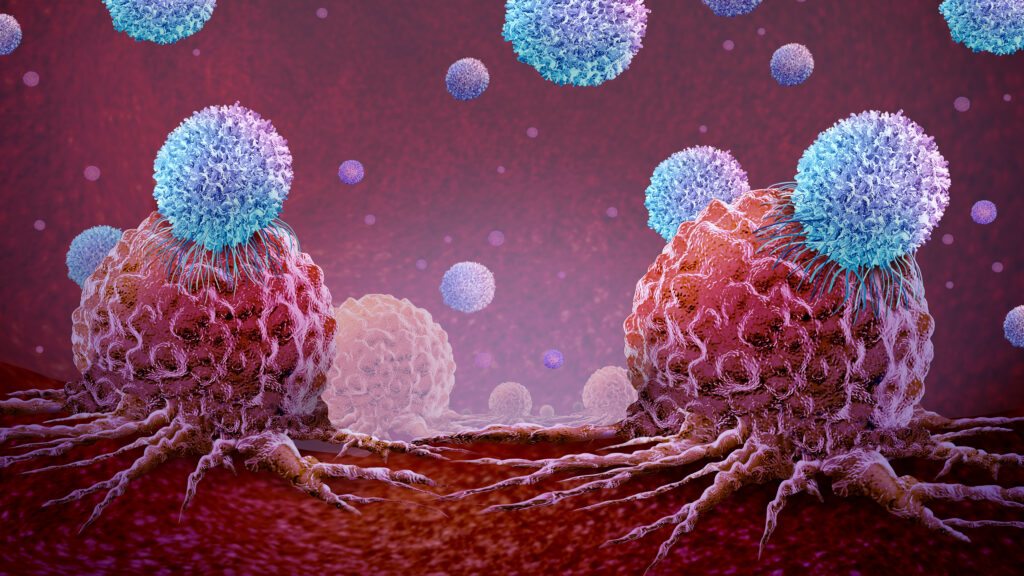
CAR-T cells, immune cells engineered to fight cancer, are one of oncology’s most powerful tools. But making them is arduous, as the patient’s immune cells must be extracted, manipulated in a lab, then returned to the patient’s body. Instead, scientists at Azalea Therapeutics, a spinout from the lab of Nobel laureate Jennifer Doudna, are seeking to make the engineered cells right in the patient’s own body.
In a new paper published in Nature on Wednesday, the researchers showed some early signs of success with the process, known as in vivo CAR-T. With an infusion of gene editing particles, scientists were able to create CAR-T cells that could clear both solid and blood tumors in mice, a step forward for the field.
Azalea Therapeutics isn’t the only group developing in vivo CAR-T. But, said Justin Eyquem, a cancer researcher at the University of California San Francisco and senior author on the paper, what makes their method unique is the ability to reliably genetically edit the right cells and the right part of those cell’s genomes. The method should practically eliminate the chances of accidentally editing the wrong cell or the wrong part of the genome, Eyquem said, both of which could pose serious risks to the patient.
STAT+ Exclusive Story
Already have an account? Log in
This article is exclusive to STAT+ subscribers
Unlock this article — plus daily coverage and analysis of the biotech sector — by subscribing to STAT+.
Already have an account? Log in
Individual plans
Group plans
View All Plans
To read the rest of this story subscribe to STAT+.
Subscribe
