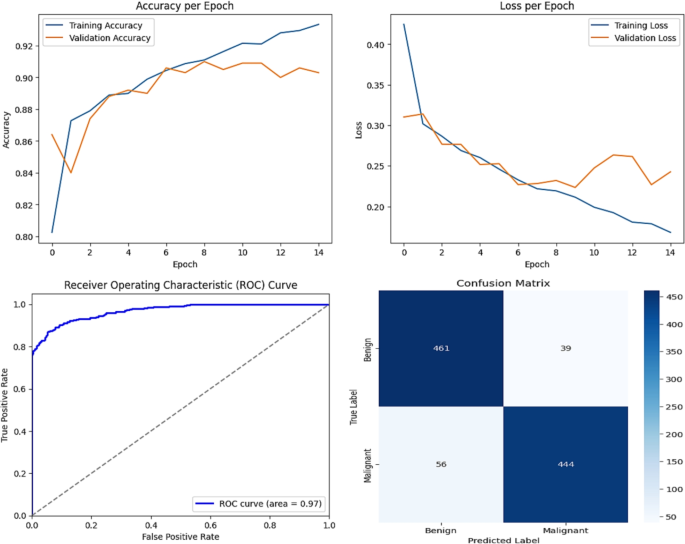
Skin cancer is one of the most prevalent and potentially life-threatening cancers globally, making it a critical area of focus in medical research. Early detection, followed by timely and appropriate treatment, can significantly enhance patient survival outcomes. In recent years, computer-aided diagnostic systems have gained substantial attention for their ability to support accurate and efficient skin cancer diagnosis. This study presents an optimized stacked ensemble strategy to improve skin lesion classification performance. Experiments were conducted on the Melanoma Skin Cancer Dataset using four different convolutional neural network (CNN) architectures, each trained with different optimizers, including Adam, Stochastic Gradient Descent (SGD), Root Mean Square Propagation (RMSprop), and AdaMax (Adamax). All models were trained using categorical cross-entropy loss and evaluated based on validation accuracy, with hyperparameters such as learning rate, batch size, and number of epochs kept constant. More than 90 model combinations were tested using four ensemble strategies: soft and hard voting, weighted voting (using grid search), and stacked ensemble using various meta-learners (Gradient Boosting (GB), k-Nearest Neighbors (KNN), Support Vector Machine (SVM), Logistic Regression (LR), and Naïve Bayes (NB)). The models and ensembles were assessed using standard performance metrics including accuracy, precision, recall, F1-score, and Area Under the Receiver Operating Characteristic Curve (ROC-AUC). Among the evaluated configurations, the stacked ensemble model with Gradient Boosting (GB) as the meta-classifier and M1+M2+M3+M4 as the deep learning base models achieved a validation accuracy of 97.4% and a robust independent test accuracy of 91.80% with a ROC-AUC of 96.87%. The findings demonstrate that ensemble learning, particularly stacked ensembling, significantly enhances classification accuracy and strengthens the reliability of melanoma detection on unseen datasets.
Trending
- A pancreatic cancer organoid-macrophage co-culture using starPEG-heparin hydrogel deciphers tumor-immune cell interactions
- How Might WCLC 2026 Clarify the Evolving Role of APPs in Lung Cancer?
- How Is AI Advancing Tumor Boards, Care Coordination, and Treatment Planning?
- ITGA5 promotes homologous recombination mediated radioresistance in esophageal squamous cell carcinoma by upregulating RAD51AP1 expression
- Helping stoma bag users to swim with confidence
- Therapy induced senescence promotes immunogenicity in acute myeloid Leukemia through reduced EZH2 activity
- Association between smoking, tumor genetics, and outcomes in men with metastatic prostate cancer
- PD-L1 expression and survival in unresectable/recurrent gastric cancer treated by 1st-line treatment without immune checkpoint inhibitors: JCOG1013A1


Saturday, September 5
A robust stacked ensemble strategy with multi-optimizer CNN models for skin cancer classification
 By NewsCancer