


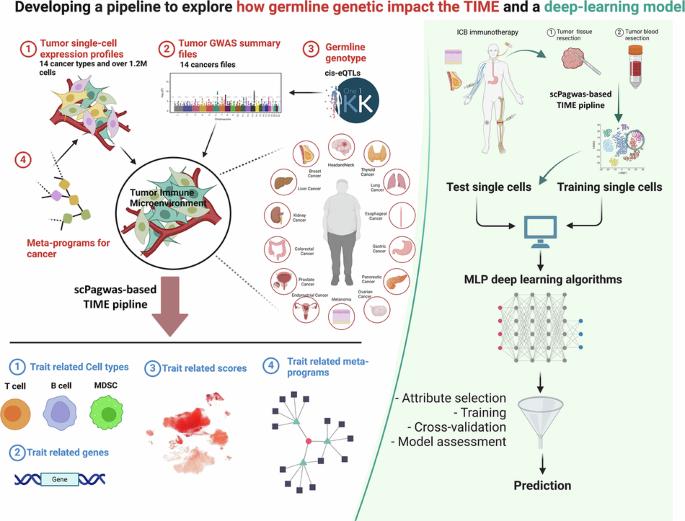
Inherited genetic variation can weaken the ability of the immune system to detect and eliminate malignant cells, limiting the effectiveness of cancer immunotherapy. However, how germline polymorphisms shape the tumor immune microenvironment across cancers remains unclear. Here, we present a polygenic analysis framework that integrates single-cell RNA sequencing with GWAS summary statistics across 14 cancer types to identify genes, immune cells, and functional programs linked to cancer risk. We identify three major genetic modules associated with T cells, B cells, and myeloid cells, and show that the T-cell module is strongly linked to cytotoxic and regulatory T cells, particularly in melanoma and breast cancer. We also identify trait-related genes, including CST7, that are associated with cytokine signaling and antigen presentation. In addition, we develop a deep-learning model that predicts immunotherapy response from both tissue and blood samples, supporting the potential of integrated germline and immune features as predictive biomarkers. Together, these findings provide a framework for understanding how inherited variation shapes tumor immunity and may guide biomarker development for cancer immunotherapy.
The alternative text for this image may have been generated using AI.
