


Machine learning modeling for analyzing transcriptome datasets and gene classifiers
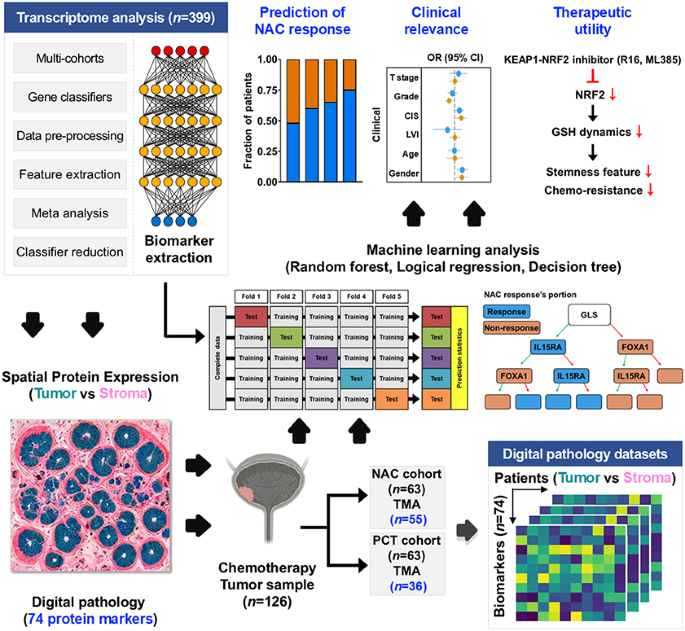
In previous work, we performed gene expression profiling of MIBC tumors from four independent cohorts to elucidate the biological basis of the molecular heterogeneity in the MIBC NAC response14. In this study, we used the transcriptome datasets and various molecular classifiers to establish a machine learning-based computation strategy with the capacity to (1) derive a data-driven classifier for NAC response prediction using single and multicohort cross-validation and (2) optimize the key variables in each gene classifier to select a small number, preferably less than 10, for further diagnostic and therapeutic applications (Fig. 1a). Initially, we used the discovery cohort of our institute (AMC), in which ‘incomplete TURBT’ was documented on the TURBT surgical record, indicating that residual tumor remained after TURBT, thereby excluding the possibility of complete tumor removal by TURBT before NAC and enabling precise assessment of the therapeutic response to NAC14. Transcriptome profiling was performed on 16 patients (NR, n = 8; R, n = 8) using laser capture microdissection (LCMD) of tumor cells to minimize contamination of stromal and inflammatory cells from formalin-fixed and paraffin-embedded TURBT specimens.
Fig. 1: Machine learning models for analyzing transcriptome datasets and refining gene classifiers.The alternative text for this image may have been generated using AI.
a A schematic overview of the machine learning-based multicohort transcriptome analysis and gene classifier reduction for predicting the response to NAC in patients with MIBC. b A heat map summarizing the prediction scores (NR = 0 and R = 1) from the logistic regression model in the AMC discovery cohort (n = 8/group, NR and R) with the indicated gene classifiers. c Box plots of the prediction scores for the modeling algorithms, which showed robust performance in the cross-validation between the MDA MVAC (training) and AMC (validation) cohorts. d, e Multicohort cross-validation using 17 gene classifiers and the transcriptome datasets from AMC and three independent external cohorts, including publicly available gene expression profiling datasets from pre-NAC TURBT specimens and records of pathological response to NAC: box plots of the prediction scores for the logistic regression model with the top 10 MDA_MVAC_p63 gene classifier in the indicated cohort sets (d) and a comparison of the AUC for the modeling algorithms based on the indicated gene classifiers and combinations of four cohort datasets, including one cohort for training, one for validation and two for testing (e). f A decision tree depicting the stepwise classification process used for the gene classifier reduction process. Each internal node represents a decision rule based on the expression of the key feature genes, branches correspond to possible outcomes of the rule marked with different colors (true, green; false, red) and terminal nodes represent the predicted NAC response (R, blue; NR, orange) and the frequency of samples. The importance of key features is presented with the decision tree. Detailed information on the gene classifiers used for each modeling algorithm is presented in Supplementary Tables 4–7.
Given the small number of patients in the AMC discovery cohort, we used a random forest model and calculated the average ‘prediction score’ (NR = 0 and R = 1) for the ten random forest models generated (Supplementary Fig. 1a). The average importance values of the genes included in the model analysis (Supplementary Fig. 1b) was used to extract an AMC data-driven classifier comprising 25 genes (AMC data-driven classifier_#1) for stratifying two NAC response groups (Supplementary Table 4). Gene Ontology (GO) analysis of the genes in this classifier revealed key pathways related to cell cycle and proliferation (Supplementary Fig. 1c). The classifier was reduced to six genes (AMC data-driven classifier_#2) by (1) determining variable importance using the random forest model, (2) evaluating combinations of the top 5–30 variables (genes) according to importance ranking and (3) using cluster heat maps to identify the minimal set of genes that best distinguish between R and NR groups (Supplementary Table 4).
Next, different gene classifiers related to MIBC molecular stratification identified in previous studies were applied to the machine learning model to evaluate their performance in predicting the response to NAC, and highly important genes within each classifier were identified. We compared (1) five AMC classifiers, including two data-driven classifiers and three classifiers representing molecular pathways involved in NAC response from our previous report14 and (2) seven MDA_MVAC classifiers and five TCGA 2017 classifiers comprising signature biomarkers for MIBC molecular subtyping for predicting the response to NAC7 and immune checkpoint inhibition27, respectively (Fig. 1b). Logistic regression modeling was then used to evaluate the prediction scores of each classifier for stratifying the AMC discovery cohort patients. The results showed that the data-driven and in-house NAC response-related classifiers outperformed traditional molecular subtyping classifiers (Fig. 1b).
Next, we designed a classifier reduction strategy to determine the optimal combination of diagnostic IHC markers (Materials and methods), which resulted in the inclusion of fewer than six optimal genes in each classifier (Supplementary Table 5). The classifier reduction process did not substantially affect the performance of most of the classifiers for the prediction of NAC response (difference in area under the receiver operating characteristic (ROC) curve (ΔAUC) <0.2), except TCGA 2017_Luminal and Neuronal ones (Supplementary Fig. 1d,e). Overall, these findings indicate that the machine learning analysis method can be applied to the prediction of NAC response, providing optimal candidate genes for IHC-based diagnostics using the MIBC cohort transcriptome dataset and various gene classifiers.
Modeling for multicohort cross-validation of the transcriptome datasets
To validate the utility of the established machine learning model in external cohorts, we first used the MDA MVAC cohort (n = 23)7, which has a similar sample size to the AMC discovery cohort. Scale differences between the two datasets were normalized and the gene classifiers were refined by data preprocessing (Materials and methods). For cross-validation, three algorithms (logistic regression, decision tree and random forest) were applied to the power-scaled datasets, alternating between training and validation cohorts. The results indicated that both AMC NR and R classifiers effectively predicted the difference between NR and R groups in both cohorts when modeled using random forest or logistic regression (Fig. 1c and Supplementary Fig. 2a, b).
The scalability of the constructed model was evaluated by multicohort cross-validation. For this purpose, we extended the analysis to two independent cohorts: (1) an ‘MDA DDMVAC cohort’ comprising 38 patients from a phase II trial of DDMVAC and bevacizumab28 and (2) an ‘NAC metadata cohort’ consisting of 299 patients from seven institutions treated with various NAC regimens8. In addition to the differences in NAC regimens, the AMC cohort differed in that it included incomplete TURBT cases and used LCMD. Of the three cohorts, the NAC metadata cohort was similar to the AMC cohort because it used 1-mm punched tumor tissue, which was less likely to contain stromal and inflammatory cells. For the multicohort cross-validation, we analyzed transcriptome data for 39 patients (NR, n = 18; R, n = 21) for whom transcriptomic data were available from the validation cohort of 63 patients with MIBC (cT2-4aN0M0) used in the previous study14.
Following the preprocessing the four cohort datasets, we selected power scaler as the optimal scaling method by performing random forest-based premodeling (Materials and methods). To optimize the key variables in the 17 classifiers used in the previous analyses, we applied a classifier reduction process by (1) retaining the number of genes in the classifiers when the count was ≤10 and (2) selecting the top 10 key variables via random forest modeling for each dataset when the classifier gene count was >10. We also developed union classifiers by combining the top 10 genes from each classifier, which were obtained by using each cohort as a training set (Supplementary Table 6).
The results of 1,224 cross-validations (Materials and methods) indicated that logistic regression modeling using the NAC metadata cohort as the training set and the AMC cohort as the validation set achieved the best performance when applying both the top 10 and union MDA_MVAC_p63 classifiers. These models consistently yielded high AUC scores for stratifying NAC responders and nonresponders across all cohorts (Fig. 1d, e). In addition, models employing the top 10 MDA_MVAC_p53 or p53-like regulon classifiers also demonstrated solid discriminatory power across all cohorts. The union TCGA_Neuronal classifier showed strong performance in the AMC cohort but showed reduced discriminative performance in the MDA_MVAC and MDA_DDMVAC cohorts. When the random forest model was applied, the union MDA_MVAC_Luminal classifier effectively distinguished between NR and R patients in the AMC cohort and maintained predictive accuracy across the three external validation cohorts (Fig. 1e and Supplementary Fig. 2c). Notably, decision tree modeling using the NAC metadata cohort as the training set and the AMC cohort as the validation set showed strong performance when applying the union AMC data-driven classifier, particularly in both the NAC metadata and AMC cohorts (Fig. 1e and Supplementary Fig. 2d).
Identification of biomarker candidates for predicting NAC response
To further identify IHC candidate proteins for predicting the response to NAC, the union AMC data-driven classifier was reduced to define a small number of key variables by applying NAC metadata and AMC cohort cross-validation modeling, which showed the strong performance for the training and validation sets. The logistic regression model was applied to reduce the classifier to 15 key variables (Supplementary Fig. 2e). The key classifiers included core genes such as ITGAX/CD11C, AFAP1, KCTD14, RFX7, DPH2, SLC15A3, PPIL2, CARD16, FYB, GADD45B and DNMT3L (Supplementary Table 7). We applied decision tree modeling to reduce the number of key variables in the classifier to 28 and further down to 6 while maintaining the predictive performance for NAC response (Supplementary Fig. 2e,f). The decision tree modeling identified PCDHB9, HCFC1R1, NT5E, TNFAIP8, AFAP1 and POU2F2 as key predictors of NAC response with the highest predictive importance (Fig. 1f and Supplementary Table 7). To further evaluate whether these predictive markers specifically reflect NAC resistance rather than overall tumor burden, we examined their associations with various clinicopathological parameters in the AMC validation cohort. Notably, lower expression levels of AFAP1 and POU2F2 were significantly correlated with high muscularis propria invasion (P = 0.017) (Supplementary Table 8). Furthermore, low POU2F2 expression emerged as a robust prognostic indicator, significantly associated with shortened OS (P = 0.022), thereby underscoring its dual role in predicting both chemoresistance and poor clinical outcomes in MIBC. Taken together, these results confirm that the machine learning method developed for predicting the response to NAC is scalable and can be cross-validated using various multicohort transcriptome datasets. In addition, the classifier reduction process effectively identifies optimal key genes for further studies, such as IHC analysis or functional evaluation.
Role of the stress response and cell adhesion genes for stratifying NAC responses
The biological characteristics of biomarkers associated with NAC response prediction were investigated by performing GO analysis of the 50 genes assigned the highest weight in the classifiers, which effectively stratified the NAC response in the multicohort validation model. These genes were enriched in categories related to the cellular response to external and xenobiotic stimuli, cell adhesion, angiogenesis, fibroblast proliferation and immune responses (Fig. 2a and Source data). RNA-sequencing of the AMC discovery and validation cohorts showed that genes involved in the cellular stress response (for example, CADM4, COX17, GPX2, KEAP1, MAD2L1 and POU2F2), cell adhesion and motility (for example, CD53, PCDHB9, TF and THBS2) and transcription (CDK6, EGR2, KCTD1 and ZNF493) were differentially expressed between NR and R group tumors (Fig. 2b and Source data). The expression of these putative biomarkers was confirmed by qPCR analysis using cDNA libraries derived from LCMD tumor specimens (Fig. 2c). qPCR expression analysis showed that the key predictors from logistic regression and decision tree modeling were differentially expressed according to NAC response (Supplementary Fig. 3). However, the expression patterns of these genes in the AMC cohorts differed from that in the three external cohort datasets except for CADM4, COX17, POU2F2 and ZNF493 (Fig. 2b).
Fig. 2: Validation of predictive biomarkers of NAC response in multiple cohorts.The alternative text for this image may have been generated using AI.
a GO analysis of the biological processes enriched in 50 putative biomarker genes assigned the highest weight in the classifiers from various modeling algorithms in the multicohort transcriptome analysis. b A bubble plot of RNA-sequencing results for the putative biomarker genes in the four independent cohorts used in the machine learning multicohort cross-validation analysis. In the bubble plot, the selected biomarkers are categorized by their biological functions including cellular stress response, immune response, cell adhesion and motility and transcriptional regulation. Within each functional category, genes are presented in alphabetical order. c qPCR analysis of EGR2 and ZNF493 expression in AMC cohort patients (NR, n = 18; R, n = 21). Gene expression is presented as percentage relative to human β2-microglobulin (B2M) expression. d A bubble plot displaying z scores of the expression of 50 putative biomarker genes in the AMC validation cohort following stratifying three identified consensus gene expression subtypes (Ba/Sq, n = 11; LumU, n = 10; LumP, n = 18). e EGR2 and ZNF493 expression levels in subgroups of BC patients according to tumor grade (left), pT category (middle) and OS (right). Gene expression raw data were obtained from UCSC’s Xena project (http://xena.ucsc.edu/). Quantitative results are shown as the mean ± s.e.m.; ∗P < 0.05, ∗∗P < 0.01 and ∗∗∗P < 0.001. Source data.
To enhance the broader applicability of these findings, we employed the consensus MIBC classification method6, which stratified the AMC cohort into three distinct molecular subtypes: LumP (46.15%), LumU (25.64%) and Ba/Sq (28.21%). The absence of LumNS, stroma-rich and neuroendocrine-like (NE-like) subtypes in this cohort is probably attributable to the selective enrichment of BC cells via LCMD and the inherently low prevalence of the NE-like subtype14. Alignment of transcriptome data from the top 50 classifier genes with the consensus MIBC classification scheme revealed subtype-specific transcriptional patterns (Fig. 2d, Supplementary Fig. 4 and Supplementary Table 9). Ba/Sq tumors exhibited markedly elevated expression of immune-related markers (IL1B and CD274/PD-L1), while LumU tumors displayed high expression of genes implicated in cellular signaling pathways (AGAP11 and SHANK3) (Supplementary Fig. 4). By contrast, LumP tumors were characterized by suppressed expression of the cell adhesion molecules (TF and MUC16). Among stress response-associated genes, GPX4 was selectively upregulated in LumU tumors, whereas GPX2 was predominantly elevated in LumP tumors.
To examine the clinical utility of the validated markers, we analyzed TCGA datasets of BC patients29,30 using the GEPIA31 and UCSC Xena project (http://xena.ucsc.edu/) web servers. A subset of the genes related to gene transcription (CDK6, EGR2, MYC and ZNF493), cell adhesion (AFAP1, CRMP1, PSD2 and THBS2) and stress responses (AOX1, GPX2, HSPB7 and SIRT6) was significantly related to the OS of BC patients from the TCGA datasets, and the altered expression of these biomarkers was dependent on tumor grade or pT category (Fig. 2e and Supplementary Fig. 5).
Computational pathology for spatial protein expression analysis
We previously reported the use of computational pathology to analyze digitalized IHC slides for spatial protein expression by implementing a deep learning-based tumor and stroma classifier14. This classifier separates IHC slide images into cancer cell and stromal compartments, thereby enabling the quantification of the mean intensity of the chromogen DAB for each compartment. To evaluate the clinical importance of 33 genes identified in the transcriptome study for which antibodies were commercially available, we applied the digital pathology assay based on the tumor/stroma classifier to TMAs generated from pre-NAC TURBT specimens from the AMC NAC cohort (n = 55). In addition to the cohort of NAC-treated patients (cT2-4aN0M0) from our previous report14, we established an independent cohort of 63 patients with advanced MIBC (>cT2-4aN0M0) from our institute, which was designated as the PCT cohort. The TMAs analyzed by computational pathology included 36 patients from the PCT cohort.
The results of computational pathology indicated that the expression levels of DNMT3L, KEAP1, PTPN12, RFX7, SIRT6, TNFAIP8, USP2 and ZBTB12 determined by IHC differed significantly between NAC R and NR group tumors of the AMC NAC cohort (Fig. 3a–d and Supplementary Fig. 6a). Consistent with transcript expression findings, the majority of proteins were enriched in R group tumors (Fig. 3b, d). For the AMC discovery cohort (n = 16), despite the small sample size, RFX7 and TNFAIP8 remained significantly upregulated in the R group and NR group tumors, respectively (Supplementary Fig. 6a). In addition, the expression of GPX4, HCFC1R1 and MYC was higher in R group tumors, although the statistical significance was marginal (Supplementary Fig. 6b). In the PCT cohort (n = 36), there was a statistically significant increase in HCFC1R1 and GADD45 protein expression in R group tumor cells, whereas DNMT3L was upregulated with marginal significance (Supplementary Fig. 6a, b).
Fig. 3: Computational pathology for spatial protein expression analysis.The alternative text for this image may have been generated using AI.
a Representative digitalized IHC images of the expression of KEAP1 and PTPN12 proteins in NAC NR and R group tumors (magnification: ×40 (top), ×200 (bottom); scale bar, 100 μm). b, c Bubble plots representing the digital pathology analyses of 33 proteins in tumorous epithelial cells (b) and the stroma compartment (c) from the AMC NAC discovery (DIS) and validation (VAL) cohorts (NR, n = 21; R, n = 34) or PCT cohort (NR, n = 25; R, n = 11). Gene symbols are presented in alphabetical order. d Expression levels of KEAP1 and PTPN12 proteins in the tumor (left) or stroma (right) compartment in the indicated AMC cohorts. Quantitative results are presented as dot plots of mean ± s.e.m. (*P < 0.05 and ∗∗P < 0.01, unpaired Student’s t-tests). Source data.
Among the genes with notable protein expression differences between tumor compartments, KEAP1, MYC, PTPN12 and SIRT6 exhibited similar expression patterns in the stromal compartment of R tumors of the AMC NAC cohort (Fig. 3c, d and Source data). PTPN12 and SIRT6 proteins maintained significant expression differences in the AMC discovery cohort. In addition, ADA, GPX2 and GPX4 were upregulated in the stromal compartment of R tumors, although the significance of the differences was marginal.
Analysis of the spatial distribution of these proteins across distinct molecular subtypes, as defined by the consensus classification model, revealed subtype-specific expression patterns. In Ba/Sq subtype tumors, MUC16, TF and TFEB proteins were significantly upregulated, whereas NRF2 expression was notably downregulated in both tumor and stromal compartments (Supplementary Fig. 7a). In the LumU subtype, KCTD14 exhibited significant upregulation, while the expression of CARD16 and MYC proteins was also elevated, though with marginal statistical significance (Supplementary Fig. 7b). Tumors of the LumP subtype demonstrated a significant upregulation of HCFC1R1 expression (Supplementary Fig. 7b). In addition, within the stromal compartment of Ba/Sq tumors, several proteins including FYB1, NOTUM, SLC15A3 and USP2 were significantly upregulated, whereas DNMT3L and EGR2 showed an upward trend with marginal statistical significance (Supplementary Fig. 7c).
Correlation of clinicopathologic features and biomarker expression profiles with NAC response and clinical outcomes
We added 33 proteins to the 41 proteins (Supplementary Fig. 6c, d) from our previous study14 and constructed a digital pathology dataset for analyzing tumor and stromal expression of 74 proteins using the AMC NAC (n = 55) and PCT (n = 36) cohorts (Supplementary Tables 2 and 3). Univariate analyses identified several clinicopathologic features and biomarker expression levels significantly associated with the response to NAC (Supplementary Table 10). Consistent with previous findings14, incomplete resection of the tumor during TURBT (P = 0.022), elevated GLS protein levels (P = 0.029) and low CD11c expression (P = 0.013) in tumor cells were associated with NAC resistance (Table 1). In addition, low expression levels of DNMT3L (P = 0.024), RFX7 (P = 0.032), SIRT6 (P = 0.024), USP2 (P = 0.024) and ZBTB12 (P = 0.022) within tumor cells were significantly correlated with NAC resistance. In the stromal compartment, the expression levels of ten biomarkers, including KEAP1, were similarly associated with the response to NAC (Table 1).
Table 1 Correlation of clinicopathologic features with biomarker expression profiles.
Multivariate logistic regression analysis identified high GLS expression (P = 0.007) and low levels of CD11c (P = 0.016) or DNMT3L (P = 0.018) in tumor cells as independent predictors of NAC resistance (Table 1). The increase in GLS expression was associated with a decreased pathologic response, whereas upregulation of CD11c and DNMT3L corresponded to 7.771-fold and 8.386-fold increases in the pathologic response, respectively. Regarding stromal biomarkers, high SOX2 expression (P = 0.014) and low levels of CD11c (P = 0.016), MYC (P = 0.026) or KEAP1 (P = 0.006) were identified as independent prognostic factors; SOX2 was associated with a decrease in the pathologic response, whereas CD11c, MYC and KEAP1 were associated with 12.927-fold, 34.719-fold and 41.627-fold increases in the pathologic response, respectively (Table 1).
Machine learning-based analysis of the digital pathology datasets for the predictive IHC panel
Next, to identify the optimal number of protein combinations for predicting NAC responsiveness using clinically applicable IHC staining, the digital pathology datasets from the AMC NAC and PCT cohorts (Supplementary Tables 2 and 3) were analyzed using deep learning techniques similar to those used in transcriptome cross-validation modeling. Owing to the lack of external cohorts with IHC digital pathology results, we used the AMC NAC and PCT cohorts for cross-validation of the digital pathology datasets.
To address the limitations posed by the small number of measured biomarkers (n = 74), limited patient samples (55 NAC and 36 PCT cases) and different clinical characteristics between the training and validation groups, we used a data-driven classifier from the RFECV method (Materials and methods). The recursive feature elimination part of this method measures the performance of drop-out cases relative to that of the included cases for every variable to focus on the more impactive features of small size. To overcome the limitations of insufficient dataset size for training and validating, the method recruited the k-fold cross-validation, which divides a single dataset into k sets and trains k −1 sets, validating the remaining single set k times sequentially. The relative performance of a single variable was evaluated an average of k times in different sets (Fig. 4a). The variables selected by the RFECV were used to develop lighter models of two to five variables of the forward–backward-stepwise logistic regression and the decision tree of three-max-depth on the original raw data and on the standardized data.
Fig. 4: Digital pathology modeling with machine learning for developing an IHC panel.The alternative text for this image may have been generated using AI.
a A schematic overview of the variable selection and RFECV modeling of the digital pathology datasets from AMC NAC and PCT cohorts for developing an optimized IHC panel to predict the response to NAC. The expression levels of 74 proteins in AMC NAC (n = 55) and PCT (n = 36) cohort patients in the tumor and stroma and clinical annotations are presented in Supplementary Tables 2 and 3. b A summary of the modeling methods, data types and list or number of proteins corresponding to the biomarkers with the highest weight in each modeling algorithm that effectively distinguished between NAC NR and R groups based on the expression in the tumor compartment. c The accuracy of the model performance for NAC response prediction in the cross-validation between the AMC NAC (training) and PCT (validation) cohorts. d A decision tree model of the tumor compartment. The key feature proteins for a decision are presented in outcome branches with different colors (true, green; false, red). Terminal nodes indicate the predicted class of NAC response (R, blue; NR, orange) and the frequency of samples. The importance of key features is presented with the decision tree. e ROC curve of the predictive performance of the tumor compartment decision tree model in the AMC NAC and PCT cohorts. f–i Survival outcomes based on the computational pathology prediction model: Kaplan–Meier curves of OS (f and h) and PFS (g and i) stratified by predicted NAC response or no-response in the AMC NAC (f and g) and PCT (h and i) cohorts. Predictions were generated using the decision tree models of the computational pathology datasets of tumor compartments.
For each tumor and stroma compartment, we identified protein groups capable of distinguishing between NAC NR and R groups for each data type and modeling method (Fig. 4b and Supplementary Fig. 8a). Among the finalized models, the decision tree model with raw data of tumor compartments (Tumor_tree_raw) was the most effective in predicting the response to NAC by combining four proteins (GLS, IL15RA, AFAP1 and FOXA1) (Fig. 4c). Detailed results and the key genes involved in the best decision tree models for tumor and stromal compartments are shown in Fig. 4d (tumor expression) and Supplementary Fig. 8b (stroma expression).
To validate the clinical utility of the deep learning-based modeling method for computational pathology, we compared the performance of NAC and PCT cohorts. The decision tree model of the tumor compartment (Tumor_tree_raw) was a strong predictor of NAC response (Fig. 4e) and the distribution of patients with different NAC responses was distinctly separated in the AMC NAC cohort. This finding was validated in the PCT cohort (Supplementary Fig. 8c). However, for stromal expression-based modeling, the distinction of NAC responses was not as clear, particularly in the PCT cohort (Supplementary Fig. 8d–f). This outcome may be attributed to the variable selection and the low frequency of highly informative variables in the stromal compartment expression datasets from both AMC cohorts. The present study provides a deep learning-based modeling approach that integrates high-throughput automated digital pathology analysis of large-scale MIBC patient samples, leading to the optimal small number of protein combinations for IHC staining of tumor and stromal compartments to predict the response to NAC.
Survival outcomes of computational pathology-based prediction modeling
To assess the prognostic relevance of NAC response predictions derived from the computational pathology model, we analyzed survival outcomes in both the NAC and PCT cohorts (Materials and methods). In the NAC cohort, patients predicted to be NAC responders based on tumor biomarker expression exhibited prolonged OS (P = 0.084) and PFS (P = 0.104), though with marginal statistical significance (Fig. 4f, g). Notably, in the PCT cohort, NAC responders demonstrated significantly improved OS (P = 0.008) and PFS (P = 0.046) compared with nonresponders, as determined by the tumor-based model (Fig. 4h, i).
When predictions were based on stromal biomarker expression, NAC responders in the NAC cohort exhibited a trend toward prolonged OS (P = 0.063) and significantly longer PFS (P = 0.015) compared with nonresponders (Supplementary Fig. 9). However, no significant survival differences were observed in the PCT cohort using the stromal-based model. Collectively, these findings highlight a strong association between computational pathology-based NAC response predictions and survival outcomes in patients with MIBC, underscoring their potential clinical utility for treatment stratification.
Mechanistic validation of KEAP1–NRF2 pathway for stratifying NAC response in MIBCs
To explore potential therapeutic strategies based on biomarkers identified through machine learning analysis, we first assessed the differential expression of clinically relevant biomarker proteins in various human MIBC cell lines with distinct responses to cisplatin (Cis_R) and nonresponse (Cis_NR) behaviors. Consistent with clinical sample data, the expression of DNMT3L, GPX2, HCFC1R1, KEAP1, MYC, PTPN12, RFX7, USP2 and ZBTB12 was higher in Cis_R J82 MIBC cells than in Cis_NR cell lines (Fig. 5a and Supplementary Fig. 10a–c). The reduced expression of KEAP1 in Cis_NR T24 and J82 cells was confirmed by immunofluorescence staining (Supplementary Fig. 10d). In line with the repression of KEAP1, total and phosphorylated NRF2 proteins were upregulated in Cis_NR J82 and T24 cells. Notably, their nuclear localization, an indicative of NRF2 pathway activation, was markedly increased in these chemoresistant MIBC cells (Supplementary Fig. 10e, f). The ADA and GPX4 proteins were upregulated in Cis_R T24 cells, whereas GADD45B and TNFAIP8 showed increased expression in Cis_R KU19-19 MIBC cells (Supplementary Fig. 10g).
Fig. 5: KEAP1–NRF2 axis regulates NRF2 stability, GSH metabolism and cisplatin resistance in human MIBC cells.The alternative text for this image may have been generated using AI.
a Western blot analysis of clinically relevant biomarker proteins in cisplatin responsive (Cis_R) and nonresponsive (Cis_NR) MIBC cell lines. β-Actin was used as a loading control. Molecular weight (MW) marker sizes (kD) are shown on the left. b A gene interaction network of biomarkers characterizing the response to NAC validated using machine learning analysis. The external stress and immune response gene clusters are indicated in red and green, respectively. c, d Protein expression ratios relative to KEAP1 determined by computational pathology of the tumor compartment: a bubble plot displaying z scores and the statistical significance of protein expression ratios relative to KEAP1 in NR and R groups from the AMC NAC and PCT cohorts (c) and dot plots showing NRF2–KEAP1 (top) and GPX2–KEAP1 (bottom) protein expression ratios in the AMC cohorts (d). The ratios were calculated using values from three independent TMA cores per patient. e NRF2 protein stability was evaluated by CHX chase assay in Cis_R and Cis_NR T24 (left) and J82 (right) cells. f KEAP1 was ectopically expressed in Cis_NR T24 and J82 cells, followed by immunoblot analysis of GSH metabolism-associated genes. g A schematic of real-time live-cell GSH GRC assay using FreSHtracer after oxidative challenge with 0.1 mM diamide (red arrow). The glutathione index (GI) was derived from both baseline F510/F580 fluorescence ratio and GSH recovery slope. h, i Fluorescence ratio-based fluorescence plots (h) and GI quantification (i) in KEAP1-overexpressing Cis_NR T24 cells (n = 4). j ChIP–qPCR analysis of NRF2 binding to the promoter regions of GSH-related target genes in KEAP1-overexpressing Cis_NR T24 cells (n = 4). Fold enrichment is shown relative to empty vector controls. Quantitative data are expressed as the mean ± s.e.m.; ∗P < 0.05, ∗∗P < 0.01, ∗∗∗P < 0.001, unpaired Student’s t-test (d and i) and two-way ANOVA (h and j) with Bonferroni post hoc test. Source data.
Next, we examined the association between these biomarkers and identified two key gene networks: (1) an external stress response network involving KEAP1 and MYC and (2) an immune response gene cluster including IL1B and CD274/PD-L1 (Fig. 5b). To validate the clinical relevance of these findings, we compared the expression ratios of KEAP1 or MYC proteins and their target proteins between NR and R group patients. The ratios of several proteins including NRF2, GPX2, CK20, MUC16, PCDHB9 and PPP2R5A to the KEAP1 protein were significantly elevated in the NR tumor compartment of the AMC NAC cohort (Fig. 5c, d and Source data). In particular, analysis of the ratios to the MYC protein identified a substantial number of proteins with increased ratio values in the NR tumor compartment of the AMC NAC validation cohort (Supplementary Fig. 10h, i and Source data), suggesting that KEAP1 and MYC could play a role in regulating the biomarkers predictive of NAC response.
Based on recent evidence suggesting that NRF2 activation promotes an immune-excluded microenvironment32, we sought to determine whether NRF2 pathway can be associated with suppressed immune infiltration in our LCMD-derived AMC cohort. Correlation analysis using the RNA-sequencing dataset revealed a significant inverse relationship between NRF2/NFE2L2 expression and key immune-response-related genes, including CXCL9, CXCL10, CD11c, CD53 and CD274/PD-L1 (Supplementary Fig. 11a, b). Intriguingly, this negative correlation was more pronounced in responders (R group) compared with nonresponders (NR group), particularly for CD11c, CXCL9 and CD274, suggesting that NRF2-mediated immune evasion may be a critical determinant of therapeutic sensitivity. Furthermore, consistent with its canonical role in redox homeostasis, NRF2 expression showed strong positive correlations with GSH dynamics-related genes, such as GLS, GSR, GCLM, GCLC and PRDX1 (Supplementary Fig. 11a, c). Collectively, these data indicate that heightened NRF2 activity in MIBC not only orchestrates antioxidant defense via GSH metabolic reprogramming but also potentially contributes to a ‘cold’ tumor microenvironment by suppressing intrinsic pro-inflammatory signaling.
Functional role of KEAP1 in regulating GSH dynamics in chemoresistant MIBC cells
We previously reported that increased GSH dynamics, driven by coordinated upregulation of GLS, GSR, and GCLM, promotes cell proliferation, stemness, and invasiveness in MIBC cells14. In this context, the upregulation of KEAP1 in cisplatin-sensitive tumors, which enhances NRF2 ubiquitination and proteasomal degradation, suggests that modulation of the KEAP1–NRF2 cascade may improve therapeutic responsiveness. Indeed, cycloheximide (CHX) chase assays revealed reduced NRF2 protein stability in both Cis_R J82 and T24 cells (Fig. 5e), consistent with enhanced KEAP1-mediated degradation. Next, to mechanistically validate this hypothesis, we ectopically expressed KEAP1 in the Cis_NR T24 and J82 MIBC cell lines and examined the expression changes in genes associated with GSH biosynthesis (GCLM and GCLC), precursor metabolism (GLS), and utilization (GSR and PRDX1). KEAP1 overexpression led to transcriptional and protein-level downregulation of most GSH-associated genes in both cell lines (Fig. 5f and Supplementary Fig. 12a).
To assess the functional impact of KEAP1 on antioxidant capacity in MIBC cells, we employed FreSHtracer, a reversible fluorescent probe enabling real-time, nondestructive imaging of intracellular GSH levels33,34. Using this approach, we real-time monitored and quantified GSH redox dynamics by measuring GRC following oxidative challenge with 100 μM diamide over a 1-h time course (Fig. 5g). Consistent with the gene expression results, KEAP1-overexpressing Cis_NR cells exhibited a significant reduction in GSH dynamics, as indicated by elevated baseline fluorescence ratio (F510/F580; total GSH) and increased slopes indicative of accelerated GSH turnover during redox recovery (Fig. 5h, i and Supplementary Fig. 12b–d).
Importantly, KEAP1 overexpression decreased NRF2 protein stability (Supplementary Fig. 12e), leading to reduced levels of total and phosphorylated NRF2, along with a marked decrease in its nuclear localization in Cis_NR cells (Fig. 5f and Supplementary Fig. 12f,g), confirming effective suppression of NRF2 signaling. ChIP assays further demonstrated decreased NRF2 occupancy at promoter regions of the GSH-regulating genes in KEAP1-overexpressing cells (Fig. 5j and Supplementary Fig. 12h). Together, these findings highlight KEAP1 as a key upstream modulator of GSH dynamics through NRF2-dependent transcriptional regulation.
Role of the KEAP1–NRF2 axis in regulating proliferation and stemness in MIBC cells
Previous studies have shown that enhanced GSH dynamics promote proliferative capacity and stem-like properties, which are critical for clinical behaviors of BCs1,2,14. Consistent with this, ectopic expression of KEAP1 significantly suppressed the proliferation of the Cis_NR T24 and J82 cells (Fig. 6a and Supplementary Fig. 13a). When cultured under anchorage-independent conditions, KEAP1-overexpressing Cis_NR cells exhibited markedly reduced tumor sphere-forming ability over a 5-day period compared with vector control cells (Fig. 6b and Supplementary Fig. 13b). Moreover, both the clonogenic potential and invasive capacity of KEAP1-expressing cells were diminished, as confirmed by limiting dilution and transwell invasion assays, respectively (Fig. 6c–e and Supplementary Fig. 13c–e).
Fig. 6: The KEAP1–NRF2 axis regulates stemness properties in cisplatin-resistant MIBC cells.The alternative text for this image may have been generated using AI.
a–e Functional assays assessing proliferation (a; n = 4) and stemness features (b–e) based on tumor sphere formation (b; n = 45), colony forming unit (CFU) activity (c; n = 3), clonogenicity by limiting dilution (d; n = 3) and Matrigel invasion (e; n = 4) in KEAP1-overexpressing Cis_NR T24 cells. Representative tumor spheres are shown at ×40 (upper) and ×100 (lower) magnification (scale bars, 200 μm); invasion assays are shown at ×100 (upper) and ×200 (lower) magnification (scale bars, 100 μm). f–i Tumor sphere (f; n = 45), CFU capacity (g; n = 3), clonogenic limiting dilution (h; n = 3) and invasion (i; n = 4) assays following treatment of Cis_NR T24 (left) and J82 (right) cells with KEAP1–NRF2 inhibitors ML385 or R16. Representative images are provided in Supplementary Fig. 14a–c. j, k NRF2 protein stability after KEAP1–NRF2 pathway inhibition was evaluated by CHX chase assay in Cis_NR T24 (j) and J82 (k) cells. l Immunoblot analysis of total and phosphorylated NRF2 proteins and GSH-related markers following treatment with each KEAP1–NRF2 inhibitor. m Fluorescent ratio-based quantification of the GSH index in KEAP1–NRF2 inhibitor-treated Cis_NR T24 (left) and J82 (right) cells (n = 3). Data are presented as mean ± s.e.m. P < 0.05, **P < 0.01 and ***P < 0.001. Statistical analyses were performed using unpaired two-tailed Student’s t-tests (b–e) and one-way ANOVA (f–m) with Bonferroni post hoc test. Cells in the NT (non-treated) group were used as a control.
To further validate the functional role of the KEAP1–NRF2 pathway, the Cis_NR T24 and J82 cells were treated with two distinct NRF2 pathway inhibitors, ML385 and R16 (refs. 18,19). Pharmacological inhibition of the KEAP1–NRF2 axis markedly attenuated tumor sphere formation (Fig. 6f and Supplementary Fig. 14a), clonogenic growth (Fig. 6g, h and Supplementary Fig. 14b), and invasive capacities (Fig. 6i and Supplementary Fig. 14c), supporting its critical role in maintaining the stemness phenotype of chemoresistant MIBC cells. Mechanistically, treatment with ML385 or R16 markedly decreased the expression and protein stability of NRF2 (Fig. 6j, k), accompanied by the downregulation of the NRF2-regulated genes involved in GSH metabolism (Fig. 6l and Supplementary Fig. 14d). Accordingly, ML385- or R16-treated Cis_NR T24 and J82 cells showed a substantial reduction in GSH index profiles, as determined by real-time GRC live cell imaging assay (Fig. 6m and Supplementary Fig. 14e). These findings collectively indicate that KEAP1–NRF2 signaling governs GSH dynamics and regulates cellular proliferation, stem-like properties and invasiveness in human MIBC cells, and provide mechanistic support for targeting the KEAP1–NRF2 pathway as a strategy to overcome chemoresistance in MIBC.
Therapeutic targeting of the KEAP1–NRF2 axis resensitizes chemoresistant MIBC cells
To explore the therapeutic potential of the NRF2–KEAP1 pathway for modulating the response to cisplatin-based neoadjuvant chemotherapy in human MIBCs, cells were treated with varying doses of cisplatin in the presence or absence of two types of NRF2–KEAP1 inhibitors (ML385 and R16). In J82 and T24 Cis_R MIBC cell lines, the combination of cisplatin with each NRF2–KEAP1 inhibitor markedly suppressed cell growth at a suboptimal cisplatin concentration (1 μg/ml) (Fig. 7a, b), whereas the NRF2–KEAP1 inhibitors alone had a minimal impact on cell growth (Supplementary Fig. 15a, b). The combination therapy synergistically inhibited the growth of Cis_NR MIBC cells in a dose-dependent manner (Supplementary Fig. 15c, d). Notably, enforced expression of KEAP1 in Cis_NR T24 and J82 cells sensitized them to cisplatin in a dose-dependent manner, further confirming the critical role of KEAP1 in mediating chemosensitivity (Supplementary Fig. 15e, f). Consistent with these results, disruption of the NRF2–KEAP1 pathway induced apoptotic cell death in response to cisplatin treatment (Fig. 7c), activating effector caspase-3 and promoting cleavage of poly-(ADP-ribose) polymerase (PARP) in Cis_NR MIBC cells (Fig. 7d and Supplementary Fig. 15g). Suboptimal cisplatin or NRF2–KEAP1 modulators alone had no effect on caspase-3 or PARP cleavage or apoptosis.
Fig. 7: Pharmacological inhibition of the KEAP1–NRF2 pathway resensitizes cisplatin-resistant MIBC cells to chemotherapy.The alternative text for this image may have been generated using AI.
a, b Growth curves of T24 and J82 Cis_NR MIBC cell lines treated with the indicated doses of the NRF2–KEAP1 inhibitors ML385 (a) and R16 (b) alone or in combination with 1 μg/ml cisplatin (n = 6). c, d Analysis of apoptosis by flow cytometry with Annexin-V/PI staining (c; n = 4) and immunoblotting of cleaved caspase-3 and PARP (d) in T24 and J82 Cis_NR MIBC cells treated with the indicated NRF2–KEAP1 pathway inhibitors alone or in combination with 1 μg/ml cisplatin. e–h Evaluation of therapeutic efficacy in an orthotopic bladder cancer xenograft model treated with cisplatin (1 mg/kg), ML385 (30 mg/kg), R16 (55 mg/kg) or their combination. Bladder tumors were excised and visualized (e) and tumor weights quantified (f) from two independent experiments (five mice per group). g Representative hematoxylin and eosin (H&E) staining of bladder tissues from each treatment group at ×40 (top; scale bars, 200 μm) and ×200 (bottom; scale bars, 100 μm) magnification. h, i Immunofluorescence analysis of xenograft tumors for KEAP1, NRF2 and the cancer stem cell marker CD44v6 or KRT14 (h) and co-localization of NRF2 (green) and CD44v6 (red) proteins (i) in residual tumor tissues. Nuclei were counterstained with DAPI (blue). Images were acquired at ×200 magnification (scale bars, 100 μm). Data are presented as mean ± s.e.m. Statistical significance was determined by two-way ANOVA with Bonferroni post hoc test. P < 0.05, P < 0.01, *P < 0.001 versus vehicle control; #P < 0.05, ##P < 0.01, ###P < 0.001 for combination versus monotherapy. Source data.
To confirm the in vivo relevance of these findings, we examined the effect of NRF2-specific inhibitor (ML385 or R16) alone or in combination with cisplatin in an orthotopic xenograft BC model by implanting of 1 × 10⁶ Cis_NR T24 cells into the outer layer of the bladder of NSG immunodeficient mice1,2,14. After 2 weeks, animals were randomized to receive PBS vehicle, cisplatin (1 mg/kg), ML385 (30 mg/kg), R16 (55 mg/kg) or combination of cisplatin and each NRF2 inhibitor over ten intraperitoneal injections at 3-day intervals (Supplementary Fig. 16a). Monotherapy with cisplatin, ML385 or R16 induced only modest tumor inhibition (28.81% ± 12.31%, 23.93% ± 11.34% and 30.9% ± 14.88%, respectively), whereas combination therapy with cisplatin and either ML385 or R16 led to a striking reduction in tumor burden (80.29% ± 1.88% and 75.44% ± 7.4%, respectively) at 6 weeks after tumor engraftment (Fig. 7e, f). Histological analyses confirmed robust tumor inhibition in the combination treatment groups, which was not evident in monotherapy or control-treated mice (Fig. 7g and Supplementary Fig. 16b).
We further examined the expression of KEAP1–NRF2-mediated GSH metabolism-related proteins and stemness markers in xenograft tissues. Immunofluorescence revealed that cisplatin monotherapy led to upregulation of NRF2 and its downstream targets GLS, GSR and GCLM, whereas co-treatment with NRF2-specific inhibitors (ML385 or R16) effectively suppressed their expression (Fig. 7h and Supplementary Fig. 16c). Similarly, expression of bladder cancer stem cell markers CD44v6 and KRT14 was markedly suppressed in tumors from animals receiving the combination regimens (Fig. 7h). Consistent with our clinical findings, immunofluorescence analysis revealed that cisplatin monotherapy markedly induced the co-expression of NRF2 and GLS, the primary driver of GSH dynamics, in residual tumor tissues. However, this induction was effectively abrogated by co-treatment with NRF2-specific inhibitors, ML385 or R16 (Supplementary Fig. 16d). In addition, co-expression of CD44v6 and NRF2 was frequently observed in vehicle or cisplatin-treated tumors; however, it was substantially diminished following combined treatment with cisplatin and either ML365 or R16 (Fig. 7i). Together, these findings demonstrate that therapeutic targeting of the KEAP1–NRF2 pathway enhances cisplatin sensitivity in MIBCs, underscoring the translational potential of the machine learning model integrating transcriptome and digital pathology datasets as a framework for guiding rational combination therapies to overcome chemoresistance in MIBCs.
