


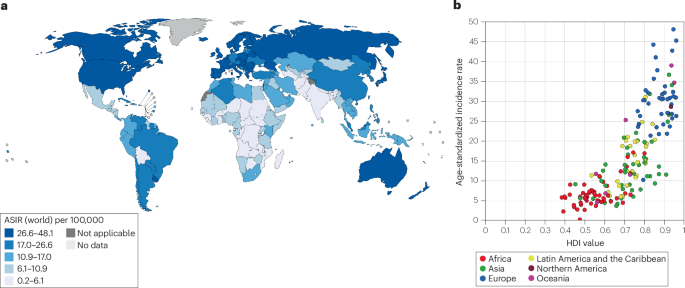
Bray, F. et al. Global cancer statistics 2022: GLOBOCAN estimates of incidence and mortality worldwide for 36 cancers in 185 countries. CA Cancer J. Clin. 74, 229–263 (2024).
Google Scholar
International Agency for Research on Cancer. Global Cancer Observatory: Cancer Today. https://gco.iarc.who.int/media/globocan/factsheets/populations/900-world-fact-sheet.pdf (2026).
Sung, H. et al. Colorectal cancer incidence trends in younger versus older adults: an analysis of population-based cancer registry data. Lancet Oncol. 26, 51–63 (2025).
Google Scholar
Siegel, R. L. et al. Global patterns and trends in colorectal cancer incidence in young adults. Gut 68, 2179–2185 (2019).
Google Scholar
Morgan, E. et al. Global burden of colorectal cancer in 2020 and 2040: incidence and mortality estimates from GLOBOCAN. Gut 72, 338–344 (2023).
Google Scholar
GBD 2019 Colorectal Cancer Collaborators. Global, regional, and national burden of colorectal cancer and its risk factors, 1990-2019: a systematic analysis for the Global Burden of Disease Study 2019. Lancet Gastroenterol. Hepatol. 7, 627–647 (2022).
Google Scholar
Gullickson, C. et al. Colorectal cancer survival in sub-Saharan Africa by age, stage at diagnosis and Human Development Index: a population-based registry study. Int. J. Cancer 149, 1553–1563 (2021).
Google Scholar
Dantas, A. A. G. et al. Multilevel analysis of social determinants of advanced stage colorectal cancer diagnosis. Sci. Rep. 14, 9667 (2024).
Google Scholar
Guo, L. et al. Global distribution of colorectal cancer staging at diagnosis: an evidence synthesis. Clin. Gastroenterol. Hepatol. 23, 2088–2101 (2025).
Google Scholar
Issaka, R. B., Chan, A. T. & Gupta, S. AGA clinical practice update on risk stratification for colorectal cancer screening and post-polypectomy surveillance: expert review. Gastroenterology 165, 1280–1291 (2023).
Google Scholar
Zhang, X. et al. Global burden of colon and rectal cancer and attributable risk factors in 204 countries and territories from 1990 to 2021. BMC Gastroenterol. 25, 332 (2025).
Google Scholar
Siegel, R. L. et al. Colorectal cancer statistics, 2026. CA Cancer J. Clin. 76, e70067 (2026).
Google Scholar
Gupta, S., May, F. P., Kupfer, S. S. & Murphy, C. C. Birth cohort colorectal cancer (CRC): implications for research and practice. Clin. Gastroenterol. Hepatol. 22, 455–469 (2024).
Google Scholar
Siegel, R. L. et al. Colorectal cancer incidence patterns in the United States, 1974-2013. J. Natl Cancer Inst. 109, djw322 (2017).
Google Scholar
Araghi, M. et al. Changes in colorectal cancer incidence in seven high-income countries: a population-based study. Lancet Gastroenterol. Hepatol. 4, 511–518 (2019).
Google Scholar
Feletto, E. et al. Trends in colon and rectal cancer incidence in Australia from 1982 to 2014: analysis of data on over 375,000 cases. Cancer Epidemiol. Biomarkers Prev. 28, 83–90 (2019).
Google Scholar
Zhang, T. et al. Global, regional, and national trends in colorectal cancer burden from 1990 to 2021 and projections to 2040. Front. Oncol. 14, 1466159 (2024).
Google Scholar
GBD 2023 Cancer Collaborators. The global, regional, and national burden of cancer, 1990-2023, with forecasts to 2050: a systematic analysis for the Global Burden of Disease Study 2023. Lancet 406, 1565–1586 (2025).
Google Scholar
Institute for Health Metrics and Evaluation. GBD Cancer Compare Data Visualization. https://vizhub.healthdata.org/gbd-compare/cancer (2026).
Meng, Y. et al. Global, regional, and national burden of early-onset colorectal cancer from 1990 to 2021: a systematic analysis based on the global burden of disease study 2021. BMC Med. 23, 34 (2025).
Google Scholar
Niv, Y. Screening the average risk population for colorectal cancer: the Israeli experience 1985-97. Colorectal Dis. 5, 358–361 (2003).
Google Scholar
Half, E. E. et al. Colorectal cancer screening at age 45 years in Israel: cost-effectiveness and global implications. Cancer 130, 901–912 (2024).
Google Scholar
Suh, M., Choi, K. S., Lee, Y. Y., Park, B. & Jun, J. K. Cancer screening in Korea, 2012: results from the Korean National Cancer Screening Survey. Asian Pac. J. Cancer Prev. 14, 6459–6463 (2013).
Google Scholar
Park, B. et al. Overview of the national cancer screening program for colorectal cancer in Korea over 14 years (2004-2017). Cancer Res. Treat. 55, 910–917 (2023).
Google Scholar
Okada, T. et al. International collaboration between Japan and Chile to improve detection rates in colorectal cancer screening. Cancer 122, 71–77 (2016).
Google Scholar
Saito, H. Colorectal cancer screening using immunochemical faecal occult blood testing in Japan. J. Med. Screen. 13, S6–S7 (2006).
Google Scholar
Basu P. et al. International Agency for Research on Cancer. Cancer Screening in Five Continents. https://canscreen5.iarc.fr (2025).
Sierra, M. S. & Forman, D. Burden of colorectal cancer in Central and South America. Cancer Epidemiol. 44, S74–S81 (2016).
Google Scholar
Gopalani, S. V. et al. Breast, cervical, and colorectal cancer screening test use in the US territories of Guam, Puerto Rico, and the US Virgin Islands. Cancer Epidemiol. 84, 102371 (2023).
Google Scholar
Mosquera, I. et al. Assessment of barriers to cancer screening and interventions implemented to overcome these barriers in 27 Latin American and Caribbean countries. Int. J. Cancer 155, 719–730 (2024).
Google Scholar
Irazola, V. et al. Quality improvement intervention to increase colorectal cancer screening at the primary care setting: a cluster-randomised controlled trial. BMJ Open Qual. 12, e002158 (2023).
Google Scholar
Alfaro, G., Berger, Z., Mondschein, S., Subiabre, F. & Yankovic, N. Barriers to the use of tests for early detection of colorectal cancer in Chile. Sci. Rep. 14, 8817 (2024).
Google Scholar
Saito, H. et al. The long term participation trend for the colorectal cancer screening after the 2011 triple disaster in Minamisoma City, Fukushima, Japan. Sci. Rep. 11, 23851 (2021).
Google Scholar
Cediel, G. et al. Ultra-processed foods drive to unhealthy diets: evidence from Chile. Public Health Nutr. 24, 1698–1707 (2021).
Google Scholar
Gómez, G. et al. Diet quality and diet diversity in eight Latin American countries: results from the Latin American Study of Nutrition and Health (ELANS). Nutrients 11, 1605 (2019).
Google Scholar
GBD 2021 Adult BMI Collaborators. Global, regional, and national prevalence of adult overweight and obesity, 1990-2021, with forecasts to 2050: a forecasting study for the Global Burden of Disease Study 2021. Lancet 405, 813–838 (2025).
Sakai, Y., Rahayu, Y. Y. S., Zhao, Y. & Araki, T. Dietary pattern transition and its nutrient intakes and diet quality among Japanese population: results from the 2003-2019 National Survey. Public Health Nutr. 27, e231 (2024).
Google Scholar
Kastrinos, F. & Syngal, S. Inherited colorectal cancer syndromes. Cancer J. 17, 405–415 (2011).
Google Scholar
Leddin, D. et al. Clinical practice guideline on screening for colorectal cancer in individuals with a family history of nonhereditary colorectal cancer or adenoma: the Canadian Association of Gastroenterology Banff Consensus. Gastroenterology 155, 1325–1347 (2018).
Google Scholar
Roos, V. H. et al. Effects of family history on relative and absolute risks for colorectal cancer: a systematic review and meta-analysis. Clin. Gastroenterol. Hepatol. 17, 2657–2667 (2019).
Google Scholar
Wong, M. C. S. et al. Risk of colorectal neoplasia in individuals with self-reported family history: a prospective colonoscopy study from 16 Asia-Pacific regions. Am. J. Gastroenterol. 111, 1621–1629 (2016).
Google Scholar
Keivanlou, M. H. et al. Family history of cancer as a potential risk factor for colorectal cancer in EMRO countries: a systematic review and meta-analysis. Sci. Rep. 13, 17457 (2023).
Google Scholar
Ramírez-Díaz, M. D. P., Alvarez-Bañuelos, M. T., Robaina-Castellanos, M. S., Castro-Enríquez, P. P. & Guzmán-García, R. E. Association of family history and life habits in the development of colorectal cancer: a matched case-control study in Mexico. Int. J. Environ. Res. Public Health 18, 8633 (2021).
Google Scholar
Lathroum, L., Ramos-Mercado, F., Hernandez-Marrero, J., Villafaña, M. & Cruz-Correa, M. Ethnic and sex disparities in colorectal neoplasia among Hispanic patients undergoing screening colonoscopy. Clin. Gastroenterol. Hepatol. 10, 997–1001 (2012).
Google Scholar
Katsidzira, L. et al. A case-control study of risk factors for colorectal cancer in an African population. Eur. J. Cancer Prev. 28, 145–150 (2019).
Google Scholar
Tazinkeng, N. N. et al. Incidence and risk factors for colorectal cancer in Africa: a systematic review and meta-analysis. BMC Gastroenterol. 24, 303 (2024).
Google Scholar
Katsidzira, L. et al. Investigation on the hereditary basis of colorectal cancers in an African population with frequent early onset cases. PLoS ONE 14, e0224023 (2019).
Google Scholar
Yurgelun, M. B. et al. Cancer susceptibility gene mutations in individuals with colorectal cancer. J. Clin. Oncol. 35, 1086–1095 (2017).
Google Scholar
Cercek, A. et al. A comprehensive comparison of early-onset and average-onset colorectal cancers. J. Natl Cancer Inst. 113, 1683–1692 (2021).
Google Scholar
Stoffel, E. M. et al. Germline genetic features of young individuals with colorectal cancer. Gastroenterology 154, 897–905 (2018).
Google Scholar
Pearlman, R. et al. Prevalence and spectrum of germline cancer susceptibility gene mutations among patients with early-onset colorectal cancer. JAMA Oncol. 3, 464–471 (2017).
Google Scholar
Mork, M. E. et al. High prevalence of hereditary cancer syndromes in adolescents and young adults with colorectal cancer. J. Clin. Oncol. 33, 3544–3549 (2015).
Google Scholar
Rubenstein, J. H., Enns, R., Heidelbaugh, J. & Barkun, A. American Gastroenterological Association Institute guideline on the diagnosis and management of Lynch syndrome. Gastroenterology 149, 777–782 (2015).
Google Scholar
Park, J. et al. Impact of population screening for Lynch syndrome insights from the All of Us data. Nat. Commun. 16, 523 (2025).
Google Scholar
International Mismatch Repair Consortium. Variation in the risk of colorectal cancer in families with Lynch syndrome: a retrospective cohort study. Lancet Oncol. 22, 1014–1022 (2021).
Win, A. K. et al. Prevalence and penetrance of major genes and polygenes for colorectal cancer. Cancer Epidemiol. Biomarkers Prev. 26, 404–412 (2017).
Google Scholar
Syngal, S. et al. ACG clinical guideline: genetic testing and management of hereditary gastrointestinal cancer syndromes. Am. J. Gastroenterol. 110, 223–263 (2015).
Google Scholar
Yang, J. et al. American Society for Gastrointestinal Endoscopy guideline on the role of endoscopy in familial adenomatous polyposis syndromes. Gastrointest. Endosc. 91, 963–982 (2020).
Google Scholar
Haraldsdottir, S. et al. Comprehensive population-wide analysis of Lynch syndrome in Iceland reveals founder mutations in MSH6 and PMS2. Nat. Commun. 8, 14755 (2017).
Google Scholar
Rossi, B. M. et al. A survey of the clinicopathological and molecular characteristics of patients with suspected Lynch syndrome in Latin America. BMC Cancer 17, 623 (2017).
Google Scholar
Lagerstedt-Robinson, K. et al. Mismatch repair gene mutation spectrum in the Swedish Lynch syndrome population. Oncol. Rep. 36, 2823–2835 (2016).
Google Scholar
Guindalini, R. S. C. et al. Mutation spectrum and risk of colorectal cancer in African American families with Lynch syndrome. Gastroenterology 149, 1446–1453 (2015).
Google Scholar
Rosenblum, R. E. et al. Lynch syndrome-associated variants and cancer rates in an ancestrally diverse biobank. JCO Precis. Oncol. 4, 1429–1444 (2020).
Google Scholar
Zhang, L. et al. Variants of DNA mismatch repair genes derived from 33,998 Chinese individuals with and without cancer reveal their highly ethnic-specific nature. Eur. J. Cancer 125, 12–21 (2020).
Google Scholar
Abu-Ghazaleh, N., Kaushik, V., Gorelik, A., Jenkins, M. & Macrae, F. Worldwide prevalence of Lynch syndrome in patients with colorectal cancer: systematic review and meta-analysis. Genet. Med. 24, 971–985 (2022).
Google Scholar
Bonadona, V. et al. Cancer risks associated with germline mutations in MLH1, MSH2, and MSH6 genes in Lynch syndrome. JAMA 305, 2304–2310 (2011).
Google Scholar
Fernandez-Rozadilla, C. et al. Deciphering colorectal cancer genetics through multi-omic analysis of 100,204 cases and 154,587 controls of European and east Asian ancestries. Nat. Genet. 55, 89–99 (2023).
Google Scholar
Chen, Z. et al. Fine-mapping analysis including over 254,000 East Asian and European descendants identifies 136 putative colorectal cancer susceptibility genes. Nat. Commun. 15, 3557 (2024).
Google Scholar
Thomas, M. et al. Combining Asian and European genome-wide association studies of colorectal cancer improves risk prediction across racial and ethnic populations. Nat. Commun. 14, 6147 (2023).
Google Scholar
Kupfer, S. S. et al. Genetic heterogeneity in colorectal cancer associations between African and European americans. Gastroenterology 139, 1677–1685 (2010).
Google Scholar
Weigl, K., Chang-Claude, J., Hsu, L., Hoffmeister, M. & Brenner, H. Establishing a valid approach for estimating familial risk of cancer explained by common genetic variants. Int. J. Cancer 146, 68–75 (2020).
Google Scholar
Mars, N. et al. Systematic comparison of family history and polygenic risk across 24 common diseases. Am. J. Hum. Genet. 109, 2152–2162 (2022).
Google Scholar
Thomas, M. et al. Genome-wide modeling of polygenic risk score in colorectal cancer risk. Am. J. Hum. Genet. 107, 432–444 (2020).
Google Scholar
Archambault, A. N. et al. Cumulative burden of colorectal cancer-associated genetic variants is more strongly associated with early-onset vs late-onset cancer. Gastroenterology 158, 1274–1286 (2020).
Google Scholar
GBD 2019 Cancer Risk Factors Collaborators. The global burden of cancer attributable to risk factors, 2010-19: a systematic analysis for the Global Burden of Disease Study 2019. Lancet 400, 563–591 (2022).
Google Scholar
Béjar, L. M., Gili, M., Infantes, B. & Marcott, P. F. Effects of changes in dietary habits on colorectal cancer incidence in twenty countries from four continents during the period 1971-2002. Rev. Esp. Enferm. Dig. 103, 519–529 (2011).
Google Scholar
NCD Risk Factor Collaboration (NCD-RisC). Worldwide trends in underweight and obesity from 1990 to 2022: a pooled analysis of 3663 population-representative studies with 222 million children, adolescents, and adults. Lancet 403, 1027–1050 (2024).
Google Scholar
Fidler, M. M., Bray, F., Vaccarella, S. & Soerjomataram, I. Assessing global transitions in human development and colorectal cancer incidence. Int. J. Cancer 140, 2709–2715 (2017).
Google Scholar
Thow, A. M. Trade liberalisation and the nutrition transition: mapping the pathways for public health nutritionists. Public Health Nutr. 12, 2150–2158 (2009).
Google Scholar
Springmann, M., Kennard, H., Dalin, C. & Freund, F. International food trade contributes to dietary risks and mortality at global, regional and national levels. Nat. Food 4, 886–893 (2023).
Google Scholar
Lamminmäki, M. et al. A population-based cohort study on changes in breast, lung and colorectal cancer incidence and mortality among non-Western immigrant women. BMC Cancer 23, 665 (2023).
Google Scholar
Mousavi, S. M., Fallah, M., Sundquist, K. & Hemminki, K. Age- and time-dependent changes in cancer incidence among immigrants to Sweden: colorectal, lung, breast and prostate cancers. Int. J. Cancer 131, E122–E128 (2012).
Google Scholar
Kune, G. A. The Melbourne Colorectal Cancer Study: reflections on a 30-year experience. Med. J. Aust. 193, 648–652 (2010).
Google Scholar
Van Hemelrijck, W. M. J., Rosskamp, M., De Schutter, H., Verdoodt, F. & Vanthomme, K. Cancer risk among individuals of migrant origin in Belgium during the 2000s – evidence of migration as a “cancer risk transition”? Soc. Sci. Med. 269, 113591 (2021).
Google Scholar
Monroe, K. R. et al. Correlation of dietary intake and colorectal cancer incidence among Mexican-American migrants: the multiethnic cohort study. Nutr. Cancer 45, 133–147 (2003).
Google Scholar
Shuldiner, J., Liu, Y. & Lofters, A. Incidence of breast and colorectal cancer among immigrants in Ontario, Canada: a retrospective cohort study from 2004-2014. BMC Cancer 18, 537 (2018).
Google Scholar
Paszat, L. et al. Risk of colorectal cancer among immigrants to Ontario, Canada. BMC Gastroenterol. 17, 85 (2017).
Google Scholar
Kune, S., Kune, G. A. & Watson, L. The Melbourne colorectal cancer study: incidence findings by age, sex, site, migrants and religion. Int. J. Epidemiol. 15, 483–493 (1986).
Google Scholar
World Cancer Research Fund/American Institute for Cancer Research. Diet, Nutrition, Physical Activity and Colorectal Cancer. https://www.wcrf.org/wp-content/uploads/2024/10/Colorectal-cancer-report.pdf (2018).
Clinton, S. K., Giovannucci, E. L. & Hursting, S. D. The World Cancer Research Fund/American Institute for Cancer Research third expert report on diet, nutrition, physical activity, and cancer: impact and future directions. J. Nutr. 150, 663–671 (2020).
Google Scholar
Hur, J. et al. Sugar-sweetened beverage intake in adulthood and adolescence and risk of early-onset colorectal cancer among women. Gut 70, 2330–2336 (2021).
Google Scholar
Joh, H. K. et al. Simple sugar and sugar-sweetened beverage intake during adolescence and risk of colorectal cancer precursors. Gastroenterology 161, 128–142 (2021).
Google Scholar
Tomić, T., Domínguez-López, S. & Barrios-Rodríguez, R. Non-aspirin non-steroidal anti-inflammatory drugs in prevention of colorectal cancer in people aged 40 or older: a systematic review and meta-analysis. Cancer Epidemiol. 58, 52–62 (2019).
Google Scholar
Liang, P. S., Shaukat, A. & Crockett, S. D. AGA clinical practice update on chemoprevention for colorectal neoplasia: expert review. Clin. Gastroenterol. Hepatol. 19, 1327–1336 (2021).
Google Scholar
Rothwell, P. M. et al. Long-term effect of aspirin on colorectal cancer incidence and mortality: 20-year follow-up of five randomised trials. Lancet 376, 1741–1750 (2010).
Google Scholar
Johnson, J. R. et al. Menopausal hormone therapy and risk of colorectal cancer. Cancer Epidemiol. Biomarkers Prev. 18, 196–203 (2009).
Google Scholar
National Comprehensive Cancer Network. Colorectal Cancer Screening. https://www.nccn.org/guidelines/guidelines-detail?category=2&id=1429 (2025).
National Comprehensive Cancer Network. Genetic/Familial High-Risk Assessment: Colorectal, Endometrial, and Gastric. https://www.nccn.org/guidelines/guidelines-detail?category=2&id=1544 (2026).
Cancer Council Australia Colorectal Cancer Screening Working Party. Clinical Practice Guidelines for the Prevention, Early Detection, and Management of Colorectal Cancer: Population Screening. https://files.magicapp.org/guideline/01c06572-c58e-4936-becb-ff45c842a7a0/published_guideline_9299-2_3.pdf (2025).
Hu, F. B. Dietary pattern analysis: a new direction in nutritional epidemiology. Curr. Opin. Lipidol. 13, 3–9 (2002).
Google Scholar
Chu, A. H. et al. Dietary patterns and colorectal cancer risk: Global Cancer Update Programme (CUP Global) systematic literature review. Am. J. Clin. Nutr. 121, 999–1016 (2025).
Google Scholar
Tabung, F. K. et al. Association of dietary inflammatory potential with colorectal cancer risk in men and women. JAMA Oncol. 4, 366–373 (2018).
Google Scholar
Tabung, F. K. et al. Association of dietary insulinemic potential and colorectal cancer risk in men and women. Am. J. Clin. Nutr. 108, 363–370 (2018).
Google Scholar
Yue, Y. et al. Prospective evaluation of dietary and lifestyle pattern indices with risk of colorectal cancer in a cohort of younger women. Ann. Oncol. 32, 778–786 (2021).
Google Scholar
Jin, Q. et al. Hyperinsulinemic and pro-inflammatory dietary patterns and metabolomic profiles are associated with increased risk of total and site-specific cancers among postmenopausal women. Cancers 15, 1756 (2023).
Google Scholar
Byrd, D. A. et al. Associations of novel dietary and lifestyle inflammation scores with incident colorectal cancer in the NIH-AARP Diet and Health Study. JNCI Cancer Spectr. 4, pkaa009 (2020).
Google Scholar
Chu, A. H. et al. Dietary-lifestyle patterns and colorectal cancer risk: Global Cancer Update Programme (CUP Global) systematic literature review. Am. J. Clin. Nutr. 121, 986–998 (2025).
Google Scholar
Song, M., Chan, A. T. & Sun, J. Influence of the gut microbiome, diet, and environment on risk of colorectal cancer. Gastroenterology 158, 322–340 (2020).
Google Scholar
Celiberto, F. et al. Fibres and colorectal cancer: clinical and molecular evidence. Int. J. Mol. Sci. 24, 13501 (2023).
Google Scholar
Bultman, S. J. Molecular pathways: gene-environment interactions regulating dietary fiber induction of proliferation and apoptosis via butyrate for cancer prevention. Clin. Cancer Res. 20, 799–803 (2014).
Google Scholar
Bolte, L. A. et al. Long-term dietary patterns are associated with pro-inflammatory and anti-inflammatory features of the gut microbiome. Gut 70, 1287–1298 (2021).
Google Scholar
Fernandez, E., Wargo, J. A. & Helmink, B. A. The microbiome and cancer: a translational science review. JAMA 333, 2188–2196 (2025).
Google Scholar
Nguyen, L. H. et al. The sulfur microbial diet is associated with increased risk of early-onset colorectal cancer precursors. Gastroenterology 161, 1423–1432 (2021).
Google Scholar
Jia, W., Xie, G. & Jia, W. Bile acid-microbiota crosstalk in gastrointestinal inflammation and carcinogenesis. Nat. Rev. Gastroenterol. Hepatol. 15, 111–128 (2018).
Google Scholar
Cani, P. D. & Jordan, B. F. Gut microbiota-mediated inflammation in obesity: a link with gastrointestinal cancer. Nat. Rev. Gastroenterol. Hepatol. 15, 671–682 (2018).
Google Scholar
Zepeda-Rivera, M. et al. A distinct Fusobacterium nucleatum clade dominates the colorectal cancer niche. Nature 628, 424–432 (2024).
Google Scholar
Janati, A. I., Karp, I., Laprise, C., Sabri, H. & Emami, E. Detection of Fusobaterium nucleatum in feces and colorectal mucosa as a risk factor for colorectal cancer: a systematic review and meta-analysis. Syst. Rev. 9, 276 (2020).
Google Scholar
Tahara, T. et al. Fusobacterium in colonic flora and molecular features of colorectal carcinoma. Cancer Res. 74, 1311–1318 (2014).
Google Scholar
Rubinstein, M. R. et al. Fusobacterium nucleatum promotes colorectal carcinogenesis by modulating E-cadherin/β-catenin signaling via its FadA adhesin. Cell Host Microbe 14, 195–206 (2013).
Google Scholar
Yang, Y. et al. Fusobacterium nucleatum increases proliferation of colorectal cancer cells and tumor development in mice by activating toll-like receptor 4 signaling to nuclear factor-κB, and up-regulating expression of microRNA-21. Gastroenterology 152, 851–866 (2017).
Google Scholar
Borowsky, J. et al. Association of Fusobacterium nucleatum with specific T-cell subsets in the colorectal carcinoma microenvironment. Clin. Cancer Res. 27, 2816–2826 (2021).
Google Scholar
Gao, Y. et al. Fusobacterium nucleatum stimulates cell proliferation and promotes PD-L1 expression via IFIT1-related signal in colorectal cancer. Neoplasia 35, 100850 (2023).
Google Scholar
Gur, C. et al. Binding of the Fap2 protein of Fusobacterium nucleatum to human inhibitory receptor TIGIT protects tumors from immune cell attack. Immunity 42, 344–355 (2015).
Google Scholar
Pleguezuelos-Manzano, C. et al. Mutational signature in colorectal cancer caused by genotoxic pks+ E. coli. Nature 580, 269–273 (2020).
Google Scholar
Chen, B. et al. Contribution of pks+ E. coli mutations to colorectal carcinogenesis. Nat. Commun. 14, 7827 (2023).
Google Scholar
Díaz-Gay, M. et al. Geographic and age variations in mutational processes in colorectal cancer. Nature 643, 230–240 (2025).
Google Scholar
Piccinno, G. et al. Pooled analysis of 3,741 stool metagenomes from 18 cohorts for cross-stage and strain-level reproducible microbial biomarkers of colorectal cancer. Nat. Med. 31, 2416–2429 (2025).
Google Scholar
Liu, W. et al. Microbial community heterogeneity within colorectal neoplasia and its correlation with colorectal carcinogenesis. Gastroenterology 160, 2395–2408 (2021).
Google Scholar
Yachida, S. et al. Metagenomic and metabolomic analyses reveal distinct stage-specific phenotypes of the gut microbiota in colorectal cancer. Nat. Med. 25, 968–976 (2019).
Google Scholar
Suga, D. et al. The gut microbiota composition in patients with right- and left-sided colorectal cancer and after curative colectomy, as analyzed by 16S rRNA gene amplicon sequencing. BMC Gastroenterol. 22, 313 (2022).
Google Scholar
Tito, R. Y. et al. Microbiome confounders and quantitative profiling challenge predicted microbial targets in colorectal cancer development. Nat. Med. 30, 1339–1348 (2024).
Google Scholar
Abdill, R. J., Adamowicz, E. M. & Blekhman, R. Public human microbiome data are dominated by highly developed countries. PLoS Biol. 20, e3001536 (2022).
Google Scholar
Ramaboli, M. C. et al. Diet changes due to urbanization in South Africa are linked to microbiome and metabolome signatures of Westernization and colorectal cancer. Nat. Commun. 15, 3379 (2024).
Google Scholar
Maghini, D. G. et al. Expanding the human gut microbiome atlas of Africa. Nature 638, 718–728 (2025).
Google Scholar
Nakatsu, G. et al. Alterations in enteric virome are associated with colorectal cancer and survival outcomes. Gastroenterology 155, 529–541 (2018).
Google Scholar
Liang, G. & Bushman, F. D. The human virome: assembly, composition and host interactions. Nat. Rev. Microbiol. 19, 514–527 (2021).
Google Scholar
Luo, S. et al. Gut virome profiling identifies an association between temperate phages and colorectal cancer promoted by Helicobacter pylori infection. Gut Microbes 15, 2257291 (2023).
Google Scholar
Lin, Y. et al. Altered mycobiota signatures and enriched pathogenic Aspergillus rambellii are associated with colorectal cancer based on multicohort fecal metagenomic analyses. Gastroenterology 163, 908–921 (2022).
Google Scholar
Coker, O. O., Wu, W. K. K., Wong, S. H., Sung, J. J. Y. & Yu, J. Altered gut archaea composition and interaction with bacteria are associated with colorectal cancer. Gastroenterology 159, 1459–1470.e5 (2020).
Google Scholar
Li, T. et al. Multi-cohort analysis reveals altered archaea in colorectal cancer fecal samples across populations. Gastroenterology 168, 525–538 (2025).
Google Scholar
National Institutes of Health. Human Virome Program. https://commonfund.nih.gov/humanvirome (2026).
Woodruff, T. J. Health effects of fossil fuel-derived endocrine disruptors. N. Engl. J. Med. 390, 922–933 (2024).
Google Scholar
Jung, Y. S. et al. Characterization and regulation of microplastic pollution for protecting planetary and human health. Environ. Pollut. 315, 120442 (2022).
Google Scholar
Botelho, J. C., Kato, K., Wong, L. Y. & Calafat, A. M. Per- and polyfluoroalkyl substances (PFAS) exposure in the U.S. population: NHANES 1999-March 2020. Environ. Res. 270, 120916 (2025).
Google Scholar
Wee, S. Y. & Aris, A. Z. Environmental impacts, exposure pathways, and health effects of PFOA and PFOS. Ecotoxicol. Environ. Saf. 267, 115663 (2023).
Google Scholar
Kurwadkar, S. et al. Per- and polyfluoroalkyl substances in water and wastewater: a critical review of their global occurrence and distribution. Sci. Total Environ. 809, 151003 (2022).
Google Scholar
Sorensen, R. M., Kanwar, R. S. & Jovanovi, B. Past, present, and possible future policies on plastic use in the United States, particularly microplastics and nanoplastics: a review. Integr. Environ. Assess. Manag. 19, 474–488 (2023).
Google Scholar
Chartres, N. et al. Effects of microplastic exposure on human digestive, reproductive, and respiratory health: a rapid systematic review. Environ. Sci. Technol. 58, 22843–22864 (2024).
Google Scholar
International Agency for Research on Cancer. Agents Classified by the IARC Monographs, Volumes 1–141. https://monographs.iarc.who.int/agents-classified-by-the-iarc (2025).
International Agency for Research on Cancer. Report of the Advisory Group to Recommend Priorities for the IARC Monographs During 2025–2029. https://monographs.iarc.who.int/wp-content/uploads/2024/11/AGP_Report_2025-2029.pdf (2024).
Koehoorn, M. et al. Occupational asbestos exposure and gastrointestinal cancers: systematic review and meta-analyses. Occup. Environ. Med. 81, 639–646 (2025).
Google Scholar
Sassano, M., Seyyedsalehi, M. S. & Boffetta, P. Occupational benzene exposure and colorectal cancer: a systematic review and meta-analysis. Environ. Res. 257, 119213 (2024).
Google Scholar
Xie, P. P., Zong, Z. Q., Qiao, J. C., Li, Z. Y. & Hu, C. Y. Exposure to pesticides and risk of colorectal cancer: a systematic review and meta-analysis. Environ. Pollut. 345, 123530 (2024).
Google Scholar
Duijster, J., Mughini-Gras, L., Neefjes, J. & Franz, E. Occupational exposure and risk of colon cancer: a nationwide registry study with emphasis on occupational exposure to zoonotic gastrointestinal pathogens. BMJ Open 11, e050611 (2021).
Google Scholar
Xu, J., Qu, J., Jin, H. & Mao, W. Associations between microplastics in human feces and colorectal cancer risk. J. Hazard. Mater. 495, 139099 (2025).
Google Scholar
Pan, W. et al. Identification and analysis of microplastics in peritumoral and tumor tissues of colorectal cancer. Sci. Rep. 15, 16130 (2025).
Google Scholar
Vandenberg, L. N. et al. Hormones and endocrine-disrupting chemicals: low-dose effects and nonmonotonic dose responses. Endocr. Rev. 33, 378–455 (2012).
Google Scholar
Hu, X. et al. A scalable workflow to characterize the human exposome. Nat. Commun. 12, 5575 (2021).
Google Scholar
Fernández-Martínez, N. F. et al. Relationship between exposure to mixtures of persistent, bioaccumulative, and toxic chemicals and cancer risk: a systematic review. Environ. Res. 188, 109787 (2020).
Google Scholar
Li, J. et al. Per- and polyfluoroalkyl substances exposure and its influence on the intestinal barrier: an overview on the advances. Sci. Total Environ. 852, 158362 (2022).
Google Scholar
Humphrey, K. M. et al. Establishing a role for environmental toxicant exposure induced epigenetic remodeling in malignant transformation. Semin. Cancer Biol. 57, 86–94 (2019).
Google Scholar
Hu, J. & Yu, Y. Epigenetic response profiles into environmental epigenotoxicant screening and health risk assessment: a critical review. Chemosphere 226, 259–272 (2019).
Google Scholar
Peinado, F. M., Artacho-Cordón, F., Barrios-Rodríguez, R. & Arrebola, J. P. Influence of polychlorinated biphenyls and organochlorine pesticides on the inflammatory milieu. A systematic review of in vitro, in vivo and epidemiological studies. Environ. Res. 186, 109561 (2020).
Google Scholar
Thompson, P. A. et al. Environmental immune disruptors, inflammation and cancer risk. Carcinogenesis 36, S232–S253 (2015).
Google Scholar
United Nations, Department of Economic and Social Affairs. World Urbanization Prospects 2018. https://population.un.org/wup/assets/WUP2018-Report.pdf (2019).
Kundu D., Debnath T., Chakravorty S., Sharma P. & Kar B. The urban century: trends and patterns of urbanisation in Asia and Africa. National Institute of Urban Affairs. https://www.centreforsustainablecities.ac.uk/wp-content/uploads/2023/02/The-Urban-Century.pdf (2025).
Knudsen, A. B. et al. Colorectal cancer screening: an updated modeling study for the US Preventive Services Task Force. JAMA 325, 1998–2011 (2021).
Google Scholar
Davidson, K. W. et al. Screening for colorectal cancer: US Preventive Services Task Force recommendation statement. JAMA 325, 1965–1977 (2021).
Google Scholar
Patel, S. G. et al. Updates on age to start and stop colorectal cancer screening: recommendations from the U.S. Multi-Society Task Force on Colorectal Cancer. Am. J. Gastroenterol. 117, 57–69 (2022).
Google Scholar
Sehgal, M. et al. Colorectal cancer incidence after colonoscopy at ages 45-49 or 50-54 years. Gastroenterology 160, 2018–2028 (2021).
Google Scholar
Ma, W. et al. Age at initiation of lower gastrointestinal endoscopy and colorectal cancer risk among US women. JAMA Oncol. 8, 986–993 (2022).
Google Scholar
Lew, J. B. et al. Re-evaluating population-level screening recommendations to address increasing early-onset colorectal cancer rates in Australia: a modelling study. ESMO Gastrointest. Oncol. 7, 100136 (2025).
Google Scholar
Skulsky, S. L. et al. Canadian considerations on updating the age of initiation for colorectal cancer screening in individuals at average risk. Can. J. Surg. 68, E313–E324 (2025).
Google Scholar
Kalyta, A. et al. Association of reducing the recommended colorectal cancer screening age with cancer incidence, mortality, and costs in Canada using OncoSim. JAMA Oncol. 9, 1432–1436 (2023).
Google Scholar
Health Promotion Administration, Ministry of Health and Welfare. Healthy Taiwan: Expanding Colorectal Cancer Screening for Better Protection. https://www.hpa.gov.tw/EngPages/Detail.aspx?nodeid=1051&pid=18910 (2025).
Schliemann, D. et al. The implementation of colorectal cancer screening interventions in low-and middle-income countries: a scoping review. BMC Cancer 21, 1125 (2021).
Google Scholar
Montalvan-Sanchez, E. E. et al. Colorectal cancer screening programs in Latin America: a systematic review and meta-analysis. JAMA Netw. Open 7, e2354256 (2024).
Google Scholar
Alatise, O. I. et al. Colorectal cancer screening with fecal immunochemical testing: a community-based, cross-sectional study in average-risk individuals in Nigeria. Lancet Glob. Health 10, e1012–e1022 (2022).
Google Scholar
Chung, D. C. et al. A cell-free DNA blood-based test for colorectal cancer screening. N. Engl. J. Med. 390, 973–983 (2024).
Google Scholar
Shaukat, A. et al. Clinical validation of a circulating tumor DNA-based blood test to screen for colorectal cancer. JAMA 334, 56–63 (2025).
Google Scholar
Katz, M. L., Loomans-Kropp, H. A. & Reiter, P. L. Colorectal cancer screening blood test: awareness and willingness among a national sample of adults post-Federal and Drug Administration approval. BMC Public Health 25, 1853 (2025).
Google Scholar
Liang, P. S. et al. Blood test increases colorectal cancer screening in persons who declined colonoscopy and fecal immunochemical test: a randomized controlled trial. Clin. Gastroenterol. Hepatol. 21, 2951–2957 (2023).
Google Scholar
The Lancet Gastroenterology & Hepatology. Blood tests for colorectal cancer: practical or premature? Lancet Gastroenterol. Hepatol. 9, 895 (2024).
Google Scholar
Cavestro, G. M. et al. Delphi initiative for early-onset colorectal cancer (DIRECt) international management guidelines. Clin. Gastroenterol. Hepatol. 21, 581–603 (2023).
Google Scholar
Ng, K. et al. A blueprint for creating an early-onset colorectal cancer program based on experiences from 7 clinical centers across the United States and Canada. Oncologist 30, oyaf199 (2025).
Google Scholar
Benson, A. B. et al. Colon cancer, version 3.2024, NCCN clinical practice guidelines in oncology. J. Natl Compr. Canc. Netw. 22, e240029 (2024).
Google Scholar
Kneuertz, P. J. et al. Overtreatment of young adults with colon cancer: more intense treatments with unmatched survival gains. JAMA Surg. 150, 402–409 (2015).
Google Scholar
Georgiou, A. et al. Outcomes of patients with early onset colorectal cancer treated in a UK specialist cancer center. Cancers 11, 1558 (2019).
Google Scholar
Zaborowski, A. M. et al. Clinicopathological features and oncological outcomes of patients with young-onset rectal cancer. Br. J. Surg. 107, 606–612 (2020).
Google Scholar
Blanke, C. D. et al. Impact of young age on treatment efficacy and safety in advanced colorectal cancer: a pooled analysis of patients from nine first-line phase III chemotherapy trials. J. Clin. Oncol. 29, 2781–2786 (2011).
Google Scholar
Quah, H. M. et al. Young age influences treatment but not outcome of colon cancer. Ann. Surg. Oncol. 14, 2759–2765 (2007).
Google Scholar
Manjelievskaia, J. et al. Chemotherapy use and survival among young and middle-aged patients with colon cancer. JAMA Surg. 152, 452–459 (2017).
Google Scholar
Fontana, E. et al. Early-onset colorectal adenocarcinoma in the IDEA database: treatment adherence, toxicities, and outcomes with 3 and 6 months of adjuvant fluoropyrimidine and oxaliplatin. J. Clin. Oncol. 39, 4009–4019 (2021).
Google Scholar
Eng, C. et al. A comprehensive framework for early-onset colorectal cancer research. Lancet Oncol. 23, e116–e128 (2022).
Google Scholar
Dent, J. et al. Cancer immunotherapy clinical trials to support urgently needed access in low- and middle-income countries: a report from the SITC global access and impact committee. J. Immunother. Cancer 13, e011258 (2025).
Google Scholar
Barzi, A., Sadeghi, S., Kattan, M. W. & Meropol, N. J. Comparative effectiveness of screening strategies for Lynch syndrome. J. Natl Cancer Inst. 107, djv005 (2015).
Google Scholar
Bissmeyer, M. A., Velarde, A., Salazar, A. S. & Zamorano, A. S. Use and feasibility of a Lynch syndrome predictive model for inherited colorectal and endometrial cancer in a low-middle income country. Fam. Cancer 23, 563–567 (2024).
Google Scholar
Campos-Segura, A. V. et al. Characterization of screening strategies for Lynch syndrome in Latin America. Clin. Gastroenterol. Hepatol. 23, 1642–1654 (2025).
Google Scholar
Afshin A. et al. Health effects of overweight and obesity in 195 countries over 25 years. N. Engl. J. Med. 377, 13–27 (2017).
Google Scholar
Sallis, J. F. et al. Built environment, physical activity, and obesity: findings from the International Physical Activity and Environment Network (IPEN) adult study. Annu. Rev. Public Health 41, 119–139 (2020).
Google Scholar
Giles-Corti, B. et al. City planning and population health: a global challenge. Lancet 388, 2912–2924 (2016).
Google Scholar
Mayne, S. L., Auchincloss, A. H. & Michael, Y. L. Impact of policy and built environment changes on obesity-related outcomes: a systematic review of naturally occurring experiments. Obes. Rev. 16, 362–375 (2015).
Google Scholar
Gu, M. J. et al. Attributable causes of colorectal cancer in China. BMC Cancer 18, 38 (2018).
Google Scholar
Nayak, S. P., Sasi, M. P., Sreejayan, M. P. & Mandal, S. A case-control study of roles of diet in colorectal carcinoma in a South Indian Population. Asian Pac. J. Cancer Prev. 10, 565–568 (2009).
Google Scholar
Wang, J. et al. Associations between 5,10-methylenetetrahydrofolate reductase codon 677 and 1298 genetic polymorphisms and environmental factors with reference to susceptibility to colorectal cancer: a case-control study in an Indian population. Int. J. Cancer 118, 991–997 (2006).
Google Scholar
Choudhury, A. et al. High-depth African genomes inform human migration and health. Nature 586, 741–748 (2020).
Google Scholar
Dutta, R., Vallurupalli, M., McVeigh, Q., Huang, F. W. & Rebbeck, T. R. Understanding inequities in precision oncology diagnostics. Nat. Cancer 4, 787–794 (2023).
Google Scholar
Huncharek, M., Muscat, J. & Kupelnick, B. Colorectal cancer risk and dietary intake of calcium, vitamin D, and dairy products: a meta-analysis of 26,335 cases from 60 observational studies. Nutr. Cancer 61, 47–69 (2009).
Google Scholar
International Agency for Research on Cancer. Data Visualization Tools for Exploring the Global Cancer Burden in 2024. https://gco.iarc.who.int/today/ (2026).
United Nations. Human Development Index. https://hdr.undp.org/data-center/human-development-index (2026).
