


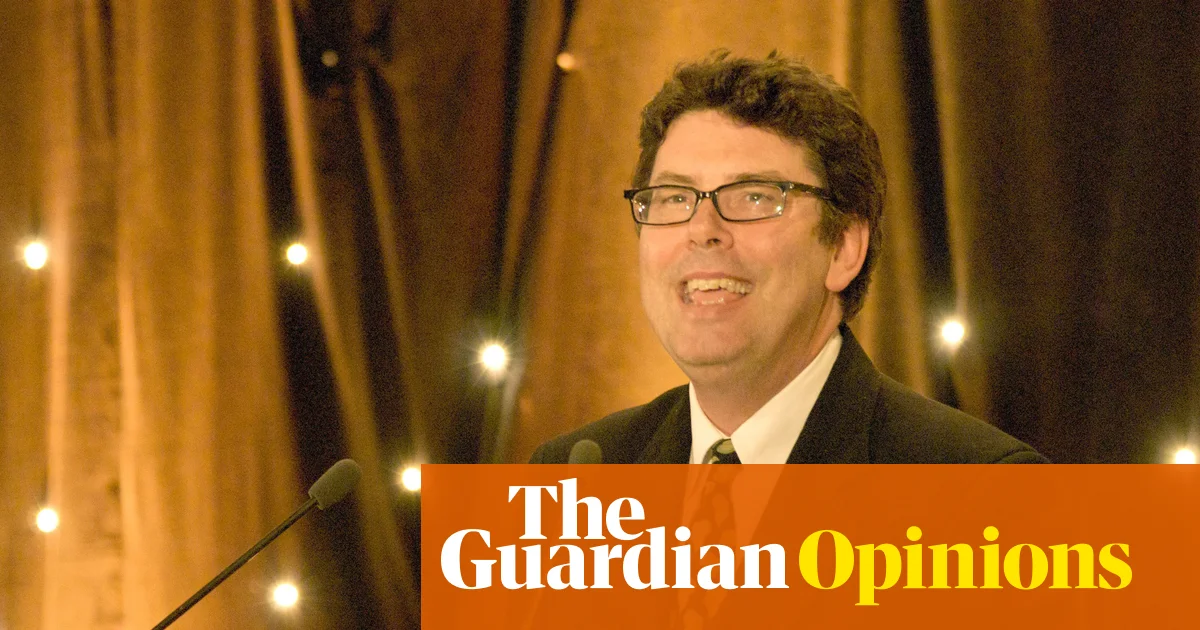
Like so many of you, my experience of James Valentine was almost entirely through radio. I’m an ABC broadcaster in regional New South Wales, many hours drive from the Sydney studios where he conjured radio magic out of thin air every weekday and, as I’d sit in my studio preparing for my own show, I’d listen to Afternoons – a masterclass in quality talkback.
The thing I most admired was how comfortable James was with silence, secure enough to let a moment breathe where other announcers might rush to fill the air. He knew that it was in that space that a caller might land the killer line, or offer the surprisingly touching reveal. It’s been a huge influence on how I make radio.
At 2.55pm each day he would throw to my statewide Drive show and I would strive to bring something of that same spirit and generosity to my own listeners.
I find myself grieving him the same way his listeners are. He was someone who felt like a friend, because when a voice has kept you company every afternoon for years, friend is the only word that fits.
When the news broke on Thursday that James had died, something struck me about the outpouring that followed. The public grief was real and enormous but it kept giving way to joy, to moments of hilarity that had stayed with listeners for years. If you were lucky enough to hear the tribute put together by ABC Sydney during the Afternoons program (a true act of love from a team who must have been devastated themselves), you would have heard story after story about his warmth, his generosity and his sense of humour that was razor sharp without ever choosing to draw blood.
As a broadcaster, James set the bar. He was fearless in a way that reminded you radio is live and anything can happen, and he leaned into that rather than shying away from it. His segment ideas, his talkback invitations, his interviews – all of it came from a place of genuine curiosity and joy. It was clever without being exclusionary, funny without needing a victim. It’s everything public radio should be.
When James announced he was beginning treatment for oesophageal cancer back in March 2024, he shared openly with his audience his diagnosis and the choices he was facing with his treatment. For me, and no doubt many others, it hit particularly close to home. Less than two years earlier, my mother had been diagnosed with pancreatic cancer and I’d been her carer as she underwent complex surgery and treatment. She’d come out the other side into remission, so I knew something of the road he and his family were about to walk. As anyone who has navigated a cancer diagnosis themselves, or held the hand of someone they love while they did, I felt a deep connection to James through the way he spoke about it so honestly and with such grace.
By the time James returned to the airwaves after five months of treatment, my world had changed completely – my mother’s cancer had returned, and within a few short months I was holding her in my arms as she took her final breath.
When I returned to work a couple of weeks later, there on my first day back was the comforting voice of James – where he belonged at the helm of the good ship Afternoons, throwing to my show as though nothing had changed. And in my grief over the loss of my mum, his survival meant something. His return felt like a small victory. He had no idea, of course. But that’s the thing about radio – listeners weave a broadcaster into the fabric of their own lives whether the broadcaster knows it or not and, in doing so, make them part of their own story.
On Thursday listeners rang and texted my program to share their memories of him, and one message made me laugh out loud. Pete from Narooma recalled a moment on the radio that happened more than 20 years ago when James was chatting with a listener who mentioned he’d cooked up some grasshoppers “because he was hungry”.
James’s response, delivered in his inimitable deadpan: “Well, I suppose they’re just a flying prawn.” Pete said that ever since, every time he sees a grasshopper he hears James’s voice: “just a flying prawn”. That tiny throwaway line from a random afternoon has lived in Pete’s mind for decades. That’s what great radio does, and that’s what James created every day.
But as brilliant as he was on air, the bar he really set was off it. It’s one thing to be warm and generous when the microphone is live – some people can manage that as a performance – but what the tributes have made clear is that James was exactly the same when nobody was listening. Not just to his presenter peers but to young producers, junior staff, anyone who crossed his path.
In an industry that has made excuses for some spectacularly bad behaviour in the name of talent, James Valentine was proof that you don’t have to choose between being extraordinary at your job and being good to the people around you.
James showed us what public broadcasting could be at its very best and reminded those of us who work in it that when listeners invite you into their lives every day it’s a gift. It’s our job to be worthy of it. I’m going to spend the rest of my career trying to live up to the standard he set. And I’ll never look at a grasshopper the same way again.
