


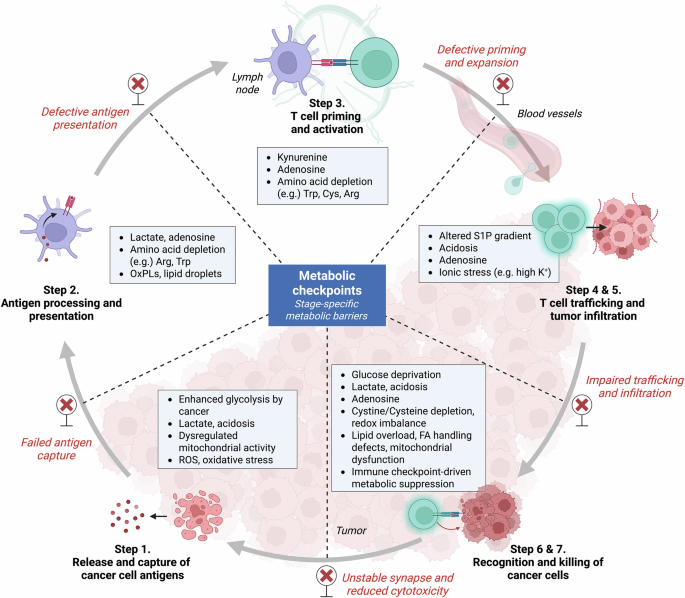
Arner, E. N. & Rathmell, J. C. Metabolic programming and immune suppression in the tumor microenvironment. Cancer Cell 41, 421–433 (2023).
Google Scholar
Mellman, I., Chen, D. S., Powles, T. & Turley, S. J. The cancer-immunity cycle: indication, genotype, and immunotype. Immunity 56, 2188–2205 (2023).
Google Scholar
Somarribas Patterson, L. F. & Vardhana, S. A. Metabolic regulation of the cancer-immunity cycle. Trends Immunol. 42, 975–993 (2021).
Google Scholar
Del Prete, A. et al. Dendritic cell subsets in cancer immunity and tumor antigen sensing. Cell Mol. Immunol. 20, 432–447 (2023).
Google Scholar
Kao, K. C., Vilbois, S., Tsai, C. H. & Ho, P. C. Metabolic communication in the tumour-immune microenvironment. Nat. Cell Biol. 24, 1574–1583 (2022).
Google Scholar
Zhang, B. et al. Glycolysis in the tumor microenvironment shapes dendritic cell function and antitumor immunity. Front. Immunol. 17, 1744671 (2026).
Google Scholar
Møller, S. H., Wang, L. & Ho, P.-C. Metabolic programming in dendritic cells tailors immune responses and homeostasis. Cell. Mol. Immunol. 19, 370–383 (2022).
Google Scholar
Chen, S. et al. Regulation of dendritic cell biology by amino acids and their transporters. Front. Immunol. 16, 1626973 (2025).
Google Scholar
Wang, L. et al. The inhibitory effect of adenosine on tumor adaptive immunity and intervention strategies. Acta Pharm. Sin. B. 14, 1951–1964 (2024).
Google Scholar
Manoharan, I., Prasad, P. D., Thangaraju, M. & Manicassamy, S. Lactate-dependent regulation of immune responses by dendritic cells and macrophages. Front. Immunol. 12, 691134 (2021).
Google Scholar
Veglia, F. et al. Lipid bodies containing oxidatively truncated lipids block antigen cross-presentation by dendritic cells in cancer. Nat. Commun. 8, 2122 (2017).
Google Scholar
Srivastava, N. & Wan, X. From damage signals to immune modulators: oxidized lipids in immunometabolic inflammation. J. Lipid Res. 67, 100990 (2026).
Google Scholar
Ma, S., Ming, Y., Wu, J. & Cui, G. Cellular metabolism regulates the differentiation and function of T-cell subsets. Cell Mol. Immunol. 21, 419–435 (2024).
Google Scholar
Bhandarkar, V., Dinter, T. & Spranger, S. Architects of immunity: how dendritic cells shape CD8+ T cell fate in cancer. Sci. Immunol. 10, eadf4726 (2025).
Google Scholar
Labadie, B. W., Bao, R. & Luke, J. J. Reimagining IDO pathway inhibition in cancer immunotherapy via downstream focus on the tryptophan-kynurenine-aryl hydrocarbon axis. Clin. Cancer Res. 25, 1462–1471 (2019).
Google Scholar
Munn, D. H. et al. GCN2 kinase in T cells mediates proliferative arrest and anergy induction in response to indoleamine 2,3-dioxygenase. Immunity 22, 633–642 (2005).
Google Scholar
Wang, W. & Zou, W. Amino acids and their transporters in T cell immunity and cancer therapy. Mol. Cell 80, 384–395 (2020).
Google Scholar
Simula, L. et al. Mitochondrial metabolism sustains CD8+ T cell migration for an efficient infiltration into solid tumors. Nat. Commun. 15, 2203 (2024).
Google Scholar
Vuononvirta, J., Marelli-Berg, F. M. & Poobalasingam, T. Metabolic regulation of T lymphocyte motility and migration. Mol. Aspects Med. 77, 100888 (2021).
Google Scholar
Rivera, J., Proia, R. L. & Olivera, A. The alliance of sphingosine-1-phosphate and its receptors in immunity. Nat. Rev. Immunol. 8, 753–763 (2008).
Google Scholar
Haas, R. et al. Lactate regulates metabolic and pro-inflammatory circuits in control of T cell migration and effector functions. PLoS Biol. 13, e1002202 (2015).
Google Scholar
Newton, H. S., Chimote, A. A., Arnold, M. J., Wise-Draper, T. M. & Conforti, L. Targeted knockdown of the adenosine A2A receptor by lipid NPs rescues the chemotaxis of head and neck cancer memory T cells. Mol. Ther. Methods Clin. Dev. 21, 133–143 (2021).
Google Scholar
Chimote, A. A. A defect in KCa3.1 channel activity limits the ability of CD8+ T cells from cancer patients to infiltrate an adenosine-rich microenvironment. Sci. Signal 11, https://doi.org/10.1126/scisignal.aaq1616 (2018).
Eil, R. et al. Ionic immune suppression within the tumour microenvironment limits T cell effector function. Nature 537, 539–543 (2016).
Google Scholar
Xiong, Y. et al. CD4 T cell sphingosine 1-phosphate receptor (S1PR)1 and S1PR4 and endothelial S1PR2 regulate afferent lymphatic migration. Sci. Immunol. 4, https://doi.org/10.1126/sciimmunol.aav1263 (2019).
Chen, D. S. & Mellman, I. Oncology meets immunology: the cancer-immunity cycle. Immunity 39, 1–10 (2013).
Google Scholar
Chao, Z. et al. Immunological synapse: structures, molecular mechanisms and therapeutic implications in disease. Signal Transduct. Target. Ther. 10, 254 (2025).
Google Scholar
Sena, L. A. et al. Mitochondria are required for antigen-specific T cell activation through reactive oxygen species signaling. Immunity 38, 225–236 (2013).
Google Scholar
Quintana, A. et al. T cell activation requires mitochondrial translocation to the immunological synapse. Proc. Natl Acad. Sci. USA. 104, 14418–14423 (2007).
Google Scholar
Baixauli, F. et al. The mitochondrial fission factor dynamin-related protein 1 modulates T-cell receptor signalling at the immune synapse. EMBO J. 30, 1238–1250 (2011).
Google Scholar
Gubser, P. M. et al. Rapid effector function of memory CD8+ T cells requires an immediate-early glycolytic switch. Nat. Immunol. 14, 1064–1072 (2013).
Google Scholar
Fischbeck, A. J. et al. Tumor lactic acidosis: protecting tumor by inhibiting cytotoxic activity through motility arrest and bioenergetic silencing. Front. Oncol. 10, 589434 (2020).
Google Scholar
Siska, P. J. et al. Fluorescence-based measurement of cystine uptake through xCT shows requirement for ROS detoxification in activated lymphocytes. J. Immunol. Methods 438, 51–58 (2016).
Google Scholar
Klemke, M. et al. Oxidation of cofilin mediates T cell hyporesponsiveness under oxidative stress conditions. Immunity 29, 404–413 (2008).
Google Scholar
Chang, C. H. et al. Metabolic competition in the tumor microenvironment is a driver of cancer progression. Cell 162, 1229–1241 (2015).
Google Scholar
Geiger, R. et al. L-arginine modulates T cell metabolism and enhances survival and anti-tumor activity. Cell 167, 829–842.e13 (2016).
Google Scholar
Scharping, N. E. et al. The tumor microenvironment represses T cell mitochondrial biogenesis to drive intratumoral T cell metabolic insufficiency and dysfunction. Immunity 45, 374–388 (2016).
Google Scholar
Patsoukis, N. et al. PD-1 alters T-cell metabolic reprogramming by inhibiting glycolysis and promoting lipolysis and fatty acid oxidation. Nat. Commun. 6, 6692 (2015).
Google Scholar
Plata-Gomez, A. B., Chen, W., Ho, P. C. & Ling, G. S. Mitochondrial lipid metabolism in tumor immunosurveillance and evasion. Trends Immunol. 46, 766–778 (2025).
Google Scholar
Xu, S. et al. Uptake of oxidized lipids by the scavenger receptor CD36 promotes lipid peroxidation and dysfunction in CD8+ T cells in tumors. Immunity 54, 1561–1577.e7 (2021).
Google Scholar
Huang, K. et al. Tumor metabolic regulators: key drivers of metabolic reprogramming and the promising targets in cancer therapy. Mol. Cancer 24, 7 (2025).
Google Scholar
Huang, K. et al. Pan-cancer analysis of transcriptional metabolic dysregulation using The Cancer Genome Atlas. Nat. Commun. 9, 5330 (2018).
Google Scholar
Benedetti, E. et al. A multimodal atlas of tumour metabolism reveals the architecture of gene–metabolite covariation. Nat. Metab. 5, 1029–1044 (2023).
Google Scholar
Faubert, B. et al. Lactate metabolism in human lung tumors. Cell 171, 358–371.e9 (2017).
Google Scholar
Faubert, B. et al. Loss of the tumor suppressor LKB1 promotes metabolic reprogramming of cancer cells via HIF-1ɑ. Proc. Natl Acad. Sci. USA 111, 2554–2559 (2014).
Google Scholar
Zhou, X. et al. Effect of PTEN loss on metabolic reprogramming in prostate cancer cells. Oncol. Lett. 17, 2856–2866 (2019).
Google Scholar
Pavlova, N. N. & Thompson, C. B. The emerging hallmarks of cancer metabolism. Cell Metab. 23, 27–47 (2016).
Google Scholar
Gottfried, E. et al. Tumor-derived lactic acid modulates dendritic cell activation and antigen expression. Blood 107, 2013–2021 (2006).
Google Scholar
Ho, P. C. et al. Phosphoenolpyruvate is a metabolic checkpoint of anti-tumor T cell responses. Cell 162, 1217–1228 (2015).
Google Scholar
Quinn, W. J. et al. Lactate limits T cell proliferation via the NAD(H) redox state. Cell Rep. 33, 108500 (2020).
Google Scholar
Luo, W. et al. Pyruvate kinase M2 is a PHD3-stimulated coactivator for hypoxia-inducible factor 1. Cell 145, 732–744 (2011).
Google Scholar
Ding, X. C. et al. The relationship between expression of PD-L1 and HIF-1ɑ in glioma cells under hypoxia. J. Hematol. Oncol. 14, 92 (2021).
Google Scholar
Ma, G. et al. Targeted glucose or glutamine metabolic therapy combined with PD-1/PD-L1 checkpoint blockade immunotherapy for the treatment of tumors — mechanisms and strategies. Front. Oncol. 11, 697894 (2021).
Google Scholar
Xu, R. et al. Reprogramming of amino acid metabolism in pancreatic cancer: recent advances and therapeutic strategies. Front. Oncol. 10, 572722 (2020).
Google Scholar
Timmerman, L. A. et al. Glutamine sensitivity analysis identifies the xCT antiporter as a common triple-negative breast tumor therapeutic target. Cancer Cell 24, 450–465 (2013).
Google Scholar
Hu, J. et al. Multi-omic profiling of clear cell renal cell carcinoma identifies metabolic reprogramming associated with disease progression. Nat. Genet. 56, 442–457 (2024).
Google Scholar
Chen, J., Cui, L., Lu, S. & Xu, S. Amino acid metabolism in tumor biology and therapy. Cell Death Dis. 15, 42 (2024).
Google Scholar
Ding, Q., Li, R., Wang, Q., Yu, L. & Zi, F. A pan-cancer analysis of the role of argininosuccinate synthase 1 in human tumors. Front. Oncol. 13, 1049147 (2023).
Google Scholar
Xue, C. et al. Tryptophan metabolism in health and disease. Cell Metab. 35, 1304–1326 (2023).
Google Scholar
Bonifacio, V. D. B., Pereira, S. A., Serpa, J. & Vicente, J. B. Cysteine metabolic circuitries: druggable targets in cancer. Br. J. Cancer 124, 862–879 (2021).
Google Scholar
Lee, J. & Roh, J. L. Cysteine metabolism at the crossroads of ferroptosis and cancer therapy. Crit. Rev. Oncol. Hematol. 215, 104906 (2025).
Google Scholar
Guo, C. et al. SLC38A2 and glutamine signalling in cDC1s dictate anti-tumour immunity. Nature 620, 200–208 (2023).
Google Scholar
Terness, P. et al. Inhibition of allogeneic T cell proliferation by indoleamine 2,3-dioxygenase-expressing dendritic cells: mediation of suppression by tryptophan metabolites. J. Exp. Med. 196, 447–457 (2002).
Google Scholar
Vasseur, S. & Guillaumond, F. Lipids in cancer: a global view of the contribution of lipid pathways to metastatic formation and treatment resistance. Oncogenesis 11, 46 (2022).
Google Scholar
Yang, F. et al. PLIN2 promotes colorectal cancer progression through CD36-mediated epithelial-mesenchymal transition. Cell Death Dis. 16, 510 (2025).
Google Scholar
Jin, H. R. et al. Lipid metabolic reprogramming in tumor microenvironment: from mechanisms to therapeutics. J. Hematol. Oncol. 16, 103 (2023).
Google Scholar
Shen, C., Chen, J. H., Oh, H. R. & Park, J. H. Transcription factor SOX2 contributes to nonalcoholic fatty liver disease development by regulating the expression of the fatty acid transporter CD36. FEBS Lett. 595, 2493–2503 (2021).
Google Scholar
Zhang, W. et al. Fatty acid metabolic reprogramming in the tumor microenvironment: Unraveling mechanisms and therapeutic prospects. Genes Dis. 13, 101772 (2026).
Google Scholar
Munir, R., Lisec, J., Swinnen, J. V. & Zaidi, N. Lipid metabolism in cancer cells under metabolic stress. Br. J. Cancer 120, 1090–1098 (2019).
Google Scholar
Imbert, C. et al. Resistance of melanoma to immune checkpoint inhibitors is overcome by targeting the sphingosine kinase-1. Nat. Commun. 11, 437 (2020).
Google Scholar
Du, Y. W. et al. Lipid metabolism reprogramming shapes the immune landscape in the tumor microenvironment. Cell. Mol. Immunol. 23, 457–470 (2026).
Google Scholar
Xiao, L., Xian, M., Zhang, C., Guo, Q. & Yi, Q. Lipid peroxidation of immune cells in cancer. Front. Immunol. 14, 1322746 (2023).
Google Scholar
Wang, D. & DuBois, R. N. The role of prostaglandin E2 in tumor-associated immunosuppression. Trends Mol. Med. 22, 1–3 (2016).
Google Scholar
Peng, X., He, Y., Huang, J., Tao, Y. & Liu, S. Metabolism of dendritic cells in tumor microenvironment: for immunotherapy. Front. Immunol. 12, 613492 (2021).
Google Scholar
Adamik, J. et al. Distinct metabolic states guide maturation of inflammatory and tolerogenic dendritic cells. Nat. Commun. 13, 5184 (2022).
Google Scholar
Everts, B. et al. Commitment to glycolysis sustains survival of NO-producing inflammatory dendritic cells. Blood 120, 1422–1431 (2012).
Google Scholar
Giovanelli, P., Sandoval, T. A. & Cubillos-Ruiz, J. R. Dendritic cell metabolism and function in tumors. Trends Immunol. 40, 699–718 (2019).
Google Scholar
Cueto, F. J. & Sancho, D. The Flt3L/Flt3 axis in dendritic cell biology and cancer immunotherapy. Cancers 13, 1525 (2021).
Google Scholar
Pelgrom, L. R. et al. LKB1 expressed in dendritic cells governs the development and expansion of thymus-derived regulatory T cells. Cell Res. 29, 406–419 (2019).
Google Scholar
Cubillos-Ruiz, J. R. et al. ER stress sensor XBP1 controls anti-tumor immunity by disrupting dendritic cell homeostasis. Cell 161, 1527–1538 (2015).
Google Scholar
Lawless, S. J. et al. Glucose represses dendritic cell-induced T cell responses. Nat. Commun. 8, 15620 (2017).
Google Scholar
Sukhbaatar, N., Hengstschläger, M. & Weichhart, T. mTOR-mediated regulation of dendritic cell differentiation and function. Trends Immunol. 37, 778–789 (2016).
Google Scholar
Wang, Z. et al. Modulation of lactate-lysosome axis in dendritic cells by clotrimazole potentiates antitumor immunity. J. Immunother. Cancer 9, e002155 (2021).
Google Scholar
Wang, Z.-H., Peng, W.-B. & Zhou, Q. Lactate in the tumour microenvironment: from immune modulation to therapy. EBioMedicine 73, 103627 (2021).
Google Scholar
Li, X. et al. Lactate metabolism in human health and disease. Signal Transduct. Target. Ther. 7, 305 (2022).
Google Scholar
Burgdorf, S., Porubsky, S., Marx, A. & Popovic, Z. V. Cancer acidity and hypertonicity contribute to dysfunction of tumor-associated dendritic cells: potential impact on antigen cross-presentation machinery. Cancers https://doi.org/10.3390/cancers12092403 (2020).
Google Scholar
Caronni, N. et al. Downregulation of membrane trafficking proteins and lactate conditioning determine loss of dendritic cell function in lung cancer. Cancer Res. 78, 1685–1699 (2018).
Google Scholar
Marin, E. et al. Human tolerogenic dendritic cells regulate immune responses through lactate synthesis. Cell Metab. 30, 1075–1090.e8 (2019).
Google Scholar
Zhang, H. et al. Immunometabolism: crosstalk with tumor metabolism and implications for cancer immunotherapy. Mol. Cancer 24, 1–43 (2025).
Google Scholar
Mondanelli, G., Iacono, A., Allegrucci, M., Puccetti, P. & Grohmann, U. Immunoregulatory interplay between arginine and tryptophan metabolism in health and disease. Front. Immunol. 10, 1565 (2019).
Google Scholar
Schmidt, S. V., Nino-Castro, A. C. & Schultze, J. L. Regulatory dendritic cells: there is more than just immune activation. Front. Immunol. 3, 274 (2012).
Google Scholar
Simioni, P. U., Fernandes, L. G. & Tamashiro, W. M. Downregulation of L-arginine metabolism in dendritic cells induces tolerance to exogenous antigen. Int. J. Immunopathol. Pharmacol. 30, 44–57 (2017).
Google Scholar
Zhao, J. et al. Tryptophan metabolism: from physiological functions to key roles and therapeutic targets in cancer. Oncol. Rep. 54, 86 (2025).
Google Scholar
D’Angelo, J. A. et al. The cystine/glutamate antiporter regulates dendritic cell differentiation and antigen presentation. J. Immunol. 185, 3217–3226 (2010).
Google Scholar
Lo, M., Wang, Y. Z. & Gout, P. W. The xc- cystine/glutamate antiporter: a potential target for therapy of cancer and other diseases. J. Cell. Physiol. 215, 593–602 (2008).
Google Scholar
Aboelella, N. S., Brandle, C., Kim, T., Ding, Z. C. & Zhou, G. Oxidative stress in the tumor microenvironment and its relevance to cancer immunotherapy. Cancers https://doi.org/10.3390/cancers13050986 (2021).
Google Scholar
Herber, D. L. et al. Lipid accumulation and dendritic cell dysfunction in cancer. Nat. Med. 16, 880–886, https://doi.org/10.1038/nm.2172 (2010).
Google Scholar
Obermajer, N., Muthuswamy, R., Lesnock, J., Edwards, R. P. & Kalinski, P. Positive feedback between PGE2 and COX2 redirects the differentiation of human dendritic cells toward stable myeloid-derived suppressor cells. Blood 118, 5498–5505 (2011).
Google Scholar
Diao, G. et al. Prostaglandin E2 serves a dual role in regulating the migration of dendritic cells. Int. J. Mol. Med. 47, 207–218 (2021).
Google Scholar
Belabed, M. et al. Cholesterol mobilization regulates dendritic cell maturation and the immunogenic response to cancer. Nat. Immunol. 26, 188–199 (2025).
Google Scholar
Chaurasia, B. & Summers, S. A. Ceramides in metabolism: key lipotoxic players. Annu. Rev. Physiol. 83, 303–330 (2021).
Google Scholar
Kanto, T., Kalinski, P., Hunter, O. C., Lotze, M. T. & Amoscato, A. A. Ceramide mediates tumor-induced dendritic cell apoptosis. J. Immunol. 167, 3773–3784 (2001).
Google Scholar
Lee, M., Lee, S. Y. & Bae, Y.-S. Functional roles of sphingolipids in immunity and their implication in disease. Exp. Mol. Med. 55, 1110–1130 (2023).
Google Scholar
Thakkar, H., Vincent, V. & Chaurasia, B. Ceramide signaling in immunity: a molecular perspective. Lipids Health Dis. 24, 225 (2025).
Google Scholar
Shi, Y., Zhang, H. & Miao, C. Metabolic reprogram and T cell differentiation in inflammation: current evidence and future perspectives. Cell Death Discov. 11, 123 (2025).
Google Scholar
Gerriets, V. A. & Rathmell, J. C. Metabolic pathways in T cell fate and function. Trends Immunol. 33, 168–173 (2012).
Google Scholar
Geltink, R. I. K., Kyle, R. L. & Pearce, E. L. Unraveling the complex interplay between T cell metabolism and function. Annu. Rev. Immunol. 36, 461–488 (2018).
Google Scholar
Corrado, M. & Pearce, E. L. Targeting memory T cell metabolism to improve immunity. J. Clin. Invest. 132, e148546 (2022).
Google Scholar
Feng, B., Li, R., Li, W. & Tang, L. Metabolic immunoengineering approaches to enhance CD8+ T cell-based cancer immunotherapy. Cell Syst. 15, 1225–1244 (2024).
Google Scholar
Artyomov, M. N. & Van den Bossche, J. Immunometabolism in the single-cell era. Cell Metab. 32, 710–725 (2020).
Google Scholar
Møller, S. H., Hsueh, P.-C., Yu, Y.-R., Zhang, L. & Ho, P.-C. Metabolic programs tailor T cell immunity in viral infection, cancer, and aging. Cell Metab. 34, 378–395 (2022).
Google Scholar
Sun, Q. et al. Mammalian target of rapamycin up-regulation of pyruvate kinase isoenzyme type M2 is critical for aerobic glycolysis and tumor growth. Proc. Ntl Acad. Sci. 108, 4129–4134 (2011).
Google Scholar
Chen, Y. et al. Regulation of CD8+ T memory and exhaustion by the mTOR signals. Cell. Mol. Immunol. 20, 1023–1039 (2023).
Google Scholar
Huang, Y. et al. Rewiring mitochondrial metabolism to counteract exhaustion of CAR-T cells. J. Hematol. Oncol. 15, 38 (2022).
Google Scholar
Raud, B., McGuire, P. J., Jones, R. G., Sparwasser, T. & Berod, L. Fatty acid metabolism in CD8+ T cell memory: challenging current concepts. Immunol. Rev. 283, 213–231 (2018).
Google Scholar
Ecker, C. et al. Differential reliance on lipid metabolism as a salvage pathway underlies functional differences of T cell subsets in poor nutrient environments. Cell Rep. 23, 741–755 (2018).
Google Scholar
Weinberg, S. E. & Chandel, N. S. Futility sustains memory T cells. Immunity 41, 1–3 (2014).
Google Scholar
Pan, Y. et al. Survival of tissue-resident memory T cells requires exogenous lipid uptake and metabolism. Nature 543, 252–256 (2017).
Google Scholar
Zheng, Y. et al. Metabolic gatekeepers: harnessing tumor-derived metabolites to optimize T cell-based immunotherapy efficacy in the tumor microenvironment. Cell Death Dis. 15, 775 (2024).
Google Scholar
Nair, R. et al. Deciphering T-cell exhaustion in the tumor microenvironment: paving the way for innovative solid tumor therapies. Front. Immunol. 16, 1548234 (2025).
Google Scholar
Chapman, N. M. & Chi, H. Metabolic adaptation of lymphocytes in immunity and disease. Immunity 55, 14–30 (2022).
Google Scholar
Wu, H. et al. Mitochondrial dysfunction promotes the transition of precursor to terminally exhausted T cells through HIF-1α-mediated glycolytic reprogramming. Nat. Commun. 14, 6858 (2023).
Google Scholar
Vardhana, S. A. et al. Impaired mitochondrial oxidative phosphorylation limits the self-renewal of T cells exposed to persistent antigen. Nat. Immunol. 21, 1022–1033 (2020).
Google Scholar
Martinez, G. J. et al. The transcription factor NFAT promotes exhaustion of activated CD8⁺ T cells. Immunity 42, 265–278 (2015).
Google Scholar
Peralta, R. M. et al. Dysfunction of exhausted T cells is enforced by MCT11-mediated lactate metabolism. Nat. Immunol. 25, 2297–2307 (2024).
Google Scholar
Seo, S.-K. & Kwon, B. Immune regulation through tryptophan metabolism. Exp. Mol. Med. 55, 1371–1379 (2023).
Google Scholar
Lu, Z. et al. The kynurenine pathway and indole pathway in tryptophan metabolism influence tumor progression. Cancer Med. 14, e70703 (2025).
Google Scholar
Liu, Y. et al. Tumor-repopulating cells induce PD-1 expression in CD8+ T cells by transferring kynurenine and AhR activation. Cancer Cell 33, 480–494.e7 (2018).
Google Scholar
Liu, Y. et al. IL-2 regulates tumor-reactive CD8+ T cell exhaustion by activating the aryl hydrocarbon receptor. Nat. Immunol. 22, 358–369 (2021).
Google Scholar
Campesato, L. F. et al. Blockade of the AHR restricts a Treg-macrophage suppressive axis induced by L-kynurenine. Nat. Commun. 11, 4011 (2020).
Google Scholar
Luo, M. et al. Roles of prostaglandins in immunosuppression. Clin. Immunol. 265, 110298 (2024).
Google Scholar
Lacher, S. B. et al. PGE(2) limits effector expansion of tumour-infiltrating stem-like CD8(+) T cells. Nature 629, 417–425 (2024).
Google Scholar
Wang, L. et al. The emerging role of SPHK1 at the immune-metabolic interface: a pan-cancer integrative analysis. Sci. Rep. 16, 5528 (2026).
Google Scholar
Ma, X. et al. Cholesterol induces CD8+ T cell exhaustion in the tumor microenvironment. Cell Metab. 30, 143–156.e5 (2019).
Google Scholar
Song, M. et al. IRE1α–XBP1 controls T cell function in ovarian cancer by regulating mitochondrial activity. Nature 562, 423–428 (2018).
Google Scholar
Hwang, S.-M. et al. Transgelin 2 guards T cell lipid metabolism and antitumour function. Nature 635, 1010–1018 (2024).
Google Scholar
Martin-Cofreces, N. B., Valpuesta, J. M. & Sanchez-Madrid, F. T cell asymmetry and metabolic crosstalk can fine-tune immunological synapses. Trends Immunol. 42, 649–653 (2021).
Google Scholar
Martin-Cofreces, N. B., Baixauli, F. & Sanchez-Madrid, F. Immune synapse: conductor of orchestrated organelle movement. Trends Cell Biol. 24, 61–72 (2014).
Google Scholar
Guermonprez, P. et al. ER-phagosome fusion defines an MHC class I cross-presentation compartment in dendritic cells. Nature 425, 397–402 (2003).
Google Scholar
Calzada-Fraile, D. & Sanchez-Madrid, F. Reprogramming dendritic cells through the immunological synapse: a two-way street. Eur. J. Immunol. 53, e2350393 (2023).
Google Scholar
Gnanaprakasam, J. N. R., Sherman, J. W. & Wang, R. MYC and HIF in shaping immune response and immune metabolism. Cytokine Growth Factor Rev. 35, 63–70 (2017).
Google Scholar
Bunnell, S. C. et al. T cell receptor ligation induces the formation of dynamically regulated signaling assemblies. J. Cell Biol. 158, 1263–1275 (2002).
Google Scholar
Campi, G., Varma, R. & Dustin, M. L. Actin and agonist MHC-peptide complex-dependent T cell receptor microclusters as scaffolds for signaling. J. Exp. Med. 202, 1031–1036 (2005).
Google Scholar
Tabdanov, E. et al. Micropatterning of TCR and LFA-1 ligands reveals complementary effects on cytoskeleton mechanics in T cells. Integr. Biol. 7, 1272–1284 (2015).
Google Scholar
Schafer, S., Chen, K. & Ma, L. Crosstalking with dendritic cells: a path to engineer advanced T cell immunotherapy. Front. Syst. Biol. https://doi.org/10.3389/fsysb.2024.1372995 (2024).
Google Scholar
Yi, J. et al. Centrosome repositioning in T cells is biphasic and driven by microtubule end-on capture-shrinkage. J. Cell Biol. 202, 779–792 (2013).
Google Scholar
Huse, M. Microtubule-organizing center polarity and the immunological synapse: protein kinase C and beyond. Front. Immunol. 3, 235 (2012).
Google Scholar
Lioudyno, M. I. et al. Orai1 and STIM1 move to the immunological synapse and are up-regulated during T cell activation. Proc. Natl Acad. Sci. USA. 105, 2011–2016 (2008).
Google Scholar
Nicolaou, S. A. et al. Localization of Kv1.3 channels in the immunological synapse modulates the calcium response to antigen stimulation in T lymphocytes. J. Immunol. 183, 6296–6302 (2009).
Google Scholar
Ghergurovich, J. M. et al. A small molecule G6PD inhibitor reveals immune dependence on pentose phosphate pathway. Nat. Chem. Biol. 16, 731–739 (2020).
Google Scholar
Lotscher, J. et al. Magnesium sensing via LFA-1 regulates CD8+ T cell effector function. Cell. 185, 585–602.e29 (2022).
Google Scholar
Kolan, S. S. et al. Cellular metabolism dictates T cell effector function in health and disease. Scand. J. Immunol. 92, e12956 (2020).
Google Scholar
Combs, J. et al. Recruitment of dynein to the Jurkat immunological synapse. Proc. Natl Acad. Sci. USA. 103, 14883–14888 (2006).
Google Scholar
Schuurmans, F., Wagemans, K. E., Adema, G. J. & Cornelissen, L. A. M. Tumor glucose metabolism and the T cell glycocalyx: implication for T cell function. Front. Immunol. 15, 1409238 (2024).
Google Scholar
Song, M. et al. IRE1alpha-XBP1 controls T cell function in ovarian cancer by regulating mitochondrial activity. Nature. 562, 423–428 (2018).
Google Scholar
Fischer, K. et al. Inhibitory effect of tumor cell-derived lactic acid on human T cells. Blood. 109, 3812–3819 (2007).
Google Scholar
Gavriliouk, D. et al. Regulation of Orai1/STIM1 mediated I(CRAC) by intracellular pH. Sci. Rep. 7, 9829 (2017).
Google Scholar
Zimmermann, H., Zebisch, M. & Strater, N. Cellular function and molecular structure of ecto-nucleotidases. Purinergic Signal. 8, 437–502 (2012).
Google Scholar
Huang, S., Apasov, S., Koshiba, M. & Sitkovsky, M. Role of A2a extracellular adenosine receptor-mediated signaling in adenosine-mediated inhibition of T-cell activation and expansion. Blood. 90, 1600–1610 (1997).
Google Scholar
Linnemann, C. et al. Adenosine regulates CD8 T-cell priming by inhibition of membrane-proximal T-cell receptor signalling. Immunology. 128, e728–e737 (2009).
Google Scholar
Feldmeyer, N. et al. Arginine deficiency leads to impaired cofilin dephosphorylation in activated human T lymphocytes. Int. Immunol. 24, 303–313 (2012).
Google Scholar
Zea, A. H. et al. L-Arginine modulates CD3zeta expression and T cell function in activated human T lymphocytes. Cell Immunol. 232, 21–31 (2004).
Google Scholar
Swamy, M. et al. Glucose and glutamine fuel protein O-GlcNAcylation to control T cell self-renewal and malignancy. Nat. Immunol. 17, 712–720 (2016).
Google Scholar
Janes, P. W., Ley, S. C. & Magee, A. I. Aggregation of lipid rafts accompanies signaling via the T cell antigen receptor. J. Cell Biol. 147, 447–461, https://doi.org/10.1083/jcb.147.2.447 (1999).
Google Scholar
Lim, S. A., Su, W., Chapman, N. M. & Chi, H. Lipid metabolism in T cell signaling and function. Nat. Chem. Biol. 18, 470–481 (2022).
Google Scholar
Yang, W. et al. Potentiating the antitumour response of CD8+ T cells by modulating cholesterol metabolism. Nature. 531, 651–655 (2016).
Google Scholar
Schmidt, N. M. et al. Targeting human Acyl-CoA:cholesterol acyltransferase as a dual viral and T cell metabolic checkpoint. Nat. Commun. 12, 2814 (2021).
Google Scholar
Kremer, K. N. et al. LPA suppresses T cell function by altering the cytoskeleton and disrupting immune synapse formation. Proc. Natl Acad. Sci. USA. 119, e2118816119 (2022).
Google Scholar
Levitan, I. & Shentu, T. P. Impact of oxLDL on cholesterol-rich membrane rafts. J Lipids. 2011, 730209 (2011).
Google Scholar
Stine, Z. E., Schug, Z. T., Salvino, J. M. & Dang, C. V. Targeting cancer metabolism in the era of precision oncology. Nat. Rev. Drug Discov. 21, 141–162 (2022).
Google Scholar
Tufail, M., Jiang, C.-H. & Li, N. Altered metabolism in cancer: insights into energy pathways and therapeutic targets. Mol. Cancer. 23, 203 (2024).
Google Scholar
Zhang, H. et al. Metabolic reprogramming and immune evasion: the interplay in the tumor microenvironment. Biomarker Res. 12, 96 (2024).
Google Scholar
Miller, Z. A. et al. GLUT1 inhibitor BAY-876 induces apoptosis and enhances anti-cancer effects of bitter receptor agonists in head and neck squamous carcinoma cells. Cell Death Discov. 10, 339 (2024).
Google Scholar
Hayashi, M. et al. GLUT1 inhibition by BAY-876 induces metabolic changes and cell death in human colorectal cancer cells. BMC Cancer. 25, 716 (2025).
Google Scholar
Raez, L. E. et al. A phase I dose-escalation trial of 2-deoxy-D-glucose alone or combined with docetaxel in patients with advanced solid tumors. Cancer Chemother. Pharmacol. 71, 523–530 (2013).
Google Scholar
Mohan, A. et al. Devimistat in combination with gemcitabine and cisplatin in biliary tract cancer: preclinical evaluation and phase Ib multicenter clinical trial (BilT-04). Clin. Cancer Res. 29, 2394–2400 (2023).
Google Scholar
Yao, S. et al. Phase 1 trial of ADI-PEG20 plus cisplatin in patients with pretreated metastatic melanoma or other advanced solid malignancies. Br. J. Cancer. 124, 1533–1539 (2021).
Google Scholar
Sheveleva, E. V. et al. Imexon induces an oxidative endoplasmic reticulum stress response in pancreatic cancer cells. Mol. Cancer Res. 10, 392–400 (2012).
Google Scholar
Barr, P. M. et al. Phase 2 study of imexon, a prooxidant molecule, in relapsed and refractory B-cell non-Hodgkin lymphoma. Blood. 124, 1259–1265 (2014).
Google Scholar
Sleire, L. et al. Drug repurposing: sulfasalazine sensitizes gliomas to gamma knife radiosurgery by blocking cystine uptake through system Xc−, leading to glutathione depletion. Oncogene. 34, 5951–5959 (2015).
Google Scholar
Lian, X. et al. Anticancer properties of fenofibrate: a repurposing use. J. Cancer. 9, 1527–1537 (2018).
Google Scholar
Steggerda, S. M. et al. Inhibition of arginase by CB-1158 blocks myeloid cell-mediated immune suppression in the tumor microenvironment. J. Immunother. Cancer 5, 101 (2017).
Google Scholar
Naing, A. et al. First-in-human phase 1 study of the arginase inhibitor INCB001158 alone or combined with pembrolizumab in patients with advanced or metastatic solid tumours. BMJ Oncol. 3, e000249 (2024).
Google Scholar
Kelly, C. M. et al. A phase II study of epacadostat and pembrolizumab in patients with advanced sarcoma. Clin. Cancer Res. 29, 2043–2051 (2023).
Google Scholar
Fox, E. et al. Indoximod: an immunometabolic adjuvant that empowers T cell activity in cancer. Front. Oncol. 8, 370 (2018).
Google Scholar
Falchook, G. et al. First-in-human study of the safety, pharmacokinetics, and pharmacodynamics of first-in-class fatty acid synthase inhibitor TVB-2640 alone and with a taxane in advanced tumors. EClinicalMedicine. 34, 100797 (2021).
Google Scholar
Okkenhaug, K., Graupera, M. & Vanhaesebroeck, B. Targeting PI3K in cancer: impact on tumor cells, their protective stroma, angiogenesis, and immunotherapy. Cancer Discov. 6, 1090–1105 (2016).
Google Scholar
Harding, J. J. et al. A phase I dose-escalation and expansion study of telaglenastat in patients with advanced or metastatic solid tumors. Clin. Cancer Res. 27, 4994–5003 (2021).
Google Scholar
Smith, D. C. et al. A phase 1 study of nevanimibe HCl, a novel adrenal-specific sterol O-acyltransferase 1 (SOAT1) inhibitor, in adrenocortical carcinoma. Invest. New Drugs. 38, 1421–1429 (2020).
Google Scholar
Schneider, E. et al. CD73-mediated adenosine production by CD8 T cell-derived extracellular vesicles constitutes an intrinsic mechanism of immune suppression. Nat. Commun. 12, 5911 (2021).
Google Scholar
Kim, D. W. et al. CD73 inhibitor oleclumab plus osimertinib in previously treated patients with advanced T790M-negative EGFR-mutated NSCLC: a brief report. J. Thorac. Oncol. 18, 650–656 (2023).
Google Scholar
Cubillos-Zapata, C. et al. Ibrutinib as an antitumor immunomodulator in patients with refractory chronic lymphocytic leukemia. Oncoimmunology 5, e1242544 (2016).
Google Scholar
Papazoglou, D. et al. Ibrutinib-based therapy reinvigorates CD8+ T cells compared to chemoimmunotherapy: immune monitoring from the E1912 trial. Blood. 143, 57–63 (2024).
Google Scholar
Long, M. et al. Ibrutinib treatment improves T cell number and function in CLL patients. J. Clin. Invest. 127, 3052–3064 (2017).
Google Scholar
Kuang, B. et al. Celecoxib in oncology: targeting the COX-2/PGE2 axis to reprogram the tumor immune microenvironment and enhance multimodal therapy. Front. Pharmacol. 16, 1691392 (2025).
Google Scholar
Beloueche-Babari, M. et al. MCT1 inhibitor AZD3965 increases mitochondrial metabolism, facilitating combination therapy and noninvasive magnetic resonance spectroscopy. Cancer Res. 77, 5913–5924 (2017).
Google Scholar
Liu, J., Li, X., Li, Y., Gong, Q. & Luo, K. Metformin-based nanomedicines for reprogramming tumor immune microenvironment. Theranostics. 15, 993–1016 (2025).
Google Scholar
Subbiah, V. et al. Phase I study of mTORC1/2 inhibitor sapanisertib (CB-228/TAK-228) in combination with metformin in patients with mTOR/AKT/PI3K pathway alterations and advanced solid malignancies. Cancer Res. Commun. 4, 378–387 (2024).
Google Scholar
Dunbar, E. M. et al. Phase 1 trial of dichloroacetate (DCA) in adults with recurrent malignant brain tumors. Invest. New Drugs. 32, 452–464 (2014).
Google Scholar
Van der Vreken, A. et al. Fueling CARs: metabolic strategies to enhance CAR T-cell therapy. Exp. Hematol. Oncol. 13, 66 (2024).
Google Scholar
Perucha, B. et al. Reprogramming CAR-T cells: targeting SLC transporters for tumor microenvironment adaptation. Pharmacol. Res. 220, 107928 (2025).
Google Scholar
Guo, Y. et al. Metabolic reprogramming of terminally exhausted CD8+ T cells by IL-10 enhances anti-tumor immunity. Nat. Immunol. 22, 746–756 (2021).
Google Scholar
Han, J. et al. Metabolic glycan labeling immobilizes dendritic cell membrane and enhances antitumor efficacy of dendritic cell vaccine. Nat. Commun. 14, 5049 (2023).
Google Scholar
Ma, E. H. et al. Metabolic profiling using stable isotope tracing reveals distinct patterns of glucose utilization by physiologically activated CD8+ T cells. Immunity. 51, 856–870.e5 (2019).
Google Scholar
Paillon, N., Ung, T. P. L., Dogniaux, S., Stringari, C. & Hivroz, C. Label-free single-cell live imaging reveals fast metabolic switch in T lymphocytes. Biophys. J. 123, 555a–556a (2024).
Google Scholar
Moresi, F. et al. Microphysiological systems in cancer research: advancing immunotherapy through tumor microenvironment-integrated organ-on-chip models. Adv. Ther. 8, e00098 (2025).
Google Scholar
Morrison, A. I. et al. Functional organotypic human lymph node model with native immune cells benefits from fibroblastic reticular cell enrichment. Sci. Rep. 15, 12233 (2025).
Google Scholar
Dabbagh Moghaddam, F. et al. Advances in engineering immune-tumor microenvironments on-a-chip: integrative microfluidic platforms for immunotherapy and drug discovery. Mol. Cancer. 24, 271 (2025).
Google Scholar
Wang, Z. et al. Companion diagnostics and predictive biomarkers for PD-1/PD-L1 immune checkpoint inhibitors therapy in malignant melanoma. Front. Immunol. 15, 1454720 (2024).
Google Scholar
Wang, Y.-H., Wang, L. & Ho, P.-C. Decoding immunometabolism with next-generation tools: lessons from dendritic cells and T cells. EMBO J. 1, 16 (2025).
