


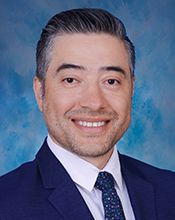
Bispecific antibodies and CAR T-cell therapy are both recommended treatment options for patients with relapsed/refractory follicular lymphoma after the second line of therapy, raising questions about how best to select and sequence between them. CancerNetwork® spoke with Carlos Silva Rondon, MD, assistant member in the Department of Malignant Hematology and Cellular Therapy at Moffitt Cancer Institute at Memorial Healthcare System/Memorial Cancer Institute in Pembroke Pines, Florida, about his position in favor of CAR T-cell therapy. The conversation followed a debate on the topic with Nikesh Shah, MD, of Tampa General Hospital Cancer Institute, at the National Immune Cell Effector Therapy (ICE-T) Conference in Orlando, Florida.
Silva Rondon discussed the disease- and patient-specific factors that guide his sequencing decisions, how he counsels patients toward CAR T-cell therapy over bispecifics, and the current state of using both modalities in sequence. Towards the end of the conversation, he also addressed the biggest unmet needs, his outlook on whether one modality will become preferred over the next 5 years, and his overall takeaway from the debate.
CancerNetwork: What is the context for the debate on bispecific antibodies vs CAR T-cell therapy in follicular lymphoma? What was your position?
Silva Rondon: Both therapies are currently recommended for relapsed/refractory follicular lymphoma beyond 2 lines of therapy, and this debate addresses the reality of the real world: Who has access to CAR T-cell therapy? Who has access to bispecific therapy? Which patients are the right candidates for one therapy vs the other? How do we sequence and look at them? And what are the patient selection criteria for each? I advocated for CAR T-cell therapy, which was very exciting—I am a cell therapy physician.
What patient- or disease-specific factors, such as comorbidities, prior lines of therapy, pace of relapse, or concern for histologic transformation, weigh most heavily in your sequencing decisions for treatment?
Those are the most critical points to think about when you have the patient in front of you and are selecting therapy. If a patient has demonstrated transformation, or if there is clinical suspicion for it, the most successful therapy—in this case, CAR T-cell therapy—is likely the right choice, given the potential for a higher overall response rate, complete response rate, and progression-free survival, including when there is concern for large B-cell lymphoma.
We also have to keep the patient’s age in mind. A younger patient vs an older patient changes whether we consider a one-time treatment vs a longer therapy course, such as a bispecific combined with lenalidomide [Revlimid] for a year of therapy, or mosunetuzumab [Lunsumio] on a fixed duration vs epcoritamab [Epkinly], which is continuous. There is also a financial burden to keep in mind that might not be as steep upfront as it is with CAR T-cell therapy, but that becomes a long-term financial toxicity.
As patient selection has improved with more years of experience giving CAR T-cell therapy, we have gotten better at recognizing and addressing toxicity earlier. It also depends on the product because some can potentially be given outpatient, such as lisocabtagene maraleucel [liso-cel; Breyanzi], whose toxicity is somewhat close to that of the bispecifics. With the experience built over the years, in the right setting, there is an opportunity to treat patients who have comorbidities or who are older without necessarily increasing treatment-related mortality significantly.
How do you counsel patients on choosing between CAR T-cell therapy and bispecifics when weighing factors such as response durability, toxicity, logistical burden, and outpatient convenience?
It is important to understand what the patient wants and how they want to spend their time, as well as their overall situation. For CAR T-cell therapy, we need a caregiver in place, and the patient needs access to a CAR T-cell therapy center or an early referral so they can undergo treatment in time. It is important to mention that the data for CAR T-cell therapy in follicular lymphoma have shown potential curability at 10 years: a 47% lymphoma-free survival at the 10-year follow-up of tisagenlecleucel [tisa-cel; Kymriah], recently published in the New England Journal of Medicine.1
I explain to patients whether they want a one-time treatment, understanding that if they relapse, they would still have access to and could be eligible for bispecifics, and vice versa. If a patient has comorbidities or does not want CAR T-cell therapy, and the risk of transformation is low, they could potentially be treated with a bispecific—the mosunetuzumab data show good, durable responses, although so far they are inferior to CAR T-cell therapy. These patients can still benefit from CAR T-cell therapy later if they need it, since we have different targets available. That is the sequencing question we will keep learning about as the field matures and more data mature.
When it comes to using both CAR T-cell therapy and bispecifics in sequence, what are you seeing in your own practice, and what does the field still need to learn?
One of the main barriers is implementation. We have to be realistic that most patients who need these therapies are still not getting them, or not getting them in a timely fashion. Early referral for evaluation for bispecifics or CAR T-cell therapy still needs work within the community so we can help these patients get their therapies on time. We also need to help the community with administering some of these products. The bispecifics do not come risk-free either; they carry risks of cytokine release syndrome (CRS) and immune effector cell-associated neurotoxicity syndrome (ICANS), and there is a long-term infection risk and hypogammaglobulinemia to consider. It is also not necessarily a caregiver-free treatment; patients still need some caregiver support. Bispecifics are being administered more widely in the community than they were 2 years ago, which is great, but it is important that patients who might benefit from CAR T-cell therapy—because they have higher-risk disease, or there is concern for progression of disease within 24 months [POD24] or potential transformation—do not miss the opportunity to get CAR T-cell therapy early rather than a bispecific. Building communication and trust between academic centers and the community will help us provide the best possible care.
Where is the biggest unmet need in relapsed/refractory follicular lymphoma right now?
We are fairly familiar with managing toxicity in the context of both CAR T-cell therapy and bispecifics, but it will be important to understand more about refractory cases of toxicity, such as refractory ICANS, and what interventions can help. Biomarkers are another area with a real data gap. It will be important to understand which biomarkers are useful, not just for one product, but across multiple products, and whether there are other markers we can act on later.
It is important to continue working on access; if we look at real-world access, it is behind where it needs to be. Those 2 areas, biomarkers and access, are probably what we need to focus on most. Sequencing data will come with time, since current clinical trials are largely using bispecifics earlier in the treatment course, and we will need results from studies like the phase 3 ZUMA-22 trial (NCT05371093).2 How we implement these products and therapies, how we bring them to patients, and which biomarkers are useful and actionable will be important.
Five years from now, do you expect one of these modalities to be clearly preferred in the field—perhaps CAR T-cell therapy, as your position implies—or will this remain a personalized, case-by-case decision?
Based on what we know so far, this will continue to be a personalized decision, made case-by-case based on the patient’s disease characteristics, risk factors, treatment options, and preferences. That reflects how we treat cancer in modern times: it is personalized, based on biology, patient preference, risk, and access. Despite how we adjust these therapies over time, I believe the decision will continue to be personalized.
What do you hope those in attendance take away from the debate overall?
My point is that we are not comparing one therapy against the other; it is actually a combined effort, because both bispecifics and CAR T-cell therapy are needed, and they can work together at different points for a patient. They are both good options, and we are fortunate to have them. The key message is that we are not limited to chemotherapy anymore. We can alternate between these therapies, and we have candidates for one or the other.
CAR T-cell therapy can offer deeper responses, a longer duration of response, and a one-time intervention, at the expense of higher upfront toxicity and cost, though newer constructs can help offset some of that toxicity. It is also important to remind everyone that bispecifics come with their own risks, including infectious risk and longer-term financial burden. Understanding that and presenting it clearly to the patient allows them to decide, so that we do not skew the choice based on how we present it or how our center practices.
References
- Ruella M, Paruzzo L, Chong ER, et al. Ten-year outcomes after CAR T-cell therapy for B-cell lymphomas. N Engl J Med. 2026;394(24):2440-2448. doi:10.1056/NEJMoa2518035
- Study of axicabtagene ciloleucel versus standard of care therapy in participants with relapsed/refractory follicular lymphoma (ZUMA-22). ClinicalTrials.gov. Updated October 15, 2026. Accessed July 22, 2026. https://tinyurl.com/fs4nd82u
