


Key Takeaways
- High prevalence, high cure rate: Skin cancer is the most common cancer in the U.S., affecting 1 in 5 Americans by age 70. Fortunately, most cases are highly curable when detected early.
- The three main types: The vast majority of diagnoses are basal cell carcinoma (most common, slow-growing) or squamous cell carcinoma. Melanoma is much rarer but highly aggressive and likely to spread.
- The ABCDE warning signs: Check your skin regularly for suspicious moles using the ABCDE rule: Asymmetry, irregular Borders, uneven Color, a Diameter larger than a pea, and an Evolving or changing appearance.
- Sun damage is the leading cause: Ultraviolet (UV) radiation from sunlight and tanning beds is the primary driver of skin cancer. Protecting yourself with UPF-rated clothing and a broad-spectrum SPF 30+ sunscreen is essential.
- Advanced treatment breakthroughs: While early-stage lesions are easily removed via standard or Mohs surgery, advanced melanoma treatments have shifted dramatically, with newer immunotherapy drugs offering long-term remission.
Summertime often brings more attention to your skin. Sunburns, tans and freckles are often on the mind. And some people might start to notice a new, strange-looking mole and make a mental note to get it checked out later. But those subtle skin changes can be a sign of skin cancer, the most common cancer in the United States.
Cancer has long been the second-leading cause of death in the United States, behind only heart disease. Cancer arises from a change in the way cells divide and can manifest in virtually any part of the body – including the bones, blood, brain and organs. However, skin cancers affect more people than any other type of cancer.
According to 2026 data from the American Cancer Society, approximately 13,500 people are diagnosed with skin cancer every day. The prevalence of skin cancer makes sense given that skin is the body’s largest organ and made up of millions of cells, any of which could turn cancerous under the right circumstances.
While the prevalence is high, the good news is that skin cancer can be treatable if caught early enough. Read on for a guide on skin cancer types, symptoms, diagnosis and treatment.
Types of Skin Cancer
There are several types of skin cancer that occur in different layers of the skin. Most skin cancers start in the outer layer, known as the epidermis.
The three primary kinds of skin cancer are:
Type of skin cancer
Appearance
Severity
Basal cell carcinoma
Often described as pink and pearly
Tend to grow slowly but can spread to other parts of the body without treatment
Squamous cell carcinoma
Sometimes described as “sharp” an usually more firm
More likely to grow into deeper layers of skin and therefore more likely to spread to other body parts than basal cell carcinoma
Melanoma
Typically appear as small, brown lumps or spots of darker coloration on the skin
More aggressive and more likely to spread to other areas of the body
Basal cell carcinoma
Basal cell skin cancer is the most common form of skin cancer. This type develops in basal cells, which form the lower part of the epidermis.
Basal cell skin cancers are usually slow-growing bumps noted over time as they get larger, bleed or create ulcers in the skin, says Dr. Jason H. Miller, a board-certified dermatologist and medical director at Schweiger Dermatology Group in Freehold, New Jersey. “Basal skin cancers are often described as pink and pearly, and usually occur in areas of chronic sun exposure.”
The ACS reports that basal cell carcinoma accounts for 8 out of 10 skin cancers, and it usually develops on areas of the skin that receive a lot of sun exposure, such as the head and neck. Basal cell carcinomas tend to grow slowly, but they can spread to other parts of the body, which is why they should be treated if detected.
Squamous cell carcinoma
Squamous cell carcinoma is the second most common type of skin cancer, accounting for 2 out of 10 skin cancers, the ACS reports. Squamous cells are on the outer part of the epidermis, and are constantly shed as new squamous cells form.
Squamous cell carcinoma typically occurs on sun-exposed areas, such as the face, ears, lips and back of the hands. Miller adds that these types of skin cancers are usually more firm, “sometimes sharp,” and can be tender when pushed on.
Squamous cell carcinoma is more likely to grow into deeper layers of skin, so it’s more likely to spread to other body parts than basal cell carcinoma.
Melanoma
Melanoma is cancer of melanocytes, a specific type of skin cell. Melanoma is much less common than basal and squamous cell carcinoma. However, this form of cancer tends to be much more aggressive and more likely to spread to other areas of the body. Melanocytes are also responsible for the formation of noncancerous growths called moles, which typically appear as small, brown lumps or spots of darker coloration on the skin.
Miller says melanoma shows up most classically as an irregular, changing or darkening mole.
“Melanoma has a higher chance of spreading to other organs than either basal cell or squamous cell, but all are treated more effectively when identified earlier,” he explains.
If a melanoma goes undetected, it can spread and become deadly.
According to the ACS, some 112,000 new melanomas will be diagnosed in 2025, and 8,510 people are expected to die of the disease in 2026.
Other Types of Skin Cancer
There are several other, much rarer types of skin cancer and skin malignancies, including:
- Merkel cell carcinoma
- Kaposi’s sarcoma
- Acral lentiginous melanoma
- Cutaneous T-cell lymphoma
- Dermatofibrosarcoma protuberans
- Microcystic adnexal carcinoma
- Undifferentiated pleomorphic sarcoma
- Sebaceous carcinoma
- Extramammary Paget’s disease
Each arises in a specific type of skin cell. While some are aggressive and likely to metastasize, others are slow-growing and may not be an immediate threat.
What Does Skin Cancer Look Like?
Early stage skin cancer symptoms can be subtle. Common skin changes that could indicate cancer has developed include:
- A mole that darkens, bleeds or falls off
- A new growth or the appearance of a new dark spot
- A sore or pimple that bleeds easily and won’t heal
- A scaly white nodule that becomes painful as it grows larger
- A flat, dark, irregularly shaped mole that looks different from your other moles
- Severe itching or a rash that doesn’t clear up
- Flaking or peeling of the skin
One easy way to remember all the signs of melanoma is knowing your ABCs. Each letter relates to a characteristic of the disease that should send you to the doctor for evaluation:
- A: Asymmetrical. If a mole or spot is irregular or asymmetrical in shape, that’s cause for concern.
- B: Border. A jagged or irregular border around a mole or darker spot on the skin could also be a sign of cancer.
- C: Color. Is the mole or spot darker in one area versus another? Uneven color can signify a problem.
- D: Diameter. The larger a spot or mole is, the more likely it is to be cancerous. If it’s larger than the size of a pea, definitely get it checked out.
- E: Evolving. If your questionable mole or spot has changed recently, talk to your doctor.
If you develop red bumps, lumps, sores, pimples that don’t heal or new moles, take a clear photo of the spot with a ruler in the image as reference and send the photo to your primary care provider or dermatologist through their patient portal.
What Causes Skin Cancer?
While it’s difficult to point to a single cause for any particular case of skin cancer, there are a lot of factors that may elevate your risk of skin cancer. Chief among them is sunlight.
Exposure to ultraviolet light – a form of radiation present in sunlight – has been linked to a higher incidence of skin cancer because UV radiation can damage genes in skin cells, leading them to turn cancerous.
Risk Factors for Skin Cancer
Because exposure to ultraviolet radiation is a known cause of skin cancer, the more time you spend in the sun without appropriate protection, the more your risk of developing cancer climbs.
The ACS says that all individuals are at risk for developing skin cancer, regardless of race or ethnicity. Contributing factors can include:
- Where you live. Places that are sunnier and warmer tend to have higher rates of skin cancer than colder climes where people tend to be bundled up more.
- Whether you use tanning beds. The use of tanning beds has been linked with increased rates of skin cancer.
- Whether you use sunscreen. If you spend a lot of time outdoors without covering your skin or using sunscreen, your risk increases.
- Exposure to other forms of radiation. It’s not just UV light that can be problematic; other types of radiation, such as that emitted for X-rays, can also cause cancer.
- Exposure to certain chemicals. Arsenic and some pesticides have been linked to skin cancer.
- Whether you smoke. Smoking has been linked to a host of cancers, including skin cancer.
- Age. The longer your cells have to develop genetic mutations, the more likely they will turn cancerous. However, skin cancer is not just a risk to older adults. 2025 research data from the National Cancer Institute found that melanoma is one of only a few types of cancer that continues to rise in young people.
- Certain medical conditions. Some medical conditions, such as rheumatoid arthritis, may also elevate your risk of skin cancer.
- Skin, hair and eye color. People with darker skin, which has more melanin, appear to have a somewhat lesser risk of developing skin cancer. Those with fair skin, blue or green eyes and red or blond hair tend to have a higher risk of sunburns and skin cancer.
- Genetics. People with a personal or family history of skin cancer and those with a lot of moles or certain types of moles may also be at greater risk of developing skin cancer.
- Gender. Skin cancer rates are much higher in women than men before age 50, according to ACS, but after age 50, men are more likely than women to develop skin cancer. This could be related to changes in detection practices, higher incidence of indoor tanning among women or higher occupational UV exposure among men.
Diagnosis
To confirm a suspicion of skin cancer, your doctor will biopsy a sample of cells and look at them under the microscope. This is usually a simple procedure that can be done in your dermatologist’s office.
If the biopsy returns a positive result, your doctor may authorize additional tests to check whether the cancer has spread to other parts of the body, such as nearby lymph nodes. You may also undergo surgical removal of nearby lymph nodes to see if cancer is present, a procedure called sentinel node biopsy.
Treatment
Once your doctor has determined the type and stage of the skin cancer, you can begin treatment.
- Removal or surgery. For basal and squamous cell carcinoma or precancerous lesions called actinic keratoses, your doctor may remove these cells by shaving them off or cutting them out. In some cases, the provider may use liquid nitrogen to freeze away the cells.
- Mohs surgery. For certain basal and squamous cell carcinomas with high-risk features, such as lesions that are large or involve surrounding nerves, your doctor may perform a type of procedure called Mohs surgery, Miller says. “Mohs surgery involves removing the lesion and then testing the margins in the office to provide real-time evidence that all cells have been removed. Once the cancer cells are clear, the area can be repaired, often with a smaller scar.” Some special surgery centers may also offer the procedure for melanoma, Miller adds.
- Chemotherapy. Typically for later-stage melanoma, you may undergo courses of powerful anti-cancer drugs which can be administered intravenously (IV), as a pill or as a cream.
- Radiation therapy.Also typically reserved for later-stage melanoma, radiation involves using high-energy particles to destroy the DNA of cancer cells.
- Immunotherapy medications. These medications are used particularly for advanced-stage melanoma. They leverage the body’s own immune system to destroy cancer cells
The field is ever-evolving as new therapies come on the market.
How Can I Reduce My Risk of Developing Skin Cancer?
Although some people are naturally more susceptible to developing skin cancer, there are a few things you can do to help reduce your risk:
- Cover up. When you’re outside, cover your skin with fabric (long sleeves, long pants, a wide-brimmed hat) or a high-quality SPF 30+ sunblock to prevent burning. Clothing is the best protection of all and better than any form of sunblock. Look for UPF-rated clothing to block the most rays.
- Seek shade. The sun is strongest between the hours of 10 a.m. and 2 p.m. During this time, head inside or seek shade to reduce sun exposure.
- Use enough sunblock. Many people don’t use enough sunblock. You should be using at least an ounce each time you apply.
- Reapply often. Reapply sunblock every couple of hours when you’re outdoors and more frequently if you’re swimming, sweating or otherwise in a wet environment. Even the most water-resistant sunblock only lasts about 80 minutes, so reapply frequently.
- Avoid tanning beds. Tanning for aesthetic purposes is so last century; avoid the UV bed, and reduce your skin cancer risk. Even if you have been a sun worshiper in the past, it’s never too late to start taking better care of your skin.
Screening for Skin Cancer
Although the U.S. Preventive Services Task Force has concluded there’s not enough evidence to recommend routine skin cancer screening by a doctor, many healthcare professionals still urge people – especially those who have a personal or family history of skin cancer – to have a dermatologist or other healthcare provider conduct an annual skin check.
A skin check is a thorough visual examination of all your skin to spot potential skin cancers. Miller says a thorough dermatologist should “check all areas of your skin, including your scalp, hands and feet, including between the toes.” While skin cancer often appears on the face, it can occur anywhere on the body, sometimes hidden between toes, in folds of skin and other hard-to-see places.
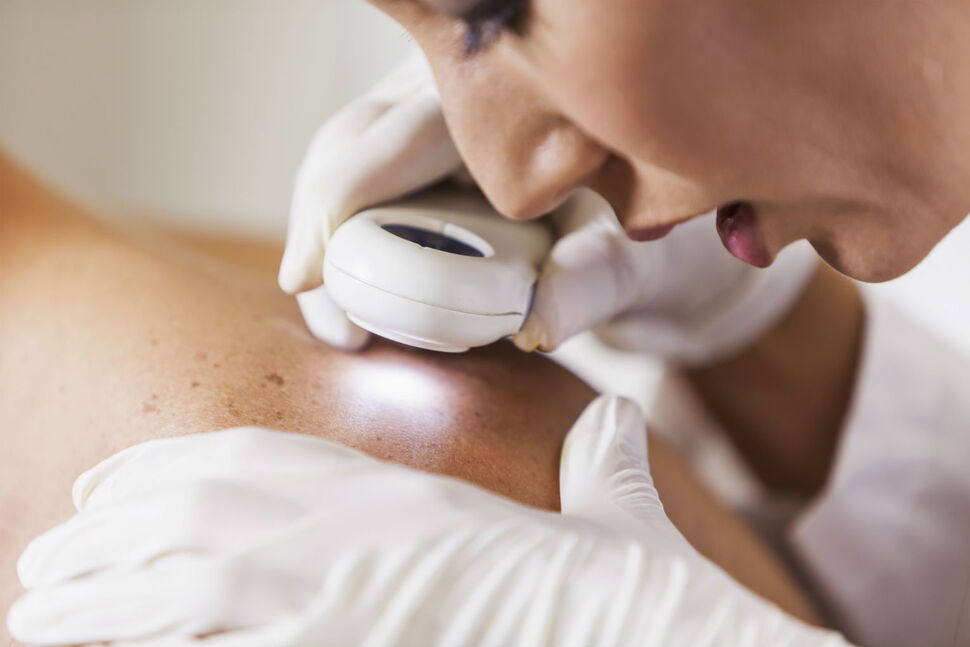
Spotting suspicious skin changes when they arise can lead to earlier detection of malignancies, easier treatment for those early-stage skin cancers and higher survival rates. Most dermatologists will also utilize dermoscopy, which is a technique that utilizes a handheld camera called a dermatoscope that magnifies the mole to help determine if it is worrisome, Miller adds.
Frequently Asked Questions
Does wearing sunscreen reduce my vitamin D levels?
Experts recommend getting vitamin D from diet or supplements, since unprotected UV exposure poses a high risk for developing skin cancer. Dr. Richard Bottiglione, a board-certified dermatologist and Mohs surgery specialist in Phoenix, Arizona, says “Vitamin D insufficiency has not been a problem over the years I’ve seen in my patients. We get more sun than we all think, even if we wear sunscreen regularly. You can get vitamin D by sitting next to a window or walking to your car.” Bottiglione does add that individuals who live in climates with little sunlight or who spend all day indoors may need to pay more attention to their vitamin D.
Can I get a “base tan” and then apply sunscreen after?
A base tan is still a risk to developing skin cancer and is not recommended by experts. “You’re still getting sun, it may be less hours in the sun, but it’s still sun, which can cause damage to the skin,” Bottiglione says. “You’re still in the sun, which can change the epidermis cells into cancer. The order of preference is: no sun is best, base tan is better and no sunscreen in the sun is the worst you can do for your skin cancer risk.”
Does it matter if I wear chemical sunscreens or mineral sunscreen?
According to experts: Not really. “It’s a personal preference,” Bottiglione says. “The one you will wear and you’re not allergic or irritated by is the best. They both work, so try different ones to see what you like most.”
Chemical sunscreens are sunscreens that contain ingredients like oxybenzone or octinoxate, while mineral suncreens contain ingredients like zinc oxide or titanium dioxide.
Updated on July 10, 2026: This story was published at an earlier date and has been updated with new information.
