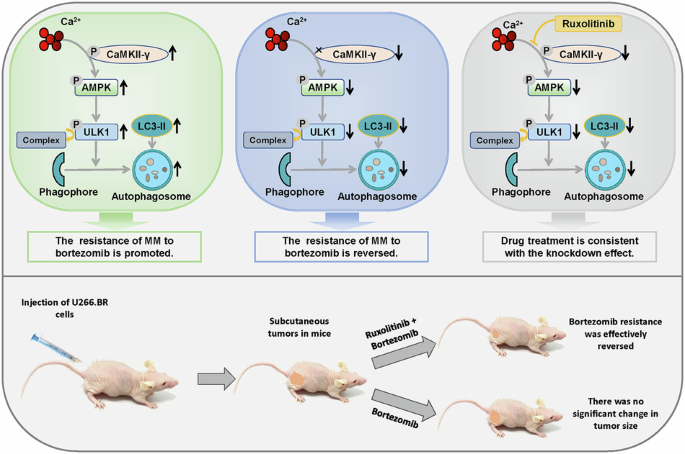
Multiple myeloma (MM) is the second most common hematologic malignancy, with increasing incidence and earlier onset. Despite the therapeutic efficacy of proteasome inhibitors and other strategies, nearly all patients eventually develop resistance, making the discovery of novel drug targets and innovative therapeutic approaches an urgent clinical need. A critical knowledge gap exists regarding the molecular mechanisms underlying bortezomib (first-line MM drug) resistance, which hinders the development of effective resistance-reversing strategies. Here we show calcium/calmodulin-dependent protein kinase II gamma (CaMKII-γ) regulates bortezomib-resistant MM (BRMM) via AMPK-ULK1-autophagy axis. High-throughput screening identified ruxolitinib as a selective CaMKII-γ inhibitor, which reverses BRMM resistance in vitro (using U266 and KMS11 bortezomib-resistant cell lines) and in vivo (using female BALB/c nude mouse model), with efficacy comparable to genetic CaMKII-γ ablation, providing a potential therapeutic strategy for BRMM with broader implications to improve patient outcomes in the future.
Trending
- Atezolizumab Plus Chemotherapy Improves PFS in dMMR/MSI-H Metastatic CRC
- FDA Advisory Committee Backs RP1/Nivolumab for Advanced Melanoma
- CAR T-Cell Therapy Could Soon Expand Into Non-Oncology Indications
- TKTL1 mediates metabolic adaptation and stress resistance in pancreatic cancer cells under nutrient-deprived conditions
- Capricor’s data clash with the FDA| STAT
- Cevostamab Shows Durable Responses in Relapsed/Refractory Multiple Myeloma
- How KRAS-Targeted Therapy May Advance Toward Cancer Prevention
- Tanning Is Getting Hot Again. Here’s What It Really Does to Your Skin


Thursday, July 30
Ruxolitinib inhibits CaMKII-γ to reverse bortezomib resistance in multiple myeloma
 By NewsCancer