


Human samples
All studies involving human samples were performed in accordance with the relevant guidelines and regulations, and approved by the respective hospital ethics committees (CEIm # 23/213 and 20/615, Hospital 12 de Octubre and Hospital Puerta de Hierro, respectively), with patients providing informed consent without compensation.
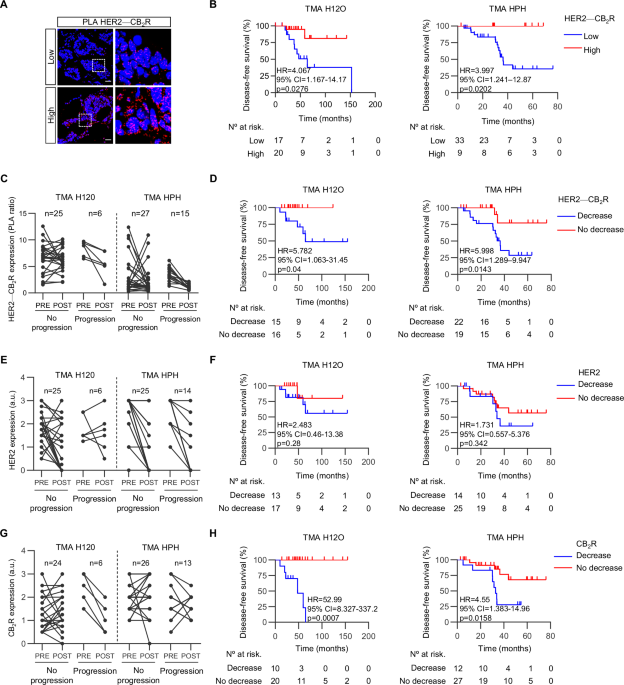
Two tissue microarrays (TMAs) were constructed using 1 mm cores from paraffin-embedded tissue blocks, arranged into a positionally encoded recipient paraffin block. The samples consisted of tumor biopsies from HER2+ cancer patients collected before and after neoadjuvant treatment (NAT), which included trastuzumab (± additional anti-HER2 therapies and/or chemotherapy). TMA H12O comprised 37 samples from patients treated at Hospital 12 de Octubre (Madrid, Spain) between 1999 and 2013, including 31 paired samples (pre- and post-NAT from the same patient). TMA HPH included 42 paired duplicate samples from patients treated at Hospital Puerta de Hierro (Madrid, Spain) between 2012 and 2022 and deposited at the hospital’s biobank (Carlos III Health Institute Biomodels and Biobanks Platform – PT23/00015).
Cell lines and cultures
Cell lines were obtained from commercial vendors whenever available. Cell lines not directly purchased from certified suppliers were authenticated by short tandem repeat profiling at the Genomics Core Facility of the Instituto de Investigaciones Biomédicas Alberto Sols (Madrid, Spain). All cell lines were cultured at 37 °C in a humidified atmosphere with 5% CO₂ and tested weekly for Mycoplasma contamination with PuReTaq Ready-To-Go PCR Beads (#27-9557-02, GE Healthcare, Madrid, Spain) and the following primers: P1, 5´ GGC GAA TGG GTG AGT AAC ACG 3´and P2, CGG ATA ACG CTT GCG ACC TAT G 3. After thawing, cell lines were used for a maximum of 25 passages. Human HER2+ female breast cancer cell lines BT474 TS (trastuzumab-sensitive, #HTB-20) and TR (trastuzumab-resistant, #CRL-3247) were obtained from the American Type Culture Collection (ATCC, Manassas, VI, USA) in 2021 and 2022, respectively.
The CB2R knockout (KO) cell line was generated by knocking out CB2R expression in TS cells using CRISPR/Cas9. The following RNA guide targeting CB2R exon 3 was cloned into the pLv-puro-sgRNA lentiviral plasmid: TCC GGA ATC ATC TAC ACC TA TGG (Addgene #7140, Watertown, MA, USA). TS cells stably expressing Cas9 (via infection with a pCLIP-hCMV-Cas9-Nuclease-Blast lentiviral plasmid, kindly donated by Dr. Markus Müschen, City of Hope Comprehensive Cancer Center, Duarte, CA, USA) were infected with the CB2R-targeting guide. Cells incorporating both Cas9 and guide were selected via antibiotic resistance, and CB2R knockout was confirmed by genomic PCR.
The scramble control (SCR) cell line was generated using the same protocol but with a scramble guide (CCT AAG GTT AAG TCG CCC TCG CTC GAG CGA GGG CGA CTT AAC CT TAGG). The CB2R rescue (RESC) and TR CB2R cell lines were derived from CB2R KO and TR cells, respectively, via lentiviral transduction of the pLv-neo-CMV-hCNR2 plasmid. Briefly, lentiviral particles were produced by transfecting HEK293T cells with envelope (pMD2.G, Addgene #12259), packaging (psPAX2, Addgene #12260), and donor plasmids (CB2R, pLv-neo-hCNR2, Vector Builder, Neu-Isenburg, Germany). Conditioned medium containing recombinant lentiviruses was collected, filtered, and used to infect CB2R KO and TR cells.
Trastuzumab sensitive/resistant cells derived from PDX118 (a patient-derived xenograft established from a HER2⁺ breast tumor) were kindly provided by Dr. Enrique Arenas (Institut de Recerca Contra la Leucèmia Josep Carreras. Barcelona, Spain) and are described in [13].
CHO-K1 (#CCL-61, RRID:CVCL_0214) and HEK293T cells (#CRL-3216, RRID:CVCL_0063) (both female) were obtained from EACR (Nottingham, UK) and ATCC, respectively. The HEK HER2 and HEK CB2R cell lines were generated by lentiviral transduction of the pLv-Bsd-CMV-hERBB2 and pLv225-puro-HA-hCNR2 plasmids (Vector Builder), respectively, following the protocol described above. HEK HER2-CB2R cells were generated by simultaneous infection with both plasmids.
The NK cell line NK92-CD16-GFP (male) was also obtained from ATCC in 2016 (#CRL-2408, RRID:CVCL_3755).
All BT474-derived and PDX-derived cell lines were cultured in DMEM/F12 supplemented with FBS, and penicillin/streptomycin. HEK293T cells were grown in DMEM supplemented with FBS, ultraglutamine, and penicillin/streptomycin. Cells used for displacement experiments were grown in DMEM/F12 (CHO-K1) or DMEM (HEK293T) supplemented just with FBS. NK92-CD16-GFP cells were cultured in RPMI supplemented with FBS, human serum, IL-2, glutamine, sodium pyruvate, and β-mercaptoethanol.
Cell viability assays
Cells were seeded at semi-confluence and cultured for 24 h. Viability was then assessed using crystal violet staining. Briefly, cultures were incubated with 0.1% crystal violet solution in methanol/water for 20 min. After several washes, the resulting crystals were dissolved in methanol, and absorbance was measured at 570 nm.
When cells were treated with trastuzumab, erlotinib, or cannabinoids alone, their viability was measured after 5, 3, and 1 days of drug exposure, respectively. For experiments with combined treatments, cell viability was analyzed 4 days after drug challenge. Cannabinoids used were HU308 (CB2R-selective agonist, Tocris Bioscience #3088, Bristol, UK), Δ9-tetrahydrocannabinol (THC, a CB1R/CB2R mixed agonist, THC Pharm Gmbh #THC-1099, Frankfurt, Germany) and three Cannabis sativa extracts: two of them rich in THC (Cannabis Extracts 1 and 2, CE1 and CE2), and one with a balanced THC:CBD ratio (CE3). CE1 was kindly donated by Aunt Zelda’s (California, USA), and C2 and C3 by Curativa Group (Colombia). The composition of the three extracts is shown in Supplementary Table S2.
In tumor cell + NK cell co-culture experiments, tumor cell lines were seeded at semi-confluence in complete medium and incubated with trastuzumab for 1 h. Subsequently, NK92-CD16-GFP cells were added at a 1:4 ratio (tumor:NK cells) in NK cell medium lacking IL-2, and cell viability was assessed 24 h later.
Proximity ligation assays (PLAs)
Receptor heteromers were detected using the Duolink In Situ PLA Detection Kit (Sigma-Aldrich, St. Louis, MA, USA) according to the manufacturer’s instructions. For TMAs and animal-derived xenograft sections, samples were deparaffinized, subjected to heat-induced antigen retrieval in sodium citrate buffer, and permeabilized with 0.05% Triton X-100. For cell cultures, cells were seeded on glass coverslips, challenged with the corresponding treatment when indicated, fixed with paraformaldehyde, and permeabilized with Triton X-100. Samples were then incubated with primary antibodies: rabbit anti-CB2R (Cayman Chemical, #101550-1, RRID:AB_327841), mouse anti-HER2 (Santa Cruz Biotechnology, #sc-08, RRID:AB_627998), rabbit anti-EGFR, and rabbit anti-IFNGR1 (Cell Signaling Technology, #4267, RRID:AB_2246311, and #34808, RRID:AB_2799061, respectively). Secondary antibodies conjugated to PLUS and MINUS complementary nucleotide probes (anti-rabbit PLUS and anti-mouse MINUS; Sigma-Aldrich #DUO92002 and #DUO92004, respectively) were added, followed by ligase and polymerase in the presence of red fluorescent nucleotides. Nuclei were stained with DAPI. Samples were analyzed via confocal microscopy and processed with ImageJ software. Heteromer expression was quantified as the number of red fluorescent dots (indicating receptor proximity sufficient for probe complementation, circularization, and amplification) per total cells in the field.
Kaplan-Meier curves for disease-free survival based on heteromer expression were generated using the Kaplan-Meier Plotter (KM plotter) online tool. The best threshold cutoffs were automatically determined by the software.
Immunohistochemistry assays
Paraffin-embedded tissue sections were subjected to a heat-induced antigen retrieval and subsequent incubation with either rabbit anti-HER2 (Herceptest, 1:500, Agilent Dako, Santa Clara, CA, USA), rabbit anti-CB2R (Cayman Chemical, #101550-1, RRID:AB_327841, 1:2500), or rabbit anti-EGFR (Leica Biosystems, #NCL-EGFR, RRID:AB_442085, or Cell Signaling Technology, #4267, RRID:AB_2246311) antibodies.
Immunodetection was performed using the Envision method with diaminobenzidine as the chromogen. CB2R and EGFR expression were quantified in the TMAs assigning scores to each sample [0 (no staining), 1 (weak staining), 2 (moderate staining), or 3 (high staining)]. HER2 staining was scored in accordance with the HercepTest manufacturer’s guidelines.
Kaplan-Meier plots for disease-free survival based on HER2, CB2R, or EGFR expression were generated as explained in the PLA methods section.
Real-time quantitative PCR (qPCR)
RNA extraction was performed using the NucleoZOL kit (#740404, Macherey-Nagel, Dueren, Germany) following the manufacturer’s instructions. Reverse transcription to cDNA was carried out using the Transcriptor First Strand cDNA Synthesis Kit (#4897030001, Roche Life Science, Barcelona, Spain). qPCR was performed with the following primers and SYBR Green probe (Roche Life Science #4913914001): CNR2: sense CAC TGA TCC CCA ATG ACT ACC T, antisense CAT GCC CAT AGG TGT AGA TG; ERBB2: sense GGG AAA CCT GGA ACT CAC CT, antisense CCC TGC ACC TCC TGG ATA; ERBB1: sense ACA CAG AAT CTA TAC CCA CCA GAG T, antisense ATC AAC TCC CAA ACG GTC AC; ERBB3: sense TGA ATG GCC TGA GTG TGA CC, antisense CCC CTG ACA GAA TCT CGG TG; ERBB4: sense GAG CAA GAA TTG ACT CGA ATA GG, antisense TTC CTG ACA TGG GGG TGT AG; IFNGR1: sense CCT TGT CAT GCA GGG TGT GA, antisense TTG GTG TAG GCA CTG AGG AC; JAK1: sense GGC TTC TGA GAC ACA CGC TT, antisense CAG CTG TCC AGT GTT CTC CA; JAK2: sense GCC GGG TTT CAG AAG CAG G, antisense TTC AGA ACA TTT GCC GTC GC; STAT1: sense GCT CGT TTG TGG TGG AAA GAC, antisense TCT CTC ATT CAC ATC TCT CAA CTT; ACTB: sense CCA ACC GCG AGA AGAT GA, antisense CCA GAG GCG TAC AGG GAT AG; TBP: sense CCC ATG ACT CCC ATG ACC, antisense TTT ACA ACC AAG ATT CAC TGT GG. Gene expression was calculated using the ΔΔCt method and normalized to reference genes TBP (TATA-binding protein) and ACTB (β-Actin).
RNA sequencing (RNAseq)
RNA from cell cultures was isolated as described above. Concentration and RNA integrity (>7) were determined, and 1 μg per sample was utilized for RNA-seq. Sequencing and results analysis (with Genome One software) were performed by Dreamgenics S.L. (Oviedo, Spain). The generated datasets are available through the Gene Expression Omnibus repository under the accession number GSE300749. Gene expression level was represented as a colored cell, with a color key interpretation indicated where appropriate. The identification of the biological processes modulated by the differentially expressed genes was performed by using the pathfindR tool and the repositories of Kyoto Encyclopedia of Genes and Genomes (KEGG) and Gene Ontology (GO), and GSEA (Gene Set Enrichment Analysis).
Proteomic analyses
Cultured cells were lysed in GST lysis buffer [10% glycerol, 100 mM NaCl, 2 mM MgCl₂, 50 mM Tris-HCl pH 7.4, 1% tergitol (Sigma-Aldrich, #NP40S)] supplemented with protease and phosphatase inhibitors. Samples were centrifuged, and protein concentration in supernatants was determined using the Bradford method. Total protein was split into two fractions: one for validating target protein expression (input) and another (IP) to proceed with a protein co-immunoprecipitation (co-IP), that started with an incubation with G-Sepharose beads (or anti-HA antibody-bound beads for HEK293T HA-CB2R cells). After bead incubation, beads were removed, and samples were incubated with primary antibodies. G-Sepharose beads were then reintroduced, and target proteins were co-immunoprecipitated via centrifugation. Proteins were then eluted by boiling in Laemmli loading buffer. Analysis of the co-IP procedure was performed by Western blot (see below).
Following co-IP, proteins were separated by SDS-PAGE and stained with Coomassie Brilliant Blue G-250 to confirm proper protein separation. Gel lanes were excised, destained, dehydrated, and subjected to reduction/alkylation. After rehydration, proteins were digested with trypsin, and resulting peptides were extracted, purified, and analyzed by mass spectrometry.
LC-MS/MS parameters followed the protocol by Montero-Calle et al. [14]. Peptides were separated using a nano Easy-nLC 1000 system (Thermo Fisher Scientific, Madrid, Spain) with an Acclaim PepMap 100 precolumn (Thermo Fisher Scientific #164946) and an RSLC PepMap C18 column (Thermo Fisher Scientific #11362013). Mobile phase flow rate was 300 nL/min, with 0.1% formic acid (FA) in water (buffer A) and 0.1% FA in 100% acetonitrile (buffer B) for peptide elution over a 102-min gradient. MS/MS analysis was performed on a Q Exactive using data-dependent acquisition, selecting the top 15 most intense precursor ions for fragmentation after each scan.
Mass spectrometry data were analyzed with Proteome Discoverer (v1.4.1.14, Thermo Fisher Scientific). Raw spectra files were searched against the Swiss-Prot_2016_10.fasta database (Homo sapiens, 20121 protein sequences) using Mascot (v2.6, Matrix Science). Precursor and fragment mass tolerances were set to 10 ppm and 0.02 Da, respectively. Parameters included two missed cleavages, fixed carbamidomethylation of cysteines, and variable methionine oxidation/N-terminal acetylation. Peptides were filtered using Percolator (q-value threshold: 0.01). Venn diagrams were generated using the jvenn web tool. The Reactome Pathway Database was used to identify signaling pathways associated with potential interactors.
Western blot
Cells were scraped into DDM buffer (or RIPA buffer for JAK/STAT protein analysis) supplemented with protease and phosphatase inhibitors. Protein extracts were separated by SDS-PAGE and transferred to PVDF membranes using a Trans-Blot® SD Semi-Dry Transfer Cell (Bio-Rad, Madrid, Spain). Membranes were then incubated with the appropriate primary antibodies: mouse anti-EGFR (4267, RRID:AB_2246311), rabbit anti-JAK1 (3344, RRID:AB_2265054), rabbit anti-JAK2 (3230, RRID:AB_2128522), rabbit anti-p-STAT1 (9167, RRID:AB_561284), rabbit anti-STAT1 (9172, RRID:AB_2198300), rabbit anti-IRF1 (8478, RRID:AB_10949108), all from Cell Signaling Technology; rabbit anti-CB2R (SAB1306696), mouse anti-Vinculin (V9264, RRID:AB_10603627), and mouse anti-β Actin (A5441, RRID:AB_476744), all from Sigma-Aldrich. After several washes, membranes were incubated with the corresponding HRP-conjugated secondary antibodies, and the signal was developed using a self-prepared ECL reagent. The bioluminescence was captured with the ImageQuant LAS 500 system (GE HealthCare) and the densitometric analysis was performed using Image LabTM software (Bio-Rad).
Biotinylation assays
HER2 expression specifically at the plasma membrane was assessed by protein biotinylation assays. Following an initial 15 min incubation on ice, cells were exposed to sulfobiotin for 30 min in the dark. Cells were then washed with L-lysine and lysed in DDM buffer supplemented with protease and phosphatase inhibitors, and protein concentration was determined by Bradford assay.
A portion of each sample was reserved to assess the expression of proteins of interest (input), while the remainder was incubated with streptavidin beads to capture biotinylated proteins. Samples were centrifuged, washed with DDM buffer lacking inhibitors, and prepared in Laemmli loading buffer. After denaturation they were subjected to SDS-PAGE and transferred to PVDF membranes, that were processed as described in the Western blot section. Results were normalized using sodium-potassium ATPase and a loading control as references.
Flow cytometry assays
Trastuzumab-HER2 binding was analyzed by flow cytometry using fluorescein isothiocyanate-conjugated trastuzumab (trastuzumab-FITC; #10-2002-F, Abeomics, San Diego, CA, USA). Briefly, cells were detached from culture plates using TripLE™ Express (#12-605-010, Gibco, Eindhoven, The Netherlands) and transferred to 96-well V-bottom plates in staining buffer (PBS containing FBS, BSA, and sodium azide). Plates were centrifuged and pellets were incubated with trastuzumab-FITC for 30 min in the dark. Samples were then transferred to round-bottom polystyrene tubes and stained with 7-aminoactinomycin D (7-AAD) as a viability marker 15 min prior to analysis. Flow cytometry was performed on a FACSCalibur system (Becton Dickinson, Franklin Lakes, NJ, USA), with data processed using FlowJo™ software (BD Biosciences, San Jose, CA, USA).
Trastuzumab affinity displacement assays with NanoBiT
HiBiT-EGFR was a gift from Promega (Fitchburg, WI, USA). More details on the generation protocol can be found in [15]. DNA encoding CB2R (Uni Prot ID:P34972) flanked with PvuI and XbaI restriction sites (start codon mutated to leucine, internal XbaI site silently mutated) was purchased from Twist BioScience (San Francisco, CA, USA). DNA encoding HER2 (Uni Prot ID:P04626) was from Addgene (plasmid #16257).
DNA was digested with PvuI and XbaI (New England Biolabs, Ipswich, MA, USA) and ligated into an expression vector containing an IL-6 signal peptide and N-terminal LrgBiT tag (as described in [16]) to create LrgBiT-CB2R. For generation of HiBiT-HER2, the HER2 sequence (without its native signal peptide) was amplified using the following primers: forward 5’-GGC GGC TCG AGC GGT GCG ATC ACC CAA GTG TGC ACC GGC-3’; reverse 5’-TGC ATG CCT GCA GGT CGA CTT CAC ACT GGC ACG TCC AG-3’. The N-terminal HiBiT plasmid backbone (generated as described in [16]) was digested with PvuI and XbaI, and the HER2 PCR product was cloned in using Gibson assembly. To generate LrgBiT-HER2, the HER2 sequence was amplified essentially as described above but with the forward primer 5’-GGC TCG AGC GGT GGG GCG ATC ACC CAA GTG TGC ACC GGC-3’ and cloned in frame with the IL-6 signal peptide into the N-terminal LrgBiT plasmid backbone using Gibson assembly. Plasmids were verified by Oxford Nanopore Sequencing (Plasmidsaurus, London, UK).
HEK293T or CHO-K1 cells were plated into 6-well plates at a density of 5 × 10⁵ (HEK293T) or 2,5 × 10⁵ (CHO-K1) cells/well. The next day cells were transfected at a 1:1 ratio of HiBiT:LrgBiT-tagged receptor plasmids using FuGENE HD at a 3:1 DNA:reagent ratio following manufacturer’s instructions (Promega). The next day, cells were plated at 4 × 10⁴ cells/well into poly-D-lysine-coated (10 μg/ml; Sigma-Aldrich) white, clear, flat bottomed 96-well plates (Grenier Bio-one (655098); Stonehouse, UK). On the fourth day, cells were treated with 10 nM trastuzumab-FITC (Stratech, Ely, UK) prepared in HEPES buffered saline solution (HBSS; 2 mM sodium pyruvate, 145 mM NaCl, 10 mM D-glucose, 5 mM KCl, 1 mM MgSO4·7H2O, 10 mM HEPES, 1.3 mM CaCl2, 1.5 mM NaHCO3 in double-distilled water, pH 7.45) supplemented with 0.1% BSA in the presence or absence of trastuzumab (Stratech) for 1 h at 37 °C. Furimazine (Promega) was then added (1:400 final dilution) and luminescence and fluorescence emissions simultaneously measured on the PheraStar FSX (BMG Labtech, Ortenberg, Germany) using an optic module fitted with 475 nm (±30 nm; luminescence detection) and 535 nm (±30 nm; fluorescence detection) band pass filters. BRET ratios were calculated by dividing fluorescence by luminescence emissions.
Binding affinities (Ki) of trastuzumab were calculated using the Cheng-Prusoff equation:
$${K}_{i}=\frac{{{IC}}_{50}}{1+\,\frac{[L]}{{K}_{D}}}$$
where [L] was the concentration of trastuzumab-FITC used (nM), IC50 the molar concentration of trastuzumab that inhibited 50% of the specific binding of trastuzumab-FITC, and KD (nM) the affinity of trastuzumab-FITC determined in saturation binding experiments (HiBiT-HER2—LrgBiT-HER2 KD = 5.73 nM; HiBiT-HER2—LrgBiT-CB2R KD = 13.17 nM; HiBiT-EGFR—LrgBiT-HER2 KD = 5.29 nM; data not shown). Data were normalized for each experimental replicate to total binding of 10 nM trastuzumab-FITC (100%) and vehicle (0%).
Enzyme-linked immunosorbent assay (ELISA)
IFN-γ levels in the cancer cell + NK cell co-cultures were assessed by using the Human IFN-γ Standard TMB ELISA Development Kit (PeproTech, Cranbury, NJ, USA) following manufacturer’s instructions. Briefly, co-cultures were established as described in the Cell viability assays section, and culture media collected 24 h later. Conditioned media was incubated for 2 h in 96-well, flat-bottom ELISA microplates previously coated with anti-human IFN-γ antibody. Detection was carried out by subsequent incubation with a detection antibody and streptavidin-HRP conjugate. Color development was monitored with an ELISA plate reader.
Animals
All animal procedures were conducted in accordance with European regulations, with the approval of the Complutense University Animal Experimentation Committee and the Madrid Regional Government (PROEX 150.2/23). The maximal tumor burden permitted was 1 × 103 mm3 and it was never exceeded. Animals were housed in the UCM School of Biology animal facility under a 12-h light-dark cycle, with ad libitum access to food and water. Sample size was calculated using the GRANMO Sample Size Calculator (version 8), assuming a two-sided test with an alpha risk of 0.05 and a beta risk of 0.2, a common standard deviation of 1.4, and an estimated 20% dropout rate.
Xenografts were generated by subcutaneous injection of 2 × 10⁶ TR or TR CB2R cells (resuspended in Matrigel) into the right flank of 6-week-old female athymic nude-Foxn1nu mice (RRID:IMSR_ENV:HSP-069, Envigo, Barcelona, Spain). Due to estrogen receptor (ER) expression in BT474 cells, drinking water was supplemented with 17β-estradiol (Sigma-Aldrich) starting one week before cancer cell inoculation and continuing until sacrifice. Tumors were monitored regularly using a digital caliper, and their volume was calculated as (4π/3) × (width/2)² × (length/2). Once tumors reached a volume of 100–200 mm³, animals were randomly assigned to experimental groups by sequential allocation to the different treatment arms without additional selection criteria, and treatment commenced. Blinding was not implemented during treatment administration, as knowledge of group allocation was required to ensure correct dosing and treatment delivery.
For xenografts derived from TR cells, six treatment groups were established with the following schedules: Trastuzumab (20 mg/kg in saline, intraperitoneally (IP), twice weekly); Erlotinib (50 mg/kg in PEG/saline 1:1, IP, five times weekly); Erlotinib followed by trastuzumab (One week of erlotinib followed by three weeks of trastuzumab); Trastuzumab followed by erlotinib (One week of trastuzumab followed by three weeks of erlotinib); Trastuzumab + erlotinib (Four weeks of combined treatment); Vehicle (PEG/saline, IP, five times weekly).
For xenografts derived from TR CB2R cells, two groups were established: Trastuzumab and Vehicle, following the same dosing schedules as above.
After four weeks of treatment (or earlier if tumor volumes exceeded 1×103 mm³), mice were euthanized. Tumors were excised and divided into two portions when possible—one for protein extraction and the other for RNA isolation—and snap-frozen until subsequent processing.
Statistical analyses
Sample size was determined based on prior experience using similar HER2+ breast cancer models. No samples or animals were excluded from the analyses.
Pearson’s chi-squared test was used for statistical analysis of the human samples included in the TMAs. Kaplan-Meier survival curves were statistically compared by the log-rank test. For the rest of data, normality was assessed using the Shapiro-Wilk test. For normally distributed datasets, independent two-group comparisons were performed using Student’s t test, while for multi-group analyses one-way or two-way ANOVA followed by Tukey’s post hoc test were used. Non-normally distributed data were analyzed via the Mann–Whitney U test for two independent groups or the Kruskal-Wallis test with Dunn’s post hoc correction for multi-group comparisons. All statistical tests were two-tailed, with significance thresholds set at p < 0.05. Unless otherwise stated, data are expressed as mean ± SEM. Statistical analysis was performed with GraphPad Prism version 8.0.1. or 10.4.2.
