


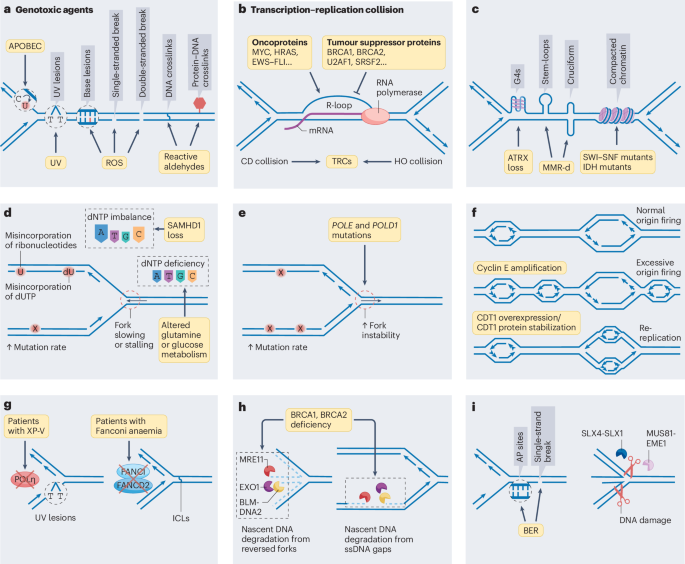
Saxena, S. & Zou, L. Hallmarks of DNA replication stress. Mol. Cell 82, 2298–2314 https://doi.org/10.1016/j.molcel.2022.05.004 (2022).
Google Scholar
Deshpande, A. M. & Newlon, C. S. DNA replication fork pause sites dependent on transcription. Science 272, 1030–1033 https://doi.org/10.1126/science.272.5264.1030 (1996).
Google Scholar
Labib, K., Tercero, J. A. & Diffley, J. F. Uninterrupted MCM2–7 function required for DNA replication fork progression. Science 288, 1643–1647 https://doi.org/10.1126/science.288.5471.1643 (2000).
Google Scholar
Anglana, M., Apiou, F., Bensimon, A. & Debatisse, M. Dynamics of DNA replication in mammalian somatic cells: nucleotide pool modulates origin choice and interorigin spacing. Cell 114, 385–394 https://doi.org/10.1016/s0092-8674(03)00569-5 (2003).
Google Scholar
Zou, L. & Elledge, S. J. Sensing DNA damage through ATRIP recognition of RPA–ssDNA complexes. Science 300, 1542–1548 https://doi.org/10.1126/science.1083430 (2003). This study demonstrates that RPA-coated ssDNA is a structure induced by replication stress that activates the ATR checkpoint pathway.
Google Scholar
Farmer, H. et al. Targeting the DNA repair defect in BRCA mutant cells as a therapeutic strategy. Nature 434, 917–921 https://doi.org/10.1038/nature03445 (2005).
Google Scholar
Bryant, H. E. et al. Specific killing of BRCA2-deficient tumours with inhibitors of poly(ADP-ribose) polymerase. Nature 434, 913–917 https://doi.org/10.1038/nature03443 (2005). Together with Farmer et al. (2005), this study shows the use of PARP inhibitor to induce synthetic lethality and selectively kill BRCA-deficient cancer cells.
Google Scholar
Zeman, M. K. & Cimprich, K. A. Causes and consequences of replication stress. Nat. Cell Biol. 16, 2–9 https://doi.org/10.1038/ncb2897 (2014).
Google Scholar
Bartkova, J. et al. DNA damage response as a candidate anti-cancer barrier in early human tumorigenesis. Nature 434, 864–870 https://doi.org/10.1038/nature03482 (2005).
Google Scholar
Gorgoulis, V. G. et al. Activation of the DNA damage checkpoint and genomic instability in human precancerous lesions. Nature 434, 907–913 https://doi.org/10.1038/nature03485 (2005). Together with Bartkova et al. (2005), this study shows that the DNA damage checkpoint is a barrier to the increase of genomic instability in cancer cells.
Google Scholar
Macheret, M. & Halazonetis, T. D. DNA replication stress as a hallmark of cancer. Annu. Rev. Pathol. 10, 425–448 https://doi.org/10.1146/annurev-pathol-012414-040424 (2015).
Google Scholar
Helmrich, A., Ballarino, M. & Tora, L. Collisions between replication and transcription complexes cause common fragile site instability at the longest human genes. Mol. Cell 44, 966–977 https://doi.org/10.1016/j.molcel.2011.10.013 (2011).
Google Scholar
Bester, A. C. et al. Nucleotide deficiency promotes genomic instability in early stages of cancer development. Cell 145, 435–446 https://doi.org/10.1016/j.cell.2011.03.044 (2011).
Google Scholar
Cortez, D. Replication-coupled DNA repair. Mol. Cell 74, 866–876 https://doi.org/10.1016/j.molcel.2019.04.027 (2019).
Google Scholar
Burrell, R. A. et al. Replication stress links structural and numerical cancer chromosomal instability. Nature 494, 492–496 https://doi.org/10.1038/nature11935 (2013).
Google Scholar
Cybulla, E. & Vindigni, A. Leveraging the replication stress response to optimize cancer therapy. Nat. Rev. Cancer 23, 6–24 https://doi.org/10.1038/s41568-022-00518-6 (2023).
Google Scholar
Bartkova, J. et al. Oncogene-induced senescence is part of the tumorigenesis barrier imposed by DNA damage checkpoints. Nature 444, 633–637 https://doi.org/10.1038/nature05268 (2006).
Google Scholar
Zimmer, J. et al. Targeting BRCA1 and BRCA2 deficiencies with G-quadruplex-interacting compounds. Mol. Cell 61, 449–460 https://doi.org/10.1016/j.molcel.2015.12.004 (2016).
Google Scholar
Elvers, I., Johansson, F., Groth, P., Erixon, K. & Helleday, T. UV stalled replication forks restart by re-priming in human fibroblasts. Nucleic Acids Res. 39, 7049–7057 https://doi.org/10.1093/nar/gkr420 (2011).
Google Scholar
Wilhelm, T. et al. Slow replication fork velocity of homologous recombination-defective cells results from endogenous oxidative stress. PLoS Genet. 12, e1006007 https://doi.org/10.1371/journal.pgen.1006007 (2016).
Google Scholar
Garaycoechea, J. I. et al. Genotoxic consequences of endogenous aldehydes on mouse haematopoietic stem cell function. Nature 489, 571–575 https://doi.org/10.1038/nature11368 (2012). This study demonstrates that endogenous aldehydes inflict severe DNA damage on haematopoietic stem cells, requiring a dual protection system of aldehyde clearance and Fanconi anaemia DNA repair to prevent stem cell attrition and bone marrow failure.
Google Scholar
Semlow, D. R. & Walter, J. C. Mechanisms of vertebrate DNA interstrand cross-link repair. Annu. Rev. Biochem. 90, 107–135 https://doi.org/10.1146/annurev-biochem-080320-112510 (2021).
Google Scholar
Buisson, R., Lawrence, M. S., Benes, C. H. & Zou, L. APOBEC3A and APOBEC3B activities render cancer cells susceptible to ATR inhibition. Cancer Res. 77, 4567–4578 https://doi.org/10.1158/0008-5472.CAN-16-3389 (2017).
Google Scholar
Green, A. M. et al. Cytosine deaminase APOBEC3A sensitizes leukemia cells to inhibition of the DNA replication checkpoint. Cancer Res. 77, 4579–4588 https://doi.org/10.1158/0008-5472.CAN-16-3394 (2017).
Google Scholar
Milano, L., Gautam, A. & Caldecott, K. W. DNA damage and transcription stress. Mol. Cell 84, 70–79 https://doi.org/10.1016/j.molcel.2023.11.014 (2024).
Google Scholar
Hamperl, S., Bocek, M. J., Saldivar, J. C., Swigut, T. & Cimprich, K. A. Transcription–replication conflict orientation modulates R-loop levels and activates distinct DNA damage responses. Cell 170, 774–786.e19 https://doi.org/10.1016/j.cell.2017.07.043 (2017).
Google Scholar
Brickner, J. R., Garzon, J. L. & Cimprich, K. A. Walking a tightrope: the complex balancing act of R-loops in genome stability. Mol. Cell 82, 2267–2297 https://doi.org/10.1016/j.molcel.2022.04.014 (2022).
Google Scholar
Petermann, E., Lan, L. & Zou, L. Sources, resolution and physiological relevance of R-loops and RNA–DNA hybrids. Nat. Rev. Mol. Cell Biol. 23, 521–540 https://doi.org/10.1038/s41580-022-00474-x (2022).
Google Scholar
Kotsantis, P. et al. Increased global transcription activity as a mechanism of replication stress in cancer. Nat. Commun. 7, 13087 https://doi.org/10.1038/ncomms13087 (2016).
Google Scholar
Uhl, L. et al. MYC binding to nascent RNA suppresses innate immune signaling by R-loop-derived RNA-DNA hybrids. Cell https://doi.org/10.1016/j.cell.2025.12.019 (2026).
Google Scholar
Hatchi, E. et al. BRCA1 recruitment to transcriptional pause sites is required for R-loop-driven DNA damage repair. Mol. Cell 57, 636–647 https://doi.org/10.1016/j.molcel.2015.01.011 (2015).
Google Scholar
Bhatia, V. et al. BRCA2 prevents R-loop accumulation and associates with TREX-2 mRNA export factor PCID2. Nature 511, 362–365 https://doi.org/10.1038/nature13374 (2014).
Google Scholar
Shivji, M. K. K., Renaudin, X., Williams, C. H. & Venkitaraman, A. R. BRCA2 regulates transcription elongation by RNA polymerase II to prevent R-loop accumulation. Cell Rep. 22, 1031–1039 https://doi.org/10.1016/j.celrep.2017.12.086 (2018).
Google Scholar
Nguyen, H. D. et al. Spliceosome mutations induce R loop-associated sensitivity to ATR inhibition in myelodysplastic syndromes. Cancer Res. 78, 5363–5374 https://doi.org/10.1158/0008-5472.CAN-17-3970 (2018).
Google Scholar
Chen, L. et al. The augmented R-loop is a unifying mechanism for myelodysplastic syndromes induced by high-risk splicing factor mutations. Mol. Cell 69, 412–425.e6 https://doi.org/10.1016/j.molcel.2017.12.029 (2018).
Google Scholar
Gorthi, A. et al. EWS–FLI1 increases transcription to cause R-loops and block BRCA1 repair in Ewing sarcoma. Nature 555, 387–391 https://doi.org/10.1038/nature25748 (2018).
Google Scholar
Wang, Y. et al. G-quadruplex DNA drives genomic instability and represents a targetable molecular abnormality in ATRX-deficient malignant glioma. Nat. Commun. 10, 943 https://doi.org/10.1038/s41467-019-08905-8 (2019).
Google Scholar
Voineagu, I., Narayanan, V., Lobachev, K. S. & Mirkin, S. M. Replication stalling at unstable inverted repeats: interplay between DNA hairpins and fork stabilizing proteins. Proc. Natl Acad. Sci. USA 105, 9936–9941 https://doi.org/10.1073/pnas.0804510105 (2008).
Google Scholar
van Wietmarschen, N. et al. Repeat expansions confer WRN dependence in microsatellite-unstable cancers. Nature 586, 292–298 https://doi.org/10.1038/s41586-020-2769-8 (2020). This study reveals that large-scale TA-dinucleotide repeat expansions in MSI cancers form non-B DNA secondary structures that stall replication forks, creating a specific reliance on the WRN helicase to unwind these structures and prevent fatal chromosome shattering.
Google Scholar
Gupta, M. et al. BRG1 loss predisposes lung cancers to replicative stress and ATR dependency. Cancer Res. 80, 3841–3854 https://doi.org/10.1158/0008-5472.CAN-20-1744 (2020).
Google Scholar
Bayona-Feliu, A., Barroso, S., Munoz, S. & Aguilera, A. The SWI/SNF chromatin remodeling complex helps resolve R-loop-mediated transcription–replication conflicts. Nat. Genet. 53, 1050–1063 https://doi.org/10.1038/s41588-021-00867-2 (2021).
Google Scholar
Schvartzman, J. M. et al. Oncogenic IDH mutations increase heterochromatin-related replication stress without impacting homologous recombination. Mol. Cell 83, 2347–2356.e8 https://doi.org/10.1016/j.molcel.2023.05.026 (2023).
Google Scholar
Li, F. et al. ATRX loss induces telomere dysfunction and necessitates induction of alternative lengthening of telomeres during human cell immortalization. EMBO J. 38, e96659 https://doi.org/10.15252/embj.201796659 (2019).
Google Scholar
Mullen, N. J. & Singh, P. K. Nucleotide metabolism: a pan-cancer metabolic dependency. Nat. Rev. Cancer 23, 275–294 https://doi.org/10.1038/s41568-023-00557-7 (2023).
Google Scholar
Toledo, L. I. et al. ATR prohibits replication catastrophe by preventing global exhaustion of RPA. Cell 155, 1088–1103 https://doi.org/10.1016/j.cell.2013.10.043 (2013). This report shows that ATR inhibition in cells under high replication stress leads to cell death through replication catastrophe.
Google Scholar
Aird, K. M. et al. Suppression of nucleotide metabolism underlies the establishment and maintenance of oncogene-induced senescence. Cell Rep. 3, 1252–1265 https://doi.org/10.1016/j.celrep.2013.03.004 (2013).
Google Scholar
Coquel, F. et al. SAMHD1 acts at stalled replication forks to prevent interferon induction. Nature 557, 57–61 https://doi.org/10.1038/s41586-018-0050-1 (2018).
Google Scholar
Clifford, R. et al. SAMHD1 is mutated recurrently in chronic lymphocytic leukemia and is involved in response to DNA damage. Blood 123, 1021–1031 https://doi.org/10.1182/blood-2013-04-490847 (2014).
Google Scholar
Rentoft, M. et al. Heterozygous colon cancer-associated mutations of SAMHD1 have functional significance. Proc. Natl Acad. Sci. USA 113, 4723–4728 https://doi.org/10.1073/pnas.1519128113 (2016).
Google Scholar
Blount, B. C. et al. Folate deficiency causes uracil misincorporation into human DNA and chromosome breakage: implications for cancer and neuronal damage. Proc. Natl Acad. Sci. USA 94, 3290–3295 https://doi.org/10.1073/pnas.94.7.3290 (1997).
Google Scholar
Saxena, S. et al. Unprocessed genomic uracil as a source of DNA replication stress in cancer cells. Mol. Cell 84, 2036–2052.e7 https://doi.org/10.1016/j.molcel.2024.04.004 (2024).
Google Scholar
Mortusewicz, O., Haslam, J., Gad, H. & Helleday, T. Uracil-induced replication stress drives mutations, genome instability, anti-cancer treatment efficacy, and resistance. Mol. Cell 85, 1897–1906 https://doi.org/10.1016/j.molcel.2025.04.015 (2025).
Google Scholar
Zhou, Z. X., Williams, J. S., Lujan, S. A. & Kunkel, T. A. Ribonucleotide incorporation into DNA during DNA replication and its consequences. Crit. Rev. Biochem. Mol. Biol. 56, 109–124 https://doi.org/10.1080/10409238.2020.1869175 (2021).
Google Scholar
Caldecott, K. W. Causes and consequences of DNA single-strand breaks. Trends Biochem. Sci. 49, 68–78 https://doi.org/10.1016/j.tibs.2023.11.001 (2024).
Google Scholar
Vaitsiankova, A. et al. PARP inhibition impedes the maturation of nascent DNA strands during DNA replication. Nat. Struct. Mol. Biol. 29, 329–338 https://doi.org/10.1038/s41594-022-00747-1 (2022).
Google Scholar
Simoneau, A., Xiong, R. & Zou, L. The trans cell cycle effects of PARP inhibitors underlie their selectivity toward BRCA1/2-deficient cells. Genes Dev. 35, 1271–1289 https://doi.org/10.1101/gad.348479.121 (2021). This study shows that ssDNA gaps are a key determinant of PARP inhibitor sensitivity in BRCA-deficient cells.
Google Scholar
Strauss, J. D. & Pursell, Z. F. Replication DNA polymerases, genome instability and cancer therapies. NAR Cancer 5, zcad033 https://doi.org/10.1093/narcan/zcad033 (2023).
Google Scholar
Hodel, K. P. et al. Explosive mutation accumulation triggered by heterozygous human Pol ε proofreading-deficiency is driven by suppression of mismatch repair. eLife 7, e32692 https://doi.org/10.7554/eLife.32692 (2018).
Google Scholar
Labrousse, G. et al. The hereditary N363K POLE exonuclease mutant extends PPAP tumor spectrum to glioblastomas by causing DNA damage and aneuploidy in addition to increased mismatch mutagenicity. NAR Cancer 5, zcad011 https://doi.org/10.1093/narcan/zcad011 (2023).
Google Scholar
Hass, C. S., Gakhar, L. & Wold, M. S. Functional characterization of a cancer causing mutation in human replication protein A. Mol. Cancer Res. 8, 1017–1026 https://doi.org/10.1158/1541-7786.MCR-10-0161 (2010).
Google Scholar
Tatsumi, R. & Ishimi, Y. An MCM4 mutation detected in cancer cells affects MCM4/6/7 complex formation. J. Biochem. 161, 259–268 https://doi.org/10.1093/jb/mvw065 (2017).
Google Scholar
Macheret, M. & Halazonetis, T. D. Intragenic origins due to short G1 phases underlie oncogene-induced DNA replication stress. Nature 555, 112–116 https://doi.org/10.1038/nature25507 (2018).
Google Scholar
Machida, Y. J. & Dutta, A. The APC/C inhibitor, Emi1, is essential for prevention of rereplication. Genes Dev. 21, 184–194 https://doi.org/10.1101/gad.1495007 (2007).
Google Scholar
Brison, O. et al. Transcription-mediated organization of the replication initiation program across large genes sets common fragile sites genome-wide. Nat. Commun. 10, 5693 https://doi.org/10.1038/s41467-019-13674-5 (2019).
Google Scholar
Yang, W. & Gao, Y. Translesion and repair DNA polymerases: diverse structure and mechanism. Annu. Rev. Biochem. 87, 239–261 https://doi.org/10.1146/annurev-biochem-062917-012405 (2018).
Google Scholar
Masutani, C. et al. The XPV (xeroderma pigmentosum variant) gene encodes human DNA polymerase eta. Nature 399, 700–704 https://doi.org/10.1038/21447 (1999).
Google Scholar
Ceccaldi, R., Sarangi, P. & D’Andrea, A. D. The Fanconi anaemia pathway: new players and new functions. Nat. Rev. Mol. Cell Biol. 17, 337–349 https://doi.org/10.1038/nrm.2016.48 (2016).
Google Scholar
Neelsen, K. J. & Lopes, M. Replication fork reversal in eukaryotes: from dead end to dynamic response. Nat. Rev. Mol. Cell Biol. 16, 207–220 https://doi.org/10.1038/nrm3935 (2015).
Google Scholar
Schlacher, K. et al. Double-strand break repair-independent role for BRCA2 in blocking stalled replication fork degradation by MRE11. Cell 145, 529–542 https://doi.org/10.1016/j.cell.2011.03.041 (2011). This paper reveals that BRCA2-deficient cells fail to protect stalled replication forks and make nascent DNA vulnerable to nucleolytic degradation.
Google Scholar
Tirman, S. et al. Temporally distinct post-replicative repair mechanisms fill PRIMPOL-dependent ssDNA gaps in human cells. Mol. Cell 81, 4026–4040.e8 https://doi.org/10.1016/j.molcel.2021.09.013 (2021).
Google Scholar
Seppa, I. M. et al. MRN-CtIP, EXO1, and DNA2-WRN/BLM act bidirectionally to process DNA gaps in PARPi-treated cells without strand cleavage. Genes Dev. 39, 582–602 https://doi.org/10.1101/gad.352421.124 (2025).
Google Scholar
Taglialatela, A. et al. REV1-Polζ maintains the viability of homologous recombination-deficient cancer cells through mutagenic repair of PRIMPOL-dependent ssDNA gaps. Mol. Cell 81, 4008–4025.e7 https://doi.org/10.1016/j.molcel.2021.08.016 (2021).
Google Scholar
Cong, K. et al. Replication gaps are a key determinant of PARP inhibitor synthetic lethality with BRCA deficiency. Mol. Cell 81, 3128–3144.e7 https://doi.org/10.1016/j.molcel.2021.06.011 (2021). This study suggests that ssDNA accumulation in BRCA-deficient cells underlies PARP inhibitor sensitivity.
Google Scholar
Ali, R. et al. Targeting PARP1 in XRCC1-deficient sporadic invasive breast cancer or preinvasive ductal carcinoma in situ induces synthetic lethality and chemoprevention. Cancer Res. 78, 6818–6827 https://doi.org/10.1158/0008-5472.CAN-18-0633 (2018).
Google Scholar
Mohni, K. N., Kavanaugh, G. M. & Cortez, D. ATR pathway inhibition is synthetically lethal in cancer cells with ERCC1 deficiency. Cancer Res. 74, 2835–2845 https://doi.org/10.1158/0008-5472.CAN-13-3229 (2014).
Google Scholar
Heyza, J. R. et al. ATR inhibition overcomes platinum tolerance associated with ERCC1- and p53-deficiency by inducing replication catastrophe. NAR Cancer 5, zcac045 https://doi.org/10.1093/narcan/zcac045 (2023).
Google Scholar
Ionov, Y., Peinado, M. A., Malkhosyan, S., Shibata, D. & Perucho, M. Ubiquitous somatic mutations in simple repeated sequences reveal a new mechanism for colonic carcinogenesis. Nature 363, 558–561 https://doi.org/10.1038/363558a0 (1993).
Google Scholar
Fugger, K. et al. Targeting the nucleotide salvage factor DNPH1 sensitizes BRCA-deficient cells to PARP inhibitors. Science 372, 156–165 https://doi.org/10.1126/science.abb4542 (2021).
Google Scholar
Ortega, P. et al. Mechanism of DNA replication fork breakage and PARP1 hyperactivation during replication catastrophe. Sci. Adv. https://doi.org/10.1126/sciadv.adu0437 (2025).
Situ, K. et al. BRCA2 deficiency and replication stress drive APOBEC3-mediated genomic instability. Nat. Commun. 16, 9544 https://doi.org/10.1038/s41467-025-64578-6 (2025).
Google Scholar
Couch, F. B. et al. ATR phosphorylates SMARCAL1 to prevent replication fork collapse. Genes Dev. 27, 1610–1623 https://doi.org/10.1101/gad.214080.113 (2013).
Google Scholar
Ragland, R. L. et al. RNF4 and PLK1 are required for replication fork collapse in ATR-deficient cells. Genes Dev. 27, 2259–2273 https://doi.org/10.1101/gad.223180.113 (2013).
Google Scholar
Matos, D. A. et al. ATR protects the genome against R loops through a MUS81-triggered feedback loop. Mol. Cell 77, 514–527.e4 https://doi.org/10.1016/j.molcel.2019.10.010 (2020).
Google Scholar
Chen, C. C., Feng, W., Lim, P. X., Kass, E. M. & Jasin, M. Homology-directed repair and the role of BRCA1, BRCA2, and related proteins in genome integrity and cancer. Annu. Rev. Cancer Biol. 2, 313–336 https://doi.org/10.1146/annurev-cancerbio-030617-050502 (2018).
Google Scholar
Saldivar, J. C., Cortez, D. & Cimprich, K. A. The essential kinase ATR: ensuring faithful duplication of a challenging genome. Nat. Rev. Mol. Cell Biol. 18, 622–636 https://doi.org/10.1038/nrm.2017.67 (2017).
Google Scholar
Kumagai, A., Lee, J., Yoo, H. Y. & Dunphy, W. G. TopBP1 activates the ATR–ATRIP complex. Cell 124, 943–955 https://doi.org/10.1016/j.cell.2005.12.041 (2006).
Google Scholar
Bass, T. E. et al. ETAA1 acts at stalled replication forks to maintain genome integrity. Nat. Cell Biol. 18, 1185–1195 https://doi.org/10.1038/ncb3415 (2016).
Google Scholar
Haahr, P. et al. Activation of the ATR kinase by the RPA-binding protein ETAA1. Nat. Cell Biol. 18, 1196–1207 https://doi.org/10.1038/ncb3422 (2016).
Google Scholar
Lee, Y. C., Zhou, Q., Chen, J. & Yuan, J. RPA-binding protein ETAA1 is an ATR activator involved in DNA replication stress response. Curr. Biol. 26, 3257–3268 https://doi.org/10.1016/j.cub.2016.10.030 (2016).
Google Scholar
Saldivar, J. C. et al. An intrinsic S/G2 checkpoint enforced by ATR. Science 361, 806–810 https://doi.org/10.1126/science.aap9346 (2018).
Google Scholar
Bass, T. E. & Cortez, D. Quantitative phosphoproteomics reveals mitotic function of the ATR activator ETAA1. J. Cell Biol. 218, 1235–1249 https://doi.org/10.1083/jcb.201810058 (2019).
Google Scholar
Kumagai, A., Kim, S. M. & Dunphy, W. G. Claspin and the activated form of ATR–ATRIP collaborate in the activation of Chk1. J. Biol. Chem. 279, 49599–49608 https://doi.org/10.1074/jbc.M408353200 (2004).
Google Scholar
Burdova, K., Mihaljevic, B., Sturzenegger, A., Chappidi, N. & Janscak, P. The mismatch-binding factor MutSβ can mediate ATR activation in response to DNA double-strand breaks. Mol. Cell 59, 603–614 https://doi.org/10.1016/j.molcel.2015.06.026 (2015).
Google Scholar
Yoo, H. Y., Kumagai, A., Shevchenko, A., Shevchenko, A. & Dunphy, W. G. The Mre11–Rad50–Nbs1 complex mediates activation of TopBP1 by ATM. Mol. Biol. Cell 20, 2351–2360 https://doi.org/10.1091/mbc.e08-12-1190 (2009).
Google Scholar
Lee, J. & Dunphy, W. G. The Mre11–Rad50–Nbs1 (MRN) complex has a specific role in the activation of Chk1 in response to stalled replication forks. Mol. Biol. Cell 24, 1343–1353 https://doi.org/10.1091/mbc.E13-01-0025 (2013).
Google Scholar
Duursma, A. M., Driscoll, R., Elias, J. E. & Cimprich, K. A. A role for the MRN complex in ATR activation via TOPBP1 recruitment. Mol. Cell 50, 116–122 https://doi.org/10.1016/j.molcel.2013.03.006 (2013).
Google Scholar
Shiotani, B. et al. Two distinct modes of ATR activation orchestrated by Rad17 and Nbs1. Cell Rep. 3, 1651–1662 https://doi.org/10.1016/j.celrep.2013.04.018 (2013).
Google Scholar
Wang, J., Gong, Z. & Chen, J. MDC1 collaborates with TopBP1 in DNA replication checkpoint control. J. Cell Biol. 193, 267–273 https://doi.org/10.1083/jcb.201010026 (2011).
Google Scholar
Matsuoka, S. et al. ATM and ATR substrate analysis reveals extensive protein networks responsive to DNA damage. Science 316, 1160–1166 https://doi.org/10.1126/science.1140321 (2007). This proteomic study identifies hundreds of potential substrates of ATM and ATR induced by DNA damage or replication stress.
Google Scholar
Liu, Q. et al. Chk1 is an essential kinase that is regulated by Atr and required for the G2/M DNA damage checkpoint. Genes Dev. 14, 1448–1459 (2000).
Google Scholar
Bekker-Jensen, S. et al. Spatial organization of the mammalian genome surveillance machinery in response to DNA strand breaks. J. Cell Biol. 173, 195–206 https://doi.org/10.1083/jcb.200510130 (2006).
Google Scholar
Matsuoka, S. et al. Ataxia telangiectasia-mutated phosphorylates Chk2 in vivo and in vitro. Proc. Natl Acad. Sci. USA 97, 10389–10394 https://doi.org/10.1073/pnas.190030497 (2000).
Google Scholar
Stiff, T. et al. ATR-dependent phosphorylation and activation of ATM in response to UV treatment or replication fork stalling. EMBO J. 25, 5775–5782 https://doi.org/10.1038/sj.emboj.7601446 (2006).
Google Scholar
Buisson, R., Boisvert, J. L., Benes, C. H. & Zou, L. Distinct but concerted roles of ATR, DNA-PK, and Chk1 in countering replication stress during S phase. Mol. Cell 59, 1011–1024 https://doi.org/10.1016/j.molcel.2015.07.029 (2015).
Google Scholar
Leung, W. et al. ATR protects ongoing and newly assembled DNA replication forks through distinct mechanisms. Cell Rep. 42, 112792 https://doi.org/10.1016/j.celrep.2023.112792 (2023).
Google Scholar
Moiseeva, T. N. et al. An ATR and CHK1 kinase signaling mechanism that limits origin firing during unperturbed DNA replication. Proc. Natl Acad. Sci. USA 116, 13374–13383 https://doi.org/10.1073/pnas.1903418116 (2019).
Google Scholar
Collis, S. J. et al. FANCM and FAAP24 function in ATR-mediated checkpoint signaling independently of the Fanconi anemia core complex. Mol. Cell 32, 313–324 https://doi.org/10.1016/j.molcel.2008.10.014 (2008).
Google Scholar
Pichierri, P. & Rosselli, F. The DNA crosslink-induced S-phase checkpoint depends on ATR–CHK1 and ATR–NBS1–FANCD2 pathways. EMBO J. 23, 1178–1187 https://doi.org/10.1038/sj.emboj.7600113 (2004).
Google Scholar
Bukhari, A. B. et al. Inhibiting Wee1 and ATR kinases produces tumor-selective synthetic lethality and suppresses metastasis. J. Clin. Invest. 129, 1329–1344 https://doi.org/10.1172/JCI122622 (2019).
Google Scholar
Xu, B., Kim, S. T., Lim, D. S. & Kastan, M. B. Two molecularly distinct G2/M checkpoints are induced by ionizing irradiation. Mol. Cell Biol. 22, 1049–1059 https://doi.org/10.1128/MCB.22.4.1049-1059.2002 (2002).
Google Scholar
Turchick, A. et al. Selective inhibition of ATM-dependent double-strand break repair and checkpoint control synergistically enhances the efficacy of ATR inhibitors. Mol. Cancer Ther. 22, 859–872 https://doi.org/10.1158/1535-7163.MCT-22-0685 (2023).
Google Scholar
Song, Y. et al. ATM counteracts chromatin-bound cGAS during DNA replication. Nat. Cell Biol. 28, 946–956 https://doi.org/10.1038/s41556-026-01931-x (2026).
Google Scholar
Xie, K., Doles, J., Hemann, M. T. & Walker, G. C. Error-prone translesion synthesis mediates acquired chemoresistance. Proc. Natl Acad. Sci. USA 107, 20792–20797 https://doi.org/10.1073/pnas.1011412107 (2010).
Google Scholar
Stanzione, M. et al. Translesion DNA synthesis mediates acquired resistance to olaparib plus temozolomide in small cell lung cancer. Sci. Adv. 8, eabn1229 https://doi.org/10.1126/sciadv.abn1229 (2022).
Google Scholar
Garcia-Gomez, S. et al. PrimPol, an archaic primase/polymerase operating in human cells. Mol. Cell 52, 541–553 https://doi.org/10.1016/j.molcel.2013.09.025 (2013).
Google Scholar
Mouron, S. et al. Repriming of DNA synthesis at stalled replication forks by human PrimPol. Nat. Struct. Mol. Biol. 20, 1383–1389 https://doi.org/10.1038/nsmb.2719 (2013).
Google Scholar
Quinet, A. et al. PRIMPOL-mediated adaptive response suppresses replication fork reversal in BRCA-deficient cells. Mol. Cell 77, 461–474.e9 https://doi.org/10.1016/j.molcel.2019.10.008 (2020).
Google Scholar
Kawale, A. S. et al. APOBEC3A induces DNA gaps through PRIMPOL and confers gap-associated therapeutic vulnerability. Sci. Adv. 10, eadk2771 https://doi.org/10.1126/sciadv.adk2771 (2024).
Google Scholar
Belan, O. et al. POLQ seals post-replicative ssDNA gaps to maintain genome stability in BRCA-deficient cancer cells. Mol. Cell 82, 4664–4680.e9 https://doi.org/10.1016/j.molcel.2022.11.008 (2022).
Google Scholar
Pavani, R. et al. Structure and repair of replication-coupled DNA breaks. Science 385, eado3867 https://doi.org/10.1126/science.ado3867 (2024).
Google Scholar
Elango, R. et al. Two-ended recombination at a Flp-nickase-broken replication fork. Mol. Cell 85, 78–90.e3 https://doi.org/10.1016/j.molcel.2024.11.006 (2025).
Google Scholar
Wu, X. & Malkova, A. Break-induced replication mechanisms in yeast and mammals. Curr. Opin. Genet. Dev. 71, 163–170 https://doi.org/10.1016/j.gde.2021.08.002 (2021).
Google Scholar
Costantino, L. et al. Break-induced replication repair of damaged forks induces genomic duplications in human cells. Science 343, 88–91 https://doi.org/10.1126/science.1243211 (2014).
Google Scholar
Sorensen, C. S. et al. The cell-cycle checkpoint kinase Chk1 is required for mammalian homologous recombination repair. Nat. Cell Biol. 7, 195–201 https://doi.org/10.1038/ncb1212 (2005).
Google Scholar
Mehta, K. P. M. et al. CHK1 phosphorylates PRIMPOL to promote replication stress tolerance. Sci. Adv. 8, eabm0314 https://doi.org/10.1126/sciadv.abm0314 (2022).
Google Scholar
Ngoi, N. Y. L. et al. Targeting ATR in patients with cancer. Nat. Rev. Clin. Oncol. 21, 278–293 https://doi.org/10.1038/s41571-024-00863-5 (2024).
Google Scholar
Chan, K. L., Palmai-Pallag, T., Ying, S. & Hickson, I. D. Replication stress induces sister-chromatid bridging at fragile site loci in mitosis. Nat. Cell Biol. 11, 753–760 https://doi.org/10.1038/ncb1882 (2009).
Google Scholar
Harrigan, J. A. et al. Replication stress induces 53BP1-containing OPT domains in G1 cells. J. Cell Biol. 193, 97–108 https://doi.org/10.1083/jcb.201011083 (2011).
Google Scholar
Minocherhomji, S. et al. Replication stress activates DNA repair synthesis in mitosis. Nature 528, 286–290 https://doi.org/10.1038/nature16139 (2015). This paper demonstrates that entry into early mitosis triggers DNA synthesis at under-replicated regions, mitigating chromosome mis-segregation and genomic instability caused by replication stress.
Google Scholar
Bhowmick, R., Minocherhomji, S. & Hickson, I. D. RAD52 facilitates mitotic DNA synthesis following replication stress. Mol. Cell 64, 1117–1126 https://doi.org/10.1016/j.molcel.2016.10.037 (2016).
Google Scholar
Glover, T. W., Berger, C., Coyle, J. & Echo, B. DNA polymerase alpha inhibition by aphidicolin induces gaps and breaks at common fragile sites in human chromosomes. Hum. Genet. 67, 136–142 https://doi.org/10.1007/BF00272988 (1984).
Google Scholar
Guler, G. et al. Concordant loss of fragile gene expression early in breast cancer development. Pathol. Int. 55, 471–478 https://doi.org/10.1111/j.1440-1827.2005.01855.x (2005).
Google Scholar
Nunez, M. I. et al. Frequent loss of WWOX expression in breast cancer: correlation with estrogen receptor status. Breast Cancer Res. Treat. 89, 99–105 https://doi.org/10.1007/s10549-004-1474-x (2005).
Google Scholar
Arlt, M. F. et al. Replication stress induces genome-wide copy number changes in human cells that resemble polymorphic and pathogenic variants. Am. J. Hum. Genet. 84, 339–350 https://doi.org/10.1016/j.ajhg.2009.01.024 (2009).
Google Scholar
Boland, C. R. & Goel, A. Microsatellite instability in colorectal cancer. Gastroenterology 138, 2073–2087.e3 https://doi.org/10.1053/j.gastro.2009.12.064 (2010).
Google Scholar
Polak, P. et al. A mutational signature reveals alterations underlying deficient homologous recombination repair in breast cancer. Nat. Genet. 49, 1476–1486 https://doi.org/10.1038/ng.3934 (2017).
Google Scholar
Petljak, M. et al. Mechanisms of APOBEC3 mutagenesis in human cancer cells. Nature 607, 799–807 https://doi.org/10.1038/s41586-022-04972-y (2022).
Google Scholar
Brown, V. E. et al. CDK2 regulates collapsed replication fork repair in CCNE1-amplified ovarian cancer cells via homologous recombination. NAR Cancer 5, zcad039 https://doi.org/10.1093/narcan/zcad039 (2023).
Google Scholar
Di Micco, R. et al. Oncogene-induced senescence is a DNA damage response triggered by DNA hyper-replication. Nature 444, 638–642 https://doi.org/10.1038/nature05327 (2006).
Google Scholar
Dominguez-Sola, D. et al. Non-transcriptional control of DNA replication by c-Myc. Nature 448, 445–451 https://doi.org/10.1038/nature05953 (2007).
Google Scholar
Gaillard, H., Garcia-Muse, T. & Aguilera, A. Replication stress and cancer. Nat. Rev. Cancer 15, 276–289 https://doi.org/10.1038/nrc3916 (2015).
Google Scholar
Ray Chaudhuri, A. et al. Replication fork stability confers chemoresistance in BRCA-deficient cells. Nature 535, 382–387 https://doi.org/10.1038/nature18325 (2016).
Google Scholar
Nik-Zainal, S. et al. Landscape of somatic mutations in 560 breast cancer whole-genome sequences. Nature 534, 47–54 https://doi.org/10.1038/nature17676 (2016).
Google Scholar
Mannava, S. et al. Depletion of deoxyribonucleotide pools is an endogenous source of DNA damage in cells undergoing oncogene-induced senescence. Am. J. Pathol. 182, 142–151 https://doi.org/10.1016/j.ajpath.2012.09.011 (2013).
Google Scholar
Sakai, W. et al. Secondary mutations as a mechanism of cisplatin resistance in BRCA2-mutated cancers. Nature 451, 1116–1120 https://doi.org/10.1038/nature06633 (2008).
Google Scholar
Waks, A. G. et al. Reversion and non-reversion mechanisms of resistance to PARP inhibitor or platinum chemotherapy in BRCA1/2-mutant metastatic breast cancer. Ann. Oncol. 31, 590–598 https://doi.org/10.1016/j.annonc.2020.02.008 (2020).
Google Scholar
Doles, J. et al. Suppression of Rev3, the catalytic subunit of Polζ, sensitizes drug-resistant lung tumors to chemotherapy. Proc. Natl Acad. Sci. USA 107, 20786–20791 https://doi.org/10.1073/pnas.1011409107 (2010).
Google Scholar
Roberts, S. A. et al. An APOBEC cytidine deaminase mutagenesis pattern is widespread in human cancers. Nat. Genet. 45, 970–976 https://doi.org/10.1038/ng.2702 (2013).
Google Scholar
Burns, M. B. et al. APOBEC3B is an enzymatic source of mutation in breast cancer. Nature 494, 366–370 https://doi.org/10.1038/nature11881 (2013).
Google Scholar
Burns, M. B., Temiz, N. A. & Harris, R. S. Evidence for APOBEC3B mutagenesis in multiple human cancers. Nat. Genet. 45, 977–983 https://doi.org/10.1038/ng.2701 (2013).
Google Scholar
Green, A. M. & Weitzman, M. D. The spectrum of APOBEC3 activity: from anti-viral agents to anti-cancer opportunities. DNA Repair 83, 102700 https://doi.org/10.1016/j.dnarep.2019.102700 (2019).
Google Scholar
Jamal-Hanjani, M. et al. Tracking the evolution of non-small-cell lung cancer. N. Engl. J. Med. 376, 2109–2121 https://doi.org/10.1056/NEJMoa1616288 (2017).
Google Scholar
Isozaki, H. et al. Therapy-induced APOBEC3A drives evolution of persistent cancer cells. Nature 620, 393–401 https://doi.org/10.1038/s41586-023-06303-1 (2023).
Google Scholar
Caswell, D. R. et al. The role of APOBEC3B in lung tumor evolution and targeted cancer therapy resistance. Nat. Genet. 56, 60–73 https://doi.org/10.1038/s41588-023-01592-8 (2024).
Google Scholar
Gupta, A. et al. APOBEC3 mutagenesis drives therapy resistance in breast cancer. Nat. Genet. 57, 1452–1462 https://doi.org/10.1038/s41588-025-02187-1 (2025).
Google Scholar
Chabanon, R. M. et al. Targeting the DNA damage response in immuno-oncology: developments and opportunities. Nat. Rev. Cancer 21, 701–717 https://doi.org/10.1038/s41568-021-00386-6 (2021).
Google Scholar
Ablasser, A. & Chen, Z. J. cGAS in action: expanding roles in immunity and inflammation. Science 363, eaat8657 https://doi.org/10.1126/science.aat8657 (2019).
Google Scholar
Ablasser, A. & Hur, S. Regulation of cGAS- and RLR-mediated immunity to nucleic acids. Nat. Immunol. 21, 17–29 https://doi.org/10.1038/s41590-019-0556-1 (2020).
Google Scholar
Mackenzie, K. J. et al. cGAS surveillance of micronuclei links genome instability to innate immunity. Nature 548, 461–465 https://doi.org/10.1038/nature23449 (2017).
Google Scholar
Harding, S. M. et al. Mitotic progression following DNA damage enables pattern recognition within micronuclei. Nature 548, 466–470 https://doi.org/10.1038/nature23470 (2017).
Google Scholar
Bakhoum, S. F. et al. Chromosomal instability drives metastasis through a cytosolic DNA response. Nature 553, 467–472 https://doi.org/10.1038/nature25432 (2018).
Google Scholar
Wu, I.-H. et al. RIG-I-like receptors sense replication stress through ribosomal DNA integrity to drive inflammation. Preprint at bioRxiv https://doi.org/10.64898/2026.05.27.728122 (2026).
Chen, J. et al. rDNA breaks activate dsRNA pattern recognition through sense–antisense transcription. Preprint at bioRxiv https://doi.org/10.64898/2026.05.26.728043 (2026).
Woo, S. R. et al. STING-dependent cytosolic DNA sensing mediates innate immune recognition of immunogenic tumors. Immunity 41, 830–842 https://doi.org/10.1016/j.immuni.2014.10.017 (2014).
Google Scholar
Deng, L. et al. STING-dependent cytosolic DNA sensing promotes radiation-induced type I interferon-dependent antitumor immunity in immunogenic tumors. Immunity 41, 843–852 https://doi.org/10.1016/j.immuni.2014.10.019 (2014).
Google Scholar
Dillon, M. T. et al. ATR inhibition potentiates the radiation-induced inflammatory tumor microenvironment. Clin. Cancer Res. 25, 3392–3403 https://doi.org/10.1158/1078-0432.CCR-18-1821 (2019).
Google Scholar
Geenen, J. J. J. & Schellens, J. H. M. Molecular pathways: targeting the protein kinase WEE1 in cancer. Clin. Cancer Res. 23, 4540–4544 https://doi.org/10.1158/1078-0432.CCR-17-0520 (2017).
Google Scholar
Pilie, P. G., Tang, C., Mills, G. B. & Yap, T. A. State-of-the-art strategies for targeting the DNA damage response in cancer. Nat. Rev. Clin. Oncol. 16, 81–104 https://doi.org/10.1038/s41571-018-0114-z (2019).
Google Scholar
Yap, T. A. et al. Ceralasertib (AZD6738), an oral ATR kinase inhibitor, in combination with carboplatin in patients with advanced solid tumors: a phase I study. Clin. Cancer Res. 27, 5213–5224 https://doi.org/10.1158/1078-0432.CCR-21-1032 (2021).
Google Scholar
Thomas, A. et al. Therapeutic targeting of ATR yields durable regressions in small cell lung cancers with high replication stress. Cancer Cell 39, 566–579.e7 https://doi.org/10.1016/j.ccell.2021.02.014 (2021).
Google Scholar
Petermann, E., Woodcock, M. & Helleday, T. Chk1 promotes replication fork progression by controlling replication initiation. Proc. Natl Acad. Sci. USA 107, 16090–16095 https://doi.org/10.1073/pnas.1005031107 (2010).
Google Scholar
Aarts, M. et al. Forced mitotic entry of S-phase cells as a therapeutic strategy induced by inhibition of WEE1. Cancer Discov. 2, 524–539 https://doi.org/10.1158/2159-8290.CD-11-0320 (2012).
Google Scholar
Gallo, D. et al. CCNE1 amplification is synthetic lethal with PKMYT1 kinase inhibition. Nature 604, 749–756 https://doi.org/10.1038/s41586-022-04638-9 (2022). This study discovers that inhibiting the kinase PKMYT1 is selectively lethal to CCNE1 amplified cancer cells by triggering premature activation of CDK1, driving these cells into unscheduled, lethal mitosis.
Google Scholar
Blackford, A. N. & Jackson, S. P. ATM, ATR, and DNA-PK: the trinity at the heart of the DNA damage response. Mol. Cell 66, 801–817 https://doi.org/10.1016/j.molcel.2017.05.015 (2017).
Google Scholar
Fang, Y. et al. Sequential therapy with PARP and WEE1 inhibitors minimizes toxicity while maintaining efficacy. Cancer Cell 35, 851–867.e7 https://doi.org/10.1016/j.ccell.2019.05.001 (2019).
Google Scholar
Thomas, A. et al. Tumor-targeted top1 inhibitor delivery with optimized PARP inhibition in advanced solid tumors: a phase I trial of gapped scheduling. Nat. Commun. 16, 9457 https://doi.org/10.1038/s41467-025-64509-5 (2025).
Google Scholar
Lord, C. J. & Ashworth, A. PARP inhibitors: synthetic lethality in the clinic. Science 355, 1152–1158 https://doi.org/10.1126/science.aam7344 (2017).
Google Scholar
Menissier de Murcia, J. et al. Functional interaction between PARP-1 and PARP-2 in chromosome stability and embryonic development in mouse. EMBO J. 22, 2255–2263 https://doi.org/10.1093/emboj/cdg206 (2003).
Google Scholar
Murai, J. et al. Trapping of PARP1 and PARP2 by clinical PARP inhibitors. Cancer Res. 72, 5588–5599 https://doi.org/10.1158/0008-5472.CAN-12-2753 (2012). This study reveals that PARP inhibitors act primarily by trapping PARP1 and PARP2 proteins onto damaged DNA, forming cytotoxic DNA–protein complexes that block replication forks and drive cancer cell death more effectively than catalytic inhibition alone.
Google Scholar
Murai, J. et al. Stereospecific PARP trapping by BMN 673 and comparison with olaparib and rucaparib. Mol. Cancer Ther. 13, 433–443 https://doi.org/10.1158/1535-7163.MCT-13-0803 (2014).
Google Scholar
Shao, Z. et al. Inactive PARP1 causes embryonic lethality and genome instability in a dominant-negative manner. Proc. Natl Acad. Sci. USA 120, e2301972120 https://doi.org/10.1073/pnas.2301972120 (2023).
Google Scholar
Lin, X. et al. Inactive Parp2 causes Tp53-dependent lethal anemia by blocking replication-associated nick ligation in erythroblasts. Mol. Cell 84, 3916–3931.e7 https://doi.org/10.1016/j.molcel.2024.09.020 (2024).
Google Scholar
Illuzzi, G. et al. Preclinical characterization of AZD5305, a next-generation, highly selective PARP1 inhibitor and trapper. Clin. Cancer Res. 28, 4724–4736 https://doi.org/10.1158/1078-0432.CCR-22-0301 (2022).
Google Scholar
AZD5305 more tolerable than earlier PARP agents. Cancer Discov. 12, 1602 https://doi.org/10.1158/2159-8290.CD-NB2022-0039 (2022).
Noordermeer, S. M. & van Attikum, H. PARP inhibitor resistance: a tug-of-war in BRCA-mutated cells. Trends Cell Biol. 29, 820–834 https://doi.org/10.1016/j.tcb.2019.07.008 (2019).
Google Scholar
Behan, F. M. et al. Prioritization of cancer therapeutic targets using CRISPR–Cas9 screens. Nature 568, 511–516 https://doi.org/10.1038/s41586-019-1103-9 (2019).
Google Scholar
Chan, E. M. et al. WRN helicase is a synthetic lethal target in microsatellite unstable cancers. Nature 568, 551–556 https://doi.org/10.1038/s41586-019-1102-x (2019).
Google Scholar
Lieb, S. et al. Werner syndrome helicase is a selective vulnerability of microsatellite instability-high tumor cells. eLife 8, e43333 https://doi.org/10.7554/eLife.43333 (2019).
Google Scholar
Kategaya, L., Perumal, S. K., Hager, J. H. & Belmont, L. D. Werner syndrome helicase is required for the survival of cancer cells with microsatellite instability. iScience 13, 488–497 https://doi.org/10.1016/j.isci.2019.02.006 (2019). Together with Behan et al. (2019), Chan et al. (2019) and Lieb et al. (2019), this study establishes WRN as a critical, selective synthetic lethal dependency and major therapeutic target specifically for MSI cancers.
Google Scholar
Ma, T., Wu, J., Li, S. & Chen, J. CRISPR screening identifies SMARCAL1 and MRN as modulators of WRN dependency in MSI-H colorectal cancer. Cancer Res. https://doi.org/10.1158/0008-5472.CAN-26-1023 (2026).
Google Scholar
Picco, G. et al. On-target mutations confer resistance to WRN helicase inhibitors in microsatellite unstable cancer cells. Preprint at bioRxiv https://doi.org/10.64898/2025.12.23.695783 (2025).
Pilie, P. G. et al. Ataxia-telangiectasia mutated loss-of-function displays variant and tissue-specific differences across tumor types. Clin. Cancer Res. 30, 2121–2139 https://doi.org/10.1158/1078-0432.CCR-23-1763 (2024).
Google Scholar
Yap, T. A. et al. Phase Ib basket expansion trial and alternative-schedule dose-escalation study of ATR inhibitor elimusertib in advanced solid tumors with DNA damage response defects. Cancer Discov. 15, 2019–2035 https://doi.org/10.1158/2159-8290.CD-24-1500 (2025).
Google Scholar
Yap, T. A. et al. First-in-human trial of the oral ataxia telangiectasia and RAD3-related (ATR) inhibitor BAY 1895344 in patients with advanced solid tumors. Cancer Discov. 11, 80–91 https://doi.org/10.1158/2159-8290.CD-20-0868 (2021).
Google Scholar
Wang, C. et al. Genome-wide CRISPR screens reveal synthetic lethality of RNASEH2 deficiency and ATR inhibition. Oncogene 38, 2451–2463 https://doi.org/10.1038/s41388-018-0606-4 (2019).
Google Scholar
Schleicher, E. M. et al. Dual genome-wide CRISPR knockout and CRISPR activation screens identify mechanisms that regulate the resistance to multiple ATR inhibitors. PLoS Genet. 16, e1009176 https://doi.org/10.1371/journal.pgen.1009176 (2020).
Google Scholar
Wang, C. et al. Genetic vulnerabilities upon inhibition of DNA damage response. Nucleic Acids Res. 49, 8214–8231 https://doi.org/10.1093/nar/gkab643 (2021).
Google Scholar
Lloyd, R. L. et al. Loss of Cyclin C or CDK8 provides ATR inhibitor resistance by suppressing transcription-associated replication stress. Nucleic Acids Res. 49, 8665–8683 https://doi.org/10.1093/nar/gkab628 (2021).
Google Scholar
Domchek, S. M. et al. Olaparib and durvalumab in patients with germline BRCA-mutated metastatic breast cancer (MEDIOLA): an open-label, multicentre, phase 1/2, basket study. Lancet Oncol. 21, 1155–1164 https://doi.org/10.1016/S1470-2045(20)30324-7 (2020).
Google Scholar
Overman, M. J. et al. Nivolumab in patients with metastatic DNA mismatch repair-deficient or microsatellite instability-high colorectal cancer (CheckMate 142): an open-label, multicentre, phase 2 study. Lancet Oncol. 18, 1182–1191 https://doi.org/10.1016/S1470-2045(17)30422-9 (2017).
Google Scholar
Le, D. T. et al. Phase II open-label study of pembrolizumab in treatment-refractory, microsatellite instability-high/mismatch repair-deficient metastatic colorectal cancer: KEYNOTE-164. J. Clin. Oncol. 38, 11–19 https://doi.org/10.1200/JCO.19.02107 (2020).
Google Scholar
Marabelle, A. et al. Efficacy of pembrolizumab in patients with noncolorectal high microsatellite instability/mismatch repair-deficient cancer: results from the phase II KEYNOTE-158 study. J. Clin. Oncol. 38, 1–10 https://doi.org/10.1200/JCO.19.02105 (2020).
Google Scholar
Chalabi, M. et al. Neoadjuvant immunotherapy leads to pathological responses in MMR-proficient and MMR-deficient early-stage colon cancers. Nat. Med. 26, 566–576 https://doi.org/10.1038/s41591-020-0805-8 (2020).
Google Scholar
Andre, T. et al. Pembrolizumab in microsatellite-instability-high advanced colorectal cancer. N. Engl. J. Med. 383, 2207–2218 https://doi.org/10.1056/NEJMoa2017699 (2020).
Google Scholar
Kwon, M. et al. Determinants of response and intrinsic resistance to PD-1 blockade in microsatellite instability-high gastric cancer. Cancer Discov. 11, 2168–2185 https://doi.org/10.1158/2159-8290.CD-21-0219 (2021).
Google Scholar
Lenz, H. J. et al. First-line nivolumab plus low-dose ipilimumab for microsatellite instability-high/mismatch repair-deficient metastatic colorectal cancer: the phase II CheckMate 142 study. J. Clin. Oncol. 40, 161–170 https://doi.org/10.1200/JCO.21.01015 (2022).
Google Scholar
Mellman, I., Chen, D. S., Powles, T. & Turley, S. J. The cancer-immunity cycle: indication, genotype, and immunotype. Immunity 56, 2188–2205 https://doi.org/10.1016/j.immuni.2023.09.011 (2023).
Google Scholar
US National Library of Medicine. ClinicalTrials.gov https://clinicaltrials.gov/study/NCT03682289 (2026).
US National Library of Medicine. ClinicalTrials.gov https://clinicaltrials.gov/study/NCT02223923 (2025).
US National Library of Medicine. ClinicalTrials.gov https://clinicaltrials.gov/study/NCT04704661 (2026).
US National Library of Medicine. ClinicalTrials.gov https://clinicaltrials.gov/study/NCT04497116 (2025).
US National Library of Medicine. ClinicalTrials.gov https://clinicaltrials.gov/study/NCT04972110 (2025).
US National Library of Medicine. ClinicalTrials.gov https://clinicaltrials.gov/study/NCT04267939 (2023).
US National Library of Medicine. ClinicalTrials.gov https://clinicaltrials.gov/study/NCT04535401 (2026).
US National Library of Medicine. ClinicalTrials.gov https://clinicaltrials.gov/study/NCT04616534 (2026).
US National Library of Medicine. ClinicalTrials.gov https://clinicaltrials.gov/study/NCT02487095 (2025).
US National Library of Medicine. ClinicalTrials.gov https://clinicaltrials.gov/study/NCT02589522 (2026).
US National Library of Medicine. ClinicalTrials.gov https://clinicaltrials.gov/study/NCT02567409 (2025).
US National Library of Medicine. ClinicalTrials.gov https://clinicaltrials.gov/study/NCT02203513 (2022).
US National Library of Medicine. ClinicalTrials.gov https://clinicaltrials.gov/study/NCT02873975 (2022).
US National Library of Medicine. ClinicalTrials.gov https://clinicaltrials.gov/study/NCT03057145 (2021).
US National Library of Medicine. ClinicalTrials.gov https://clinicaltrials.gov/study/NCT02797964 (2023).
US National Library of Medicine. ClinicalTrials.gov https://clinicaltrials.gov/study/NCT02797977 (2023).
US National Library of Medicine. ClinicalTrials.gov https://clinicaltrials.gov/study/NCT02659241 (2026).
US National Library of Medicine. ClinicalTrials.gov https://clinicaltrials.gov/study/NCT04460937 (2026).
US National Library of Medicine. ClinicalTrials.gov https://clinicaltrials.gov/study/NCT02617277 (2026).
US National Library of Medicine. ClinicalTrials.gov https://clinicaltrials.gov/study/NCT03253679 (2023).
US National Library of Medicine. ClinicalTrials.gov https://clinicaltrials.gov/study/NCT04855656 (2026).
US National Library of Medicine. ClinicalTrials.gov https://clinicaltrials.gov/study/NCT05605509 (2026).
US National Library of Medicine. ClinicalTrials.gov https://clinicaltrials.gov/study/NCT04644068 (2026).
US National Library of Medicine. ClinicalTrials.gov https://clinicaltrials.gov/study/NCT06120491 (2026).
US National Library of Medicine. ClinicalTrials.gov https://clinicaltrials.gov/study/NCT05838768 (2026).
US National Library of Medicine. ClinicalTrials.gov https://clinicaltrials.gov/study/NCT06004245 (2026).
US National Library of Medicine. ClinicalTrials.gov https://clinicaltrials.gov/study/NCT02588105 (2022).
US National Library of Medicine. ClinicalTrials.gov https://clinicaltrials.gov/study/NCT02516813 (2024).
Stoy, H. et al. Direct visualization of transcription–replication conflicts reveals post-replicative DNA:RNA hybrids. Nat. Struct. Mol. Biol. 30, 348–359 https://doi.org/10.1038/s41594-023-00928-6 (2023).
Google Scholar
Mengoli, V. et al. WRN helicase and mismatch repair complexes independently and synergistically disrupt cruciform DNA structures. EMBO J. 42 e111998 https://doi.org/10.15252/embj.2022111998 (2023).
Google Scholar
Davidson, I. F., Li, A. & Blow, J. J. Deregulated replication licensing causes DNA fragmentation consistent with head-to-tail fork collision. Mol. Cell 24, 433–443 https://doi.org/10.1016/j.molcel.2006.09.010 (2006).
Google Scholar
Huang, J. et al. The DNA translocase FANCM/MHF promotes replication traverse of DNA interstrand crosslinks. Mol. Cell 52, 434–446 https://doi.org/10.1016/j.molcel.2013.09.021 (2013).
Google Scholar
Haracska, L., Yu, S. L., Johnson, R. E., Prakash, L. & Prakash, S. Efficient and accurate replication in the presence of 7,8-dihydro-8-oxoguanine by DNA polymerase eta. Nat. Genet. 25, 458–461 https://doi.org/10.1038/78169 (2000).
Google Scholar
Zou, L., Cortez, D. & Elledge, S. J. Regulation of ATR substrate selection by Rad17-dependent loading of Rad9 complexes onto chromatin. Genes Dev. 16, 198–208 https://doi.org/10.1101/gad.950302 (2002).
Google Scholar
Zou, L. & Elledge, S. J. Sensing and signaling DNA damage: roles of Rad17 and Rad9 complexes in the cellular response to DNA damage. Harvey Lect. 97, 1–15 (2001).
Google Scholar
Lee, J., Kumagai, A. & Dunphy, W. G. The Rad9-Hus1-Rad1 checkpoint clamp regulates interaction of TopBP1 with ATR. J. Biol. Chem. 282, 28036–28044 https://doi.org/10.1074/jbc.M704635200 (2007).
Google Scholar
Delacroix, S., Wagner, J. M., Kobayashi, M., Yamamoto, K. & Karnitz, L. M. The Rad9-Hus1-Rad1 (9-1-1) clamp activates checkpoint signaling via TopBP1. Genes Dev. 21, 1472–1477 https://doi.org/10.1101/gad.1547007 (2007).
Google Scholar
Mailand, N. et al. Rapid destruction of human Cdc25A in response to DNA damage. Science 288, 1425–1429 https://doi.org/10.1126/science.288.5470.1425 (2000).
Google Scholar
Beyaert, M., Starczewska, E., Van Den Neste, E. & Bontemps, F. A crucial role for ATR in the regulation of deoxycytidine kinase activity. Biochem. Pharmacol. 100, 40–50 https://doi.org/10.1016/j.bcp.2015.11.022 (2016).
Google Scholar
Quinet, A., Carvajal-Maldonado, D., Lemacon, D. & Vindigni, A. DNA fiber analysis: mind the gap! Methods Enzymol. 591, 55–82 https://doi.org/10.1016/bs.mie.2017.03.019 (2017).
Google Scholar
Kara, N. et al. Multiplexed TrAEL-seq captures DNA replication dynamics in mammalian cells. Nucleic Acids Res. 54, gkag212 https://doi.org/10.1093/nar/gkag212 (2026).
Google Scholar
Kara, N., Krueger, F., Rugg-Gunn, P. & Houseley, J. Genome-wide analysis of DNA replication and DNA double-strand breaks using TrAEL-seq. PLoS Biol. 19, e3000886 https://doi.org/10.1371/journal.pbio.3000886 (2021).
Google Scholar
Rojat, V. et al. Automated mapping of DNA replication fork progression in human cells with ForkML. Nat. Commun. 17, 1975 https://doi.org/10.1038/s41467-026-68750-4 (2026).
Google Scholar
