


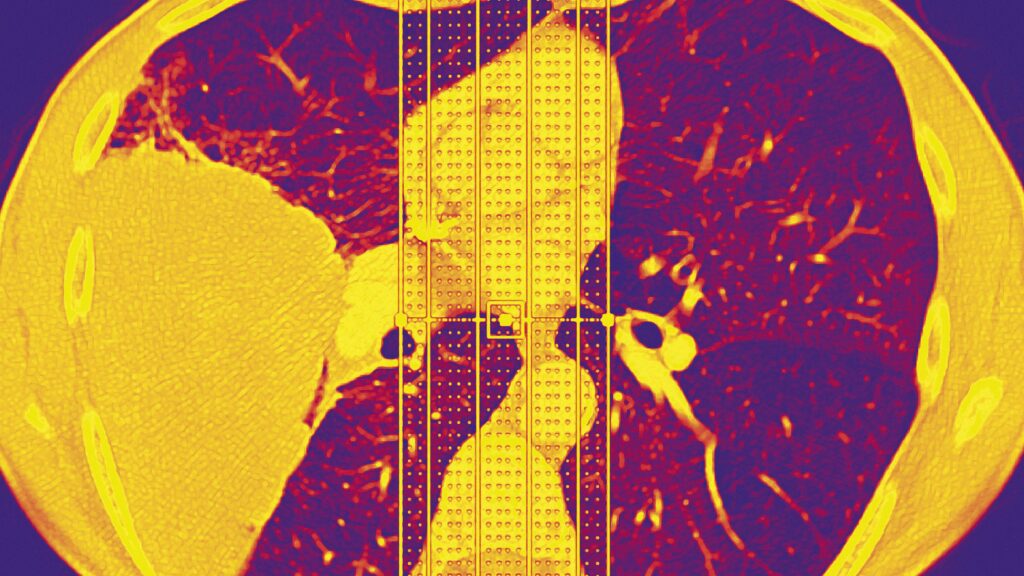
For years, researchers have known that, among people diagnosed with lung cancer, the prevalence of nonsmokers has been increasing. But they have been trying to determine what factors — whether genetic, environmental, or something else — might put these “never-smokers” at heightened risk.
Now, researchers have identified a very rare genetic variant that is associated with 25-fold higher odds of lung cancer, they reported in the journal Science on Thursday. In the U.S., the variant is far more common among people in Southern Appalachia than in other regions.
Experts said that the variant likely only plays a role in a small portion of never-smoker lung cancer cases. But the research provides further evidence that these types of tumors can be tied to distinct risk factors, which may in turn require thinking differently about screening programs and treatment strategies. More broadly, the new study highlights the types of narrow but crucial discoveries that can be made by turning to large datasets replete with health information from millions of people. In this case, the investigators relied on genetic data from 23andMe.
STAT+ Exclusive Story
Already have an account? Log in
This article is exclusive to STAT+ subscribers
Unlock this article — plus in-depth analysis, newsletters, premium events, and news alerts.
Already have an account? Log in
Individual plans
Group plans
View All Plans
To read the rest of this story subscribe to STAT+.
Subscribe
